presentation on
solartowertechnology
by
mayur p.Choudhary
x-b
 what is solar tower
 classifications
 steam based
 molten salt based
 heliostat
 advantages of use of solar energy
 application
 scope in India
contents
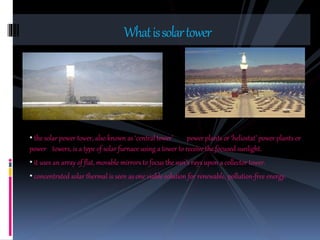
• the solar power tower, also known as ‘central tower’ power plants or ‘heliostat’ power plants or
power towers, is a type of solar furnace using a tower to receive the focused sunlight.
• it uses an array of flat, movable mirrors to focus the sun’s rays upon a collector tower.
• concentrated solar thermal is seen as one viable solution for renewable, pollution-free energy.
Whatissolartower
Solar tower can be basically classified as :-
1) Steam based solar tower
o water is used as medium which is converted to steam to generate electric power.
2) Molten salt based tower
o here melted solution of potassium nitrate and sodium nitrate is used instead of
water as a medium
Classifications
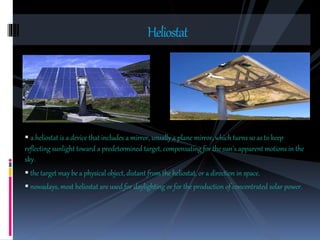
 a heliostat is a device that includes a mirror, usually a plane mirror, which turns so as to keep
reflecting sunlight toward a predetermined target, compensating for the sun’s apparent motions in the
sky.
 the target may be a physical object, distant from the heliostat, or a direction in space.
 nowadays, most heliostat are used for daylighting or for the production of concentrated solar power.
Heliostat
 Solar power is pollution free and causes no greenhouse gases to be emitted after installation.
 Reduced dependence on foreign oil and fossil fuels.
 Renewable clean power that is available every day of the year, even cloudy days produce some
power.
 Return on investment unlike paying for utility bills.
 Virtually no maintenance as solar panels last over 30 years.
 Creates jobs by employing solar panel manufacturers, solar installers, etc. and in turn helps
the economy.
advantagesofuseofsolarenergy
 Solarpowertowersconvertsunshineintocleanelectricity.
 The technologyusesmanylarge, sun-trackingmirrorscommonlyreferredto as heliostatsto focus
sunlightona receiverat thetopof a tower.
 A heat transfer fluid heated in the receiver is used to generate steam, which, in turn, is used in a
conventional turbine-generator to produce electricity.
 Early power towers such as the Solar One plant used steam as the heat transfer fluid.
 Current power towers, based on Solar Two, use molten nitrate salt because of its superior heat
transfer and energy storage capabilities.
application
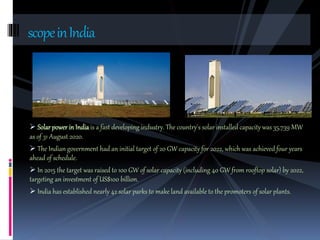
 Solarpower in India is a fast developing industry. The country's solar installed capacity was 35,739 MW
as of 31 August 2020.
 The Indian government had an initial target of 20 GW capacity for 2022, which was achieved four years
ahead of schedule.
 In 2015 the target was raised to 100 GW of solar capacity (including 40 GW from rooftop solar) by 2022,
targeting an investment of US$100 billion.
 India has established nearly 42 solar parks to make land available to the promoters of solar plants.
scopeinIndia
thankyou

computer subject enrichment activity mayur.pptx

  • 1.
  • 2.
     what issolar tower  classifications  steam based  molten salt based  heliostat  advantages of use of solar energy  application  scope in India contents
  • 3.
    • the solarpower tower, also known as ‘central tower’ power plants or ‘heliostat’ power plants or power towers, is a type of solar furnace using a tower to receive the focused sunlight. • it uses an array of flat, movable mirrors to focus the sun’s rays upon a collector tower. • concentrated solar thermal is seen as one viable solution for renewable, pollution-free energy. Whatissolartower
  • 4.
    Solar tower canbe basically classified as :- 1) Steam based solar tower o water is used as medium which is converted to steam to generate electric power. 2) Molten salt based tower o here melted solution of potassium nitrate and sodium nitrate is used instead of water as a medium Classifications
  • 5.
     a heliostatis a device that includes a mirror, usually a plane mirror, which turns so as to keep reflecting sunlight toward a predetermined target, compensating for the sun’s apparent motions in the sky.  the target may be a physical object, distant from the heliostat, or a direction in space.  nowadays, most heliostat are used for daylighting or for the production of concentrated solar power. Heliostat
  • 6.
     Solar poweris pollution free and causes no greenhouse gases to be emitted after installation.  Reduced dependence on foreign oil and fossil fuels.  Renewable clean power that is available every day of the year, even cloudy days produce some power.  Return on investment unlike paying for utility bills.  Virtually no maintenance as solar panels last over 30 years.  Creates jobs by employing solar panel manufacturers, solar installers, etc. and in turn helps the economy. advantagesofuseofsolarenergy
  • 7.
     Solarpowertowersconvertsunshineintocleanelectricity.  Thetechnologyusesmanylarge, sun-trackingmirrorscommonlyreferredto as heliostatsto focus sunlightona receiverat thetopof a tower.  A heat transfer fluid heated in the receiver is used to generate steam, which, in turn, is used in a conventional turbine-generator to produce electricity.  Early power towers such as the Solar One plant used steam as the heat transfer fluid.  Current power towers, based on Solar Two, use molten nitrate salt because of its superior heat transfer and energy storage capabilities. application
  • 8.
     Solarpower inIndia is a fast developing industry. The country's solar installed capacity was 35,739 MW as of 31 August 2020.  The Indian government had an initial target of 20 GW capacity for 2022, which was achieved four years ahead of schedule.  In 2015 the target was raised to 100 GW of solar capacity (including 40 GW from rooftop solar) by 2022, targeting an investment of US$100 billion.  India has established nearly 42 solar parks to make land available to the promoters of solar plants. scopeinIndia
  • 9.