FLOATING SOLAR POWER PLANT
PRESENTED BY: VIVEHA S
ABSTRACT
 The constant depletion of the fossil fuels and high energy demand focuses us to
renewable energy sources which are not only the future unlimited source of energy, but
also eco-friendly and sustainable.
 Even though solar power generation has several advantages over other forms of
electricity generation, it’s major problem is the requirement of land and its cost. A new
era in solar power i.e., floating solar power plants will solve this issue. This floating solar
plant can be installed in any water body which will not only decrease the cost of the
land but will also raise the amount of power generation with the cooling effect of water.
This paper presents the technical details of floating solar power plants. it involves solar
panels and other components that are fitted onto a platform with hollow plastic or tin
drums that enable it to float on water.
INTRODUCTION
 The ever increasing power demand & depletion of fossil fuels. Leads to
shift our focus to renewable energy sources.
 Wind & hydro energy sources are area specific.
 PV can be installed ay any place.
 Major issue of solar PV is the requirement of land.
 But floating solar PV can be installed on any water body. It also results in
the decrease of cost and increase in the amount of power generated
due to cooling effect of water.
PHOTOVOLTAIC CELL
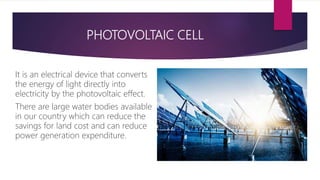
It is an electrical device that converts
the energy of light directly into
electricity by the photovoltaic effect.
There are large water bodies available
in our country which can reduce the
savings for land cost and can reduce
power generation expenditure.
METHODOLOGY
 It is a new concept for power generation by Solar photovoltaic system
installed over floating technology. This technology replaces the installation of
photovoltaic power plants on land.
 Floating solar power plants are installed on water surfaces, so these panels
are naturally cooled, due to which the temperature rise in the panels is less
compared to other solar panels. So the life time of panels increase due to
less stress on panels.
 Floating solar panels cost slightly higher than other solar panels, but
considering land scarcity, the floating solar installation cost is negligible.
METHODOLOGY
 It also provides other environmental benefits like reduction of evaporation.
 The system can also improve water quality. Solar panels acts as roof for the
water bodies, so the water will not exposed to sun and atmosphere, it adds a
beneficiation for drinking water plants.
 The organic matter growth such as algae will decrease, as solar panels acts
as cover to water.
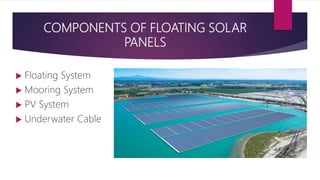
COMPONENTS OF FLOATING SOLAR
PANELS
 Floating System
 Mooring System
 PV System
 Underwater Cable
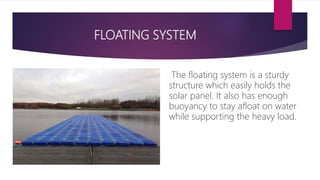
FLOATING SYSTEM
The floating system is a sturdy
structure which easily holds the
solar panel. It also has enough
buoyancy to stay afloat on water
while supporting the heavy load.
MOORING SYSTEM
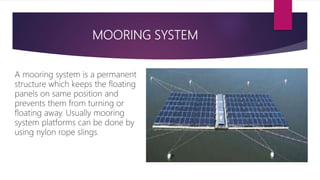
A mooring system is a permanent
structure which keeps the floating
panels on same position and
prevents them from turning or
floating away. Usually mooring
system platforms can be done by
using nylon rope slings.
PV SYSTEM
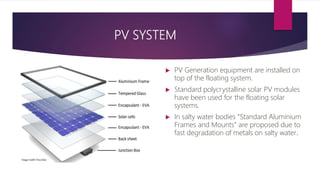
 PV Generation equipment are installed on
top of the floating system.
 Standard polycrystalline solar PV modules
have been used for the floating solar
systems.
 In salty water bodies “Standard Aluminium
Frames and Mounts” are proposed due to
fast degradation of metals on salty water.
UNDERWATER CABLES
 Underwater cable forms an important link between the grid and
the solar panels.
 Due to its usage under water, the cabling must be
a) Water proof
b)High temperature resistant and
c) strong
ADVANTAGES
 Floating solar power generating systems typically generate more electricity than
ground-mount and rooftop systems due to the cooling effect of the water.
 As the PV system is placed on a water surface, it avoids all the hurdles of land
acquisition and all the concerns of land consumption.
 Floating PV plants can reduce water loss due to evaporation, depending on the
surface covered and climate conditions.
 The cleaning water used in the floating PV system goes into the water body
again which can be reused leading to savings in water and its associated cost.
ADVANTAGES
 Floating PV plants improve water
quality, by blocking algae growth
through shading the water.
 Geographically any water body with
abundant sunlight can be used to
install floating plants.
 Technically and economically feasible.
CHALLENGES FOR INSTALLING FLOATING PV
 Electrical equipment, modules and
wiring must be water resistant.
 Effects on the environment must
be considered and the annual
fluctuation in reservoir water levels
must be taken into account during
construction.
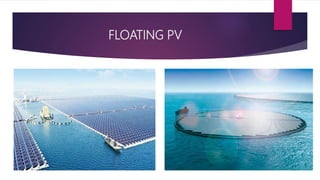
FLOATING PV
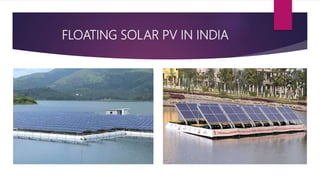
FLOATING SOLAR PV IN INDIA
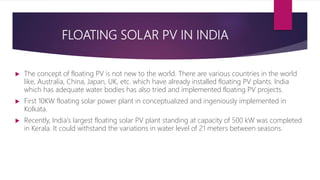
 The concept of floating PV is not new to the world. There are various countries in the world
like, Australia, China, Japan, UK, etc. which have already installed floating PV plants. India
which has adequate water bodies has also tried and implemented floating PV projects.
 First 10KW floating solar power plant in conceptualized and ingeniously implemented in
Kolkata.
 Recently, India's largest floating solar PV plant standing at capacity of 500 kW was completed
in Kerala. It could withstand the variations in water level of 21 meters between seasons.
FLOATING SOLAR PV IN INDIA
 India is currently making plans to build the world's largest floating
solar power plant.
 The plant is expected to produce 600 MW.
 The estimated investment in this project stands at RS 3000 crore.
 It will be set up in bodies of water in the state of Madhya Pradesh
on Narmada river .
FLOATING SOLAR PV IN INDIA
Floating solar PV: Overview

Floating solar PV: Overview

  • 1.
    FLOATING SOLAR POWERPLANT PRESENTED BY: VIVEHA S
  • 2.
    ABSTRACT  The constantdepletion of the fossil fuels and high energy demand focuses us to renewable energy sources which are not only the future unlimited source of energy, but also eco-friendly and sustainable.  Even though solar power generation has several advantages over other forms of electricity generation, it’s major problem is the requirement of land and its cost. A new era in solar power i.e., floating solar power plants will solve this issue. This floating solar plant can be installed in any water body which will not only decrease the cost of the land but will also raise the amount of power generation with the cooling effect of water. This paper presents the technical details of floating solar power plants. it involves solar panels and other components that are fitted onto a platform with hollow plastic or tin drums that enable it to float on water.
  • 3.
    INTRODUCTION  The everincreasing power demand & depletion of fossil fuels. Leads to shift our focus to renewable energy sources.  Wind & hydro energy sources are area specific.  PV can be installed ay any place.  Major issue of solar PV is the requirement of land.  But floating solar PV can be installed on any water body. It also results in the decrease of cost and increase in the amount of power generated due to cooling effect of water.
  • 4.
    PHOTOVOLTAIC CELL It isan electrical device that converts the energy of light directly into electricity by the photovoltaic effect. There are large water bodies available in our country which can reduce the savings for land cost and can reduce power generation expenditure.
  • 5.
    METHODOLOGY  It isa new concept for power generation by Solar photovoltaic system installed over floating technology. This technology replaces the installation of photovoltaic power plants on land.  Floating solar power plants are installed on water surfaces, so these panels are naturally cooled, due to which the temperature rise in the panels is less compared to other solar panels. So the life time of panels increase due to less stress on panels.  Floating solar panels cost slightly higher than other solar panels, but considering land scarcity, the floating solar installation cost is negligible.
  • 6.
    METHODOLOGY  It alsoprovides other environmental benefits like reduction of evaporation.  The system can also improve water quality. Solar panels acts as roof for the water bodies, so the water will not exposed to sun and atmosphere, it adds a beneficiation for drinking water plants.  The organic matter growth such as algae will decrease, as solar panels acts as cover to water.
  • 7.
    COMPONENTS OF FLOATINGSOLAR PANELS  Floating System  Mooring System  PV System  Underwater Cable
  • 8.
    FLOATING SYSTEM The floatingsystem is a sturdy structure which easily holds the solar panel. It also has enough buoyancy to stay afloat on water while supporting the heavy load.
  • 9.
    MOORING SYSTEM A mooringsystem is a permanent structure which keeps the floating panels on same position and prevents them from turning or floating away. Usually mooring system platforms can be done by using nylon rope slings.
  • 10.
    PV SYSTEM  PVGeneration equipment are installed on top of the floating system.  Standard polycrystalline solar PV modules have been used for the floating solar systems.  In salty water bodies “Standard Aluminium Frames and Mounts” are proposed due to fast degradation of metals on salty water.
  • 11.
    UNDERWATER CABLES  Underwatercable forms an important link between the grid and the solar panels.  Due to its usage under water, the cabling must be a) Water proof b)High temperature resistant and c) strong
  • 12.
    ADVANTAGES  Floating solarpower generating systems typically generate more electricity than ground-mount and rooftop systems due to the cooling effect of the water.  As the PV system is placed on a water surface, it avoids all the hurdles of land acquisition and all the concerns of land consumption.  Floating PV plants can reduce water loss due to evaporation, depending on the surface covered and climate conditions.  The cleaning water used in the floating PV system goes into the water body again which can be reused leading to savings in water and its associated cost.
  • 13.
    ADVANTAGES  Floating PVplants improve water quality, by blocking algae growth through shading the water.  Geographically any water body with abundant sunlight can be used to install floating plants.  Technically and economically feasible.
  • 14.
    CHALLENGES FOR INSTALLINGFLOATING PV  Electrical equipment, modules and wiring must be water resistant.  Effects on the environment must be considered and the annual fluctuation in reservoir water levels must be taken into account during construction.
  • 15.
  • 16.
    FLOATING SOLAR PVIN INDIA  The concept of floating PV is not new to the world. There are various countries in the world like, Australia, China, Japan, UK, etc. which have already installed floating PV plants. India which has adequate water bodies has also tried and implemented floating PV projects.  First 10KW floating solar power plant in conceptualized and ingeniously implemented in Kolkata.  Recently, India's largest floating solar PV plant standing at capacity of 500 kW was completed in Kerala. It could withstand the variations in water level of 21 meters between seasons.
  • 17.
    FLOATING SOLAR PVIN INDIA  India is currently making plans to build the world's largest floating solar power plant.  The plant is expected to produce 600 MW.  The estimated investment in this project stands at RS 3000 crore.  It will be set up in bodies of water in the state of Madhya Pradesh on Narmada river .
  • 18.