THE SOLAR SYSTEM AND BEYOND
By Hassaan Anjum
THE SUN, EARTH AND MOON
If you were given a light source, a tennis ball and a football, how would you use
them to represent the Sun, Earth, and moon? The Sun, Earth, and Moon cannot be
represented accurately by models or diagrams because the Sun is much bigger
than the Earth and the Moon and is very far away from them.
1. THE SUN
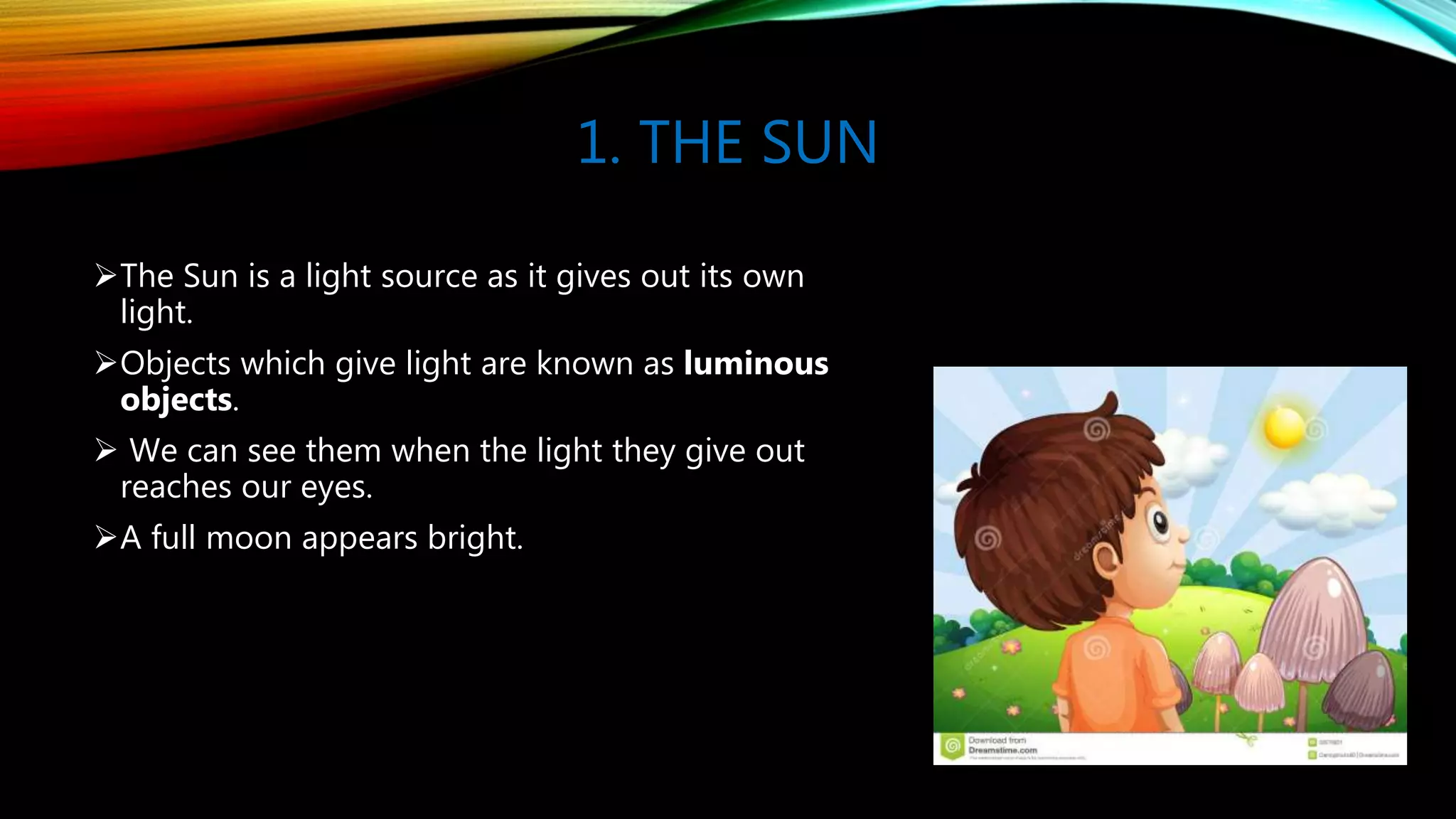
The Sun is a light source as it gives out its own
light.
Objects which give light are known as luminous
objects.
 We can see them when the light they give out
reaches our eyes.
A full moon appears bright.
2. THE MOON
Non-luminous objects
Not all bright objects are light sources.
Objects which not give out light are non-
luminous objects. We can see them
when they reflect light into our eyes.
Moon
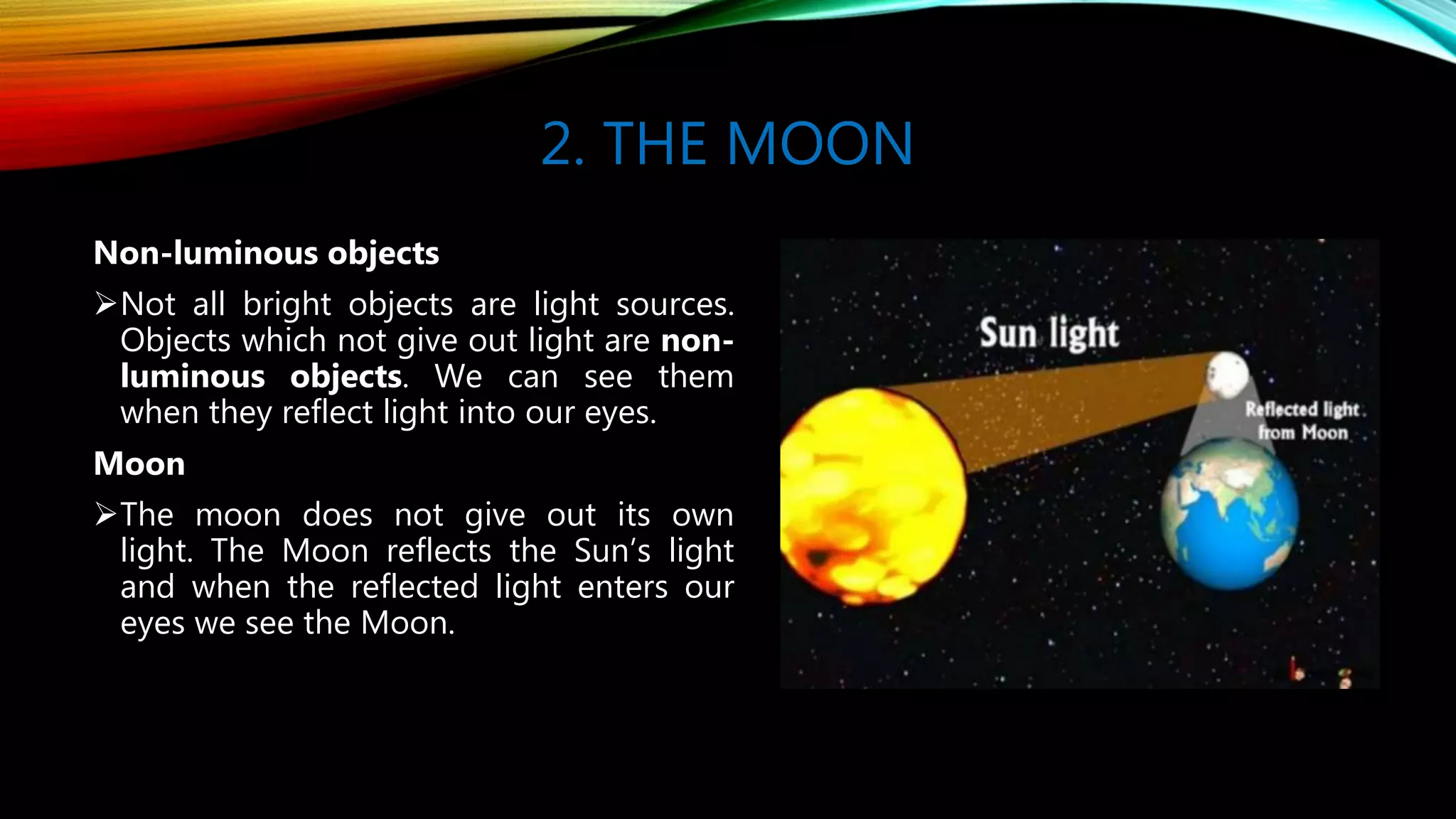
The moon does not give out its own
light. The Moon reflects the Sun’s light
and when the reflected light enters our
eyes we see the Moon.
3.THE EARTH
The Earth, like the Moon, is a non-luminous object.
What is the cause of a year?
It was believed that the Earth was the center of the
universe, and that the Sun revolves around the Earth.
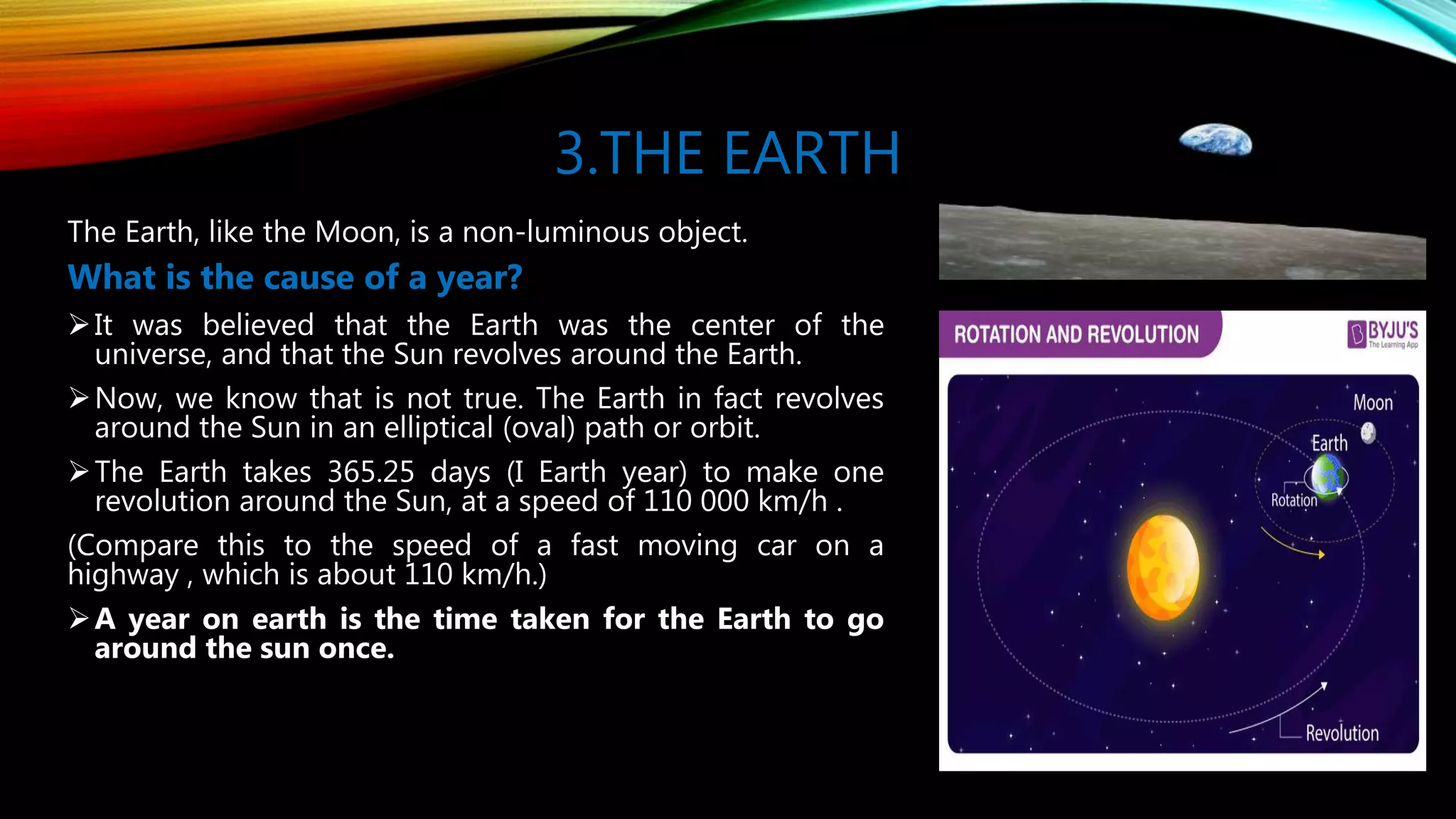
Now, we know that is not true. The Earth in fact revolves
around the Sun in an elliptical (oval) path or orbit.
The Earth takes 365.25 days (I Earth year) to make one
revolution around the Sun, at a speed of 110 000 km/h .
(Compare this to the speed of a fast moving car on a
highway , which is about 110 km/h.)
A year on earth is the time taken for the Earth to go
around the sun once.
What is the cause of a day?
The Sun rises in the morning and seems to move gradually across the sky from east
to west in the day before setting.
 people used to think that the Sun revolved around the Earth because of the apparent movement of the
Sun across the sky. Now we know better. Imagine that you are in a moving car. The trees and building’s
around seem to be moving past you. However ,this apparent movement of the scenery is due to the
movement of the car. Similarly, the sun appears to move because the Earth has moving.
The day is on the side of the Earth which is facing the Sun and the side away from
the Sun has night.
ECLIPSES
There are two types of eclipses:
1.Solar eclipse
2.Lunar eclipse
SOLAR ECLIPSE
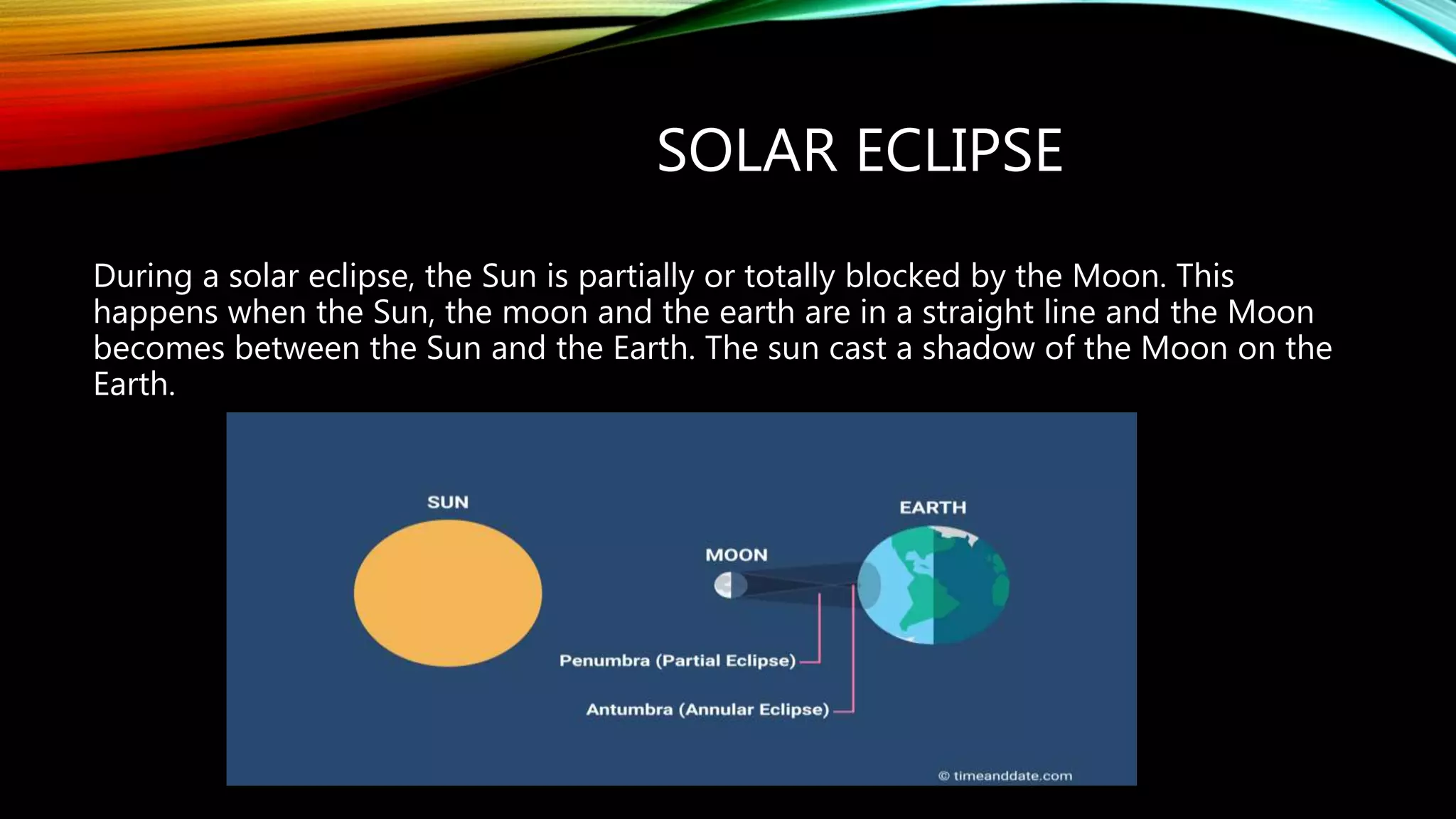
During a solar eclipse, the Sun is partially or totally blocked by the Moon. This
happens when the Sun, the moon and the earth are in a straight line and the Moon
becomes between the Sun and the Earth. The sun cast a shadow of the Moon on the
Earth.
LUNAR ECLIPSE
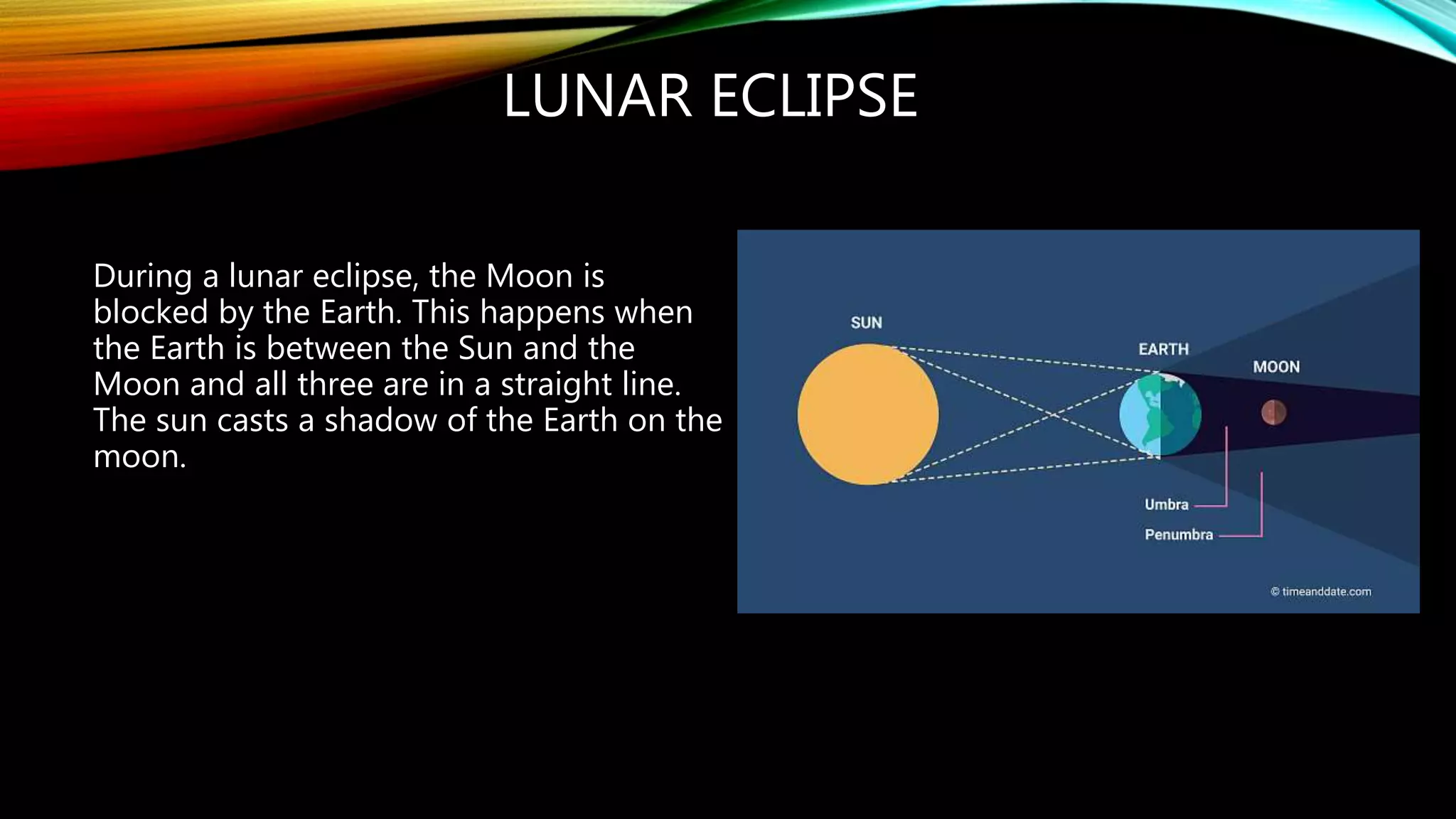
During a lunar eclipse, the Moon is
blocked by the Earth. This happens when
the Earth is between the Sun and the
Moon and all three are in a straight line.
The sun casts a shadow of the Earth on the
moon.
SEASONS
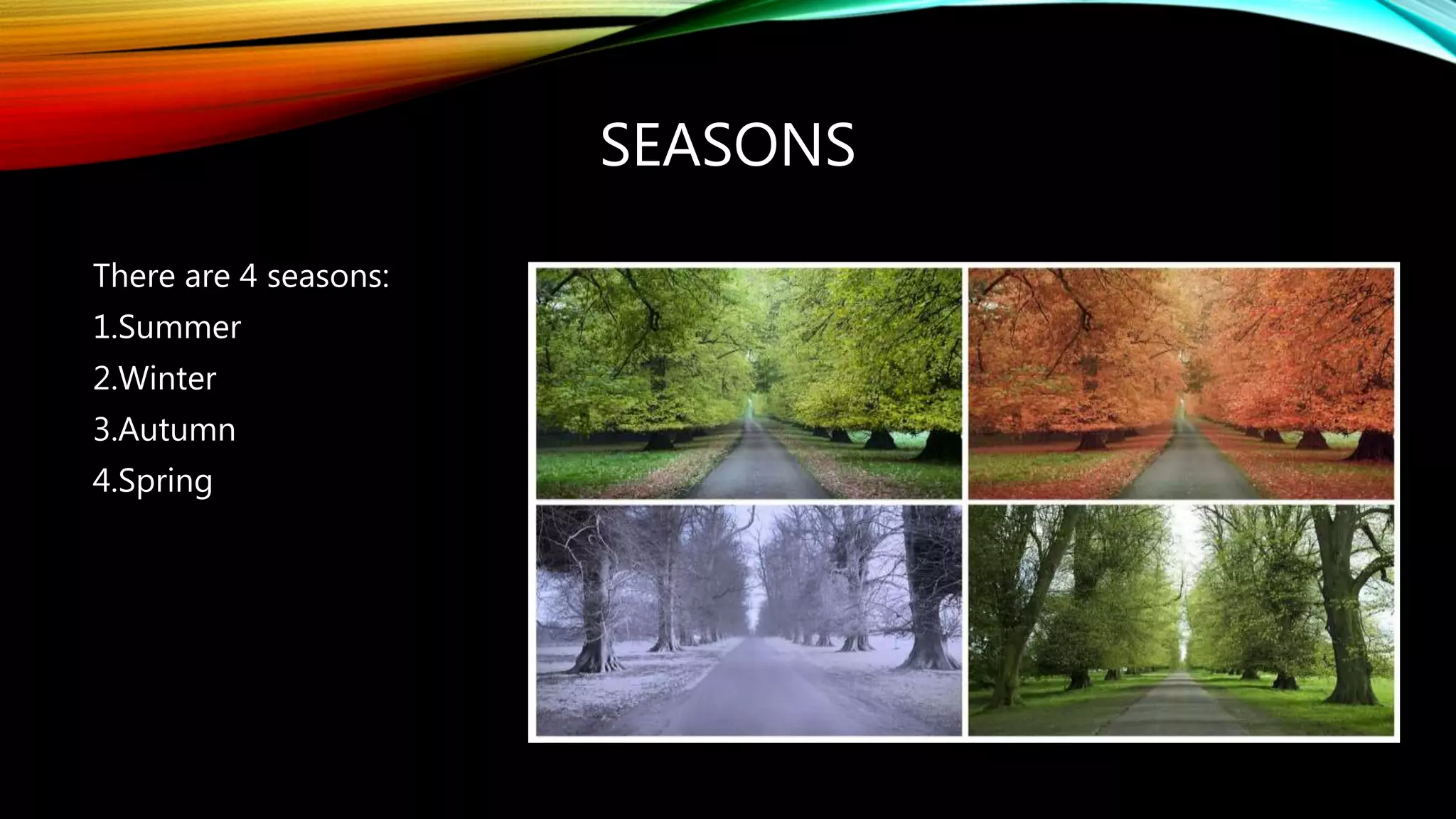
There are 4 seasons:
1.Summer
2.Winter
3.Autumn
4.Spring
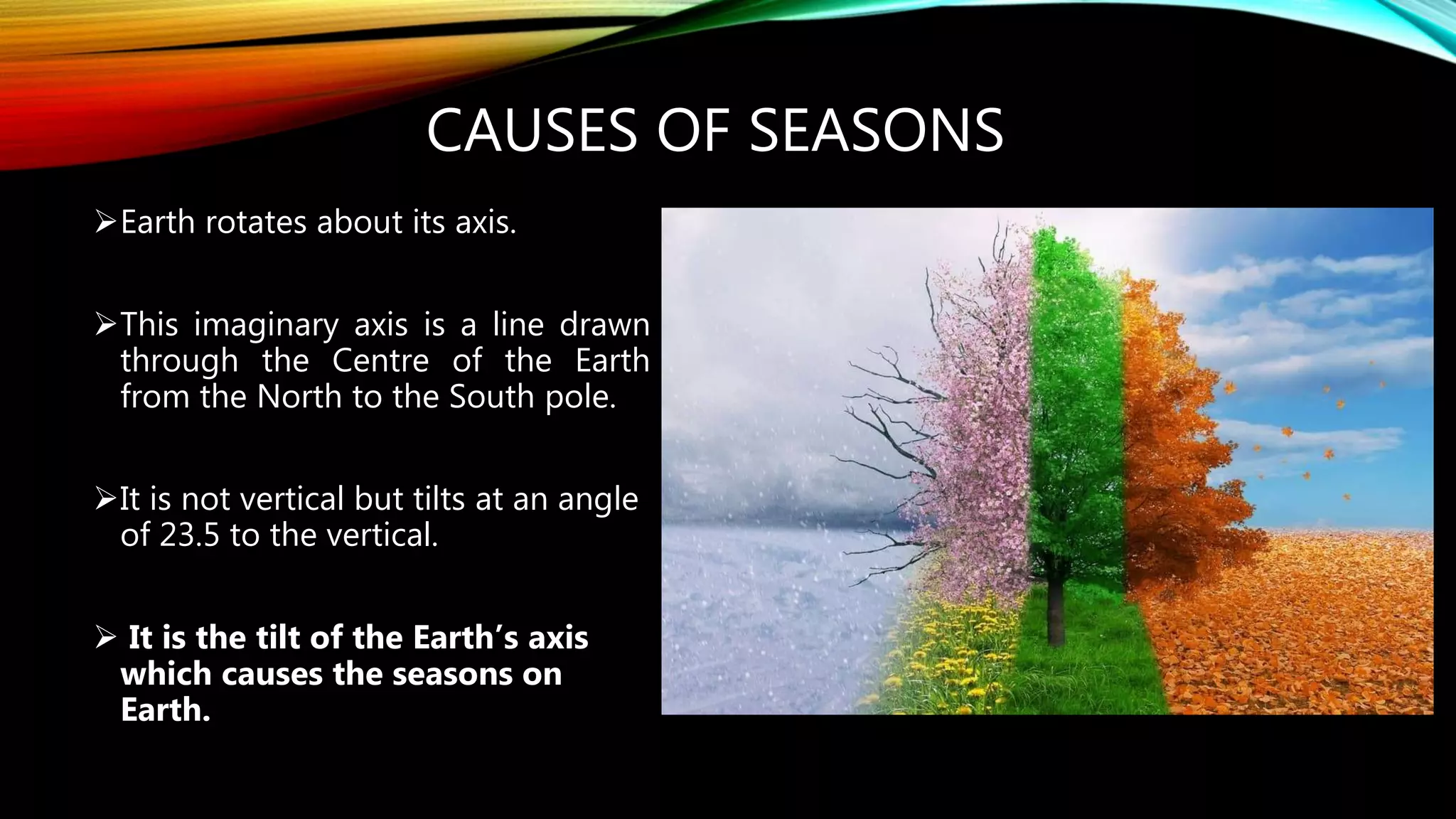
CAUSES OF SEASONS
Earth rotates about its axis.
This imaginary axis is a line drawn
through the Centre of the Earth
from the North to the South pole.
It is not vertical but tilts at an angle
of 23.5 to the vertical.
 It is the tilt of the Earth’s axis
which causes the seasons on
Earth.
SOLAR SYSTEM
SOLAR SYSTEM
 Revolving around the Sun in elliptical orbits are eight planet
 The inner planets are separated from the outer planets by an asteroid belt.
 The four outer planets are gas giants.
 All the planets, with the exception of Mercury, Venus, have Moons revolving around them.
 The Sun together with the planets and their moons, asteroids and other objects which orbit
the Sun make up the Solar System.
 The Sun makes up more than 99% of the total mass of the Solar System and it’s Gravity pulls
the other objects in the Solar System to revolve around it.
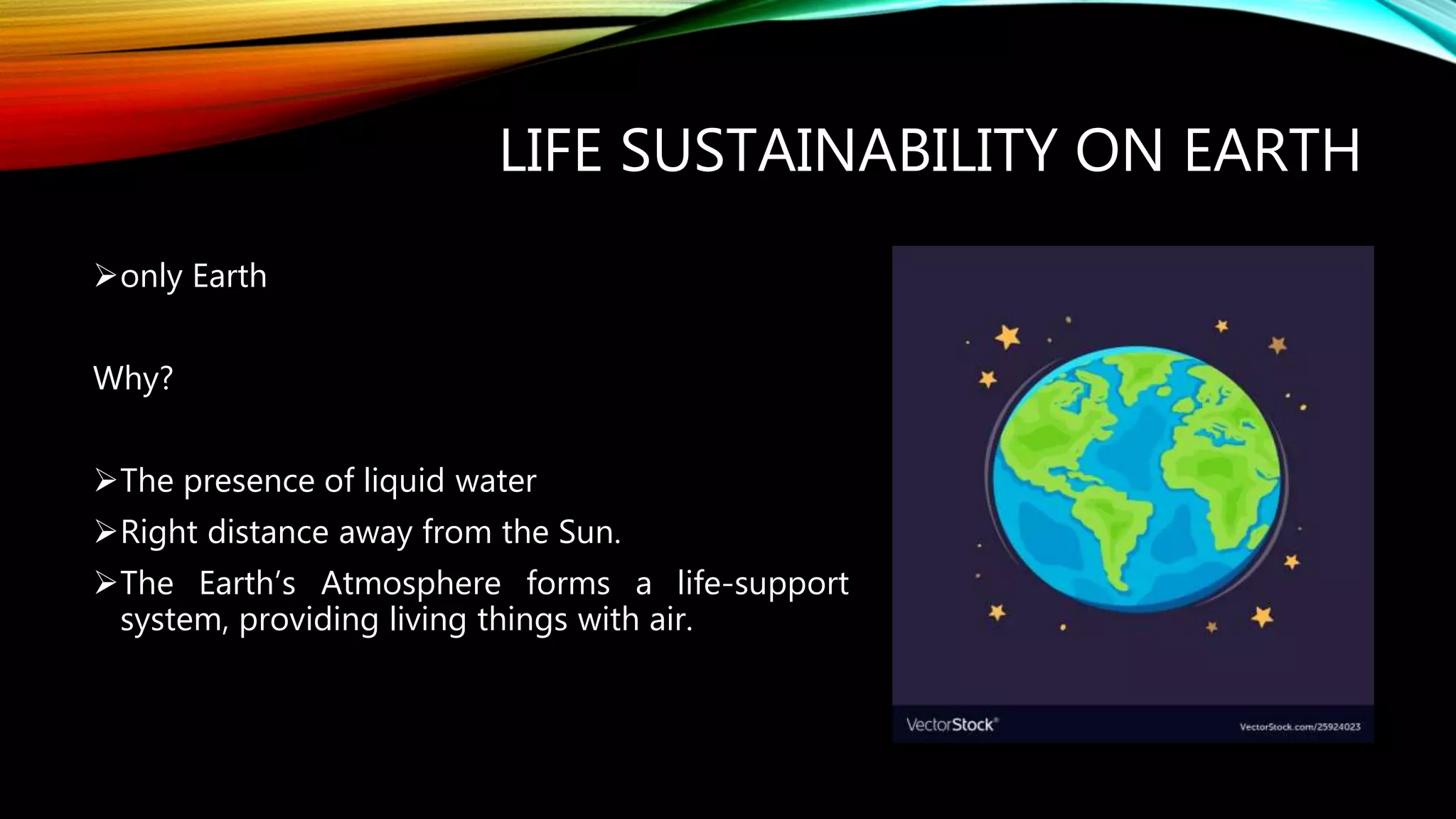
LIFE SUSTAINABILITY ON EARTH
only Earth
Why?
The presence of liquid water
Right distance away from the Sun.
The Earth’s Atmosphere forms a life-support
system, providing living things with air.

Solar System and Beyond | by M.Hassaan Anjum

  • 1.
    THE SOLAR SYSTEMAND BEYOND By Hassaan Anjum
  • 2.
    THE SUN, EARTHAND MOON If you were given a light source, a tennis ball and a football, how would you use them to represent the Sun, Earth, and moon? The Sun, Earth, and Moon cannot be represented accurately by models or diagrams because the Sun is much bigger than the Earth and the Moon and is very far away from them.
  • 3.
    1. THE SUN TheSun is a light source as it gives out its own light. Objects which give light are known as luminous objects.  We can see them when the light they give out reaches our eyes. A full moon appears bright.
  • 4.
    2. THE MOON Non-luminousobjects Not all bright objects are light sources. Objects which not give out light are non- luminous objects. We can see them when they reflect light into our eyes. Moon The moon does not give out its own light. The Moon reflects the Sun’s light and when the reflected light enters our eyes we see the Moon.
  • 5.
    3.THE EARTH The Earth,like the Moon, is a non-luminous object. What is the cause of a year? It was believed that the Earth was the center of the universe, and that the Sun revolves around the Earth. Now, we know that is not true. The Earth in fact revolves around the Sun in an elliptical (oval) path or orbit. The Earth takes 365.25 days (I Earth year) to make one revolution around the Sun, at a speed of 110 000 km/h . (Compare this to the speed of a fast moving car on a highway , which is about 110 km/h.) A year on earth is the time taken for the Earth to go around the sun once.
  • 6.
    What is thecause of a day? The Sun rises in the morning and seems to move gradually across the sky from east to west in the day before setting.  people used to think that the Sun revolved around the Earth because of the apparent movement of the Sun across the sky. Now we know better. Imagine that you are in a moving car. The trees and building’s around seem to be moving past you. However ,this apparent movement of the scenery is due to the movement of the car. Similarly, the sun appears to move because the Earth has moving. The day is on the side of the Earth which is facing the Sun and the side away from the Sun has night.
  • 7.
    ECLIPSES There are twotypes of eclipses: 1.Solar eclipse 2.Lunar eclipse
  • 8.
    SOLAR ECLIPSE During asolar eclipse, the Sun is partially or totally blocked by the Moon. This happens when the Sun, the moon and the earth are in a straight line and the Moon becomes between the Sun and the Earth. The sun cast a shadow of the Moon on the Earth.
  • 9.
    LUNAR ECLIPSE During alunar eclipse, the Moon is blocked by the Earth. This happens when the Earth is between the Sun and the Moon and all three are in a straight line. The sun casts a shadow of the Earth on the moon.
  • 10.
    SEASONS There are 4seasons: 1.Summer 2.Winter 3.Autumn 4.Spring
  • 11.
    CAUSES OF SEASONS Earthrotates about its axis. This imaginary axis is a line drawn through the Centre of the Earth from the North to the South pole. It is not vertical but tilts at an angle of 23.5 to the vertical.  It is the tilt of the Earth’s axis which causes the seasons on Earth.
  • 12.
  • 13.
    SOLAR SYSTEM  Revolvingaround the Sun in elliptical orbits are eight planet  The inner planets are separated from the outer planets by an asteroid belt.  The four outer planets are gas giants.  All the planets, with the exception of Mercury, Venus, have Moons revolving around them.  The Sun together with the planets and their moons, asteroids and other objects which orbit the Sun make up the Solar System.  The Sun makes up more than 99% of the total mass of the Solar System and it’s Gravity pulls the other objects in the Solar System to revolve around it.
  • 14.
    LIFE SUSTAINABILITY ONEARTH only Earth Why? The presence of liquid water Right distance away from the Sun. The Earth’s Atmosphere forms a life-support system, providing living things with air.