
SUBMITTED TO

SUBMITTED BY

MR. ASHWANI SHARMA

VINAY SHARMA
B.TECH (M.E) 6TH SEM

DEPT. OF MECHANICAL ENGINEERING
SHOOLINI UNIVERSITY
INTRODUCTION
 OBJECTIVE
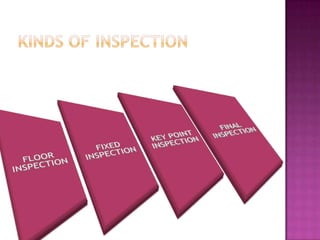
 KINDS OF INSPECTION


I.
II.
III.
IV.




FLOOR INSPECTION
FIXED INSPECTION
KEY POINT INSPECTION
FINAL INSPECTION
METHODS OF INSPECTIO
INSPECTION


ACT OF CHECKING WHETHER A COMPONENT
ACTUALLY DOES ITS WORK AS DESIRE……….



CHECKING THE ACCEPTABILIT OF
MANUFACTURED PRODUCT……



MEASURE THE QUALITY OF PRODUCT WITH
PREDECIDED STANDARDS

THE


SEPRATE DEFACTIVE COMPONENT AND THUS
ENSURE THE QUALITY OF PRODUCT



PREVENT FURTHER WORK ON SEMI FINISHED
PRODUCT ALREADY DETECTED AS SPOILED



MAKES OPERATION SAFE



DETECT SOURCES OF WEAKNESS AND TROUBLE
IN FINISHED PRODUCT



BUILTS UP THE REPUTATION



REDUCING NUMBER OF COMPLAINTS
 HELPS

CATCHING ERRORS DURING PROCESS

 SAMPLE

OF WORK IS CHECKED OF VARIOUS
MACHINE OPERATOR OR WORKERS

 CHECKING

IS DONE BEFORE THE FINAL
PRODUCT IS READY

 ELIMINATES

CENTRALIZATION
•

WORK IS BROUGHT TO INSPECTOR TO CHECK

•

DISCOVERS DEFECTS AFTER THE JOB HAS
BEEN COMPLETED

•

WHEN INSPECTION TOOLS CAN NOT BE
BROUGHT TO THE SHOP FLOOR

•

SORT OF CENTRALIZED INSPECTION
o

KEY POINT IS A STAGE BEYOND WHICH IT IS
NOT CAPABLE OF REWORK

o

EVERY PRODUCT HAS A KEY POINT IN ITS
PROCESS OF MANUFACTURE

o

IT AVOIDS FURTHER EXPENDITURE ON POOR
PARTS
 IT

CHECK ITS APPEARANCE AND
PERFORMANCE

 DESTRUCTIVE

AND NON DESTRUCTIVE
INSPECTION METHODS SUCH AS
TENSILE, FATIGUE, IMPACT, TENSILE ETC.,ARE
AVAILABLE FOR FINAL INSPECTION.

 FINAL

INSPECTION IS THE CENTRALIZED
INSPECTION
 Judgment


Inspection

Inspection That Discovers Defects

 Informative


Inspection That Reduces Defects

 Source


Inspection

Inspection

Inspection That Eliminates Defects
Visual

Testing

Liquid

Penetrant Testing:

Magnetic

Particle Testing:

Ultrasonic

Testing:

Electromagnetic
Radiographic

Testing:

Testing:
o

inspect the surface of the material for any
indications of a discontinuity or interruption
in the normal surface configuration.
 Dimensional measuring and optical aid tools
may be used.
 Advantages: To make the best judgment for
the method and technique used.
 Limitations: Surface inspection only. Difficult
to find small cracks.
 Process:

Apply a penetrating liquid to the
test material surface, Remove, Dry, Develop
and the Inspect part.
 Advantages: A wide variety of materials can
be tested. Inspection is simple, fast and
relatively economical.
 Limitations: Surface flaw detection only. Part
surface requires a thorough cleaning or
etching.

 Process:

Magnetize part and apply iron oxide
particles to the part surface.
 Flaws will attract particles giving an
indication of the location of the flaws.
 Advantage: Surface and near subsurface flaw
detection potential and linear indication
sensitivity.
 Limitations: Method is restricted to a select
group of ferromagnetic test materials only.
 Process:

Transmit high frequency sound
waves vibrations into the test material,
 Sound reflections caused by flaws produce
displayed signals.
 Advantages:

Surface and deep subsurface
flaw location detection capabilities.

 Limitations:

Part geometry, flaw orientation.
 INSPECTION

IS VERY IMPORTANT BEFORE OR
AFTER MANUFACTURING THE PRODUCT OR
SERVICE TO ENHANCE THE QUALITY AND
GROWTH OF THAT ORGANISATION .
THE END

solar air heater technology

  • 1.
    SUBMITTED TO SUBMITTED BY MR.ASHWANI SHARMA VINAY SHARMA B.TECH (M.E) 6TH SEM DEPT. OF MECHANICAL ENGINEERING SHOOLINI UNIVERSITY
  • 2.
    INTRODUCTION  OBJECTIVE  KINDSOF INSPECTION  I. II. III. IV.   FLOOR INSPECTION FIXED INSPECTION KEY POINT INSPECTION FINAL INSPECTION METHODS OF INSPECTIO
  • 3.
    INSPECTION  ACT OF CHECKINGWHETHER A COMPONENT ACTUALLY DOES ITS WORK AS DESIRE……….  CHECKING THE ACCEPTABILIT OF MANUFACTURED PRODUCT……  MEASURE THE QUALITY OF PRODUCT WITH PREDECIDED STANDARDS THE
  • 4.
     SEPRATE DEFACTIVE COMPONENTAND THUS ENSURE THE QUALITY OF PRODUCT  PREVENT FURTHER WORK ON SEMI FINISHED PRODUCT ALREADY DETECTED AS SPOILED  MAKES OPERATION SAFE  DETECT SOURCES OF WEAKNESS AND TROUBLE IN FINISHED PRODUCT  BUILTS UP THE REPUTATION  REDUCING NUMBER OF COMPLAINTS
  • 6.
     HELPS CATCHING ERRORSDURING PROCESS  SAMPLE OF WORK IS CHECKED OF VARIOUS MACHINE OPERATOR OR WORKERS  CHECKING IS DONE BEFORE THE FINAL PRODUCT IS READY  ELIMINATES CENTRALIZATION
  • 7.
    • WORK IS BROUGHTTO INSPECTOR TO CHECK • DISCOVERS DEFECTS AFTER THE JOB HAS BEEN COMPLETED • WHEN INSPECTION TOOLS CAN NOT BE BROUGHT TO THE SHOP FLOOR • SORT OF CENTRALIZED INSPECTION
  • 8.
    o KEY POINT ISA STAGE BEYOND WHICH IT IS NOT CAPABLE OF REWORK o EVERY PRODUCT HAS A KEY POINT IN ITS PROCESS OF MANUFACTURE o IT AVOIDS FURTHER EXPENDITURE ON POOR PARTS
  • 9.
     IT CHECK ITSAPPEARANCE AND PERFORMANCE  DESTRUCTIVE AND NON DESTRUCTIVE INSPECTION METHODS SUCH AS TENSILE, FATIGUE, IMPACT, TENSILE ETC.,ARE AVAILABLE FOR FINAL INSPECTION.  FINAL INSPECTION IS THE CENTRALIZED INSPECTION
  • 10.
     Judgment  Inspection Inspection ThatDiscovers Defects  Informative  Inspection That Reduces Defects  Source  Inspection Inspection Inspection That Eliminates Defects
  • 11.
  • 12.
    o inspect the surfaceof the material for any indications of a discontinuity or interruption in the normal surface configuration.  Dimensional measuring and optical aid tools may be used.  Advantages: To make the best judgment for the method and technique used.  Limitations: Surface inspection only. Difficult to find small cracks.
  • 13.
     Process: Apply apenetrating liquid to the test material surface, Remove, Dry, Develop and the Inspect part.  Advantages: A wide variety of materials can be tested. Inspection is simple, fast and relatively economical.  Limitations: Surface flaw detection only. Part surface requires a thorough cleaning or etching. 
  • 14.
     Process: Magnetize partand apply iron oxide particles to the part surface.  Flaws will attract particles giving an indication of the location of the flaws.  Advantage: Surface and near subsurface flaw detection potential and linear indication sensitivity.  Limitations: Method is restricted to a select group of ferromagnetic test materials only.
  • 15.
     Process: Transmit highfrequency sound waves vibrations into the test material,  Sound reflections caused by flaws produce displayed signals.  Advantages: Surface and deep subsurface flaw location detection capabilities.  Limitations: Part geometry, flaw orientation.
  • 16.
     INSPECTION IS VERYIMPORTANT BEFORE OR AFTER MANUFACTURING THE PRODUCT OR SERVICE TO ENHANCE THE QUALITY AND GROWTH OF THAT ORGANISATION .
  • 17.