SOIL POLLUTION Dr. Geetanjali Kaushik AIES
SOIL Soil is a thin covering over the land consisting of a mixture of minerals, organic material, living organisms, air and water that together support the growth of plant life. This includes  weathering of rocks  due to temperature changes and abrasion, wind, moving water, glaciers and lichens.
Climate and time are important in the development of soils. Extremely dry or cold climates  develop soils very  slowly  while  humid and warm climates  develop them more  rapidly .  Under  ideal climatic conditions  soft parent material may develop into a  centimeter of soil within 15 years .  Under  poor climatic conditions  a  hard parent material  may require  hundreds of years to develop into soil .
SOIL PROFILE Mature soils are arranged in a series of zones called soil horizons . Each horizon has a distinct texture and composition that varies with different types of soils.  A cross sectional view of the horizons in a soil is called a soil profile. The top layer or the surface litter layer called the O horizon consists mostly of freshly fallen leaves, twigs, animal waste, fungi and other organic materials . Normally it is  brown or black . The  uppermost layer of the soil called the A horizon  consists of  partially decomposed organic matter (humus) and some inorganic mineral particles . It is usually  darker and looser than the deeper layers . The  roots of most plants  are found in these two upper layers. These two top layers also contain a large amount of  bacteria, fungi, earthworms and other small insects  that form complex food webs in the soil that help recycle soil nutrients and contribute to soil fertility.
The  B horizon  often called the  subsoil  contains less organic material and fewer organisms  than the A horizon.  The area below the subsoil is called the  C horizon  and consists of  weathered parent material . This parent material does not contain any organic materials.  The chemical composition of the C-horizon helps to determine pH of the soil and also influences the soil’s rate of water absorption and retention.
Soils vary in their content of clay (very fine particles), silt (fine particles), sand (medium size particles) and gravel (coarse to very coarse particles). The relative amounts of the different sizes and types of mineral particles determine soil texture.  Soils with approximately equal mixtures of clay, sand, silt and humus are called loams.
Causes of Soil Degradation Soil erosion  can be defined as the movement of surface litter and topsoil from one place to another. While erosion is a natural process often caused by wind and flowing water it is greatly accelerated by human activities such as farming, construction, overgrazing by livestock, burning of grass cover and deforestation. Loss of the topsoil makes a soil less fertile and reduces its water holding capacity. The topsoil, which is washed away, also contributes to water pollution clogging lakes, increasing turbidity of the water and also leads to loss of aquatic life
For one inch of topsoil to be formed it normally requires 200-1000 years depending upon the climate and soil type.  Thus if the topsoil erodes faster than it is formed the soil becomes a non-renewable resource. Persistent pesticides  once applied are effective for a long time. However as they do not break down easily they  tend to accumulate  in the soil and in the bodies of animals in the food chain.
Loss of soil fertility  - When crops are harvested a large amount of macronutrients and a small amount of micronutrients are removed with the crops. If the same crop is grown again depleted levels of thee nutrients can result in decreased yields.
Excess salts and water Irrigated lands can produce crop yields much higher than those that only use rainwater. However this has its own set of ill effects.  Irrigation water contains dissolved salts and in dry climates much of the water in the saline solution evaporates leaving its salts such as sodium chloride in the topsoil.  The accumulation of these salts is called salinization, which can stunt plant growth, lower yields and eventually kill the crop and render the land useless for agriculture.
Problems with pesticide use Pesticides not only kill the pests but also a large variety of living things including humans. They may be persistent or non-persistent.  Persistent pesticides once applied are effective for a long time. However as they do not break down easily they tend to accumulate in the soil and in the bodies of animals in the food chain.
DDT which was one of the first synthetic organic insecticide to be used During the first ten years of its use (1942-1952) DDT is estimated to have saved about five million lives because of its use to control disease carrying mosquitoes.  However after a period of use many mosquitoes and insects became tolerant of DDT, thus making it lose its effectiveness. DDT in temperate regions of the world has a half life (the amount of time required for half of the chemical to decompose) of 10 to 15 years. This means that if 100 kilograms of DDT were to be sprayed over an area, 50 kilograms would still be present in the area 10 to 15 years later.
Persistent pesticides may also accumulate in bodies of animals, and over a period of time increase in concentration if the animal is unable to flush them out of its system thus leading to the bioaccumulation.  When an affected animal is eaten by another carnivore these pesticides are further concentrated in the body of the carnivore. This phenomenon of acquiring increasing levels of a substance in the bodies of higher trophic level organisms is known as biomagnification.
Other problems associated with insecticides is the  ability of insect populations to become resistant to them  thus rendering them useless in a couple of generations.  Most pesticides  kill beneficial as well as pest species . They kill the predator as well as the parasitic insects that control the pests. Thus the pest species increase rapidly following the use of a pesticide as there are no natural checks to their population growth.  Short term and the long-term health effects  to the persons using the pesticide and the public that consumes the food grown by using the pesticides are also major concerns.  Exposure to small quantities of pesticides over several years  can cause mutations, produce  cancers , etc.
3 main reasons for use of pesticides Firstly the use of pesticides in the short term has increased the amount of food that can be grown in many parts of the world as the damage by pests is decreased. The second reason for its extensive use is based on an economic consideration. The increased yields more than compensates the farmer for cost of pesticides.  Thirdly current health problems especially in developing countries due to mosquitoes are impossible to control without insecticides.
Alternative Approaches Organic agriculture  advocates avoiding the use of chemical fertilizers and pesticides.  Leaving crop residues on the soil and incorporating them into the soil reduces erosion and increase soil organic matter.  Crop rotation is an effective way to enhance soil fertility, reduce erosion and control pests.
Use of integrated pest management -  It uses a complete understanding of all ecological aspects of a crop and the particular pests to which it is susceptible to establish pest control strategies that uses no or few pesticides. IPM promotes the  use of biopesticides eg.  neem ( Azadirachta indica ).
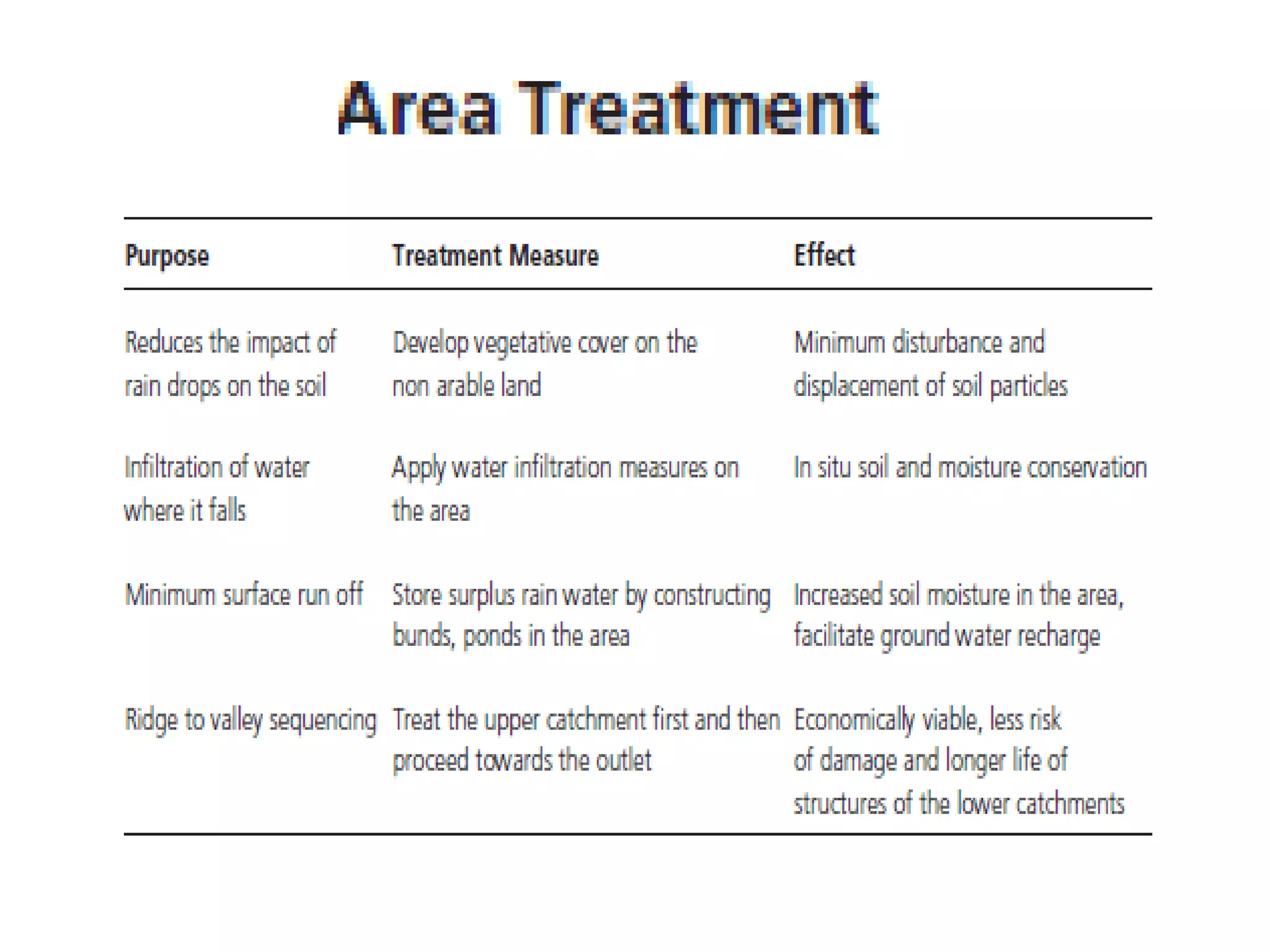
Solution Proper soil conservation measures are used to minimize the loss of top soil.  There are several techniques that can protect soil from erosion. Today both water and soil are conserved through integrated treatment methods.
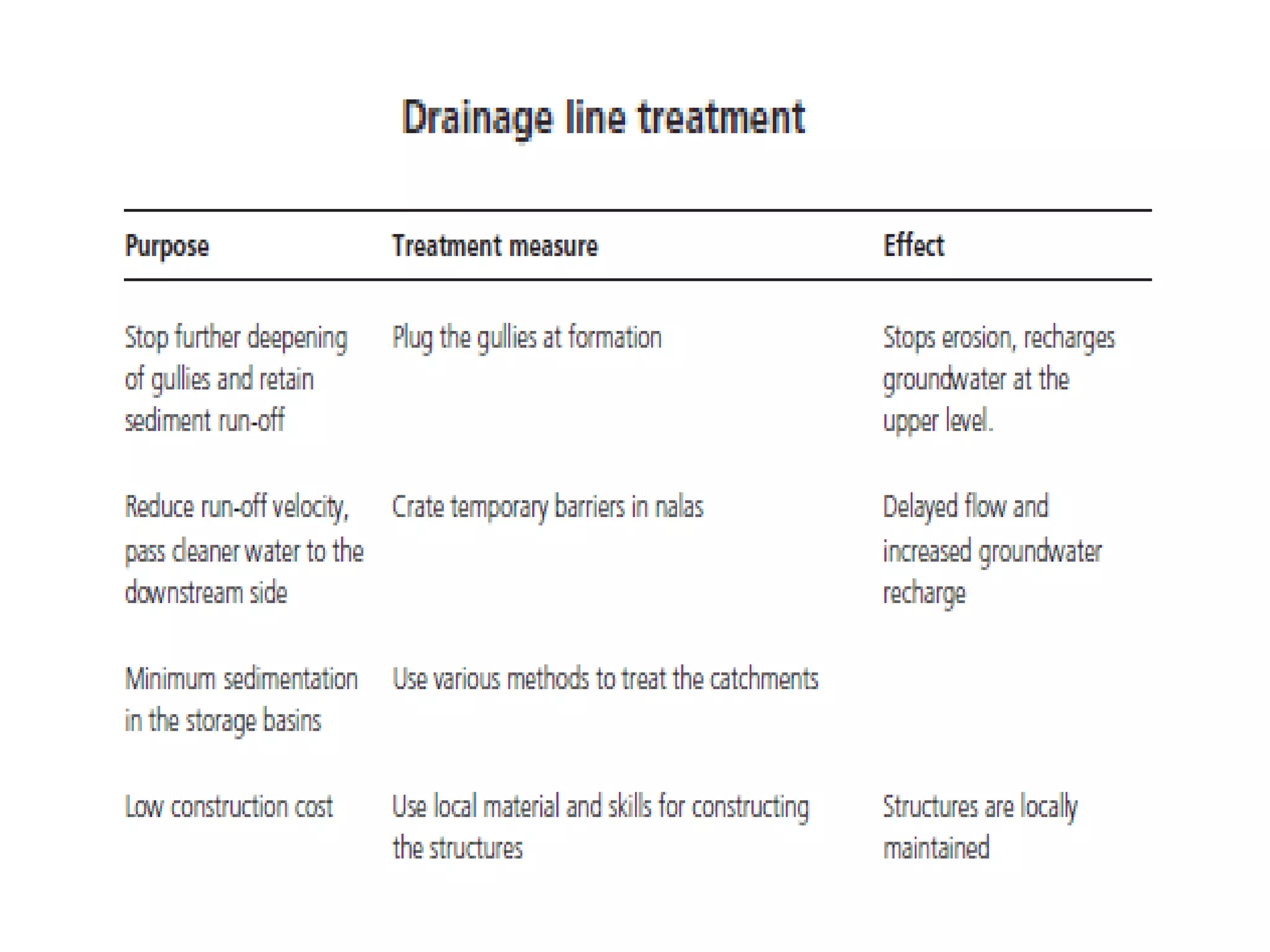
2 types of treatment generally used •  Area treatment which involves treating the land Drainage line treatment which involves treating the natural water courses (nalas)


Soil pollution

  • 1.
    SOIL POLLUTION Dr.Geetanjali Kaushik AIES
  • 2.
    SOIL Soil isa thin covering over the land consisting of a mixture of minerals, organic material, living organisms, air and water that together support the growth of plant life. This includes weathering of rocks due to temperature changes and abrasion, wind, moving water, glaciers and lichens.
  • 3.
    Climate and timeare important in the development of soils. Extremely dry or cold climates develop soils very slowly while humid and warm climates develop them more rapidly . Under ideal climatic conditions soft parent material may develop into a centimeter of soil within 15 years . Under poor climatic conditions a hard parent material may require hundreds of years to develop into soil .
  • 4.
    SOIL PROFILE Maturesoils are arranged in a series of zones called soil horizons . Each horizon has a distinct texture and composition that varies with different types of soils. A cross sectional view of the horizons in a soil is called a soil profile. The top layer or the surface litter layer called the O horizon consists mostly of freshly fallen leaves, twigs, animal waste, fungi and other organic materials . Normally it is brown or black . The uppermost layer of the soil called the A horizon consists of partially decomposed organic matter (humus) and some inorganic mineral particles . It is usually darker and looser than the deeper layers . The roots of most plants are found in these two upper layers. These two top layers also contain a large amount of bacteria, fungi, earthworms and other small insects that form complex food webs in the soil that help recycle soil nutrients and contribute to soil fertility.
  • 5.
    The Bhorizon often called the subsoil contains less organic material and fewer organisms than the A horizon. The area below the subsoil is called the C horizon and consists of weathered parent material . This parent material does not contain any organic materials. The chemical composition of the C-horizon helps to determine pH of the soil and also influences the soil’s rate of water absorption and retention.
  • 6.
    Soils vary intheir content of clay (very fine particles), silt (fine particles), sand (medium size particles) and gravel (coarse to very coarse particles). The relative amounts of the different sizes and types of mineral particles determine soil texture. Soils with approximately equal mixtures of clay, sand, silt and humus are called loams.
  • 7.
    Causes of SoilDegradation Soil erosion can be defined as the movement of surface litter and topsoil from one place to another. While erosion is a natural process often caused by wind and flowing water it is greatly accelerated by human activities such as farming, construction, overgrazing by livestock, burning of grass cover and deforestation. Loss of the topsoil makes a soil less fertile and reduces its water holding capacity. The topsoil, which is washed away, also contributes to water pollution clogging lakes, increasing turbidity of the water and also leads to loss of aquatic life
  • 8.
    For one inchof topsoil to be formed it normally requires 200-1000 years depending upon the climate and soil type. Thus if the topsoil erodes faster than it is formed the soil becomes a non-renewable resource. Persistent pesticides once applied are effective for a long time. However as they do not break down easily they tend to accumulate in the soil and in the bodies of animals in the food chain.
  • 9.
    Loss of soilfertility - When crops are harvested a large amount of macronutrients and a small amount of micronutrients are removed with the crops. If the same crop is grown again depleted levels of thee nutrients can result in decreased yields.
  • 10.
    Excess salts andwater Irrigated lands can produce crop yields much higher than those that only use rainwater. However this has its own set of ill effects. Irrigation water contains dissolved salts and in dry climates much of the water in the saline solution evaporates leaving its salts such as sodium chloride in the topsoil. The accumulation of these salts is called salinization, which can stunt plant growth, lower yields and eventually kill the crop and render the land useless for agriculture.
  • 11.
    Problems with pesticideuse Pesticides not only kill the pests but also a large variety of living things including humans. They may be persistent or non-persistent. Persistent pesticides once applied are effective for a long time. However as they do not break down easily they tend to accumulate in the soil and in the bodies of animals in the food chain.
  • 12.
    DDT which wasone of the first synthetic organic insecticide to be used During the first ten years of its use (1942-1952) DDT is estimated to have saved about five million lives because of its use to control disease carrying mosquitoes. However after a period of use many mosquitoes and insects became tolerant of DDT, thus making it lose its effectiveness. DDT in temperate regions of the world has a half life (the amount of time required for half of the chemical to decompose) of 10 to 15 years. This means that if 100 kilograms of DDT were to be sprayed over an area, 50 kilograms would still be present in the area 10 to 15 years later.
  • 13.
    Persistent pesticides mayalso accumulate in bodies of animals, and over a period of time increase in concentration if the animal is unable to flush them out of its system thus leading to the bioaccumulation. When an affected animal is eaten by another carnivore these pesticides are further concentrated in the body of the carnivore. This phenomenon of acquiring increasing levels of a substance in the bodies of higher trophic level organisms is known as biomagnification.
  • 14.
    Other problems associatedwith insecticides is the ability of insect populations to become resistant to them thus rendering them useless in a couple of generations. Most pesticides kill beneficial as well as pest species . They kill the predator as well as the parasitic insects that control the pests. Thus the pest species increase rapidly following the use of a pesticide as there are no natural checks to their population growth. Short term and the long-term health effects to the persons using the pesticide and the public that consumes the food grown by using the pesticides are also major concerns. Exposure to small quantities of pesticides over several years can cause mutations, produce cancers , etc.
  • 15.
    3 main reasonsfor use of pesticides Firstly the use of pesticides in the short term has increased the amount of food that can be grown in many parts of the world as the damage by pests is decreased. The second reason for its extensive use is based on an economic consideration. The increased yields more than compensates the farmer for cost of pesticides. Thirdly current health problems especially in developing countries due to mosquitoes are impossible to control without insecticides.
  • 16.
    Alternative Approaches Organicagriculture advocates avoiding the use of chemical fertilizers and pesticides. Leaving crop residues on the soil and incorporating them into the soil reduces erosion and increase soil organic matter. Crop rotation is an effective way to enhance soil fertility, reduce erosion and control pests.
  • 17.
    Use of integratedpest management - It uses a complete understanding of all ecological aspects of a crop and the particular pests to which it is susceptible to establish pest control strategies that uses no or few pesticides. IPM promotes the use of biopesticides eg. neem ( Azadirachta indica ).
  • 18.
    Solution Proper soilconservation measures are used to minimize the loss of top soil. There are several techniques that can protect soil from erosion. Today both water and soil are conserved through integrated treatment methods.
  • 19.
    2 types oftreatment generally used • Area treatment which involves treating the land Drainage line treatment which involves treating the natural water courses (nalas)
  • 20.
  • 21.