
Water Pollution
Prepared By:-
Rushit Patel
What Is Water Pollution?
• Change in quality of water which is harmful
to health of any living organism is termed as
Water pollution.
• Water pollution is the contamination of
water bodies
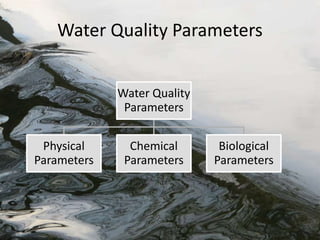
Water Quality Parameters
Water Quality
Parameters
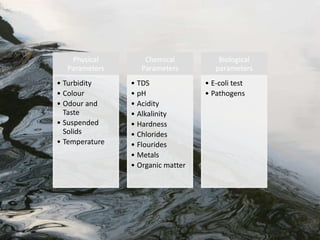
Physical
Parameters
Chemical
Parameters
Biological
Parameters
Physical
Parameters
• Turbidity
• Colour
• Odour and
Taste
• Suspended
Solids
• Temperature
Chemical
Parameters
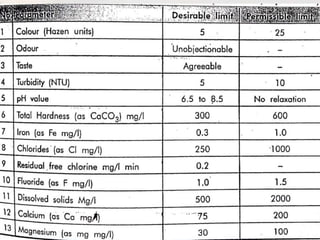
• TDS
• pH
• Acidity
• Alkalinity
• Hardness
• Chlorides
• Flourides
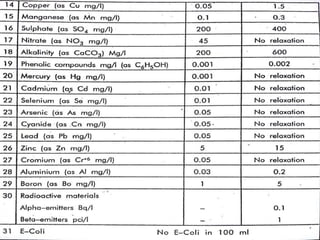
• Metals
• Organic matter
Biological
parameters
• E-coli test
• Pathogens
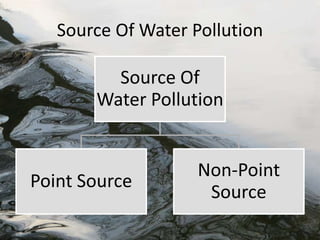
Source Of Water Pollution
Source Of
Water Pollution
Point Source
Non-Point
Source
Point and Non Point Sources
• Point source refers to
contaminants that enter
a waterway through a
discrete conveyance,
such as a pipe or ditch.
• Non-point source
pollution refers to
diffuse contamination
that does not originate
from a single discrete
source.
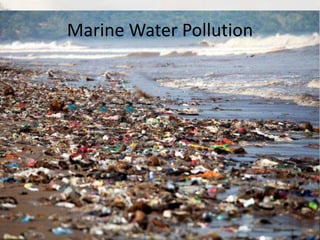
Marine Water Pollution
•Marine pollution occurs when harmful, or potentially
harmful, effects result from the entry into the ocean of
chemicals, particles, industrial, agricultural and residential
waste, noise, or the spread of invasive organisms. Eighty
percent of marine pollution comes from land.
•The pollution often comes from non point sources such as
agricultural runoff, wind-blown debris and dust. Nutrient
pollution, a form of water pollution, refers to contamination
by excessive inputs of nutrients. It is a primary cause of
eutrophication of surface waters, in which excess nutrients,
usually nitrogen or phosphorus, stimulate algae growth.
Organic Pollutants
Organic pollutants
Oxygen
demanding waste
Disease causing
waste
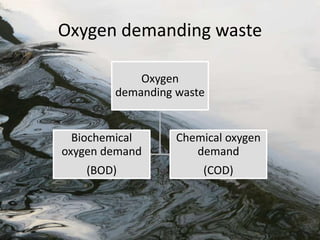
Oxygen demanding waste
Oxygen
demanding waste
Biochemical
oxygen demand
(BOD)
Chemical oxygen
demand
(COD)
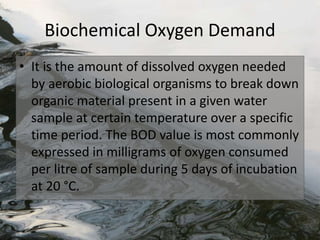
Biochemical Oxygen Demand
• It is the amount of dissolved oxygen needed
by aerobic biological organisms to break down
organic material present in a given water
sample at certain temperature over a specific
time period. The BOD value is most commonly
expressed in milligrams of oxygen consumed
per litre of sample during 5 days of incubation
at 20 °C.
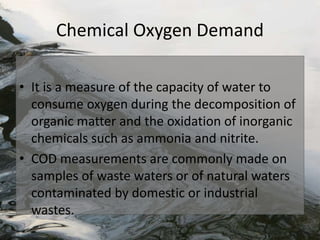
Chemical Oxygen Demand
• It is a measure of the capacity of water to
consume oxygen during the decomposition of
organic matter and the oxidation of inorganic
chemicals such as ammonia and nitrite.
• COD measurements are commonly made on
samples of waste waters or of natural waters
contaminated by domestic or industrial
wastes.
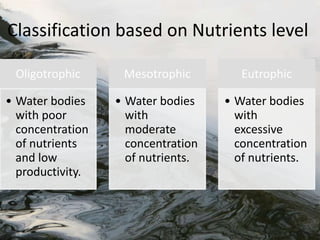
Oligotrophic
• Water bodies
with poor
concentration
of nutrients
and low
productivity.
Mesotrophic
• Water bodies
with
moderate
concentration
of nutrients.
Eutrophic
• Water bodies
with
excessive
concentration
of nutrients.
Classification based on Nutrients level
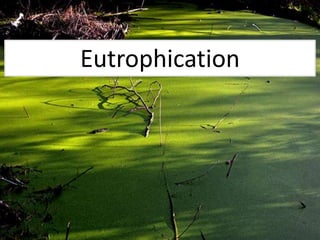
Eutrophication
What is Eutrophication?
• excessive richness of nutrients in a lake or
other body of water, frequently due to run-off
from the land, which causes a dense growth of
plant life is termed as “Eutrophication”.
• It is a Greek word eu "well" + trephein
"nourish"
Effects Of Eutrophication
• Toxic or inedible phytoplankton species
• Increased biomass of algae
• Decreases in water transparency (increased
turbidity)
• Colour, smell, and water treatment problems
• Dissolved oxygen depletion
• Loss of desirable fish species
• Reductions in harvestable fish and shellfish
Control Of Eutrophication
• Limited input of nutrients through treatment
of waste water.
• Reduction in run off from agriculture land.
• Soil erosion control.
• Reducing in use of phosphates in detergents.
Control Of Water Pollution
• Dealing with water pollution is something that
everyone (including governments and local
councils) needs to get involved with. Here are
a few things you can do to help
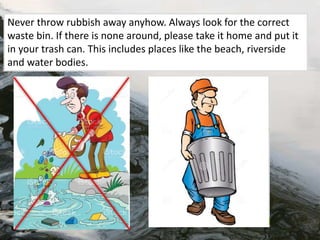
Never throw rubbish away anyhow. Always look for the correct
waste bin. If there is none around, please take it home and put it
in your trash can. This includes places like the beach, riverside
and water bodies.
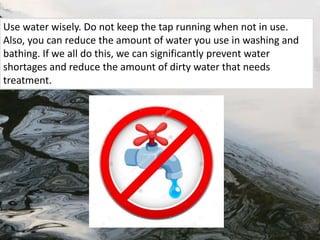
Use water wisely. Do not keep the tap running when not in use.
Also, you can reduce the amount of water you use in washing and
bathing. If we all do this, we can significantly prevent water
shortages and reduce the amount of dirty water that needs
treatment.
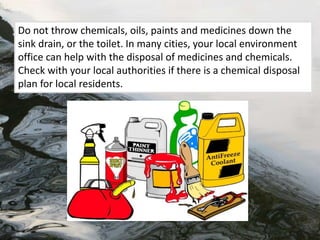
Do not throw chemicals, oils, paints and medicines down the
sink drain, or the toilet. In many cities, your local environment
office can help with the disposal of medicines and chemicals.
Check with your local authorities if there is a chemical disposal
plan for local residents.
Water pollution

Water pollution

  • 1.
  • 2.
    What Is WaterPollution? • Change in quality of water which is harmful to health of any living organism is termed as Water pollution. • Water pollution is the contamination of water bodies
  • 3.
    Water Quality Parameters WaterQuality Parameters Physical Parameters Chemical Parameters Biological Parameters
  • 4.
    Physical Parameters • Turbidity • Colour •Odour and Taste • Suspended Solids • Temperature Chemical Parameters • TDS • pH • Acidity • Alkalinity • Hardness • Chlorides • Flourides • Metals • Organic matter Biological parameters • E-coli test • Pathogens
  • 7.
    Source Of WaterPollution Source Of Water Pollution Point Source Non-Point Source
  • 8.
    Point and NonPoint Sources • Point source refers to contaminants that enter a waterway through a discrete conveyance, such as a pipe or ditch. • Non-point source pollution refers to diffuse contamination that does not originate from a single discrete source.
  • 9.
  • 10.
    •Marine pollution occurswhen harmful, or potentially harmful, effects result from the entry into the ocean of chemicals, particles, industrial, agricultural and residential waste, noise, or the spread of invasive organisms. Eighty percent of marine pollution comes from land. •The pollution often comes from non point sources such as agricultural runoff, wind-blown debris and dust. Nutrient pollution, a form of water pollution, refers to contamination by excessive inputs of nutrients. It is a primary cause of eutrophication of surface waters, in which excess nutrients, usually nitrogen or phosphorus, stimulate algae growth.
  • 11.
  • 12.
    Oxygen demanding waste Oxygen demandingwaste Biochemical oxygen demand (BOD) Chemical oxygen demand (COD)
  • 13.
    Biochemical Oxygen Demand •It is the amount of dissolved oxygen needed by aerobic biological organisms to break down organic material present in a given water sample at certain temperature over a specific time period. The BOD value is most commonly expressed in milligrams of oxygen consumed per litre of sample during 5 days of incubation at 20 °C.
  • 14.
    Chemical Oxygen Demand •It is a measure of the capacity of water to consume oxygen during the decomposition of organic matter and the oxidation of inorganic chemicals such as ammonia and nitrite. • COD measurements are commonly made on samples of waste waters or of natural waters contaminated by domestic or industrial wastes.
  • 15.
    Oligotrophic • Water bodies withpoor concentration of nutrients and low productivity. Mesotrophic • Water bodies with moderate concentration of nutrients. Eutrophic • Water bodies with excessive concentration of nutrients. Classification based on Nutrients level
  • 16.
  • 17.
    What is Eutrophication? •excessive richness of nutrients in a lake or other body of water, frequently due to run-off from the land, which causes a dense growth of plant life is termed as “Eutrophication”. • It is a Greek word eu "well" + trephein "nourish"
  • 18.
    Effects Of Eutrophication •Toxic or inedible phytoplankton species • Increased biomass of algae • Decreases in water transparency (increased turbidity) • Colour, smell, and water treatment problems • Dissolved oxygen depletion • Loss of desirable fish species • Reductions in harvestable fish and shellfish
  • 19.
    Control Of Eutrophication •Limited input of nutrients through treatment of waste water. • Reduction in run off from agriculture land. • Soil erosion control. • Reducing in use of phosphates in detergents.
  • 20.
    Control Of WaterPollution • Dealing with water pollution is something that everyone (including governments and local councils) needs to get involved with. Here are a few things you can do to help
  • 21.
    Never throw rubbishaway anyhow. Always look for the correct waste bin. If there is none around, please take it home and put it in your trash can. This includes places like the beach, riverside and water bodies.
  • 22.
    Use water wisely.Do not keep the tap running when not in use. Also, you can reduce the amount of water you use in washing and bathing. If we all do this, we can significantly prevent water shortages and reduce the amount of dirty water that needs treatment.
  • 23.
    Do not throwchemicals, oils, paints and medicines down the sink drain, or the toilet. In many cities, your local environment office can help with the disposal of medicines and chemicals. Check with your local authorities if there is a chemical disposal plan for local residents.