The State of
Food Insecurity
in the World
Rome, 27 May 2015
www.fao.org/hunger/en/
Food and Agriculture Organization of the United Nations
Meeting the 2015 international hunger targets:
taking stock of uneven progress
2015
Marks the end of the monitoring period for:
•The World Food Summit goal, pledging to halve
the number of undernourished people between
1990 and 2015
•The Millennium Development Goal 1 hunger
target, pledging to halve the proportion of
undernourished people between 1990 and 2015
How many hungry?
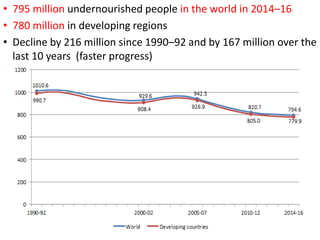
• 795 million undernourished people in the world in 2014–16
• 780 million in developing regions
• Decline by 216 million since 1990–92 and by 167 million over the
last 10 years (faster progress)
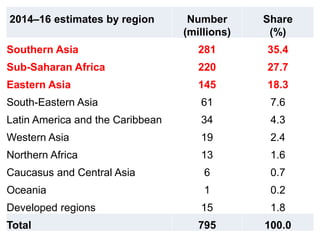
Where are the hungry?
2014–16 estimates by region Number
(millions)
Share
(%)
Southern Asia 281 35.4
Sub-Saharan Africa 220 27.7
Eastern Asia 145 18.3
South-Eastern Asia 61 7.6
Latin America and the Caribbean 34 4.3
Western Asia 19 2.4
Northern Africa 13 1.6
Caucasus and Central Asia 6 0.7
Oceania 1 0.2
Developed regions 15 1.8
Total 795 100.0
Have we reached the international
hunger targets?
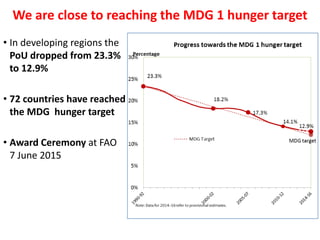
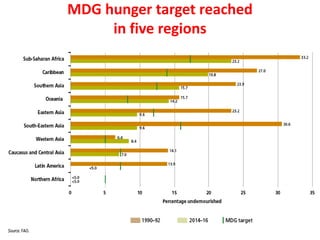
We are close to reaching the MDG 1 hunger target
• In developing regions the
PoU dropped from 23.3%
to 12.9%
• 72 countries have reached
the MDG hunger target
• Award Ceremony at FAO
7 June 2015
How did the regions fare?
MDG hunger target reached
in five regions
What are the key factors of success
in reducing hunger?
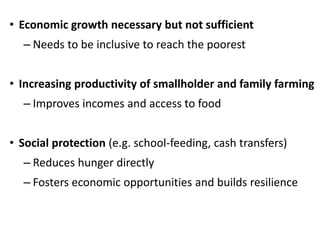
• Economic growth necessary but not sufficient
– Needs to be inclusive to reach the poorest
• Increasing productivity of smallholder and family farming
– Improves incomes and access to food
• Social protection (e.g. school-feeding, cash transfers)
– Reduces hunger directly
– Fosters economic opportunities and builds resilience
• Access to rural markets
– Provides market and employment opportunities
• International trade openness delivers benefits,
but also risks
• Protracted crises severely impact food security
– Resulting from by natural or human-made disasters
(e.g. conflicts, political instability)
– Of the 20 countries in protracted crisis, only Ethiopia
reached the MDG hunger target
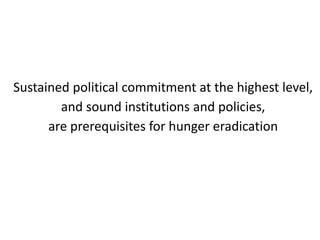
Sustained political commitment at the highest level,
and sound institutions and policies,
are prerequisites for hunger eradication

The State of Food Insecurity in the World - 2015

  • 1.
    The State of FoodInsecurity in the World Rome, 27 May 2015 www.fao.org/hunger/en/ Food and Agriculture Organization of the United Nations Meeting the 2015 international hunger targets: taking stock of uneven progress
  • 2.
  • 3.
    Marks the endof the monitoring period for: •The World Food Summit goal, pledging to halve the number of undernourished people between 1990 and 2015 •The Millennium Development Goal 1 hunger target, pledging to halve the proportion of undernourished people between 1990 and 2015
  • 4.
  • 5.
    • 795 millionundernourished people in the world in 2014–16 • 780 million in developing regions • Decline by 216 million since 1990–92 and by 167 million over the last 10 years (faster progress)
  • 6.
  • 7.
    2014–16 estimates byregion Number (millions) Share (%) Southern Asia 281 35.4 Sub-Saharan Africa 220 27.7 Eastern Asia 145 18.3 South-Eastern Asia 61 7.6 Latin America and the Caribbean 34 4.3 Western Asia 19 2.4 Northern Africa 13 1.6 Caucasus and Central Asia 6 0.7 Oceania 1 0.2 Developed regions 15 1.8 Total 795 100.0
  • 8.
    Have we reachedthe international hunger targets?
  • 9.
    We are closeto reaching the MDG 1 hunger target • In developing regions the PoU dropped from 23.3% to 12.9% • 72 countries have reached the MDG hunger target • Award Ceremony at FAO 7 June 2015
  • 10.
    How did theregions fare?
  • 11.
    MDG hunger targetreached in five regions
  • 12.
    What are thekey factors of success in reducing hunger?
  • 13.
    • Economic growthnecessary but not sufficient – Needs to be inclusive to reach the poorest • Increasing productivity of smallholder and family farming – Improves incomes and access to food • Social protection (e.g. school-feeding, cash transfers) – Reduces hunger directly – Fosters economic opportunities and builds resilience
  • 14.
    • Access torural markets – Provides market and employment opportunities • International trade openness delivers benefits, but also risks • Protracted crises severely impact food security – Resulting from by natural or human-made disasters (e.g. conflicts, political instability) – Of the 20 countries in protracted crisis, only Ethiopia reached the MDG hunger target
  • 15.
    Sustained political commitmentat the highest level, and sound institutions and policies, are prerequisites for hunger eradication