Social Penetration TheoryInterpersonal closeness proceeds in a gradual and orderly fashion from superficial to intimate levels of exchange, motivated by current and projected future outcomes. Lasting intimacy requires continual and mutual vulnerability through breadth and depth of self-disclosure (p. 120).
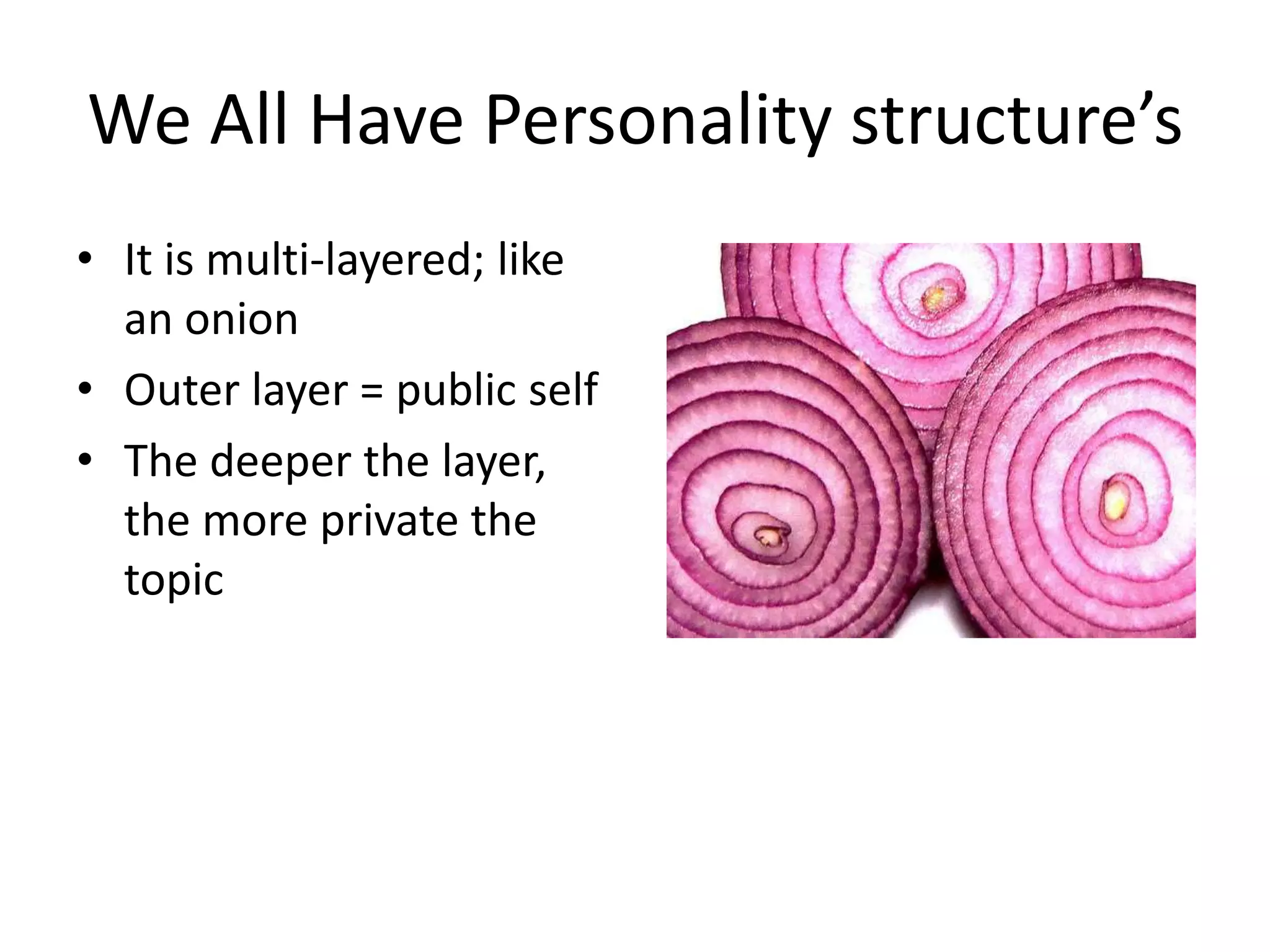
We All Have Personality structure’sIt is multi-layered; like an onion Outer layer = public selfThe deeper the layer, the more private the topic
How to peel the layers?Self-disclosure: the voluntary sharing of what makes up your personality structure.-this leads to reciprocity (openness in one person leads to openness in the other).
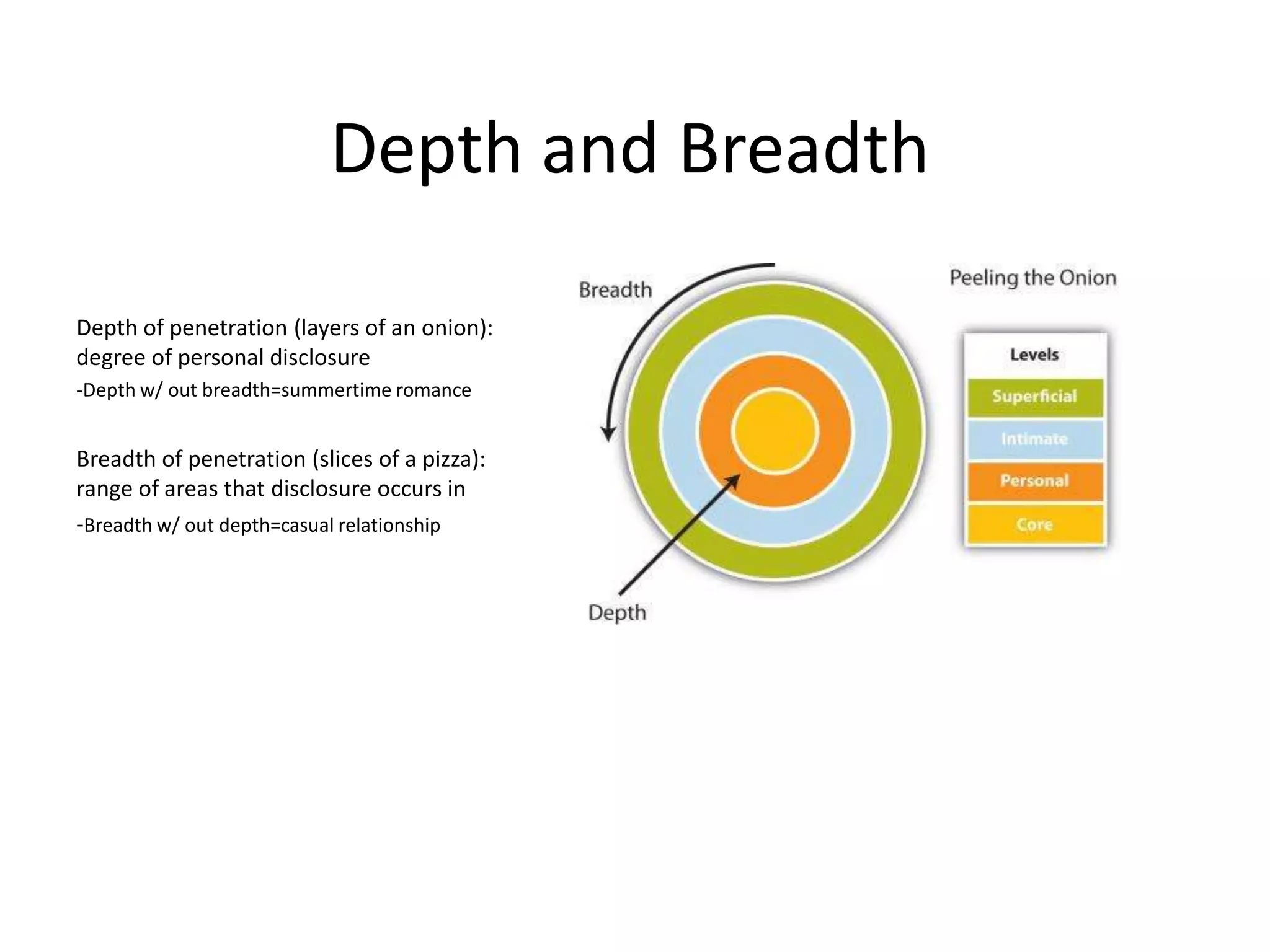
Depth and BreadthDepth of penetration (layers of an onion): degree of personal disclosure-Depth w/ out breadth=summertime romanceBreadth of penetration (slices of a pizza): range of areas that disclosure occurs in-Breadth w/ out depth=casual relationship
Depth and Breadth of Self-disclosurePeripheral items are exchanged more frequently and sooner than private information.Self-disclosure is reciprocal, especially in the early stages of the relationshipPenetration is rapid at the start but slows down quickly as more layers are peeled away.Depenetration is a gradual process of layer-by-layer withdrawal.
How to regulate closeness?On the basis of rewards and costsOutcome = rewards minus costs	- MinimaxPrinciple of behavior: people seek to maximize their benefits and minimize their costs.
Two standards for evaluating relationships1) Comparison level – Gauging relational satisfaction- We compare our relationships to the baseline of past experience. “Is this better or worse than what I’ve had?”2) Comparison level of Alternatives – Gauging relational stability- We compare our relationships with what we could have. “Is there no other relationship that is more attractive than this one?”
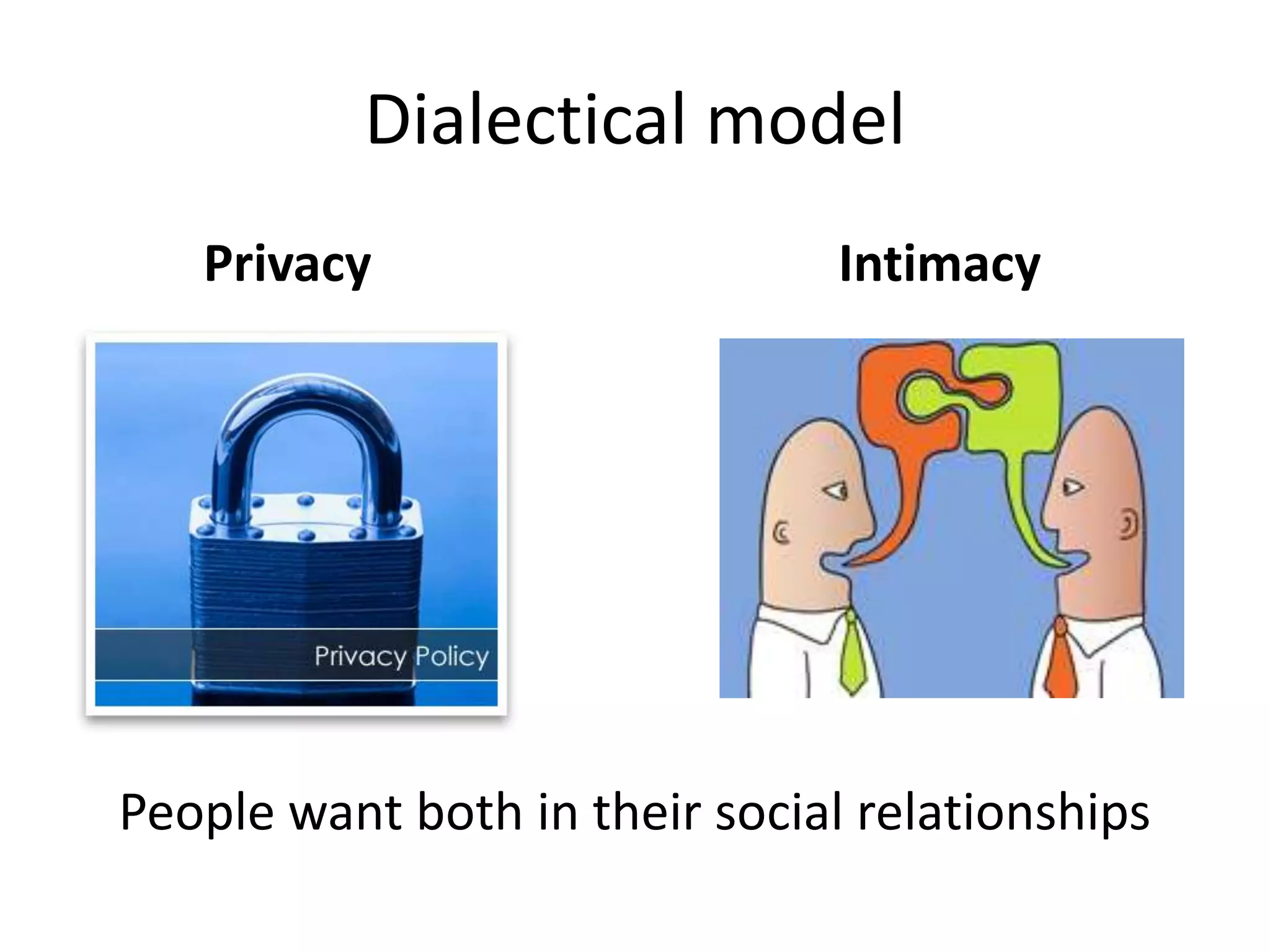
Dialectical modelPrivacy				IntimacyPeople want both in their social relationships
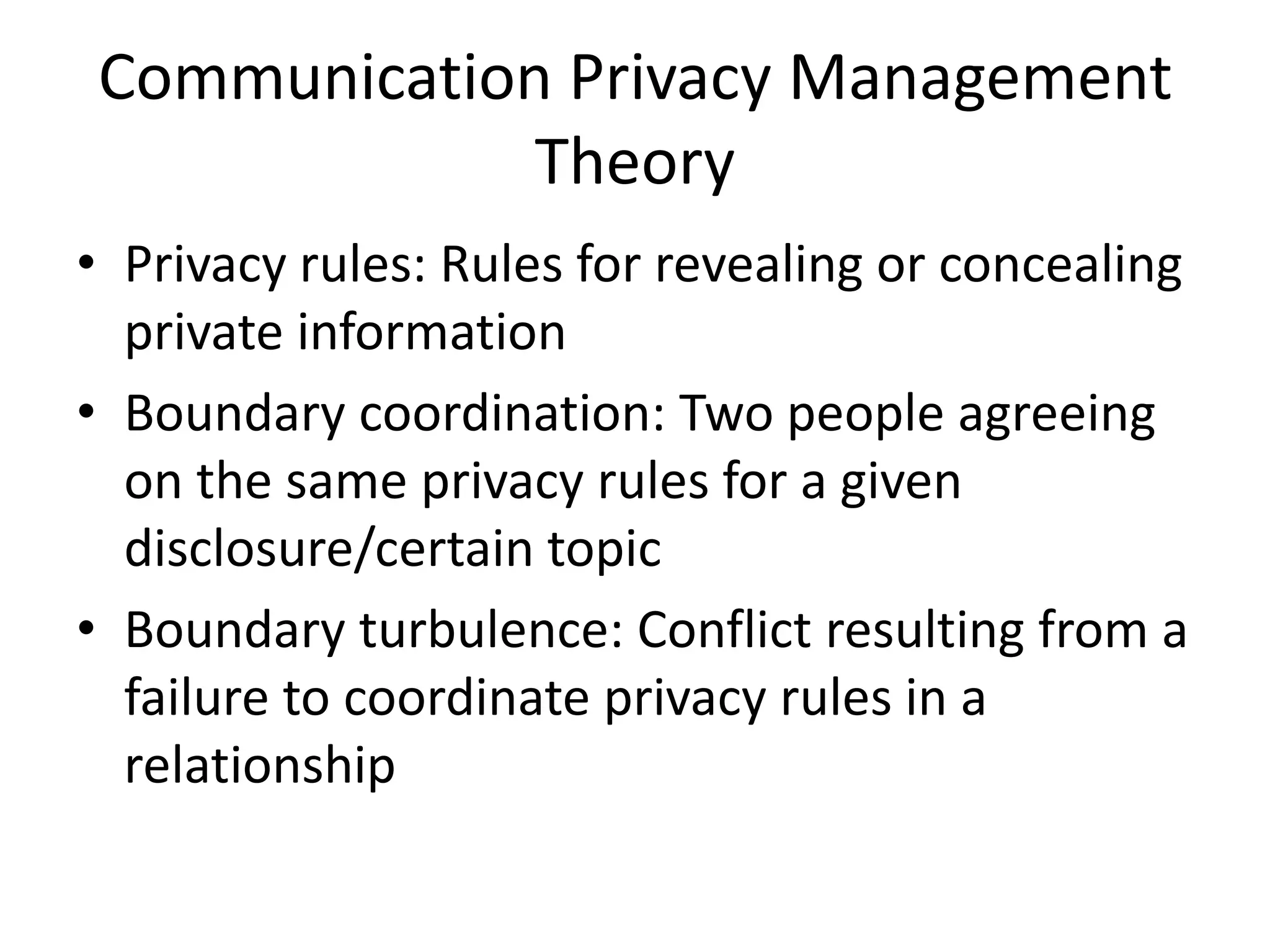
Communication Privacy Management TheoryPrivacy rules: Rules for revealing or concealing private informationBoundary coordination: Two people agreeing on the same privacy rules for a given disclosure/certain topicBoundary turbulence: Conflict resulting from a failure to coordinate privacy rules in a relationship

Social+penetration+theory

  • 1.
    Social Penetration TheoryInterpersonalcloseness proceeds in a gradual and orderly fashion from superficial to intimate levels of exchange, motivated by current and projected future outcomes. Lasting intimacy requires continual and mutual vulnerability through breadth and depth of self-disclosure (p. 120).
  • 2.
    We All HavePersonality structure’sIt is multi-layered; like an onion Outer layer = public selfThe deeper the layer, the more private the topic
  • 3.
    How to peelthe layers?Self-disclosure: the voluntary sharing of what makes up your personality structure.-this leads to reciprocity (openness in one person leads to openness in the other).
  • 4.
    Depth and BreadthDepthof penetration (layers of an onion): degree of personal disclosure-Depth w/ out breadth=summertime romanceBreadth of penetration (slices of a pizza): range of areas that disclosure occurs in-Breadth w/ out depth=casual relationship
  • 5.
    Depth and Breadthof Self-disclosurePeripheral items are exchanged more frequently and sooner than private information.Self-disclosure is reciprocal, especially in the early stages of the relationshipPenetration is rapid at the start but slows down quickly as more layers are peeled away.Depenetration is a gradual process of layer-by-layer withdrawal.
  • 6.
    How to regulatecloseness?On the basis of rewards and costsOutcome = rewards minus costs - MinimaxPrinciple of behavior: people seek to maximize their benefits and minimize their costs.
  • 7.
    Two standards forevaluating relationships1) Comparison level – Gauging relational satisfaction- We compare our relationships to the baseline of past experience. “Is this better or worse than what I’ve had?”2) Comparison level of Alternatives – Gauging relational stability- We compare our relationships with what we could have. “Is there no other relationship that is more attractive than this one?”
  • 8.
    Dialectical modelPrivacy IntimacyPeople wantboth in their social relationships
  • 9.
    Communication Privacy ManagementTheoryPrivacy rules: Rules for revealing or concealing private informationBoundary coordination: Two people agreeing on the same privacy rules for a given disclosure/certain topicBoundary turbulence: Conflict resulting from a failure to coordinate privacy rules in a relationship