Social Networking and Publishing Michael Bhaskar Pan Macmillan 14.01.09
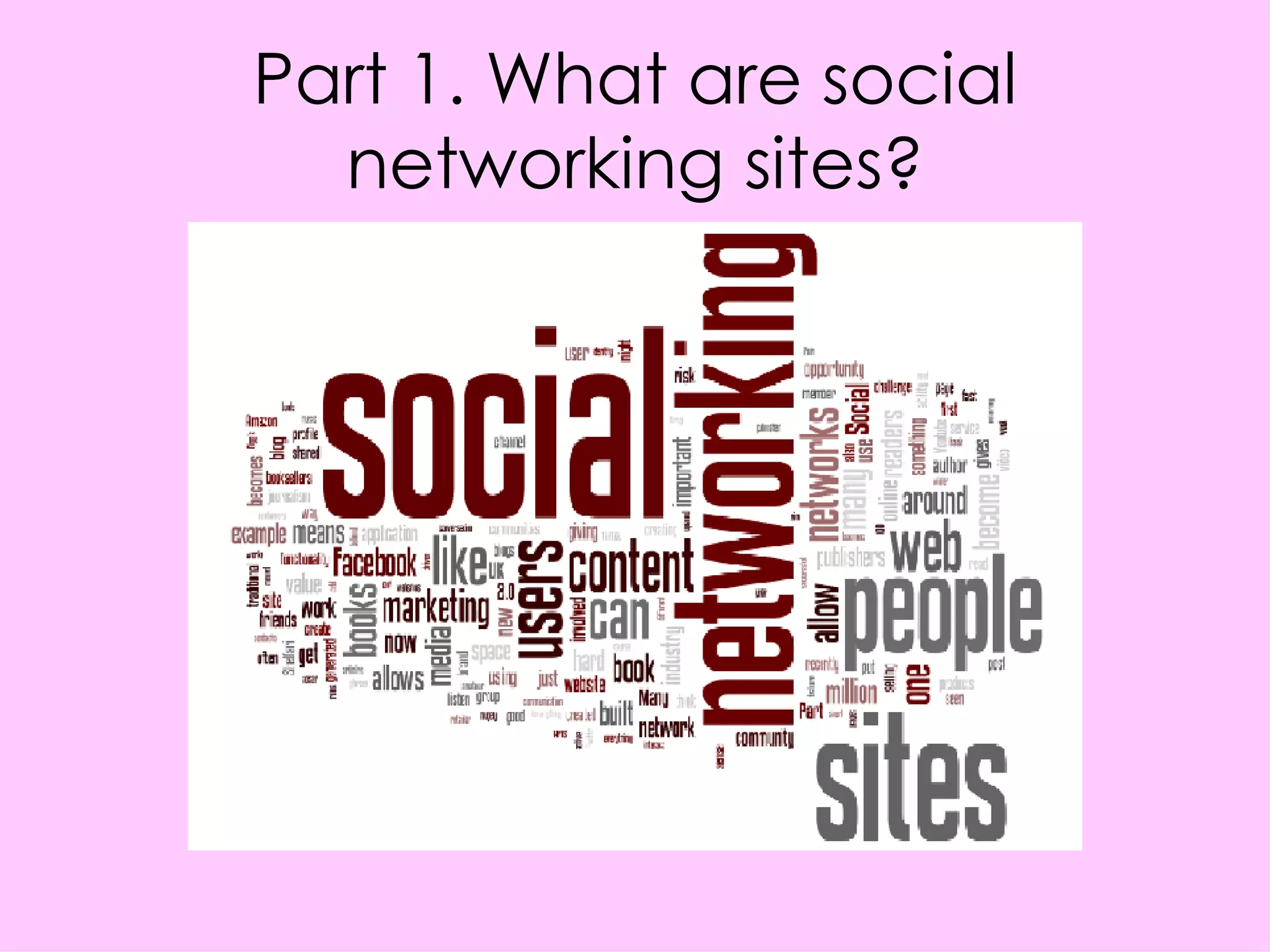
Part 1. What are social networking sites?
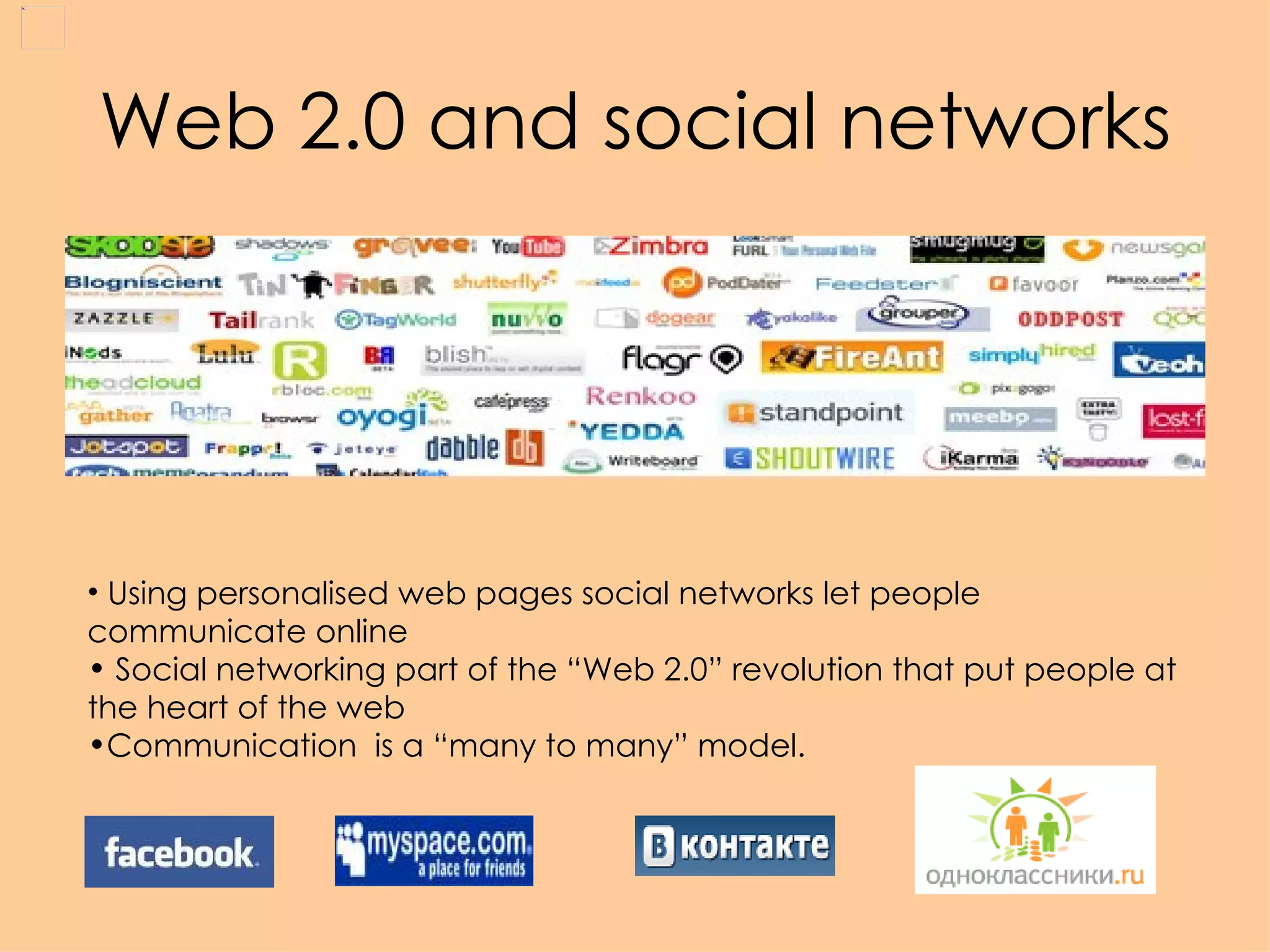
Web 2.0 and social networks Using personalised web pages social networks let people communicate online Social networking part of the “Web 2.0” revolution that put people at the heart of the web  Communication  is a “many to many” model.
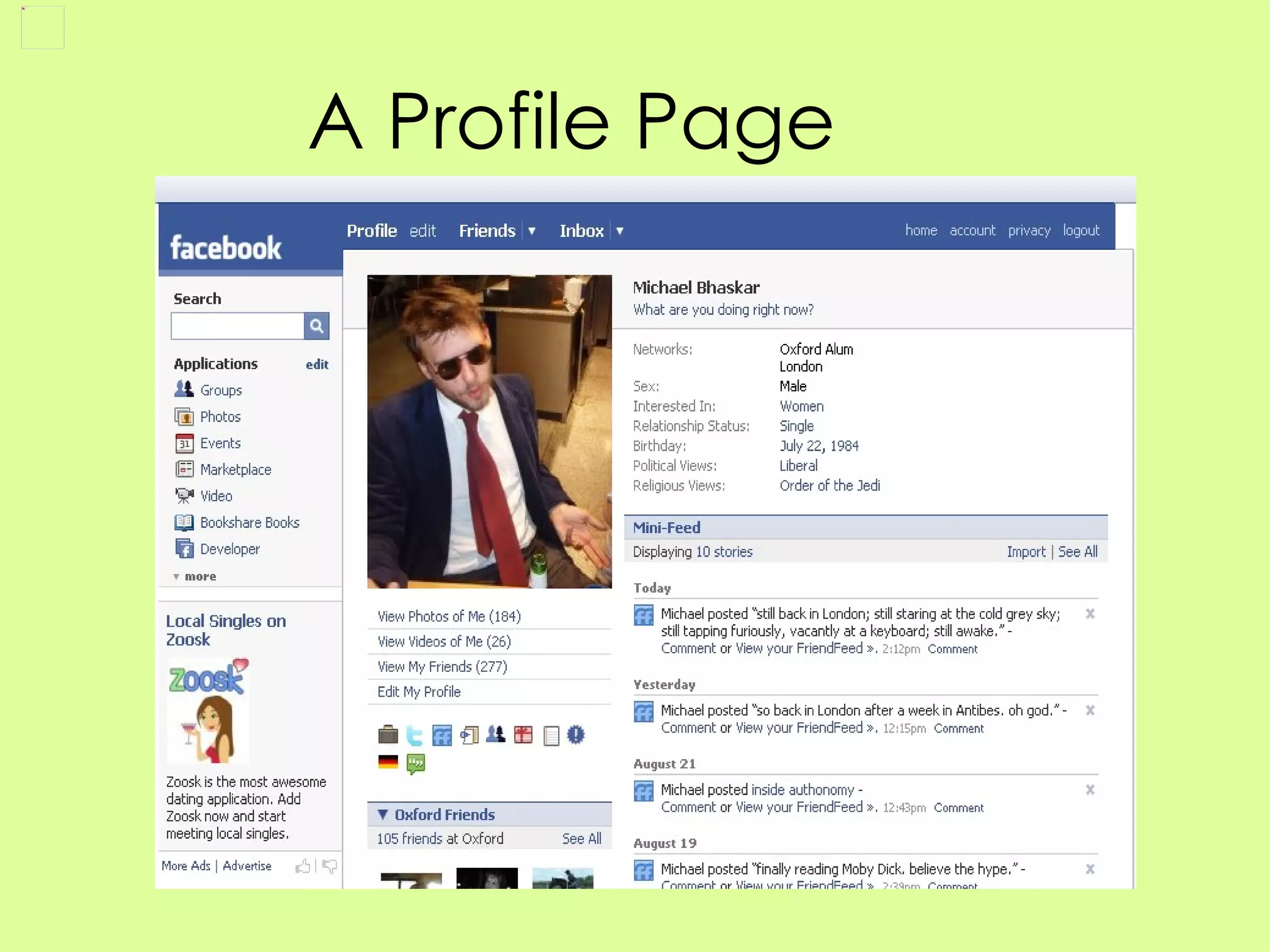
A Profile Page
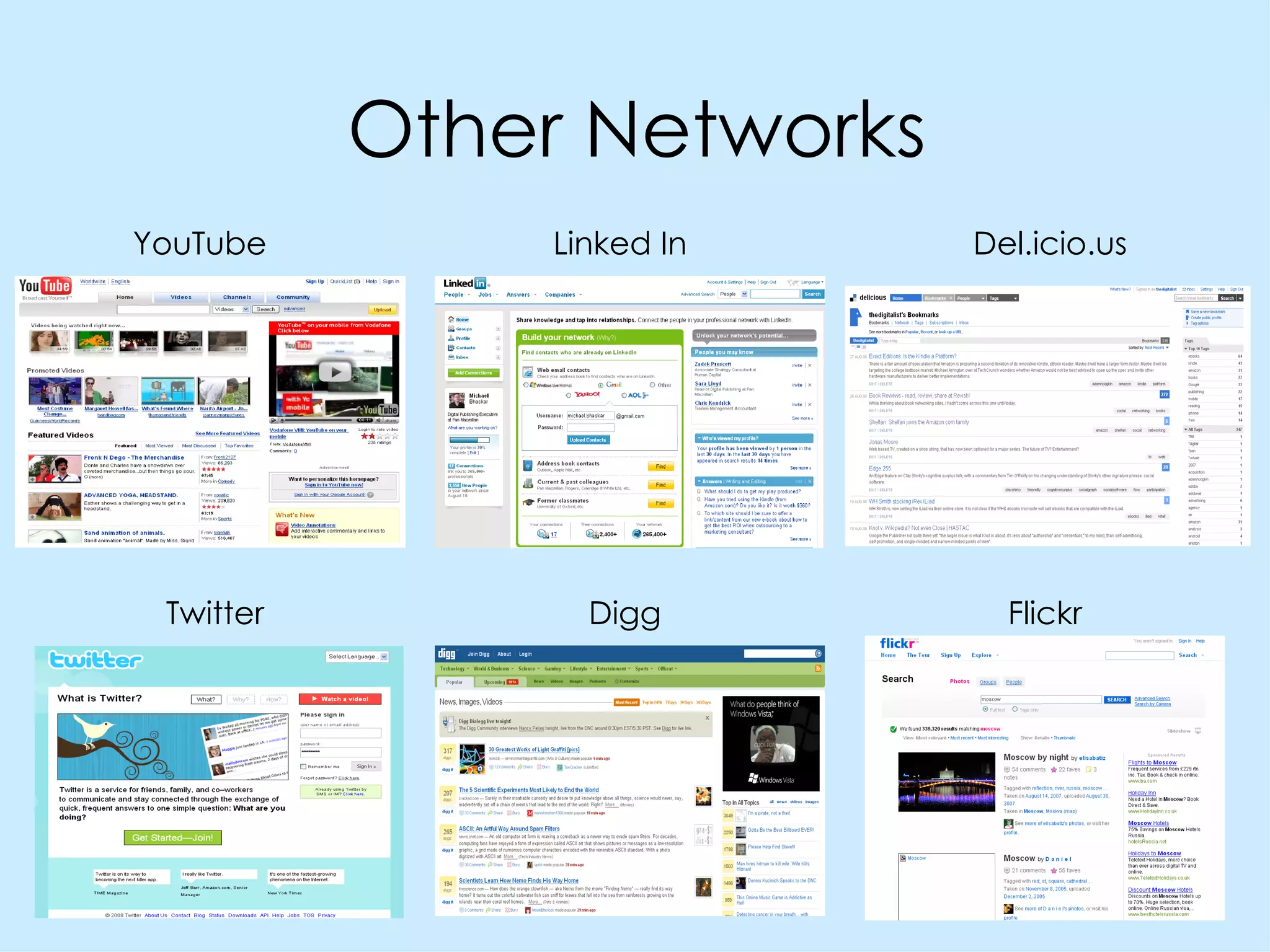
Other Networks YouTube Linked In Del.icio.us Twitter Digg Flickr
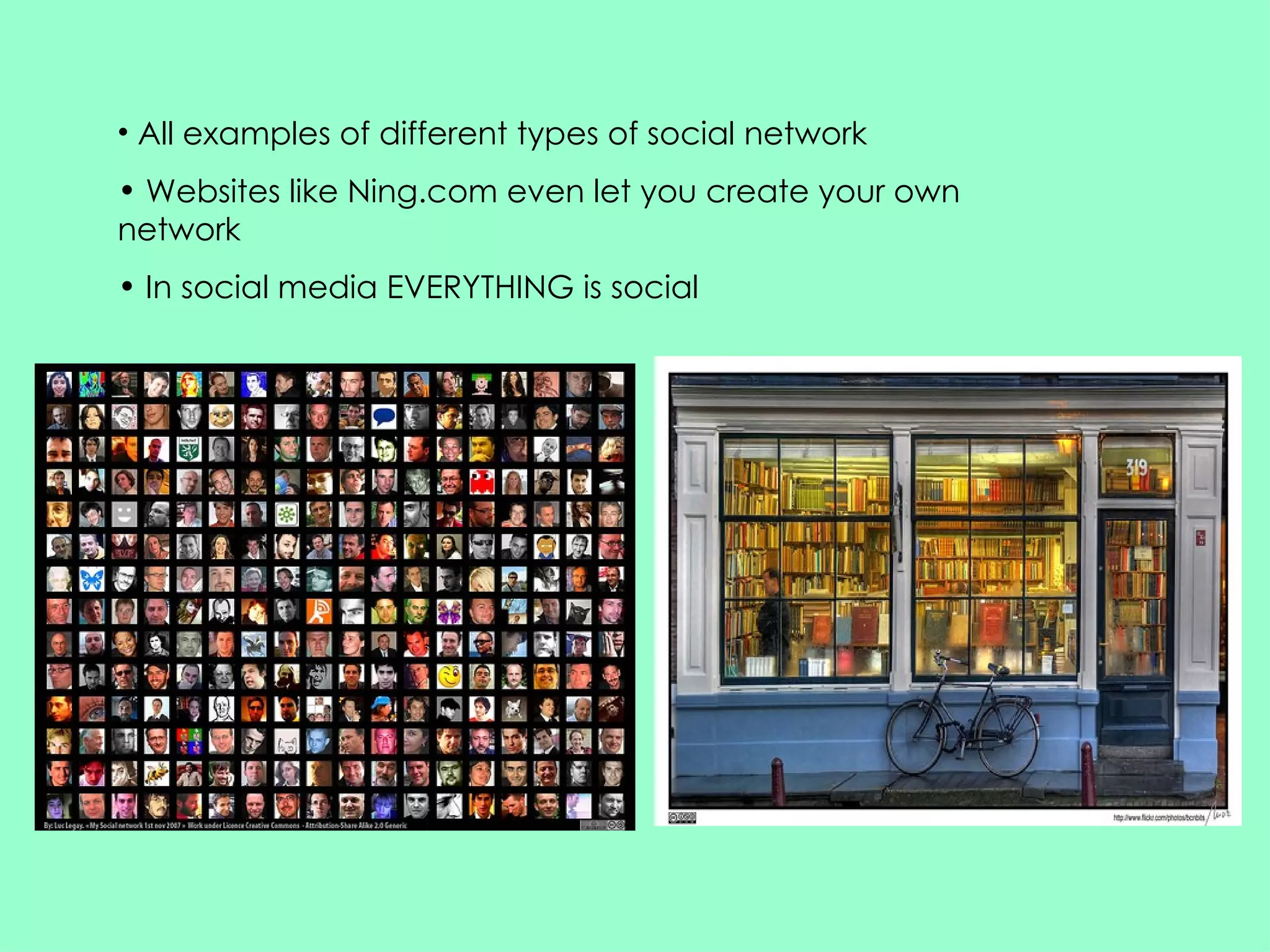
All examples of different types of social network  Websites like Ning.com even let you create your own network  In social media EVERYTHING is social
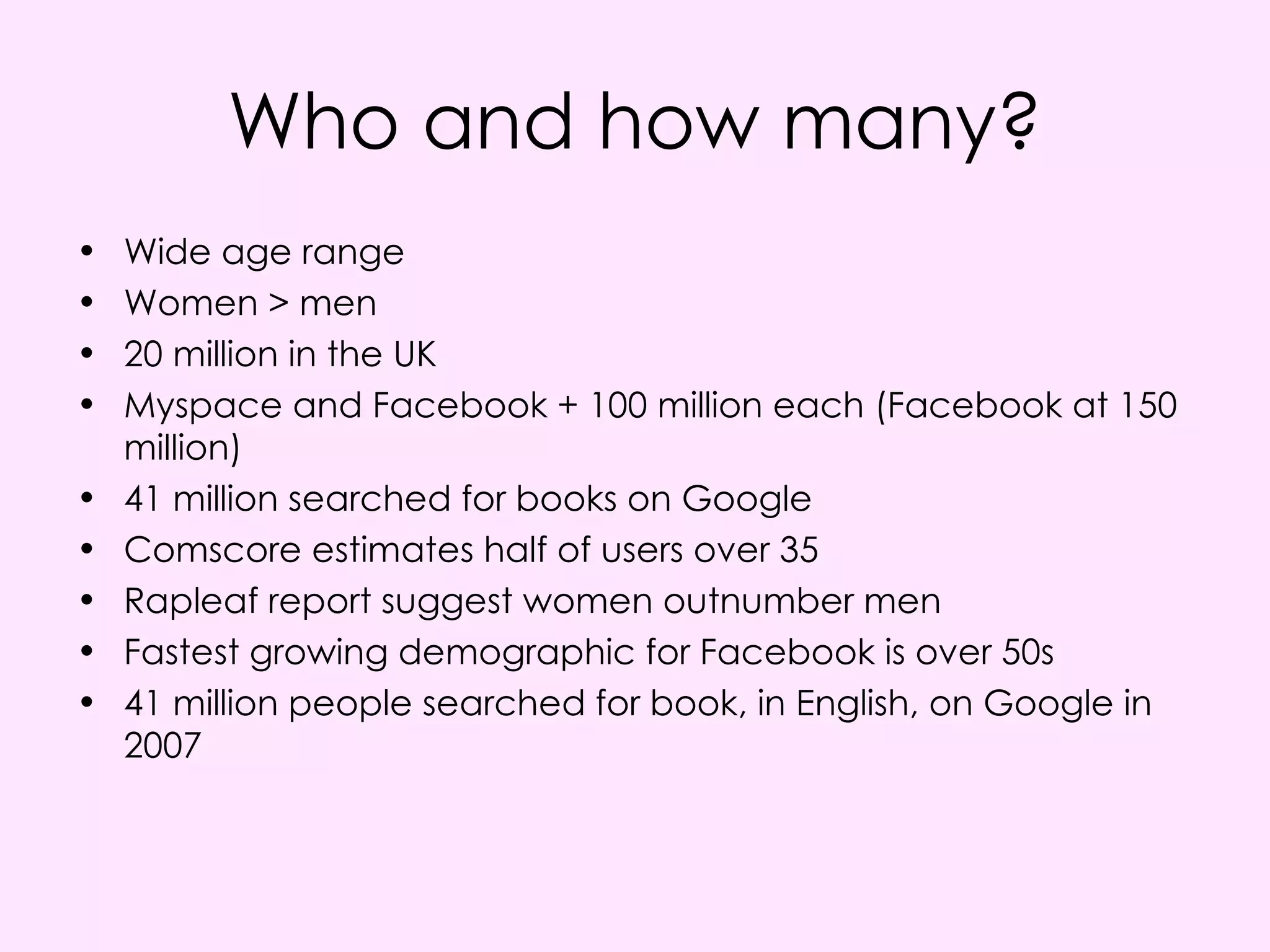
Who and how many? Wide age range Women > men  20 million in the UK Myspace and Facebook + 100 million each (Facebook at 150 million) 41 million searched for books on Google Comscore estimates half of users over 35 Rapleaf report suggest women outnumber men Fastest growing demographic for Facebook is over 50s 41 million people searched for book, in English, on Google in 2007
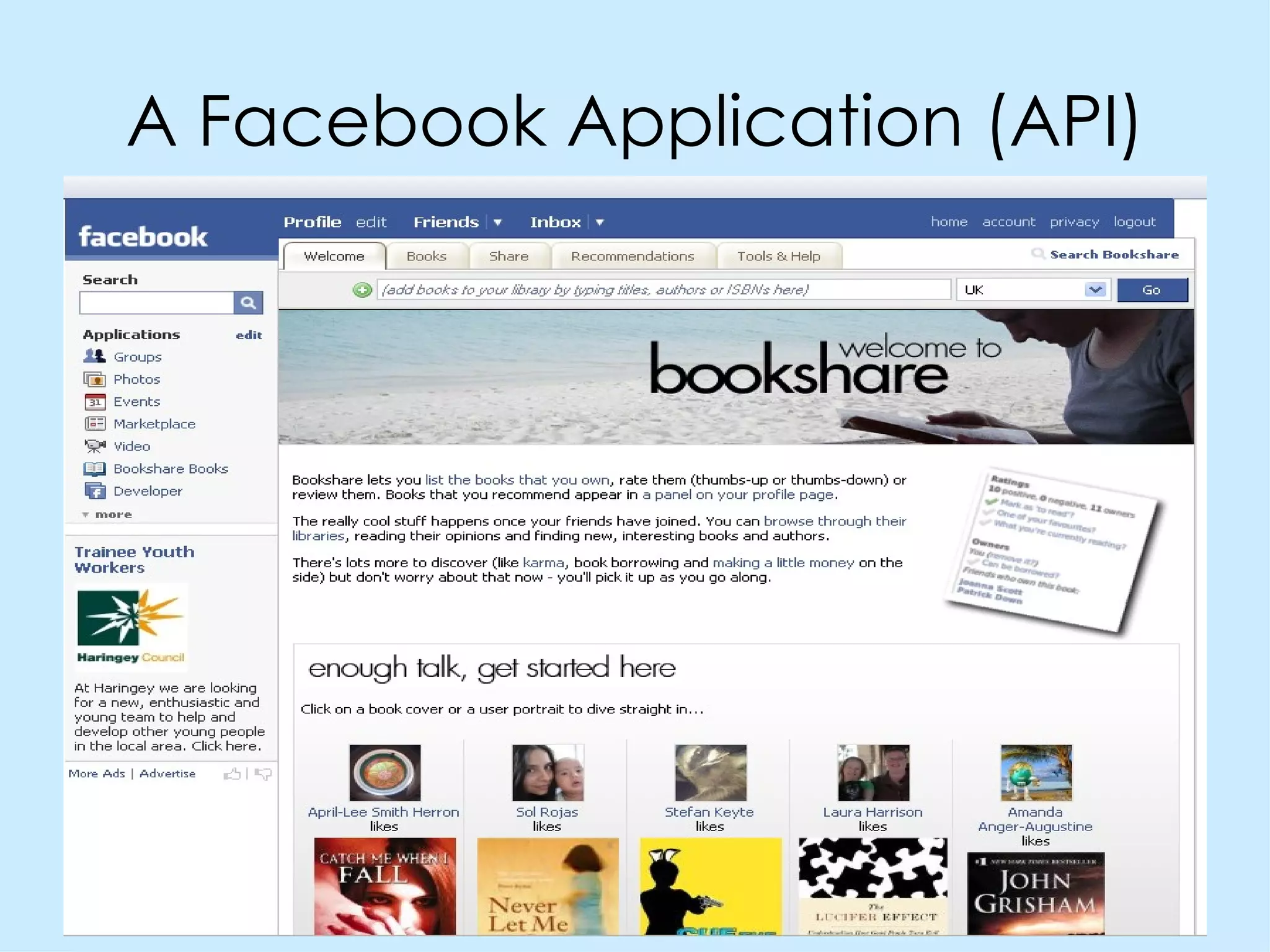
A Facebook Application (API)
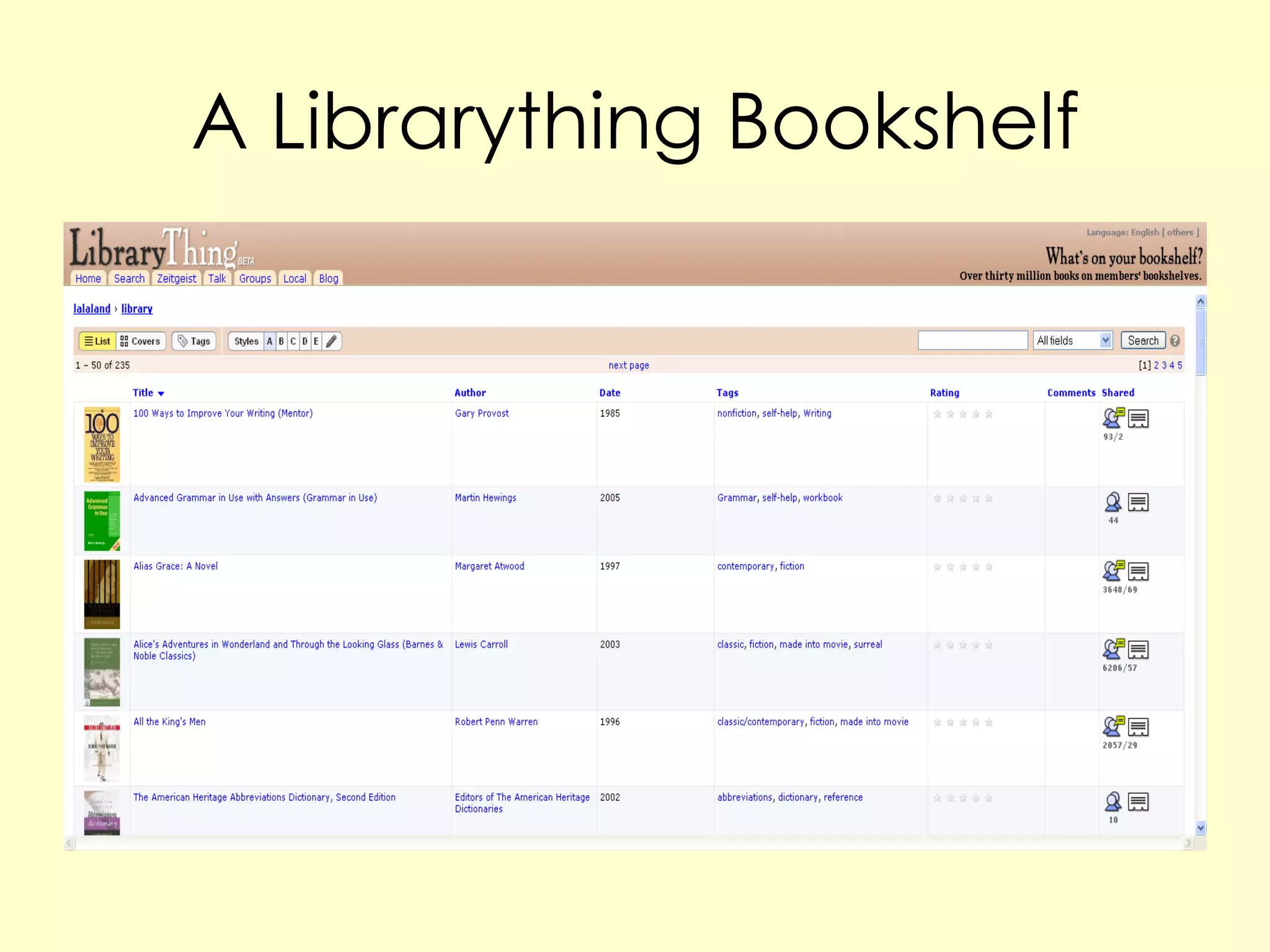
A Librarything Bookshelf
Part 2. Why are social networking sites important for the book industry
Social media effects all media The record and newspaper industries have struggled: Peer to peer downloads, a social network of media sharing, has decimated revenues from CD sales.  Record companies missed the chance to own the social space of music on the web- e.g. Myspace music “ Citizen journalism” has called into question the authority of traditional journalism Social networks are their own news service e.g. Twitter in Mumbai and on the US election Culture of free- no adequate online business model for newspapers
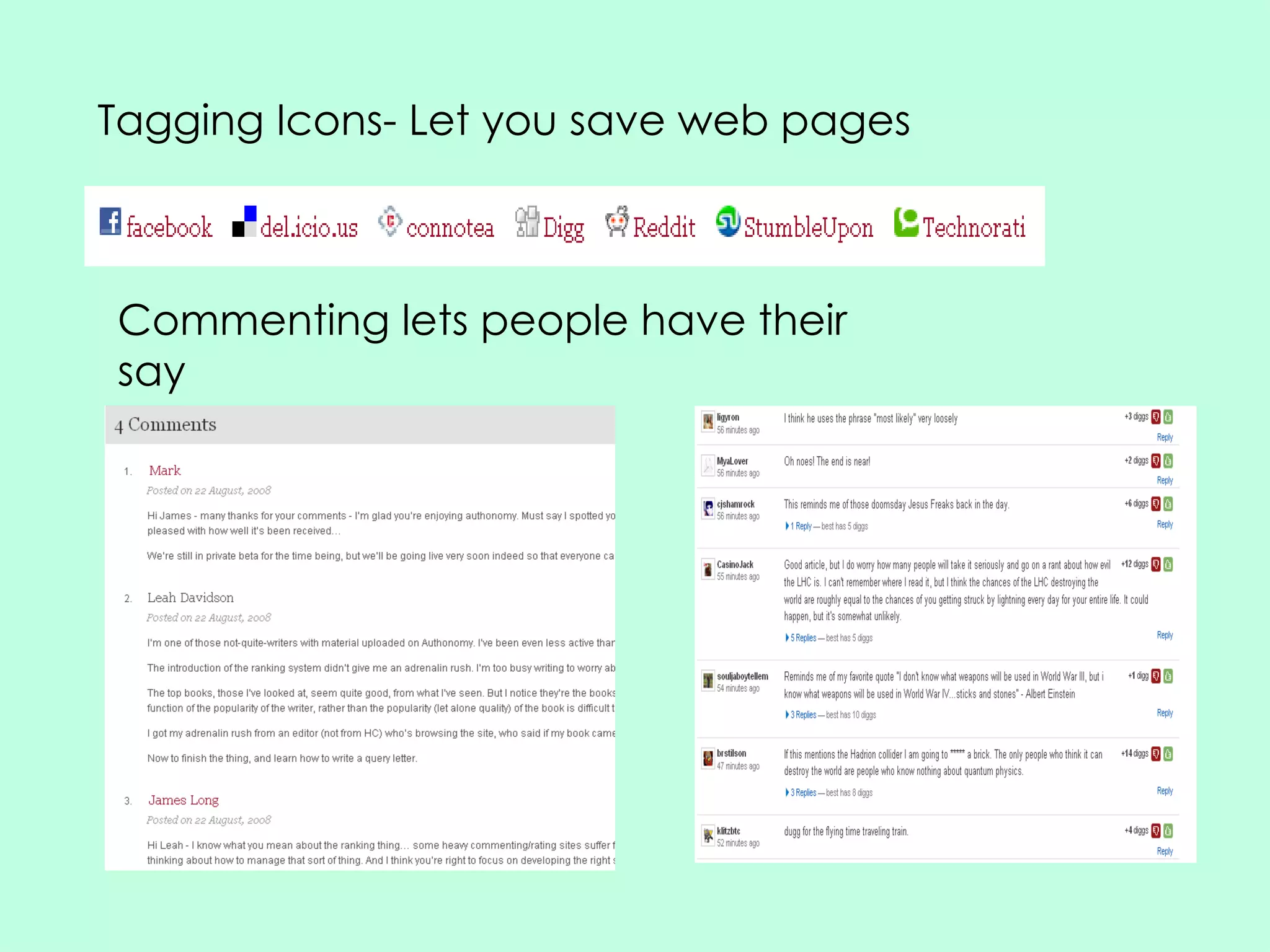
Tagging Icons- Let you save web pages Commenting lets people have their say
Virals and USG Social networks are the most powerful channel for viral marketing Products themselves of viral marketing Happens when people talk to each other- what social networks are all about Social networks are the distribution mechanism for user generated content Wikipedia- social software, collaboration, user generated contributions, valuable resource- has superseded print encyclopaedias?
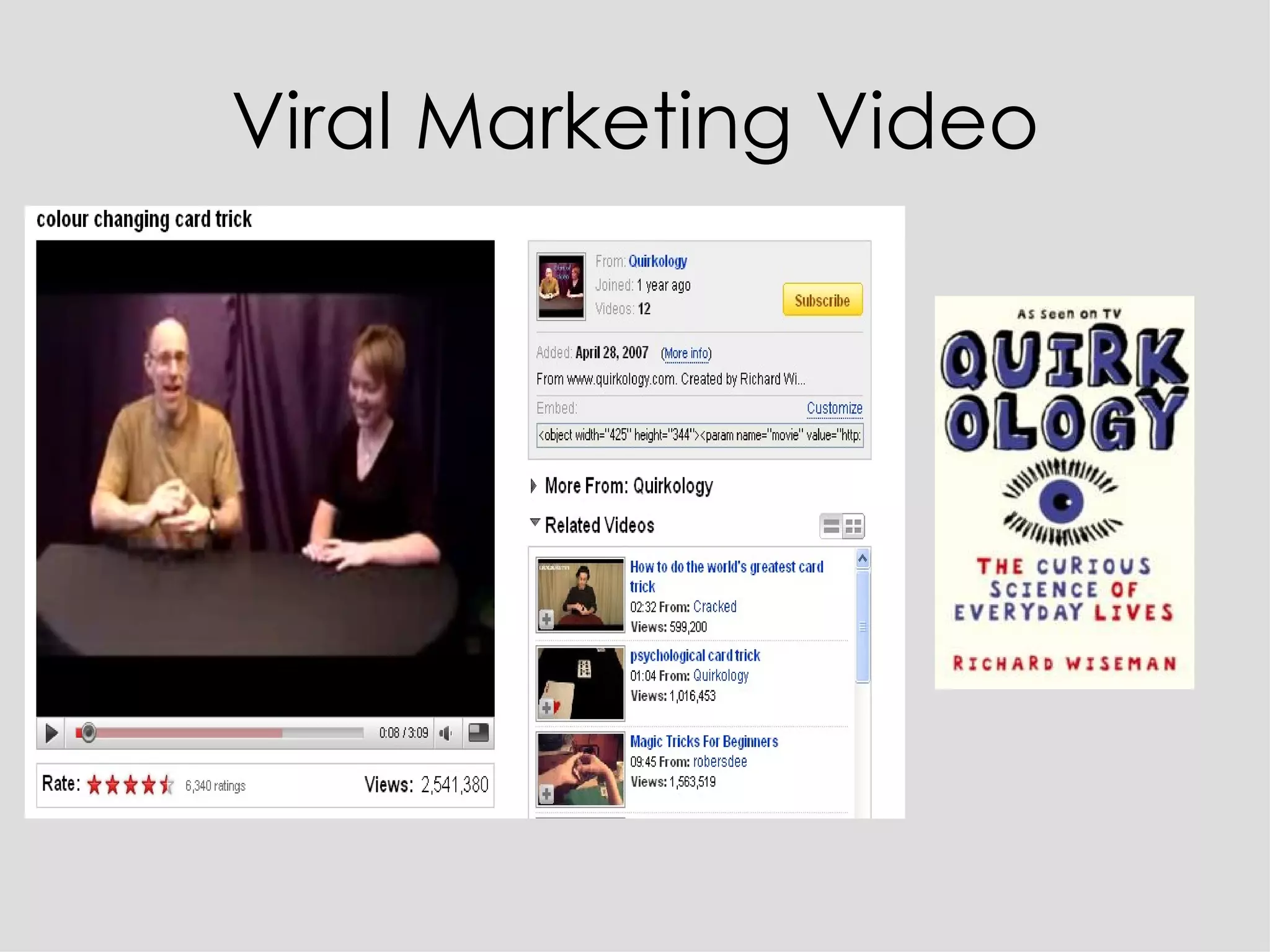
Viral Marketing Video
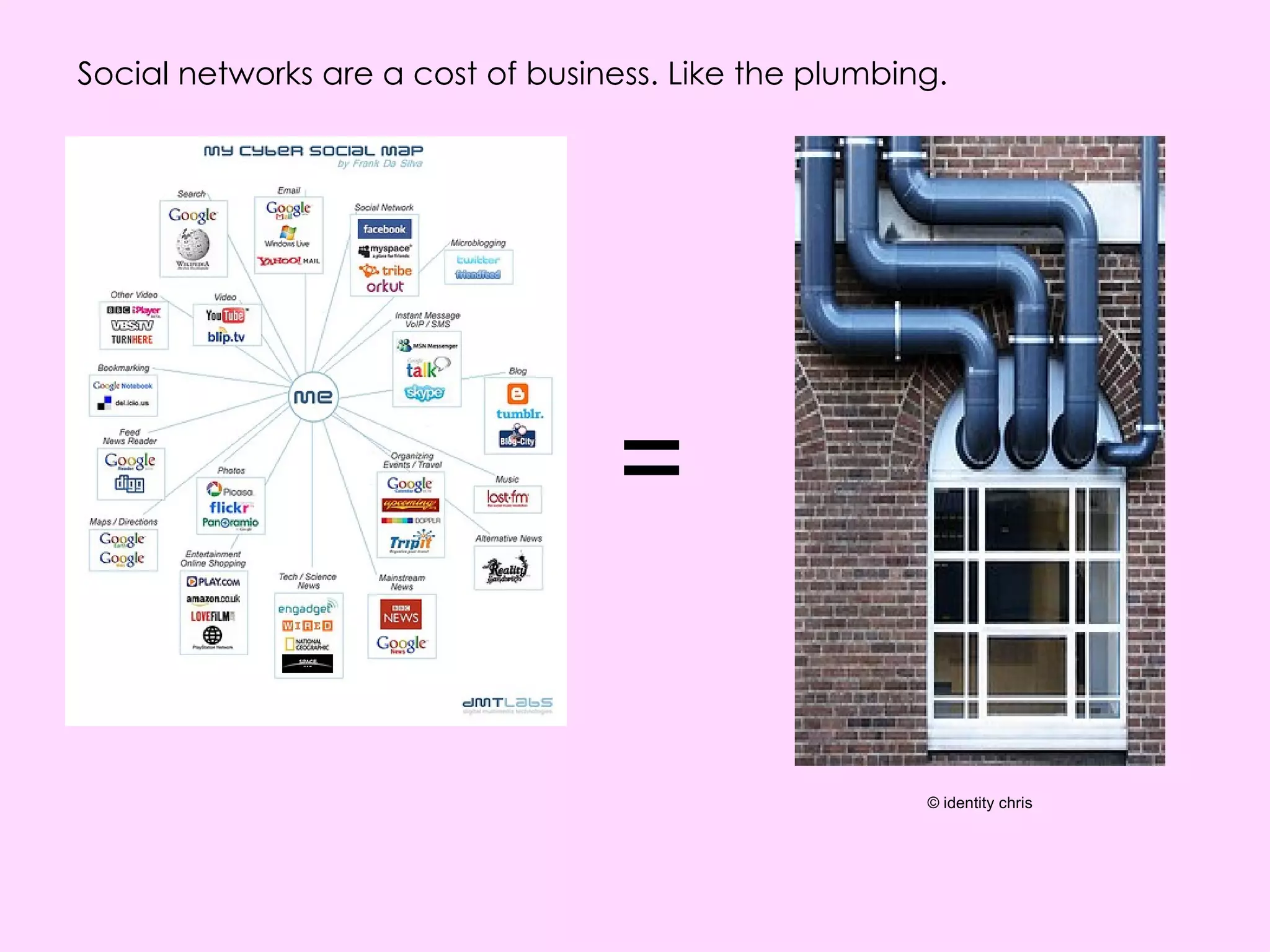
= Social networks are a cost of business. Like the plumbing.   © identity chris
Doesn’t the recession change all that?   Most tools on the internet are free, so can be cheaper than traditional marketing Directly targets fans or likely fans so is more focused Many books are still not featured widely in social media- there is still an opportunity for those that are BUT expensive web 2.0 projects may have to go on the back burner
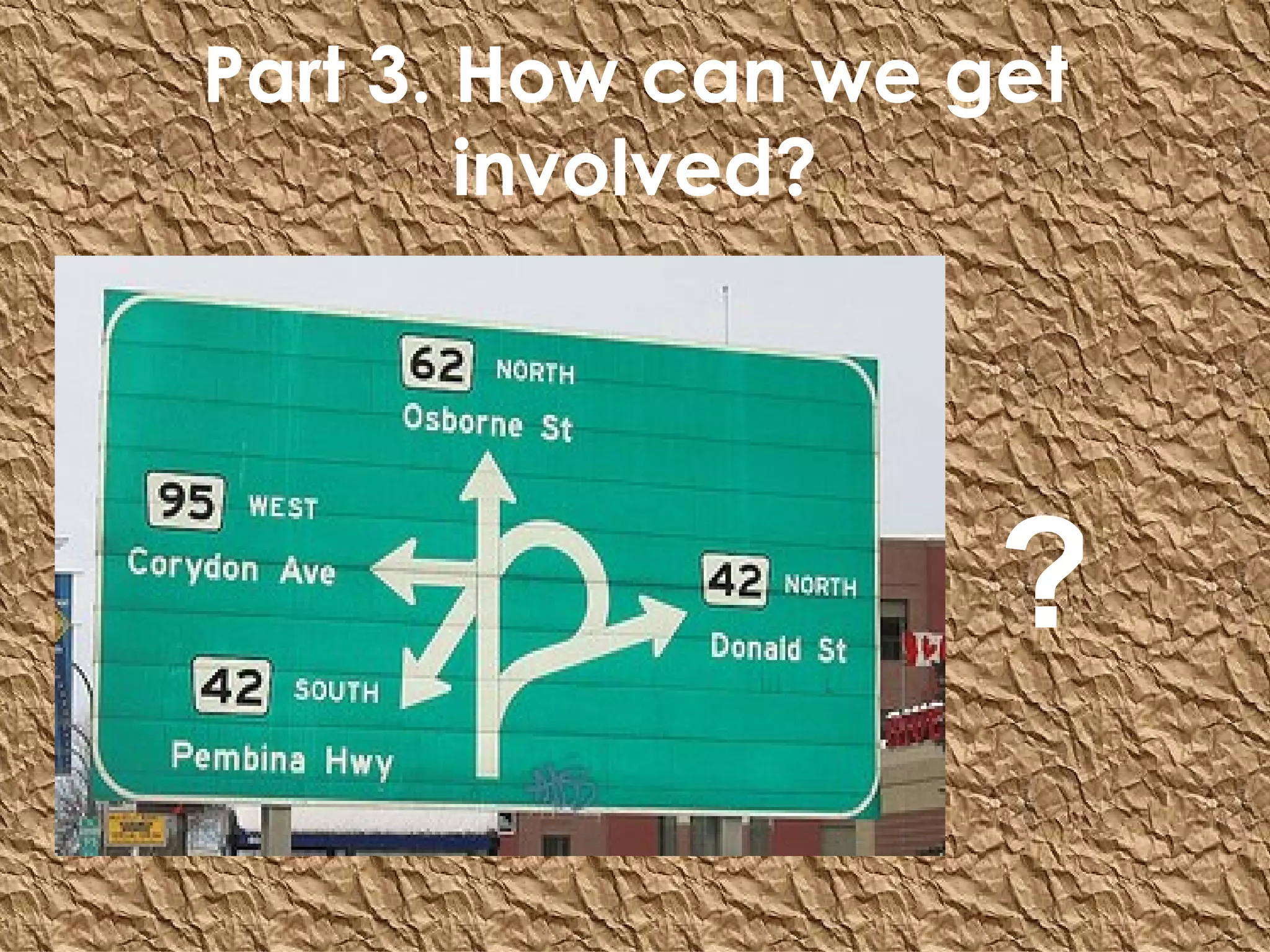
Part 3. How can we get involved? ?
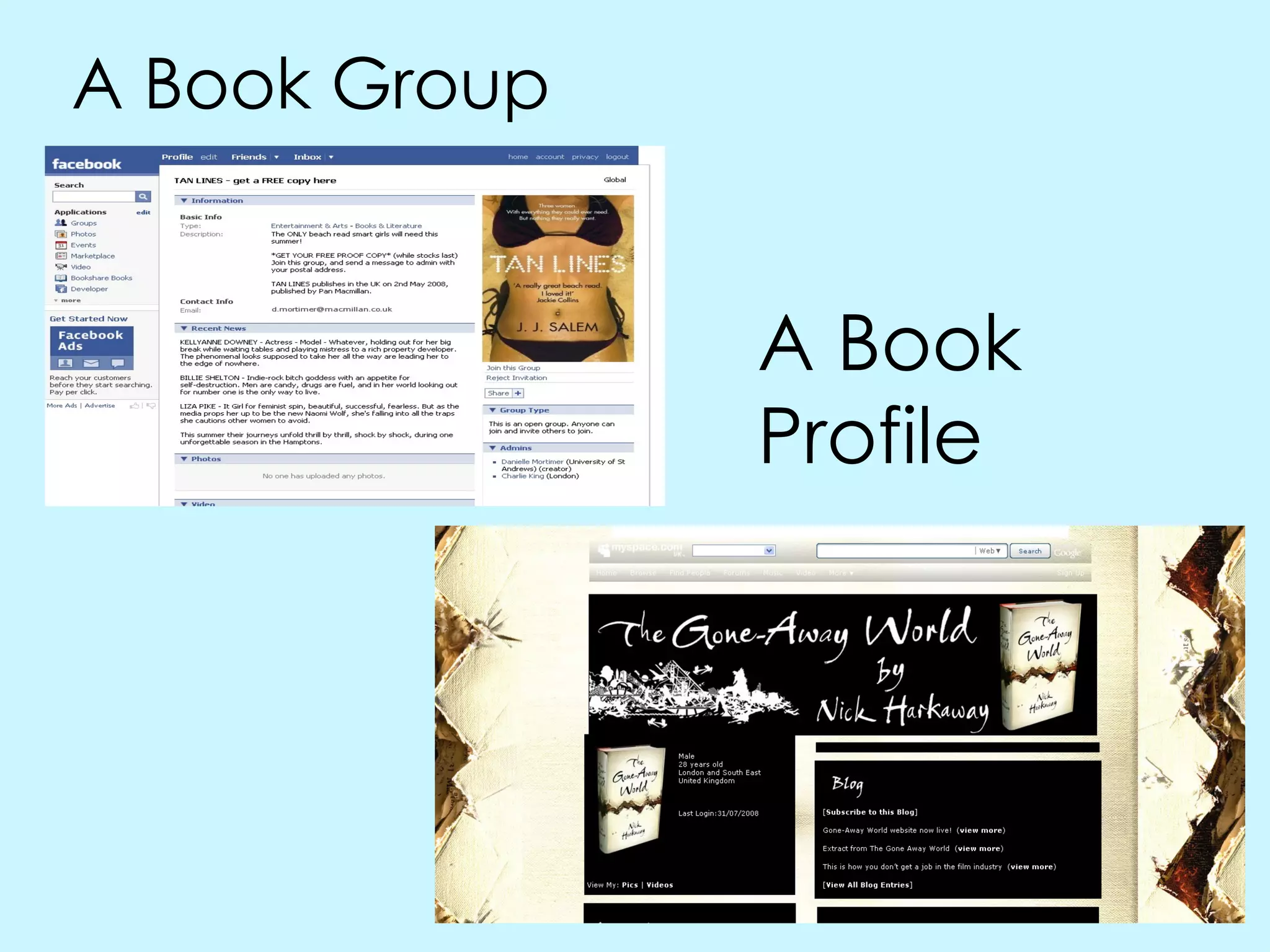
A Book Group A Book Profile
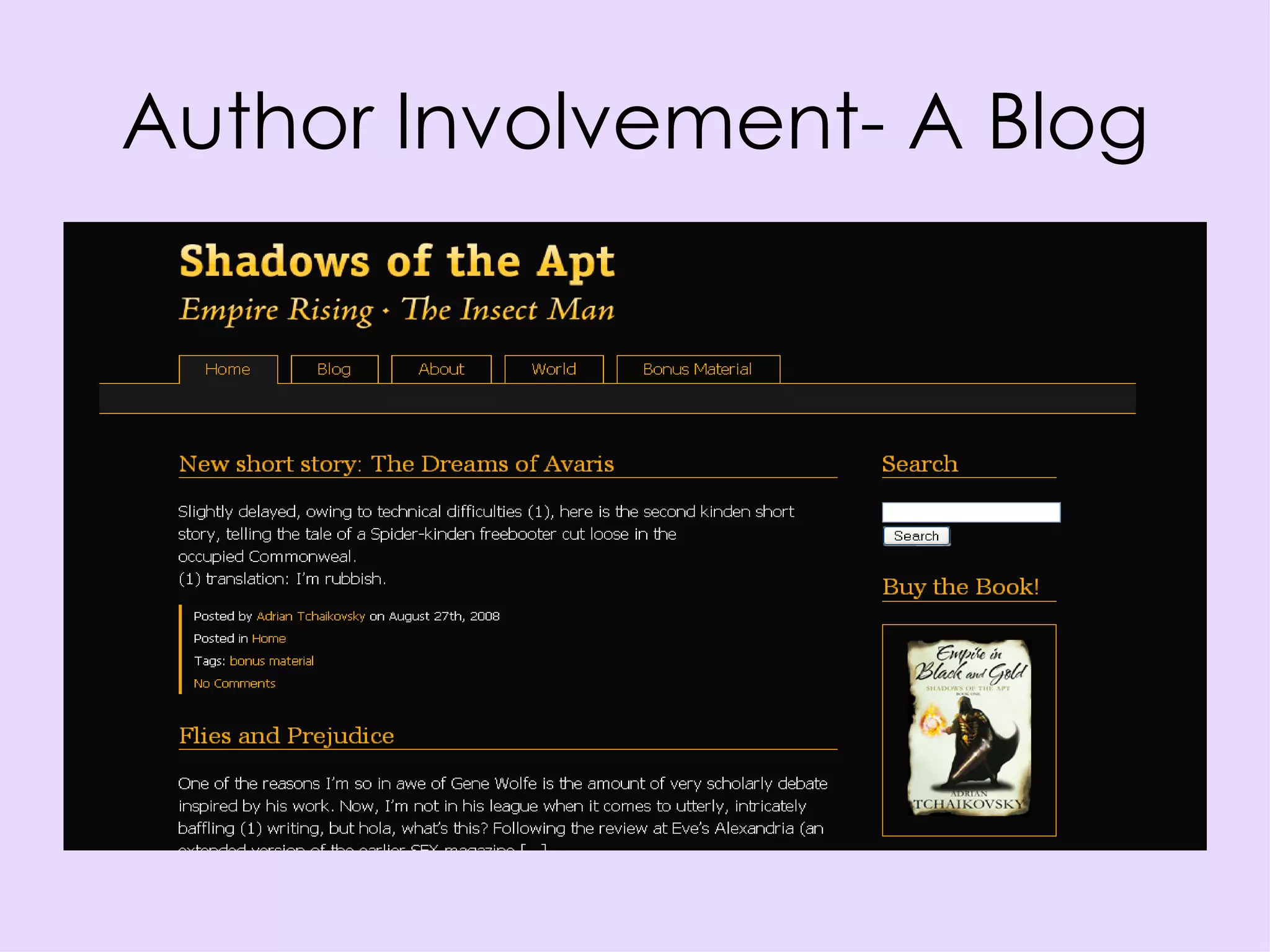
Author Involvement- A Blog
SMO – Social Media Optimisation Getting links, encouraging links and linking in return Opening up content for mash ups, letting others play with what you put on the web Having an open communicative presence for yourselves and products Making sure everything is tag-able and re-postable
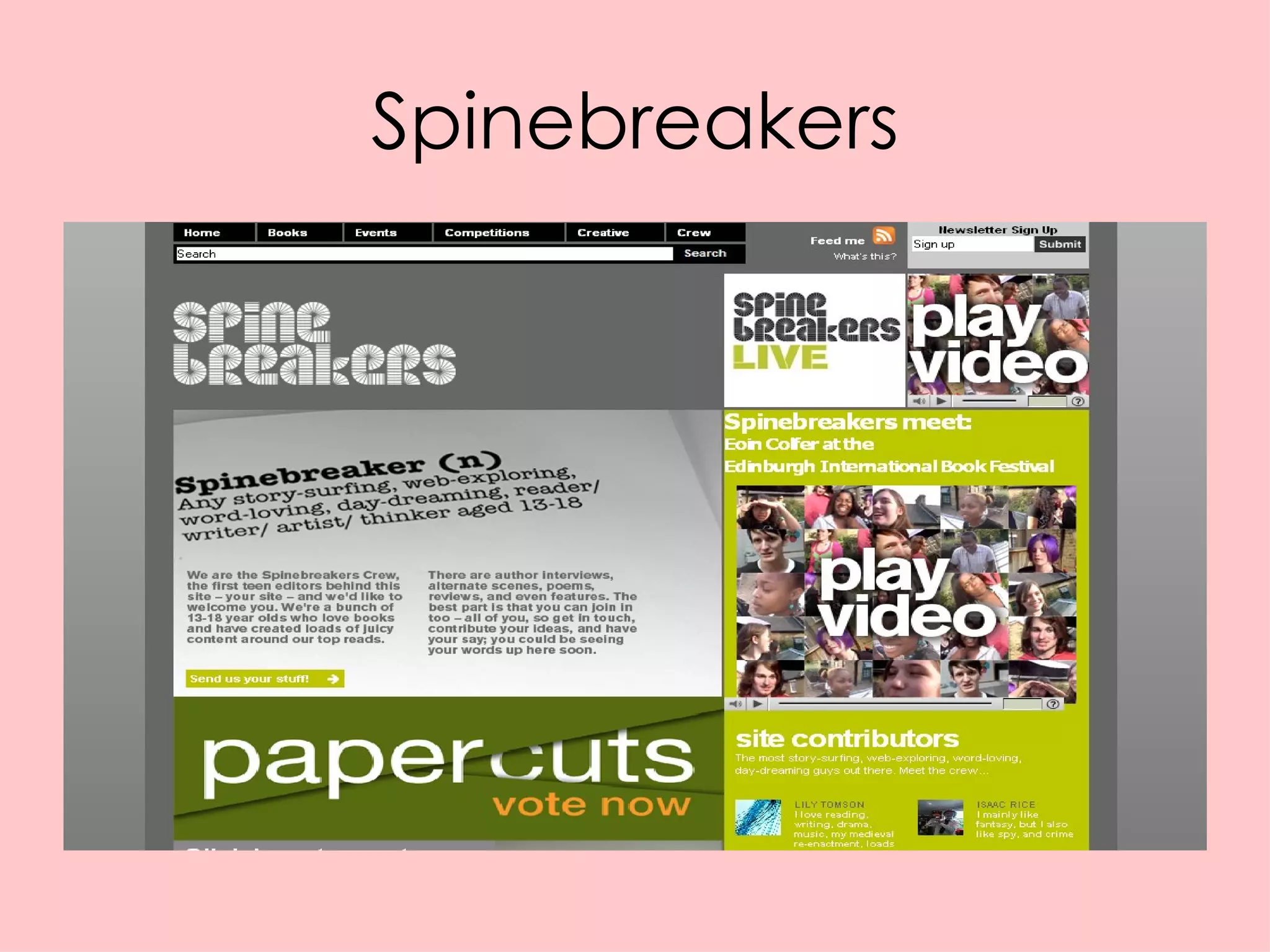
Spinebreakers
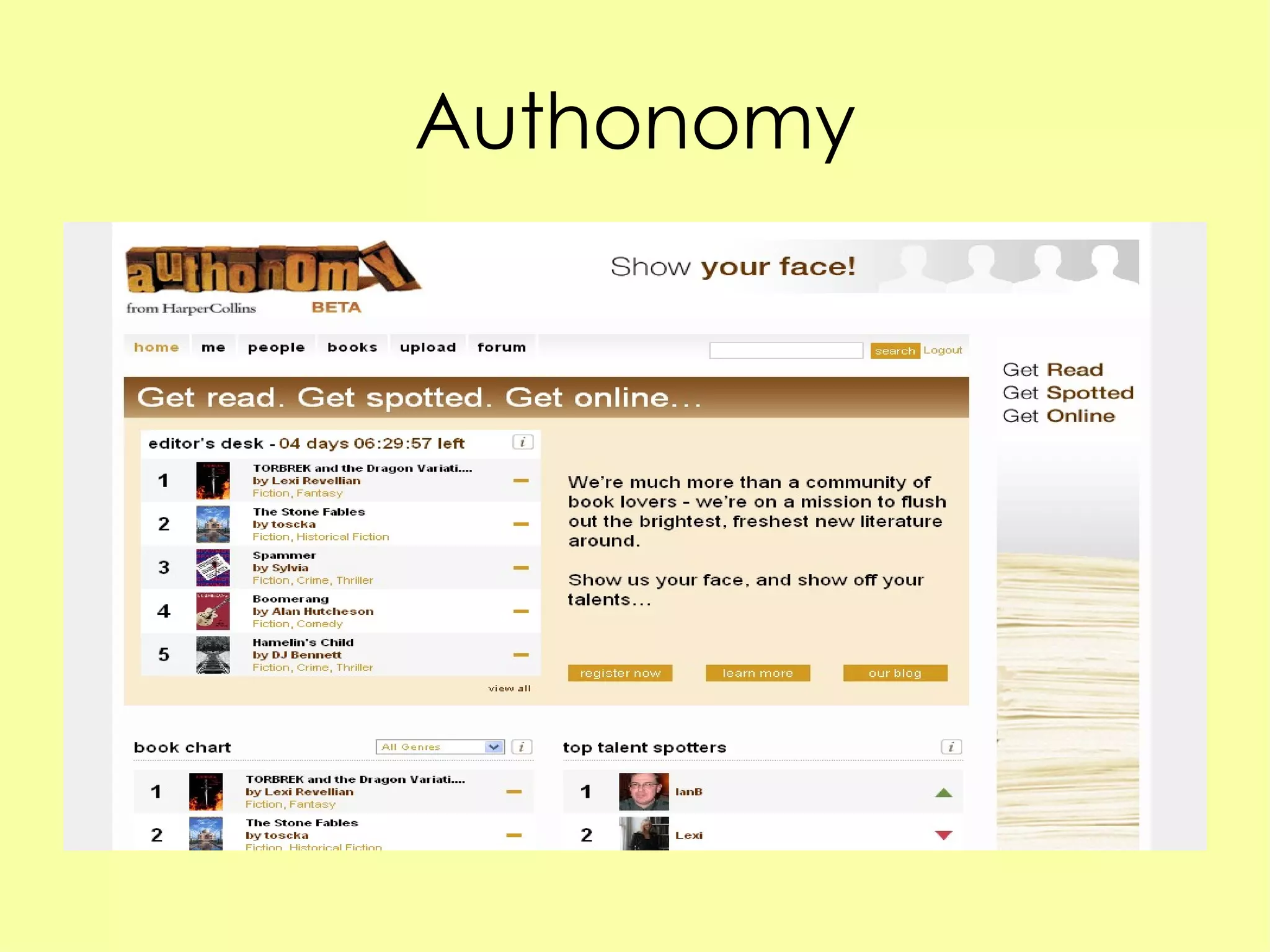
Authonomy
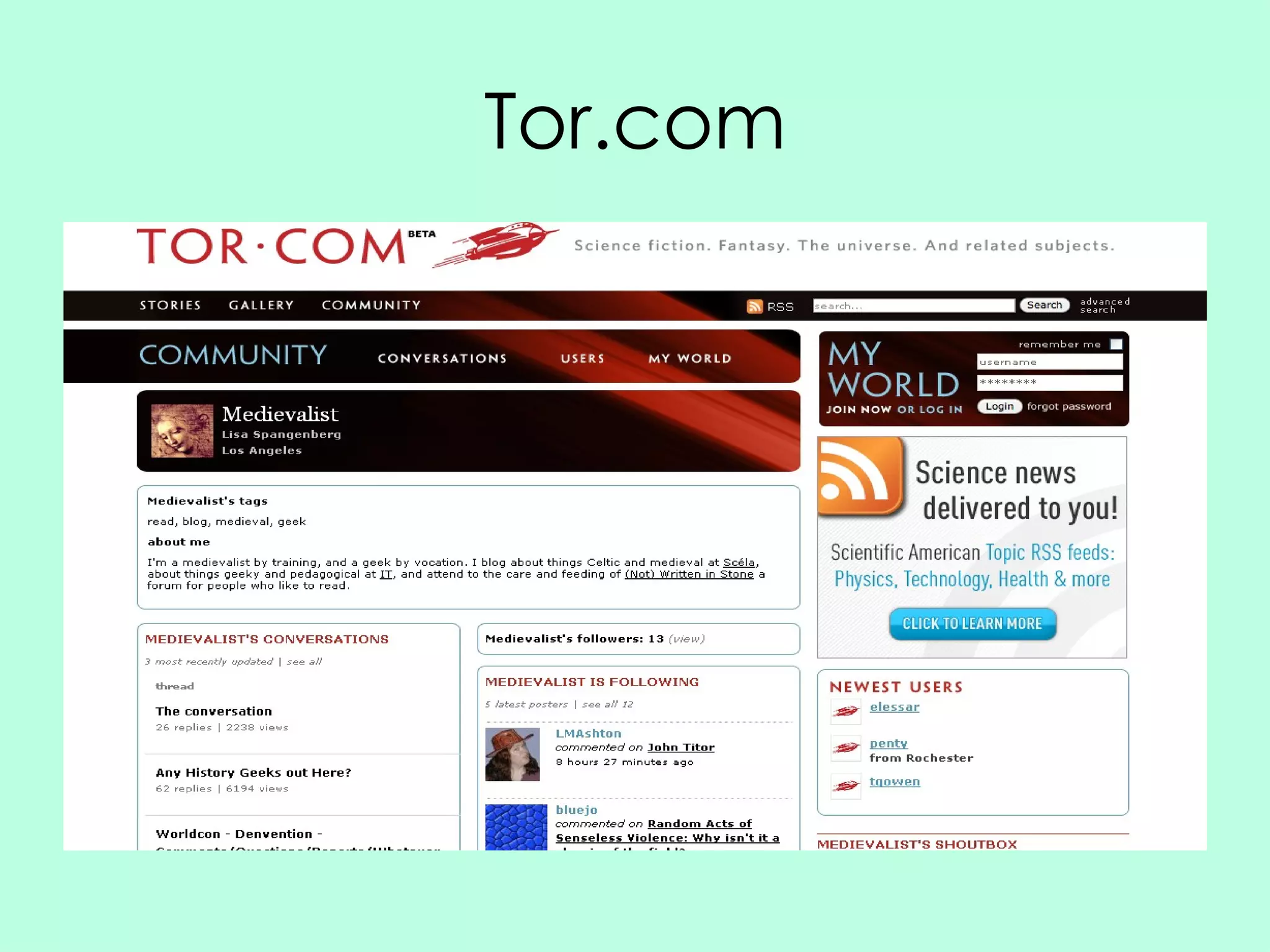
Tor.com
Lovelybooks
Do: Create new and valuable content Listen to your readership and respond to what they say Get your writers involved- and make sure you are involved Think creatively- see social media as content extension Link to other sites and use every tool at your disposal (RSS, Twitter etc) Set yourself form objectives to measure success against Have patience Remember that like all marketing this is about people
Don’t: Shout your message and just expect people to listen- preaching and selling does not go down well  Invest huge amounts of money on something already done better Create something and then just leave it Expect things to happen over night Block all user responses  Act or sound like a big business
Heavy or Light Light Create profiles and fan pages Author involvement on social networking sites On Twitter, blogging, talking to readers Uploading videos on Youtube Books on many platforms- metadata available  Heavy Building a blog or small website Developing or investing in a social network  Experimenting on the web  Skilled web team
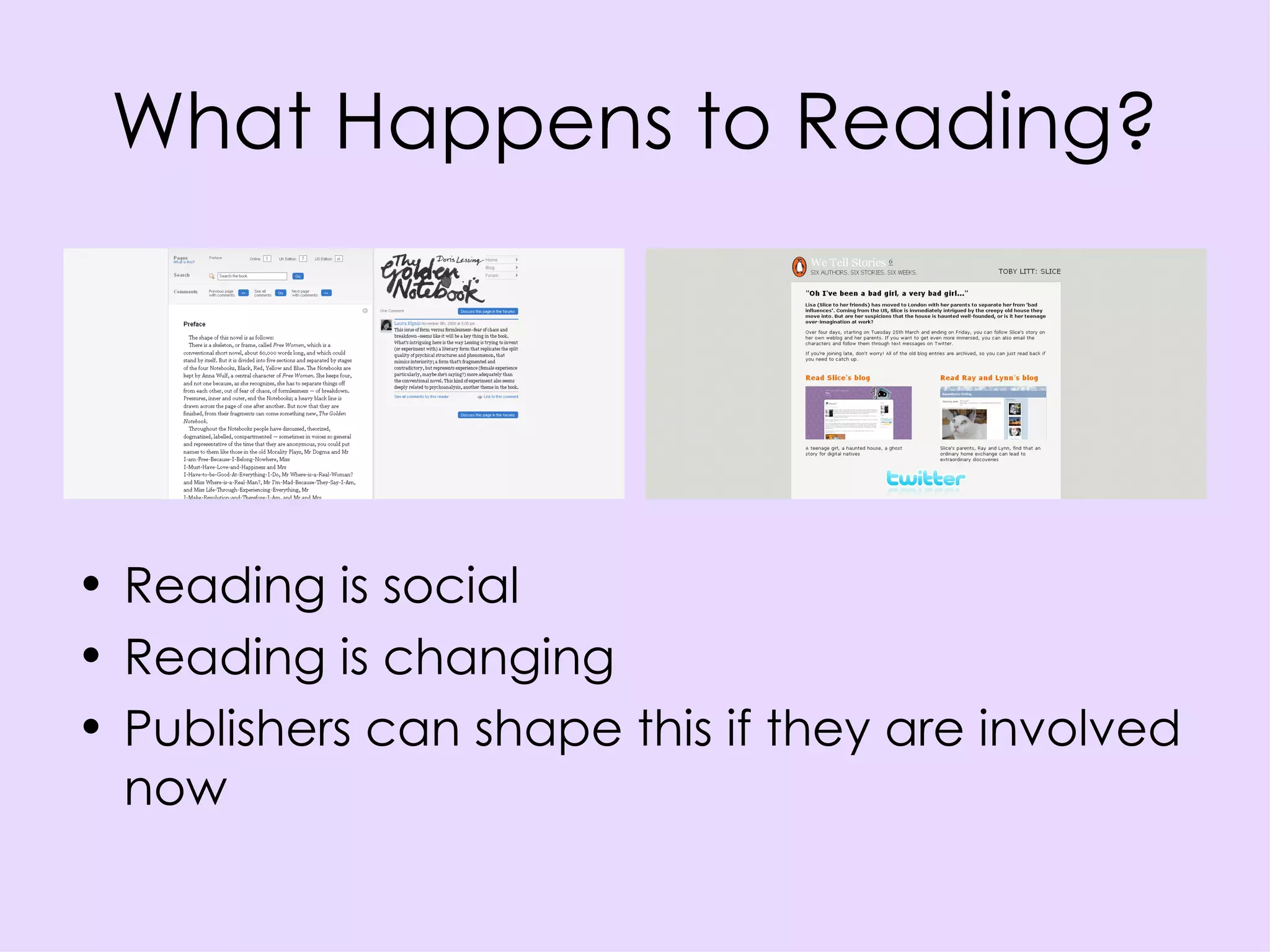
What Happens to Reading? Reading is social Reading is changing Publishers can shape this if they are involved now
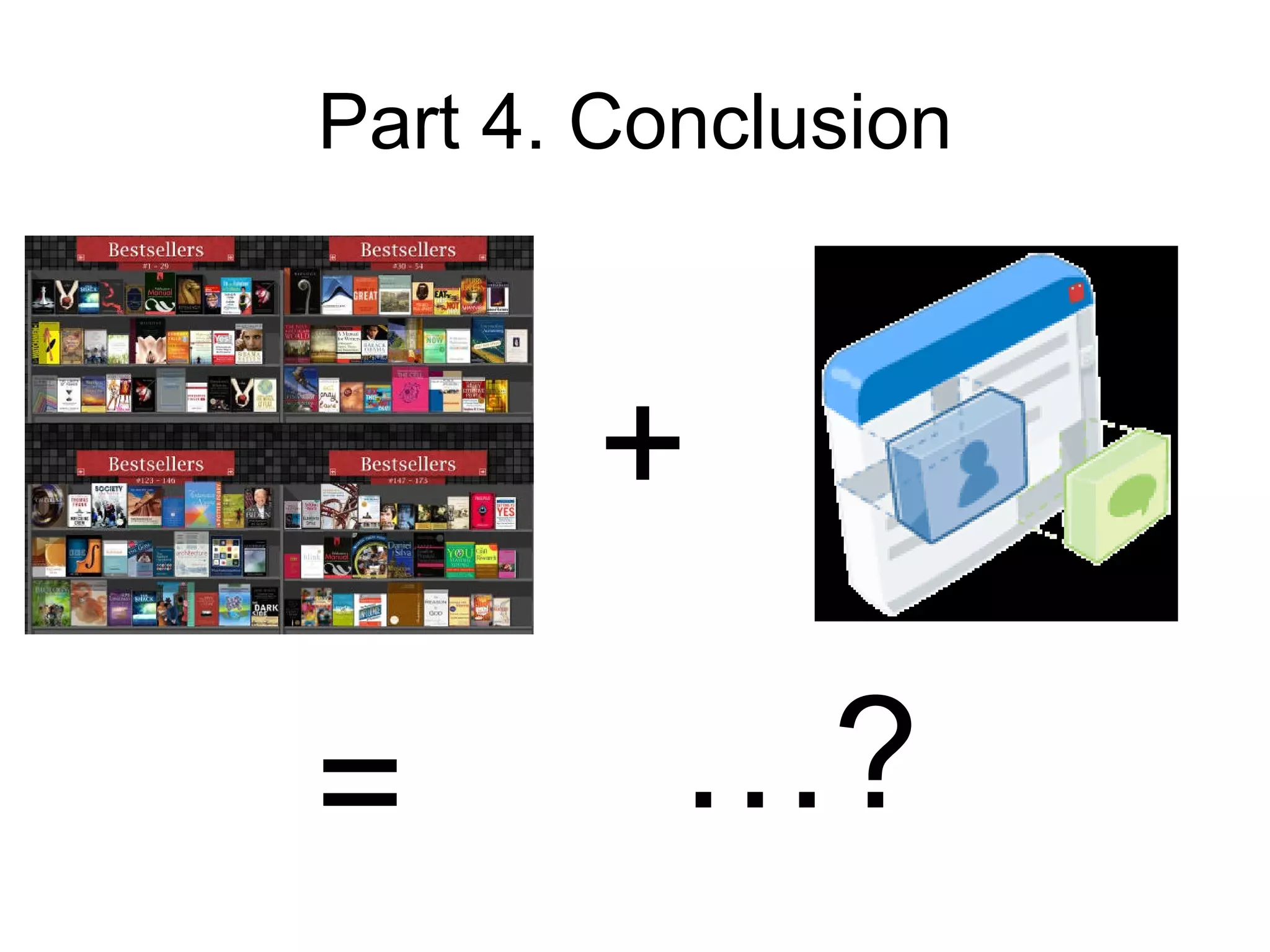
Part 4. Conclusion + = … ?
The End   Thanks for listening!

Social Networking And Publishing Pa 14.01.09

  • 1.
    Social Networking andPublishing Michael Bhaskar Pan Macmillan 14.01.09
  • 2.
    Part 1. Whatare social networking sites?
  • 3.
    Web 2.0 andsocial networks Using personalised web pages social networks let people communicate online Social networking part of the “Web 2.0” revolution that put people at the heart of the web Communication is a “many to many” model.
  • 4.
  • 5.
    Other Networks YouTubeLinked In Del.icio.us Twitter Digg Flickr
  • 6.
    All examples ofdifferent types of social network Websites like Ning.com even let you create your own network In social media EVERYTHING is social
  • 7.
    Who and howmany? Wide age range Women > men 20 million in the UK Myspace and Facebook + 100 million each (Facebook at 150 million) 41 million searched for books on Google Comscore estimates half of users over 35 Rapleaf report suggest women outnumber men Fastest growing demographic for Facebook is over 50s 41 million people searched for book, in English, on Google in 2007
  • 8.
  • 9.
  • 10.
    Part 2. Whyare social networking sites important for the book industry
  • 11.
    Social media effectsall media The record and newspaper industries have struggled: Peer to peer downloads, a social network of media sharing, has decimated revenues from CD sales. Record companies missed the chance to own the social space of music on the web- e.g. Myspace music “ Citizen journalism” has called into question the authority of traditional journalism Social networks are their own news service e.g. Twitter in Mumbai and on the US election Culture of free- no adequate online business model for newspapers
  • 12.
    Tagging Icons- Letyou save web pages Commenting lets people have their say
  • 13.
    Virals and USGSocial networks are the most powerful channel for viral marketing Products themselves of viral marketing Happens when people talk to each other- what social networks are all about Social networks are the distribution mechanism for user generated content Wikipedia- social software, collaboration, user generated contributions, valuable resource- has superseded print encyclopaedias?
  • 14.
  • 15.
    = Social networksare a cost of business. Like the plumbing. © identity chris
  • 16.
    Doesn’t the recessionchange all that? Most tools on the internet are free, so can be cheaper than traditional marketing Directly targets fans or likely fans so is more focused Many books are still not featured widely in social media- there is still an opportunity for those that are BUT expensive web 2.0 projects may have to go on the back burner
  • 17.
    Part 3. Howcan we get involved? ?
  • 18.
    A Book GroupA Book Profile
  • 19.
  • 20.
    SMO – SocialMedia Optimisation Getting links, encouraging links and linking in return Opening up content for mash ups, letting others play with what you put on the web Having an open communicative presence for yourselves and products Making sure everything is tag-able and re-postable
  • 21.
  • 22.
  • 23.
  • 24.
  • 25.
    Do: Create newand valuable content Listen to your readership and respond to what they say Get your writers involved- and make sure you are involved Think creatively- see social media as content extension Link to other sites and use every tool at your disposal (RSS, Twitter etc) Set yourself form objectives to measure success against Have patience Remember that like all marketing this is about people
  • 26.
    Don’t: Shout yourmessage and just expect people to listen- preaching and selling does not go down well Invest huge amounts of money on something already done better Create something and then just leave it Expect things to happen over night Block all user responses Act or sound like a big business
  • 27.
    Heavy or LightLight Create profiles and fan pages Author involvement on social networking sites On Twitter, blogging, talking to readers Uploading videos on Youtube Books on many platforms- metadata available Heavy Building a blog or small website Developing or investing in a social network Experimenting on the web Skilled web team
  • 28.
    What Happens toReading? Reading is social Reading is changing Publishers can shape this if they are involved now
  • 29.
  • 30.
    The End Thanks for listening!