Social Network
Social Network
 Social networking is the use of internet-based social
media programs to make connections with friends,
family, classmates, customers and clients.
 Social networking can be done for social purposes,
business purposes or both.
 Examples of social networking have included
Facebook, LinkedIn, Classmates.com and Yelp.
 Internet or mobile-device-based social spaces
designed to facilitate communication, collaboration
and content sharing across network of contacts.
Friendship
• Keeping in
Touch
• Developing
new
relationships
Sharing
• Photos
• Links
• Interests
Community
• Causes
• Beliefs
• Advocacy
Social Network
Social Network Website
 A website where one connects with those sharing
personal or professional interests, place of origin,
education at a particular school.
 Any website designed to allow multiple users
to publish content themselves.
 Sites typically allow users to create a profile
describing themselves and to exchange public or
private messages.
Characteristics of social Network
 Community
Social media allows communities to form quickly and
communicate effectively. Communities share
common interests, such as a love of photography, a
political issue or a favourite TV show.
 Participation
Social network encourages contributions and
feedback from everyone who is interested. It blurs the
line between media and audience.
 Conversation
social network is better seen as a two-way
conversation.
 Openness
Most social Network services are open to feedback
and participation. They encourage voting,
comments and the sharing of information.
Uses of SN for Student
 Students are more comfortable asking question and
clearing doubts online than in a crowded classroom.
 Students can get academic support from their
classmates and also information about academic
enrichment opportunities on campus.
 Students can organize study groups which will
encourage interaction and cooperation among friends
and classmates.
 Social learning can increase comprehension of
material and create new channels for students to
learn.
Advantages of Social Network
• Personal
• Business
• Education
Making friendship/contacts
Posting life updates
Authoring and sharing content
Advertising for their products
Create events and invite many people to join it
Reduce cost by using online sales
Collaboration between students, parents and
teachers
Development communication skills for students
• Costs very little money to set up online.
• Easy to create groups and forming communities
of interest.
• Online participation can be easier than face to
face.
• You get to meet and know a variety of people
whose interests are similar to your own.
• These sites are a window to different cultures and
places.
Disadvantages
• The most glaring disadvantage of social
networking sites is the risk of identity theft and
fraud.
• Your message can be caught up in ‘commercial
noise’.
• Harder to gauge participation and commitment.
• Not as effective as a face-to-face conversation.
• User drop-out.
• Hits do not necessarily indicate attitude change.
Risks of a social network
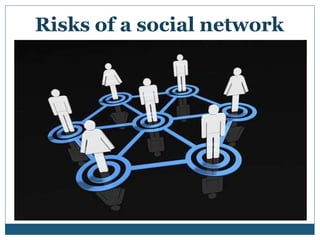
• Cybercriminals can easily get private data
• Targeted attacks against the users
• For example: personalized spam and phishing
attacks.
• Hacker infect the computers of users with
viruses
•Potential employers might findinformation about
you that is not appropiate (photos etc.)
Risks of a social networks
Social network

Social network

  • 2.
  • 3.
    Social Network  Socialnetworking is the use of internet-based social media programs to make connections with friends, family, classmates, customers and clients.  Social networking can be done for social purposes, business purposes or both.  Examples of social networking have included Facebook, LinkedIn, Classmates.com and Yelp.  Internet or mobile-device-based social spaces designed to facilitate communication, collaboration and content sharing across network of contacts.
  • 4.
    Friendship • Keeping in Touch •Developing new relationships Sharing • Photos • Links • Interests Community • Causes • Beliefs • Advocacy Social Network
  • 5.
    Social Network Website A website where one connects with those sharing personal or professional interests, place of origin, education at a particular school.  Any website designed to allow multiple users to publish content themselves.  Sites typically allow users to create a profile describing themselves and to exchange public or private messages.
  • 6.
    Characteristics of socialNetwork  Community Social media allows communities to form quickly and communicate effectively. Communities share common interests, such as a love of photography, a political issue or a favourite TV show.  Participation Social network encourages contributions and feedback from everyone who is interested. It blurs the line between media and audience.
  • 7.
     Conversation social networkis better seen as a two-way conversation.  Openness Most social Network services are open to feedback and participation. They encourage voting, comments and the sharing of information.
  • 8.
    Uses of SNfor Student  Students are more comfortable asking question and clearing doubts online than in a crowded classroom.  Students can get academic support from their classmates and also information about academic enrichment opportunities on campus.  Students can organize study groups which will encourage interaction and cooperation among friends and classmates.  Social learning can increase comprehension of material and create new channels for students to learn.
  • 9.
    Advantages of SocialNetwork • Personal • Business • Education Making friendship/contacts Posting life updates Authoring and sharing content Advertising for their products Create events and invite many people to join it Reduce cost by using online sales Collaboration between students, parents and teachers Development communication skills for students
  • 10.
    • Costs verylittle money to set up online. • Easy to create groups and forming communities of interest. • Online participation can be easier than face to face. • You get to meet and know a variety of people whose interests are similar to your own. • These sites are a window to different cultures and places.
  • 11.
    Disadvantages • The mostglaring disadvantage of social networking sites is the risk of identity theft and fraud. • Your message can be caught up in ‘commercial noise’. • Harder to gauge participation and commitment. • Not as effective as a face-to-face conversation. • User drop-out. • Hits do not necessarily indicate attitude change.
  • 12.
    Risks of asocial network
  • 13.
    • Cybercriminals caneasily get private data • Targeted attacks against the users • For example: personalized spam and phishing attacks. • Hacker infect the computers of users with viruses •Potential employers might findinformation about you that is not appropiate (photos etc.) Risks of a social networks