





Sociology
Presentation
Presented to:Miss Rabia Jameel
Presented by:Zahid and Namra
Topic:
Social Movement
.
Social Movement
A social movement is a type of group action. Social movements can be
defined as "organizational structures and strategies that may empower
oppressed populations to mount effective challenges .They are large,
sometimes informal, groupings of individuals or organizations which focus
on specific political or social issues. In other words, they carry out, resist, or
undo a social change.
.
History:
The early growth of social movements was connected to broad economic and political
changes in England in the mid-18th century.
Pakistan’s Social Movement Institute:
The institute was established in Hyderabad in March 2010 after several delibrations
in Umerkot ,Karachi and Sukkur that clubbed together social movements studies and
research.
.
By Sociologist:
Sociologist Charles Tilly defines social movements as a series of contentious
performances, displays and campaigns by which ordinary people make
collective claims on others.For Tilly, social movements are a major vehicle for
ordinary people's participation in public politics. He argues that there are
three major elements to a social movement.
Campaigns: Its all about claims.
Repository (repository of contention): Meetings,rallies and protests.
WUNC: displays public representation of worthiness, unity, numbers,
and commitments.
.
Features:
1.Its life is not certain. It may continue for a long period or may die out soon.
2.Its aim is to bring or resist a change in society.
3.It may be peaceful or violent.
4.It is an effort by a group.
.
.
Types:
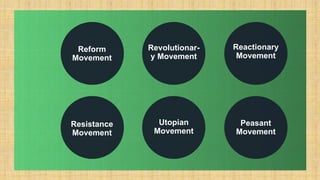
There are different types of Social Movement and
all they reflect different aspects of socialism.
These types are as next
Reform
Movement
Revolutionar-
y Movement
Reactionary
Movement
Resistance
Movement
Utopian
Movement
Peasant
Movement
.
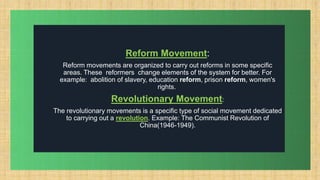
Reform Movement:
Reform movements are organized to carry out reforms in some specific
areas. These reformers change elements of the system for better. For
example: abolition of slavery, education reform, prison reform, women's
rights.
Revolutionary Movement:
The revolutionary movements is a specific type of social movement dedicated
to carrying out a revolution. Example: The Communist Revolution of
China(1946-1949).
.
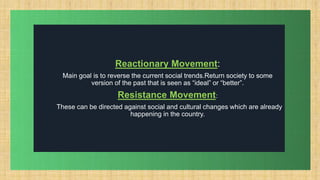
Reactionary Movement:
Main goal is to reverse the current social trends.Return society to some
version of the past that is seen as “ideal” or “better”.
Resistance Movement:
These can be directed against social and cultural changes which are already
happening in the country.
.
Utopian Movement:
These are attempts to take the society or a section of it towards a state of
perfection. Either on a large scale at some time in the future or on a smaller
scale in the present.
Peasant Movement:
Peasant movement is defined by Kathleen Gough as an attempt of a group to
effect change in the face of resistance and the peasant are people who are
engaged in an agricultural
.
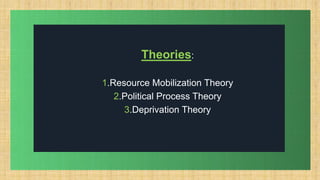
Theories:
1.Resource Mobilization Theory
2.Political Process Theory
3.Deprivation Theory
.
Deprivation Theory:
It argues that social movements have their foundations among people who
feel deprived of some goods or resources. According to this approach,
individuals who are lacking some goods, service, or comfort are more
likely to organize a social movement.
.
Resource Mobilization Theory:
This theory emphasizes the importance of resources in social movement
development and success. Resources are understood here to include:
knowledge, money, media, labor and internal and external support.
Political Process Theory:
Political process theory is similar to resource mobilization in many regards,
but tends to emphasize a different component of social structure that is
important for social movement .Political process theory argues that there are
three vital components for movement formation: insurgent consciousness,
organizational strength, and political opportunities.
.
Social Movements in the World
1.Lawyers Movement (2007)
2.Anjuman Talaba-e-Islam (2001)
3.Women’s right to vote
4.Animal Rights Movement
.
Advantages
1.Social movements offer patterns of change for betterment of human
condition, so that they have long been beneficial to human well-being
2.Social Movement is a effective way to feel free to express their
ideas,thoughts.
3. Social movements play such an important role in bringing
about social change in political, religious, educational, health, corporate,
government, and other institutional arenas.
Thank You
For watching.

Social Movement

  • 1.
    Sociology Presentation Presented to:Miss RabiaJameel Presented by:Zahid and Namra
  • 2.
  • 3.
    . Social Movement A socialmovement is a type of group action. Social movements can be defined as "organizational structures and strategies that may empower oppressed populations to mount effective challenges .They are large, sometimes informal, groupings of individuals or organizations which focus on specific political or social issues. In other words, they carry out, resist, or undo a social change.
  • 4.
    . History: The early growthof social movements was connected to broad economic and political changes in England in the mid-18th century. Pakistan’s Social Movement Institute: The institute was established in Hyderabad in March 2010 after several delibrations in Umerkot ,Karachi and Sukkur that clubbed together social movements studies and research.
  • 5.
    . By Sociologist: Sociologist CharlesTilly defines social movements as a series of contentious performances, displays and campaigns by which ordinary people make collective claims on others.For Tilly, social movements are a major vehicle for ordinary people's participation in public politics. He argues that there are three major elements to a social movement. Campaigns: Its all about claims. Repository (repository of contention): Meetings,rallies and protests. WUNC: displays public representation of worthiness, unity, numbers, and commitments.
  • 6.
    . Features: 1.Its life isnot certain. It may continue for a long period or may die out soon. 2.Its aim is to bring or resist a change in society. 3.It may be peaceful or violent. 4.It is an effort by a group. .
  • 7.
    . Types: There are differenttypes of Social Movement and all they reflect different aspects of socialism. These types are as next
  • 8.
  • 9.
    . Reform Movement: Reform movementsare organized to carry out reforms in some specific areas. These reformers change elements of the system for better. For example: abolition of slavery, education reform, prison reform, women's rights. Revolutionary Movement: The revolutionary movements is a specific type of social movement dedicated to carrying out a revolution. Example: The Communist Revolution of China(1946-1949).
  • 10.
    . Reactionary Movement: Main goalis to reverse the current social trends.Return society to some version of the past that is seen as “ideal” or “better”. Resistance Movement: These can be directed against social and cultural changes which are already happening in the country.
  • 11.
    . Utopian Movement: These areattempts to take the society or a section of it towards a state of perfection. Either on a large scale at some time in the future or on a smaller scale in the present. Peasant Movement: Peasant movement is defined by Kathleen Gough as an attempt of a group to effect change in the face of resistance and the peasant are people who are engaged in an agricultural
  • 12.
    . Theories: 1.Resource Mobilization Theory 2.PoliticalProcess Theory 3.Deprivation Theory
  • 13.
    . Deprivation Theory: It arguesthat social movements have their foundations among people who feel deprived of some goods or resources. According to this approach, individuals who are lacking some goods, service, or comfort are more likely to organize a social movement.
  • 14.
    . Resource Mobilization Theory: Thistheory emphasizes the importance of resources in social movement development and success. Resources are understood here to include: knowledge, money, media, labor and internal and external support. Political Process Theory: Political process theory is similar to resource mobilization in many regards, but tends to emphasize a different component of social structure that is important for social movement .Political process theory argues that there are three vital components for movement formation: insurgent consciousness, organizational strength, and political opportunities.
  • 15.
    . Social Movements inthe World 1.Lawyers Movement (2007) 2.Anjuman Talaba-e-Islam (2001) 3.Women’s right to vote 4.Animal Rights Movement
  • 16.
    . Advantages 1.Social movements offerpatterns of change for betterment of human condition, so that they have long been beneficial to human well-being 2.Social Movement is a effective way to feel free to express their ideas,thoughts. 3. Social movements play such an important role in bringing about social change in political, religious, educational, health, corporate, government, and other institutional arenas.
  • 17.