

John J. Carney, Esq.
Carney Forensics
Social Media Evidence: She Put What
on Facebook?! Or, Instagram, Twitter,
or YouTube?
Social Media Revolution
https://www.youtube.com/watch?v=2IcpwISszbQ
Social Media Evidence Agenda
• Social Media Sites
• “The New Confessional”
• Law Enforcement Usage
• Social Media Case Examples
• Social Media Investigations
• Social Media Discovery
• Social Media Evidence
• Social Media Ethics
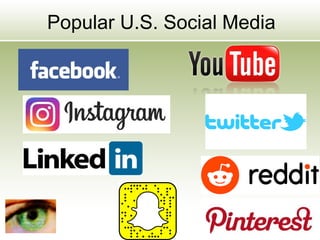
Popular U.S. Social Media
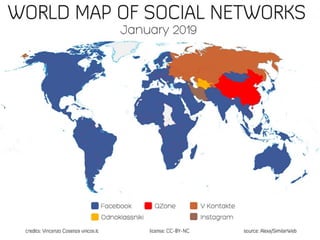
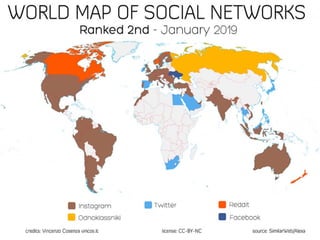
World Map of Social Networks
Picture-Sharing Social Media
Local Social Media
Dating Social Media
Direct Messages - “DM me”
Messages in Multiplayer Games
Professional Social Media
Company Collaboration
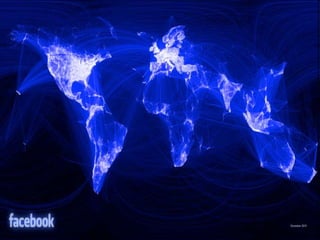
Planet Facebook
Facebook Produces Evidence
• Party Admissions - What Facebook data?
• Posts, E-mail, Friends
• State of Mind - What Facebook data?
• Status Updates
• Witness Credibility - What Facebook data?
• Posts, E-mail, Places, Friends, Contact Info
• Witness Character - What Facebook data?
• Photos, Videos, Likes, Apps
Why is Facebook the New Confessional?
• Speed and breadth amplify communication velocity
• Insecure communication
• Privacy controls constantly changing and often misunderstood
• Risk of impersonation by fake profiles – e.g. defamation
• Rapid, short and snappy communication
• Not reviewed, nor proofread; often grossly inaccurate
• Lacking context and precise meaning
• Interpretation often left to reader
• Lack of control over content – often “goes viral”
• Tacitly encourages candor as key social behavior
• Evidence often surprisingly relevant, incriminating, and
powerful for impeachment
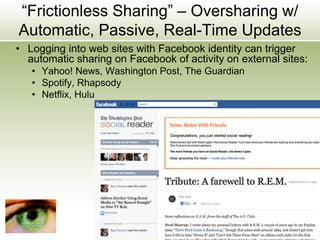
“Frictionless Sharing” – Oversharing w/
Automatic, Passive, Real-Time Updates
• Logging into web sites with Facebook identity can trigger
automatic sharing on Facebook of activity on external sites:
• Yahoo! News, Washington Post, The Guardian
• Spotify, Rhapsody
• Netflix, Hulu
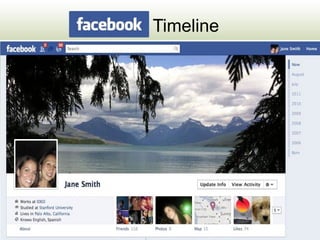
Timeline
Facebook – Privacy?
• Are Facebook wall postings discoverable?
• Yes, regardless of privacy settings or controls, but why?
• ESI – Electronically Stored Information
• No “Facebook privilege”; Mackelprang v. Fidelity National Title
Agency of Nevada, Inc. 2007 WL 119149 (D. Nev. – 2007.)
• Information likely relevant to explore claims put at issue by
government or opposing party*
• Overall trend judiciary moving toward greater permissiveness
of social media e-discovery*
• Strong likelihood privacy concerns will be outweighed by
weight and relevance of social media information
Social Media – Law Enforcement
“As a prosecutor, the first thing I do when I get a case is to
Google the victim, the suspect, and all the material witnesses.
I run them all through Facebook, MySpace, Twitter, YouTube
and see what I might get. I also do a ‘Google image search’
and see what pops up. Sometimes there’s nothing, but other
times I get the goods – pictures, status updates, and better
yet, blogs and articles they’ve written.”
- A former Deputy District Attorney for Los Angeles County
“You find out about people you never would have known
about before.”
- Dean Johnston, California Bureau of Narcotics Enforcement
Social Media – SMILE Conference
“Representatives from Twitter and Facebook say they
regularly cooperate with police and supply information on
account holders when presented with a search warrant.”
- Associated Press
About the SMILE Conference: The SMILE Conference is the
leading conference devoted to social media, Internet and law
enforcement initiatives. The SMILE Conference has pioneered the
adoption of social media by law enforcement agencies across the
world for public outreach, crime prevention, and forensics. In
conjunction with the ConnectedCops website,
http://connectedcops.net/, the SMILE Conference has become both
the go-to and most trusted source by law enforcement agencies
worldwide.
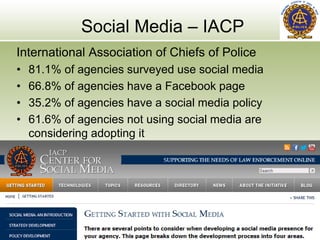
Social Media – IACP
International Association of Chiefs of Police
• 81.1% of agencies surveyed use social media
• 66.8% of agencies have a Facebook page
• 35.2% of agencies have a social media policy
• 61.6% of agencies not using social media are
considering adopting it
Prosecutors’ Social Media Stories
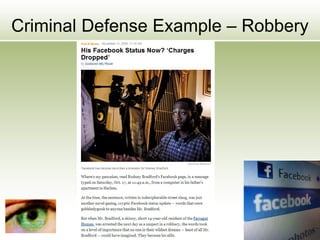
Brash Facebook Posts Lead to Bank Heist Arrests
• Two people charged in staged Texas bank heist
• Facebook status update postings landed pair in custody
• Two days before robbery – “Get $$$”
• Day after robbery – “Wipe my teeth with hundreds (sic)”
• Day after robbery – “U have to past the line sometimes!! To get
dis money”
• Two days after robbery – “I’m rich”
- CNN.com, April 22, 2011 8:54 p.m.
Prosecutors’ Social Media Stories
MySpace Page Used Against Gang Suspect
• Charged with felony assault and misdemeanor weapons
possession
• Defendant released on $5,000 bail
• Prosecutor introduced 10 pages of MySpace photos
• Wearing gang clothing
• Giving gang signs
• Standing with others in gang colors
• Based on photos and other evidence supporting likelihood
of conviction
• Judge raised bail to $50,000
- Buffalo News, Jan. 23, 2009
Social Media and OFP/HRO Violations
• Facebook “Poke”
• Tennessee woman subject OFP Oct. 2009
• Poked female petitioner via Facebook
• Arrested and charged with violating OFP
• Facebook “Friend Request”
• Florida man contacted ex-wife twice
• Arrested for violating OFP Aug. 2010
• MySpace “Friend Request”
• Constitutes violation OFP in Staten Island, NY
• New York judge: MySpace simply different conduit for
forbidden communication
• People v. Fernino, 851 NYS2d 339, Feb. 13, 2008.
Criminal Defense Example – Robbery
Criminal Defense Example – Statutory Rape
In Ohio v. Gaskins, a statutory rape case, the trial court
permitted the defendant to introduce evidence that an
underage complainant had held herself out on her MySpace
page as an eighteen-year-old with experience in adult sexual
relationships. Photos of the girl that she had posted were
admitted along with witness testimony about their authenticity.
- John G. Browning, The Lawyer’s Guide to Social Networking
State of Ohio v. Gaskins, 2007 WL 2296454 (Ohio Ct. App., Medina County, 2007).
Criminal Defense Example – Assault
D. Jesse Smith, a solo practitioner in Tucson, Ariz., said social
networking sites can be helpful for defense lawyers. In a
recent misdemeanor assault case, Smith said he was able to
prove someone other than his client was the aggressor who
started the fight because his MySpace page contained a video
of him beating someone up.
“I think that’s why he was found not guilty”, Smith said of his
client. “It’s a great source of potential impeachment evidence
against witnesses being called by the state.”
- Vesna Jaksic, “Finding Treasures for Cases on Facebook”, The National Law Journal,
October 15, 2007
Social Media Case Investigations
• Analysis
• Information Bases
• Online Preservation and Collection
• Admissibility
Internet Archive
• Wayback Machine
• web.archive.org
• Retrieve Copies of Public Web
Pages Removed in the Past
• Admitted Based on Statement or Affidavit from
Internet Archive Representative with Personal
Knowledge of Contents
• Procedure Available for Obtaining Affidavit
• Useful Sample Available
• Or, Authenticated by a Knowledgeable Employee of
Web Site
Graph Search
Twitter Archive @ U.S. Library of Congress
• Every Public Tweet
• Between Twitter’s inception in March 2006 and
December 2017 archived digitally at Library of
Congress
• Selective Tweets archived after January 1, 2018
• Twitter says, “very exciting that tweets are
becoming part of history.”
• New York Times: “your indiscretions will be able to
be seen by generations and generations of
graduate students.”
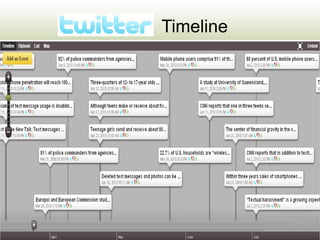
Timeline
Online Preservation & Collection
• Attorneys are Capturing Basic Evidence by Printout
• Admission Possible, but Challenges are Increasing
• Legally Defensible Collection Issues are Mounting
• Constantly changing content like wall posts,
status updates, news feeds, and timelines
• Capture of dynamic content like audio, video,
voice, and animations
• Capture of large size and scrolling content
• Capture of application and app data
Online Preservation & Collection
• Foundation and Hearsay Problems Often Exist
• Neutrality – Capture by litigants or counsel give
rise to questions about integrity of collection; also
counsel cannot serve as witness
• Process – Accuracy of collection and proper
documentation on consistent and repeatable
methods used for capturing and securing content
• Chain of Custody
• Missing Metadata or References to Authenticate
• Social Media Site name
• Uniform Resource Locator (URL) a.k.a. web address
• Date/Time Stamps from U.S. Atomic Clock; not collection PC
• Internet Protocol (IP) address and geolocation data
• Hash Codes for digital signature of evidence collection
• Log files of tool actions; Key logging of investigator actions
Social Media Admissibility?
• State v. Eleck
• 2011 WL 3278663 (Conn.App. 2011)
• Defendant charged with assault in first degree
• Defense attorney impeached witness with printout of
Facebook messages
• Court rejected messages on authentication of authorship
grounds citing “the general lack of security of the
medium….”
• Court advised, “it was incumbent on the defendant to
advance other foundational proof to authenticate that the
proffered messages did, in fact, come from Judway and
not simply from her Facebook account.”
Social Media Admissibility?
• Griffin v. State of Maryland
• Court overturned murder conviction
• Pages allegedly printed from MySpace were not properly
authenticated pursuant to Maryland Rule 5-901
• Because someone other than the purported creator could
have created the profile
• And posted comment in question, when the State
identified only date of birth of creator and her photograph
• Other Courts Erring on Side of Admissibility
• Authentication Decided on Totality of Circumstances
• Concerns about Contradictory Testimony on Identity of
Posting Author Are Left for Jury to Weigh
• Reversed Judge in Griffin Did the Same
Social Media – Discovery
• What ESI Available for Review?
• Evidence Strategies – Computer and
Mobile Devices
• Requests for Evidence
Social Media:
What ESI Can We Get For Review?
Content
• Friends, Friends of Friends, Connections, Followers, etc.
• Status Updates, Relationship Status
• E-mail, Chat, Text Messages, Friend Requests, Pokes
• Timeline (Profile) – Name, Picture, Gender, Contact, Birthday
• Wall, Posts, Comments, Tags
• Likes, Reads, Views, Listens, etc.
• Networks, Groups, Events
• Photos, Videos, Audio, Music, Tags
• Apps, App Data, Games
Pushed Content
• E-mail Notifications with Metadata
• RSS Feeds with Metadata
Metadata
Site Names, Uniform Resource Locators (URLs)
Date/Time Stamps, Geolocation Information (Check-ins)
IP Logs, Login/Logout Logs
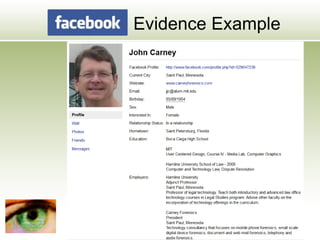
Evidence Example
Evidence Elements
• Your profile (timeline) information (ex: your contact information,
interests, groups)
• Wall (timeline) posts and content that you and your friends have
posted to your profile (timeline)
• Photos and videos that you have uploaded to your account
• Your friend list
• Notes you have created
• Events to which you have RSVP’d
• Your sent and received messages
• Any comments that you and your friends have made on your Wall
(timeline) posts, photos, and other profile (timeline) content
Evidence Elements
• IP addresses: Any IP addresses we have stored (this won't be all of the IP addresses that have
ever accessed your account)
• Login info: A list of the logins we have stored (this won't include every login during your
account's history)
• Log out info: The IP addresses from which you logged out
• Pending friend requests: Friend requests you sent and friend requests you received but
haven't accepted or denied
• Account status changes: Dates when your account was reactivated, deactivated, disabled or
deleted
• Poke info: Information about the pokes you've exchanged
• Events info: Events you accepted, declined, and responded maybe to
• Other profile (timeline) info: The mobile phone numbers you've added to your account
• Your city and hometown (whatever is currently listed)
• The names of the family members you've listed on your account
• Your relationship info (names and statuses)
• A list of the languages you’ve added to your profile
• A history of any changes you've made to the name on your account
Evidence Strategies - Computer
• If Opposition’s Evidence is Insufficient
• Social Media Evidence is Missing
• Evidence Destruction is Suspected
• Then Look Outside Facebook
• E-mail Notifications
• RSS Containing Content & Time Stamps Pushed Out by
Social Media Site
• Or, Move for Warrant / Court Order for Computer
Forensic Analysis of Opposition’s Hard Drives
• And Recover Social Media Evidence
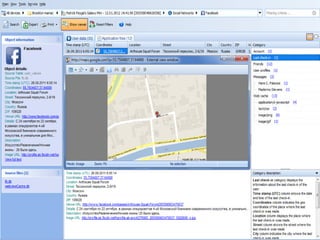
• What Evidence? What Will It Look Like?
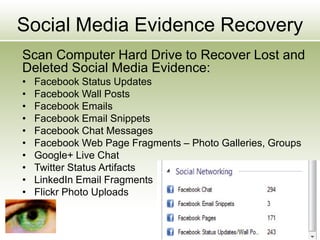
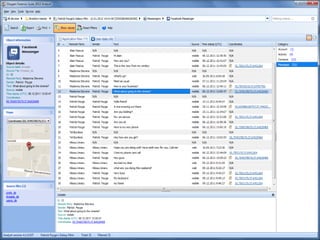
Social Media Evidence Recovery
Scan Computer Hard Drive to Recover Lost and
Deleted Social Media Evidence:
• Facebook Status Updates
• Facebook Wall Posts
• Facebook Emails
• Facebook Email Snippets
• Facebook Chat Messages
• Facebook Web Page Fragments – Photo Galleries, Groups
• Google+ Live Chat
• Twitter Status Artifacts
• LinkedIn Email Fragments
• Flickr Photo Uploads
Evidence Strategies - Mobile
• If Opposition’s Evidence is Insufficient
• Social Media Evidence is Missing
• Evidence Destruction is Suspected
• Then Look Outside Facebook
• E-mail Notifications
• RSS Containing Content & Time Stamps Pushed Out by
Social Media Site
• Or, Move for Warrant / Court Order for Mobile Device
Forensic Analysis of Opposition’s Phones & Tablets
• And Recover Social Media Evidence
• What Evidence? What Will It Look Like?
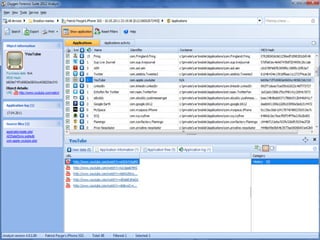
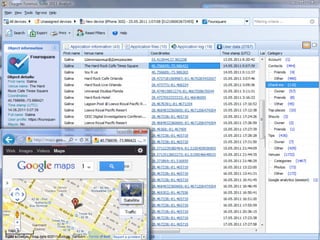
Smart Phone Apps & App Data
Requests for Evidence
• Social Media Evidence is Electronically Stored
Information (ESI) and Discoverable
• E.E.O.C. v. Simply Storage Management, LLC
• Can Place Litigation Hold on Social Media with
Preservation Letter to ISP for Evidence Protection
• Obtain Warrant/Court Order for Opposition’s
Production of Social Media Evidence
Requests for Evidence
• Defense Can Move to Compel Signed Consent
Releases from Subscriber or Party to Communication
for Subpoena
• Flagg v. City of Detroit
• O’Grady v. Superior Court
• Defense Can Request Government’s Social Media
Evidence
• FRCP 16(a)
• MRCP 9.01
• Brady v. Maryland (SCOTUS 1963)
Requests for Evidence
• Or, Obtain Court Order for Opposition's Disclosure of
Account Identification
• Username
• Password
• 2FA token/code
• With Order Expert Can Forensically Collect Evidence
Directly from Social Media Account
Search Warrants
• Social Media ISPs are Cooperative with Government
• Compliance Guides Written for Law Enforcement
• Explain How to Respond to Types of Processes
• Subpoenas
• Search Warrants
• National Security Letters
• 2703(d) Orders
• Wiretap Orders
• Trap-and-Trace Orders
• Available from Facebook, Instagram, Twitter, LinkedIn,
Microsoft, Skype, Google, YouTube, Snapchat,
Pinterest, Tumbler, Photobucket, Craigslist, Yahoo!
Subpoenas
• Stored Communications Act, 18 U.S.C. § 2701 (1986)
• Disclosure Only to Governmental Entities
• Prohibits Disclosure of “Communications Content”
• Does Not Prohibit Disclosure of New Information Types
Not Contemplated by Statute
• Images and Photos
• Audio and Voice
• Video
• Links
• Metadata, e.g. IP Logs
Subpoenas
• Move for Court Order for Subpoena to Serve Social
Media ISPs for Production of Documents and Data
• FRCP 17(c) MRCP 22.01
• ISPs Uncooperative, Except by Subscriber Consent
• Social Media Subpoena Compliance Lawyers Resist
All but Law Enforcement
• “We’re itching for that fight. We don’t want to have to
deal with these requests.”–Facebook General Counsel
• Signed Consent Release from Subscriber or Party to
Communication Might Help
• Facebook Subpoena Must Be Domesticated in Calif.
Facebook Charges Substantial Fees
• Per User Account
• For Notarized Declaration
Social Media – Legal Ethics
• Communications with Represented Party
• Communications with Unrepresented Third Party
• Use of Agents, Non-lawyer Assistants
• Advice to Clients on Use of Social Media
• Failure to Preserve Relevant Evidence
• Remember to Check Terms of Service
Social Media – Legal Ethics
• Should Lawyer “Friend” Opposing Party to Get Past
Privacy Controls to Obtain Facebook Evidence?
• Should Your Paralegal or Investigator Do It?
• What Else is Practice Called?
• “Faux Friending”
• “Pre-texting”
• “Opposition Research”
• Is It Ethical?
• Will You Be Sanctioned?
• Will Your Evidence Be Admissible?
Social Media – Legal Ethics
• Lawyer may not attempt to gain access to social media site
under false pretenses, with fictitious identity
• Violates Rule 8.4(c) on dishonesty, fraud, deceit
• Violates Rule 4.2 on communications with represented party
without other lawyer’s consent
• Rules 5.3 & 8.4(a) eliminate agents (paralegal, investigator)
• Oregon Ethics Opinion 2013-189
• Viewing publicly accessible content of represented party is
fair game
• Like reading a book or magazine article
• San Diego County Bar Assoc. Opinion 2011-2
• High ranking employees of corporation are treated as
represented parties, cannot “friend” to get access
Social Media – Legal Ethics
• What about unrepresented third parties or witnesses?
• May violate Rule 4.3 on communications with unrepresented
third parties or witnesses based on lawyer’s role or partiality
• Could violate Rule 8.4(c) on dishonesty, fraud, deceit
• Ethics opinions in Oregon, Kentucky, and New York do not
permit agents to engage in false or deceptive tactics to
circumvent social media privacy settings
• Oregon Ethics Opinion 2013-189
• Viewing publicly accessible content of unrepresented party
is fair game
• Philadelphia & San Diego County Bar Associations
• Lawyers must affirmatively disclose their reasons for
communicating with third parties
Social Media – Legal Ethics
• Should lawyers advise clients on their use of social
media?
• EEOC v. Original Honeybaked Ham shows damaging
outcome of publicly sharing posts on social media
• New York County Lawyers’ Association Ethics Op.745
• Obligation may exist in competent representation
to review social media and advise client
• Turn on or maximize privacy restrictions
• What information is wise to post or not post in
public or private social media pages
• What may be kept or removed from client’s pages
Social Media – Legal Ethics
• Balance duty to review and advise with failure to
preserve relevant social media evidence
• Avoid sanctions and adverse inference instructions
• Use care to avoid spoliation by deleting or cleaning
• Be careful with deactivating a Facebook account
• Use care changing Facebook profile picture
• Don’t let clients make mistakes with their social
media
• Don’t fail to preserve rare, but relevant social media
• Games, Dating, Company Collaboration
• Messages, Locations, Audio, Documents
Facebook – Terms of Service
Who can use Facebook
When people stand behind their opinions and actions, our community is safer and more
accountable. For that reason, you must:
• Use the same name that you use in everyday life.
• Provide accurate information about yourself.
• Create only one account (your own) and use your timeline for personal purposes.
• Not share your password, give access to your Facebook account to others, or transfer your
account to anyone else (without our permission).
We try to make Facebook broadly available to everyone, but you cannot use Facebook if:
• You are under 13 years old.
• You are a convicted sex offender.
• We previously disabled your account for violations of our terms or policies.
• You are prohibited from receiving our products, services, or software under applicable laws.
Lawyers Impact Admissibility
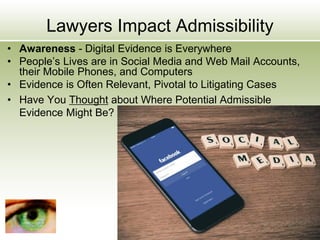
• Awareness - Digital Evidence is Everywhere
• People’s Lives are in Social Media and Web Mail Accounts,
their Mobile Phones, and Computers
• Evidence is Often Relevant, Pivotal to Litigating Cases
• Have You Thought about Where Potential Admissible
Evidence Might Be?
Lawyers Impact Admissibility
• Timeliness is Everything!
• Impacts Online Evidence Capture, Authentication, and
Admissibility
• Find, Collect, and Analyze Evidence Early – Before:
• Volatile and Impermanent Content Changes
• Privacy Controls are Tightened
• Cooperative, Third Party Witnesses are Defriended
• Wall Posts, Photos, Videos, Messages are Deleted
• Social Media Account is Terminated
Questions & Answers
Carney Forensics
“Digital Evidence is Everywhere”
Cell Phones / Smart Phones
Smart Tablets
Computer Forensics
GPS Devices
Social Media / Web Mail
Sign up for our Newsletter!!
www.carneyforensics.com

Social Media Forensics

  • 1.
    John J. Carney,Esq. Carney Forensics Social Media Evidence: She Put What on Facebook?! Or, Instagram, Twitter, or YouTube?
  • 2.
  • 3.
    Social Media EvidenceAgenda • Social Media Sites • “The New Confessional” • Law Enforcement Usage • Social Media Case Examples • Social Media Investigations • Social Media Discovery • Social Media Evidence • Social Media Ethics
  • 4.
  • 5.
    World Map ofSocial Networks
  • 6.
    World Map ofSocial Networks
  • 7.
  • 8.
  • 9.
  • 10.
    Direct Messages -“DM me”
  • 11.
  • 12.
  • 13.
  • 14.
  • 15.
    Facebook Produces Evidence •Party Admissions - What Facebook data? • Posts, E-mail, Friends • State of Mind - What Facebook data? • Status Updates • Witness Credibility - What Facebook data? • Posts, E-mail, Places, Friends, Contact Info • Witness Character - What Facebook data? • Photos, Videos, Likes, Apps
  • 16.
    Why is Facebookthe New Confessional? • Speed and breadth amplify communication velocity • Insecure communication • Privacy controls constantly changing and often misunderstood • Risk of impersonation by fake profiles – e.g. defamation • Rapid, short and snappy communication • Not reviewed, nor proofread; often grossly inaccurate • Lacking context and precise meaning • Interpretation often left to reader • Lack of control over content – often “goes viral” • Tacitly encourages candor as key social behavior • Evidence often surprisingly relevant, incriminating, and powerful for impeachment
  • 17.
    “Frictionless Sharing” –Oversharing w/ Automatic, Passive, Real-Time Updates • Logging into web sites with Facebook identity can trigger automatic sharing on Facebook of activity on external sites: • Yahoo! News, Washington Post, The Guardian • Spotify, Rhapsody • Netflix, Hulu
  • 18.
  • 19.
    Facebook – Privacy? •Are Facebook wall postings discoverable? • Yes, regardless of privacy settings or controls, but why? • ESI – Electronically Stored Information • No “Facebook privilege”; Mackelprang v. Fidelity National Title Agency of Nevada, Inc. 2007 WL 119149 (D. Nev. – 2007.) • Information likely relevant to explore claims put at issue by government or opposing party* • Overall trend judiciary moving toward greater permissiveness of social media e-discovery* • Strong likelihood privacy concerns will be outweighed by weight and relevance of social media information
  • 20.
    Social Media –Law Enforcement “As a prosecutor, the first thing I do when I get a case is to Google the victim, the suspect, and all the material witnesses. I run them all through Facebook, MySpace, Twitter, YouTube and see what I might get. I also do a ‘Google image search’ and see what pops up. Sometimes there’s nothing, but other times I get the goods – pictures, status updates, and better yet, blogs and articles they’ve written.” - A former Deputy District Attorney for Los Angeles County “You find out about people you never would have known about before.” - Dean Johnston, California Bureau of Narcotics Enforcement
  • 21.
    Social Media –SMILE Conference “Representatives from Twitter and Facebook say they regularly cooperate with police and supply information on account holders when presented with a search warrant.” - Associated Press About the SMILE Conference: The SMILE Conference is the leading conference devoted to social media, Internet and law enforcement initiatives. The SMILE Conference has pioneered the adoption of social media by law enforcement agencies across the world for public outreach, crime prevention, and forensics. In conjunction with the ConnectedCops website, http://connectedcops.net/, the SMILE Conference has become both the go-to and most trusted source by law enforcement agencies worldwide.
  • 22.
    Social Media –IACP International Association of Chiefs of Police • 81.1% of agencies surveyed use social media • 66.8% of agencies have a Facebook page • 35.2% of agencies have a social media policy • 61.6% of agencies not using social media are considering adopting it
  • 23.
    Prosecutors’ Social MediaStories Brash Facebook Posts Lead to Bank Heist Arrests • Two people charged in staged Texas bank heist • Facebook status update postings landed pair in custody • Two days before robbery – “Get $$$” • Day after robbery – “Wipe my teeth with hundreds (sic)” • Day after robbery – “U have to past the line sometimes!! To get dis money” • Two days after robbery – “I’m rich” - CNN.com, April 22, 2011 8:54 p.m.
  • 24.
    Prosecutors’ Social MediaStories MySpace Page Used Against Gang Suspect • Charged with felony assault and misdemeanor weapons possession • Defendant released on $5,000 bail • Prosecutor introduced 10 pages of MySpace photos • Wearing gang clothing • Giving gang signs • Standing with others in gang colors • Based on photos and other evidence supporting likelihood of conviction • Judge raised bail to $50,000 - Buffalo News, Jan. 23, 2009
  • 25.
    Social Media andOFP/HRO Violations • Facebook “Poke” • Tennessee woman subject OFP Oct. 2009 • Poked female petitioner via Facebook • Arrested and charged with violating OFP • Facebook “Friend Request” • Florida man contacted ex-wife twice • Arrested for violating OFP Aug. 2010 • MySpace “Friend Request” • Constitutes violation OFP in Staten Island, NY • New York judge: MySpace simply different conduit for forbidden communication • People v. Fernino, 851 NYS2d 339, Feb. 13, 2008.
  • 26.
  • 27.
    Criminal Defense Example– Statutory Rape In Ohio v. Gaskins, a statutory rape case, the trial court permitted the defendant to introduce evidence that an underage complainant had held herself out on her MySpace page as an eighteen-year-old with experience in adult sexual relationships. Photos of the girl that she had posted were admitted along with witness testimony about their authenticity. - John G. Browning, The Lawyer’s Guide to Social Networking State of Ohio v. Gaskins, 2007 WL 2296454 (Ohio Ct. App., Medina County, 2007).
  • 28.
    Criminal Defense Example– Assault D. Jesse Smith, a solo practitioner in Tucson, Ariz., said social networking sites can be helpful for defense lawyers. In a recent misdemeanor assault case, Smith said he was able to prove someone other than his client was the aggressor who started the fight because his MySpace page contained a video of him beating someone up. “I think that’s why he was found not guilty”, Smith said of his client. “It’s a great source of potential impeachment evidence against witnesses being called by the state.” - Vesna Jaksic, “Finding Treasures for Cases on Facebook”, The National Law Journal, October 15, 2007
  • 29.
    Social Media CaseInvestigations • Analysis • Information Bases • Online Preservation and Collection • Admissibility
  • 30.
    Internet Archive • WaybackMachine • web.archive.org • Retrieve Copies of Public Web Pages Removed in the Past • Admitted Based on Statement or Affidavit from Internet Archive Representative with Personal Knowledge of Contents • Procedure Available for Obtaining Affidavit • Useful Sample Available • Or, Authenticated by a Knowledgeable Employee of Web Site
  • 31.
  • 32.
    Twitter Archive @U.S. Library of Congress • Every Public Tweet • Between Twitter’s inception in March 2006 and December 2017 archived digitally at Library of Congress • Selective Tweets archived after January 1, 2018 • Twitter says, “very exciting that tweets are becoming part of history.” • New York Times: “your indiscretions will be able to be seen by generations and generations of graduate students.”
  • 33.
  • 34.
    Online Preservation &Collection • Attorneys are Capturing Basic Evidence by Printout • Admission Possible, but Challenges are Increasing • Legally Defensible Collection Issues are Mounting • Constantly changing content like wall posts, status updates, news feeds, and timelines • Capture of dynamic content like audio, video, voice, and animations • Capture of large size and scrolling content • Capture of application and app data
  • 35.
    Online Preservation &Collection • Foundation and Hearsay Problems Often Exist • Neutrality – Capture by litigants or counsel give rise to questions about integrity of collection; also counsel cannot serve as witness • Process – Accuracy of collection and proper documentation on consistent and repeatable methods used for capturing and securing content • Chain of Custody • Missing Metadata or References to Authenticate • Social Media Site name • Uniform Resource Locator (URL) a.k.a. web address • Date/Time Stamps from U.S. Atomic Clock; not collection PC • Internet Protocol (IP) address and geolocation data • Hash Codes for digital signature of evidence collection • Log files of tool actions; Key logging of investigator actions
  • 36.
    Social Media Admissibility? •State v. Eleck • 2011 WL 3278663 (Conn.App. 2011) • Defendant charged with assault in first degree • Defense attorney impeached witness with printout of Facebook messages • Court rejected messages on authentication of authorship grounds citing “the general lack of security of the medium….” • Court advised, “it was incumbent on the defendant to advance other foundational proof to authenticate that the proffered messages did, in fact, come from Judway and not simply from her Facebook account.”
  • 37.
    Social Media Admissibility? •Griffin v. State of Maryland • Court overturned murder conviction • Pages allegedly printed from MySpace were not properly authenticated pursuant to Maryland Rule 5-901 • Because someone other than the purported creator could have created the profile • And posted comment in question, when the State identified only date of birth of creator and her photograph • Other Courts Erring on Side of Admissibility • Authentication Decided on Totality of Circumstances • Concerns about Contradictory Testimony on Identity of Posting Author Are Left for Jury to Weigh • Reversed Judge in Griffin Did the Same
  • 38.
    Social Media –Discovery • What ESI Available for Review? • Evidence Strategies – Computer and Mobile Devices • Requests for Evidence
  • 39.
    Social Media: What ESICan We Get For Review? Content • Friends, Friends of Friends, Connections, Followers, etc. • Status Updates, Relationship Status • E-mail, Chat, Text Messages, Friend Requests, Pokes • Timeline (Profile) – Name, Picture, Gender, Contact, Birthday • Wall, Posts, Comments, Tags • Likes, Reads, Views, Listens, etc. • Networks, Groups, Events • Photos, Videos, Audio, Music, Tags • Apps, App Data, Games Pushed Content • E-mail Notifications with Metadata • RSS Feeds with Metadata Metadata Site Names, Uniform Resource Locators (URLs) Date/Time Stamps, Geolocation Information (Check-ins) IP Logs, Login/Logout Logs
  • 40.
  • 41.
    Evidence Elements • Yourprofile (timeline) information (ex: your contact information, interests, groups) • Wall (timeline) posts and content that you and your friends have posted to your profile (timeline) • Photos and videos that you have uploaded to your account • Your friend list • Notes you have created • Events to which you have RSVP’d • Your sent and received messages • Any comments that you and your friends have made on your Wall (timeline) posts, photos, and other profile (timeline) content
  • 42.
    Evidence Elements • IPaddresses: Any IP addresses we have stored (this won't be all of the IP addresses that have ever accessed your account) • Login info: A list of the logins we have stored (this won't include every login during your account's history) • Log out info: The IP addresses from which you logged out • Pending friend requests: Friend requests you sent and friend requests you received but haven't accepted or denied • Account status changes: Dates when your account was reactivated, deactivated, disabled or deleted • Poke info: Information about the pokes you've exchanged • Events info: Events you accepted, declined, and responded maybe to • Other profile (timeline) info: The mobile phone numbers you've added to your account • Your city and hometown (whatever is currently listed) • The names of the family members you've listed on your account • Your relationship info (names and statuses) • A list of the languages you’ve added to your profile • A history of any changes you've made to the name on your account
  • 43.
    Evidence Strategies -Computer • If Opposition’s Evidence is Insufficient • Social Media Evidence is Missing • Evidence Destruction is Suspected • Then Look Outside Facebook • E-mail Notifications • RSS Containing Content & Time Stamps Pushed Out by Social Media Site • Or, Move for Warrant / Court Order for Computer Forensic Analysis of Opposition’s Hard Drives • And Recover Social Media Evidence • What Evidence? What Will It Look Like?
  • 44.
    Social Media EvidenceRecovery Scan Computer Hard Drive to Recover Lost and Deleted Social Media Evidence: • Facebook Status Updates • Facebook Wall Posts • Facebook Emails • Facebook Email Snippets • Facebook Chat Messages • Facebook Web Page Fragments – Photo Galleries, Groups • Google+ Live Chat • Twitter Status Artifacts • LinkedIn Email Fragments • Flickr Photo Uploads
  • 45.
    Evidence Strategies -Mobile • If Opposition’s Evidence is Insufficient • Social Media Evidence is Missing • Evidence Destruction is Suspected • Then Look Outside Facebook • E-mail Notifications • RSS Containing Content & Time Stamps Pushed Out by Social Media Site • Or, Move for Warrant / Court Order for Mobile Device Forensic Analysis of Opposition’s Phones & Tablets • And Recover Social Media Evidence • What Evidence? What Will It Look Like?
  • 46.
    Smart Phone Apps& App Data
  • 47.
    Smart Phone Apps& App Data
  • 48.
    Smart Phone Apps& App Data
  • 49.
    Smart Phone Apps& App Data
  • 50.
    Requests for Evidence •Social Media Evidence is Electronically Stored Information (ESI) and Discoverable • E.E.O.C. v. Simply Storage Management, LLC • Can Place Litigation Hold on Social Media with Preservation Letter to ISP for Evidence Protection • Obtain Warrant/Court Order for Opposition’s Production of Social Media Evidence
  • 51.
    Requests for Evidence •Defense Can Move to Compel Signed Consent Releases from Subscriber or Party to Communication for Subpoena • Flagg v. City of Detroit • O’Grady v. Superior Court • Defense Can Request Government’s Social Media Evidence • FRCP 16(a) • MRCP 9.01 • Brady v. Maryland (SCOTUS 1963)
  • 52.
    Requests for Evidence •Or, Obtain Court Order for Opposition's Disclosure of Account Identification • Username • Password • 2FA token/code • With Order Expert Can Forensically Collect Evidence Directly from Social Media Account
  • 53.
    Search Warrants • SocialMedia ISPs are Cooperative with Government • Compliance Guides Written for Law Enforcement • Explain How to Respond to Types of Processes • Subpoenas • Search Warrants • National Security Letters • 2703(d) Orders • Wiretap Orders • Trap-and-Trace Orders • Available from Facebook, Instagram, Twitter, LinkedIn, Microsoft, Skype, Google, YouTube, Snapchat, Pinterest, Tumbler, Photobucket, Craigslist, Yahoo!
  • 54.
    Subpoenas • Stored CommunicationsAct, 18 U.S.C. § 2701 (1986) • Disclosure Only to Governmental Entities • Prohibits Disclosure of “Communications Content” • Does Not Prohibit Disclosure of New Information Types Not Contemplated by Statute • Images and Photos • Audio and Voice • Video • Links • Metadata, e.g. IP Logs
  • 55.
    Subpoenas • Move forCourt Order for Subpoena to Serve Social Media ISPs for Production of Documents and Data • FRCP 17(c) MRCP 22.01 • ISPs Uncooperative, Except by Subscriber Consent • Social Media Subpoena Compliance Lawyers Resist All but Law Enforcement • “We’re itching for that fight. We don’t want to have to deal with these requests.”–Facebook General Counsel • Signed Consent Release from Subscriber or Party to Communication Might Help • Facebook Subpoena Must Be Domesticated in Calif. Facebook Charges Substantial Fees • Per User Account • For Notarized Declaration
  • 56.
    Social Media –Legal Ethics • Communications with Represented Party • Communications with Unrepresented Third Party • Use of Agents, Non-lawyer Assistants • Advice to Clients on Use of Social Media • Failure to Preserve Relevant Evidence • Remember to Check Terms of Service
  • 57.
    Social Media –Legal Ethics • Should Lawyer “Friend” Opposing Party to Get Past Privacy Controls to Obtain Facebook Evidence? • Should Your Paralegal or Investigator Do It? • What Else is Practice Called? • “Faux Friending” • “Pre-texting” • “Opposition Research” • Is It Ethical? • Will You Be Sanctioned? • Will Your Evidence Be Admissible?
  • 58.
    Social Media –Legal Ethics • Lawyer may not attempt to gain access to social media site under false pretenses, with fictitious identity • Violates Rule 8.4(c) on dishonesty, fraud, deceit • Violates Rule 4.2 on communications with represented party without other lawyer’s consent • Rules 5.3 & 8.4(a) eliminate agents (paralegal, investigator) • Oregon Ethics Opinion 2013-189 • Viewing publicly accessible content of represented party is fair game • Like reading a book or magazine article • San Diego County Bar Assoc. Opinion 2011-2 • High ranking employees of corporation are treated as represented parties, cannot “friend” to get access
  • 59.
    Social Media –Legal Ethics • What about unrepresented third parties or witnesses? • May violate Rule 4.3 on communications with unrepresented third parties or witnesses based on lawyer’s role or partiality • Could violate Rule 8.4(c) on dishonesty, fraud, deceit • Ethics opinions in Oregon, Kentucky, and New York do not permit agents to engage in false or deceptive tactics to circumvent social media privacy settings • Oregon Ethics Opinion 2013-189 • Viewing publicly accessible content of unrepresented party is fair game • Philadelphia & San Diego County Bar Associations • Lawyers must affirmatively disclose their reasons for communicating with third parties
  • 60.
    Social Media –Legal Ethics • Should lawyers advise clients on their use of social media? • EEOC v. Original Honeybaked Ham shows damaging outcome of publicly sharing posts on social media • New York County Lawyers’ Association Ethics Op.745 • Obligation may exist in competent representation to review social media and advise client • Turn on or maximize privacy restrictions • What information is wise to post or not post in public or private social media pages • What may be kept or removed from client’s pages
  • 61.
    Social Media –Legal Ethics • Balance duty to review and advise with failure to preserve relevant social media evidence • Avoid sanctions and adverse inference instructions • Use care to avoid spoliation by deleting or cleaning • Be careful with deactivating a Facebook account • Use care changing Facebook profile picture • Don’t let clients make mistakes with their social media • Don’t fail to preserve rare, but relevant social media • Games, Dating, Company Collaboration • Messages, Locations, Audio, Documents
  • 62.
    Facebook – Termsof Service Who can use Facebook When people stand behind their opinions and actions, our community is safer and more accountable. For that reason, you must: • Use the same name that you use in everyday life. • Provide accurate information about yourself. • Create only one account (your own) and use your timeline for personal purposes. • Not share your password, give access to your Facebook account to others, or transfer your account to anyone else (without our permission). We try to make Facebook broadly available to everyone, but you cannot use Facebook if: • You are under 13 years old. • You are a convicted sex offender. • We previously disabled your account for violations of our terms or policies. • You are prohibited from receiving our products, services, or software under applicable laws.
  • 63.
    Lawyers Impact Admissibility •Awareness - Digital Evidence is Everywhere • People’s Lives are in Social Media and Web Mail Accounts, their Mobile Phones, and Computers • Evidence is Often Relevant, Pivotal to Litigating Cases • Have You Thought about Where Potential Admissible Evidence Might Be?
  • 64.
    Lawyers Impact Admissibility •Timeliness is Everything! • Impacts Online Evidence Capture, Authentication, and Admissibility • Find, Collect, and Analyze Evidence Early – Before: • Volatile and Impermanent Content Changes • Privacy Controls are Tightened • Cooperative, Third Party Witnesses are Defriended • Wall Posts, Photos, Videos, Messages are Deleted • Social Media Account is Terminated
  • 65.
    Questions & Answers CarneyForensics “Digital Evidence is Everywhere” Cell Phones / Smart Phones Smart Tablets Computer Forensics GPS Devices Social Media / Web Mail Sign up for our Newsletter!! www.carneyforensics.com