Social Media in Education
Dr. Diane Szader
szaderdi@wallenpaupack.org
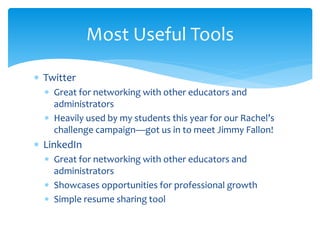
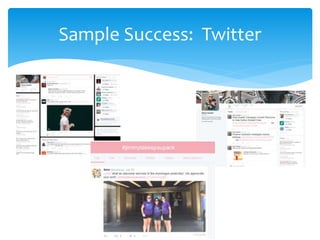
 Twitter
 Great for networking with other educators and
administrators
 Heavily used by my students this year for our Rachel’s
challenge campaign—got us in to meet Jimmy Fallon!
 LinkedIn
 Great for networking with other educators and
administrators
 Showcases opportunities for professional growth
 Simple resume sharing tool
Most Useful Tools
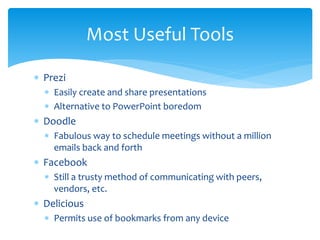
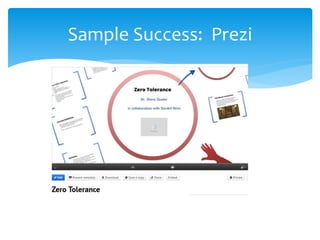
 Prezi
 Easily create and share presentations
 Alternative to PowerPoint boredom
 Doodle
 Fabulous way to schedule meetings without a million
emails back and forth
 Facebook
 Still a trusty method of communicating with peers,
vendors, etc.
 Delicious
 Permits use of bookmarks from any device
Most Useful Tools
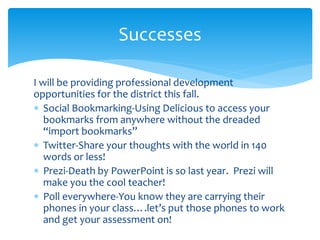
I will be providing professional development
opportunities for the district this fall.
 Social Bookmarking-Using Delicious to access your
bookmarks from anywhere without the dreaded
“import bookmarks”
 Twitter-Share your thoughts with the world in 140
words or less!
 Prezi-Death by PowerPoint is so last year. Prezi will
make you the cool teacher!
 Poll everywhere-You know they are carrying their
phones in your class….let’s put those phones to work
and get your assessment on!
Successes
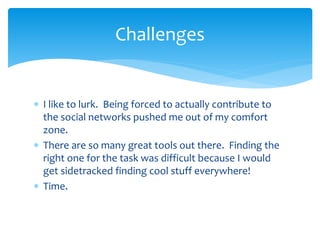
 I like to lurk. Being forced to actually contribute to
the social networks pushed me out of my comfort
zone.
 There are so many great tools out there. Finding the
right one for the task was difficult because I would
get sidetracked finding cool stuff everywhere!
 Time.
Challenges
Moodle
Pros
 Asynchronous capabilities
 Immediate feedback
 Multimedia use
Cons
 Very easy to procrastinate
 No face-to-face interaction
I’ve taught a Moodle course and been a Moodle student.
Sample Success: Twitter
Sample Success: LinkedIn
Sample Success: Prezi
Sample Success: Delicious
 When used properly, social media tools can boost student engagement, link students
to content experts, find online classroom lessons, and help establish an online body of
work.
 Keeping up with the ever changing tools is a necessity in the current educational
setting.
Conclusion

Social Media for Educators Final Presentation

  • 1.
    Social Media inEducation Dr. Diane Szader szaderdi@wallenpaupack.org
  • 2.
     Twitter  Greatfor networking with other educators and administrators  Heavily used by my students this year for our Rachel’s challenge campaign—got us in to meet Jimmy Fallon!  LinkedIn  Great for networking with other educators and administrators  Showcases opportunities for professional growth  Simple resume sharing tool Most Useful Tools
  • 3.
     Prezi  Easilycreate and share presentations  Alternative to PowerPoint boredom  Doodle  Fabulous way to schedule meetings without a million emails back and forth  Facebook  Still a trusty method of communicating with peers, vendors, etc.  Delicious  Permits use of bookmarks from any device Most Useful Tools
  • 4.
    I will beproviding professional development opportunities for the district this fall.  Social Bookmarking-Using Delicious to access your bookmarks from anywhere without the dreaded “import bookmarks”  Twitter-Share your thoughts with the world in 140 words or less!  Prezi-Death by PowerPoint is so last year. Prezi will make you the cool teacher!  Poll everywhere-You know they are carrying their phones in your class….let’s put those phones to work and get your assessment on! Successes
  • 5.
     I liketo lurk. Being forced to actually contribute to the social networks pushed me out of my comfort zone.  There are so many great tools out there. Finding the right one for the task was difficult because I would get sidetracked finding cool stuff everywhere!  Time. Challenges
  • 6.
    Moodle Pros  Asynchronous capabilities Immediate feedback  Multimedia use Cons  Very easy to procrastinate  No face-to-face interaction I’ve taught a Moodle course and been a Moodle student.
  • 7.
  • 8.
  • 9.
  • 10.
  • 11.
     When usedproperly, social media tools can boost student engagement, link students to content experts, find online classroom lessons, and help establish an online body of work.  Keeping up with the ever changing tools is a necessity in the current educational setting. Conclusion