
SOCIAL MEDIA COMMUNITY USING
OPTIMIZED CLUSTERING ALGORITHM
M.GOMATHI
M.Tech., (Information Technology)
PHASE I
• A framework for the novel task of detecting
communities by clustering messages from large
streams of social data. Our framework uses K-Means
clustering algorithm along with Genetic algorithm
and Optimized Cluster Distance (OCD) method to
cluster data.
Abstract
Introduction
Social media serves as a ubiquitous public platform which
remains accessible to users as a multiple group of internet
applications. Within the applications, the user creates individual
and unique expression for data exchange.
The study of this data by industry specialists seeking new and
inventive methods to collect data for analysis remains important
to the future of social media.
Existing System
The problem of community detection has been widely studied
within the context of large-scale.
Community detection algorithms attempt to identify groups of
vertices more densely connected to one another than to the
rest of the network. Social networks extracted from social
media however present unique challenges due to their size and
high clustering coefficients.
• Inability to account for high social dimension and
return results that are precise enough to be useful
in OEC (Online Extremist Community) detection.
DISADVANTAGES FOR EXISTING SYSTEM
Proposed System
Clustering structures the data into a
collection of objects that are similar or
dissimilar and is considered an unsupervised
learning. The application of our method is
mainly on finding user groups based on
activities and attitude features as suggested in
the authority model..
 This system helps to categorize group of
people.
 This system helps to identify group of people
participated in discussion.
 This system helps to approach targeted
crowd.
 We had used an effective algorithm which
will provide accurate result.
ADVANTAGES OF PROPOSED SYSTEM
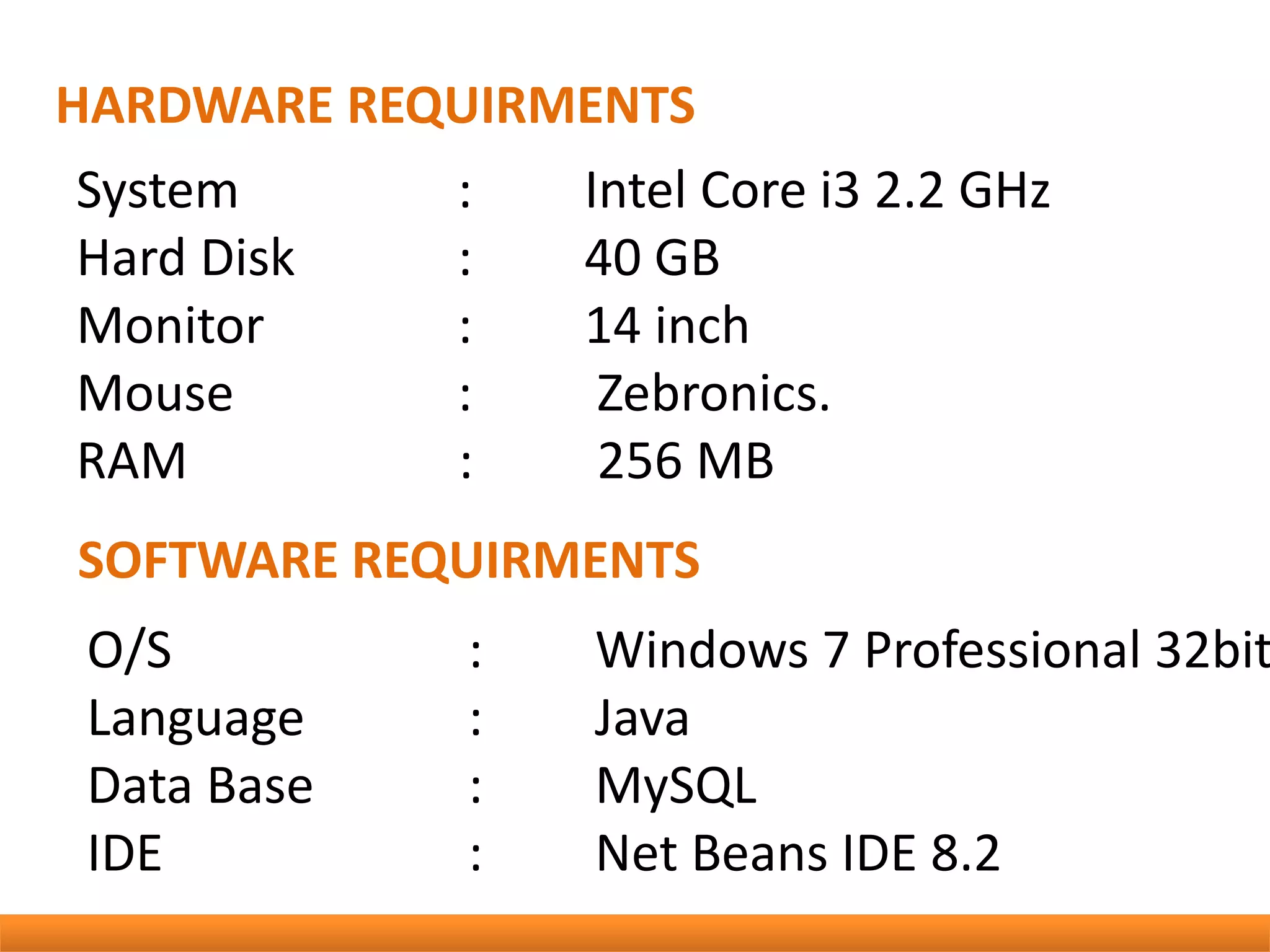
HARDWARE REQUIRMENTS
SOFTWARE REQUIRMENTS
System : Intel Core i3 2.2 GHz
Hard Disk : 40 GB
Monitor : 14 inch
Mouse : Zebronics.
RAM : 256 MB
O/S : Windows 7 Professional 32bit
Language : Java
Data Base : MySQL
IDE : Net Beans IDE 8.2
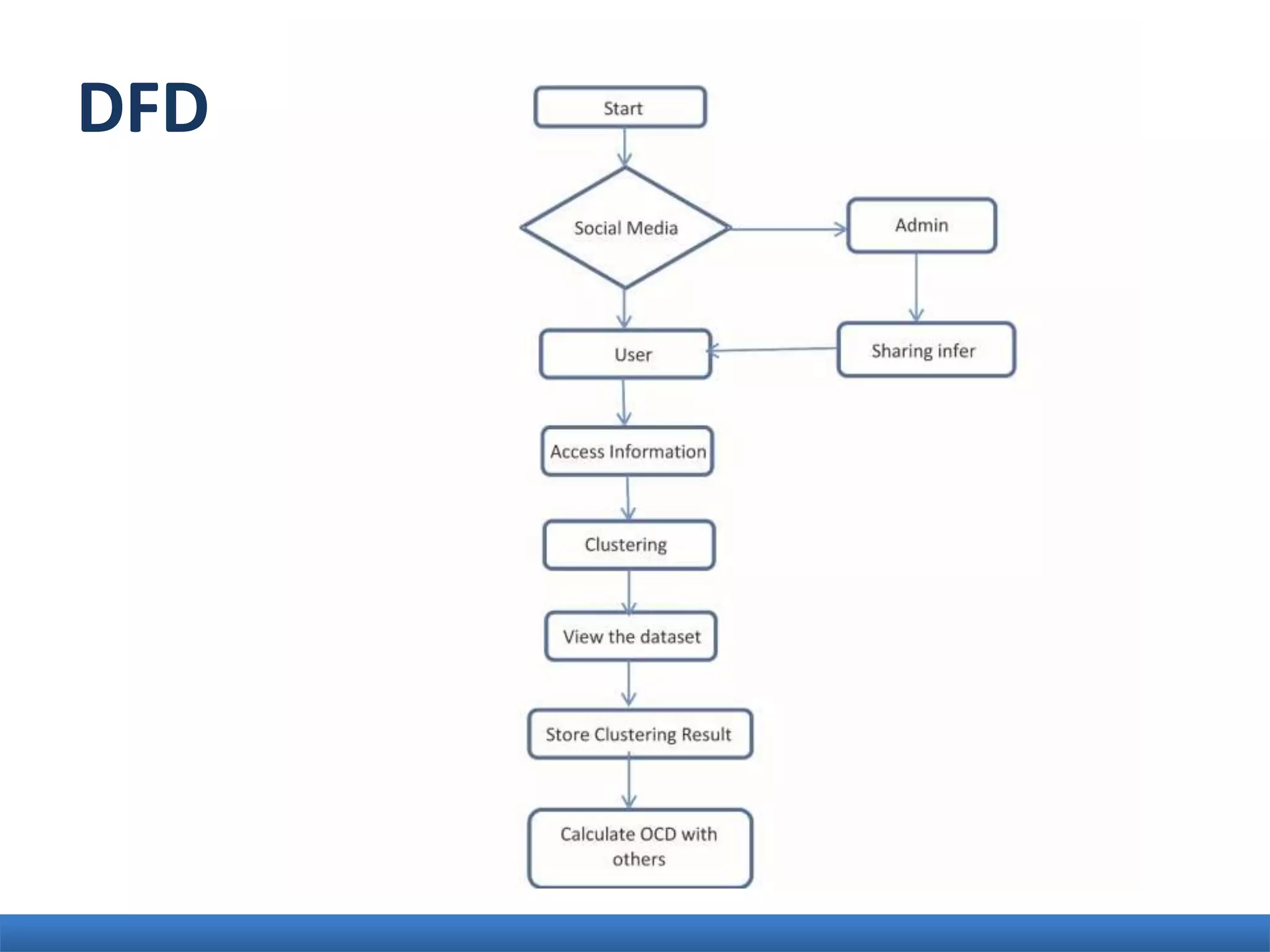
DFD
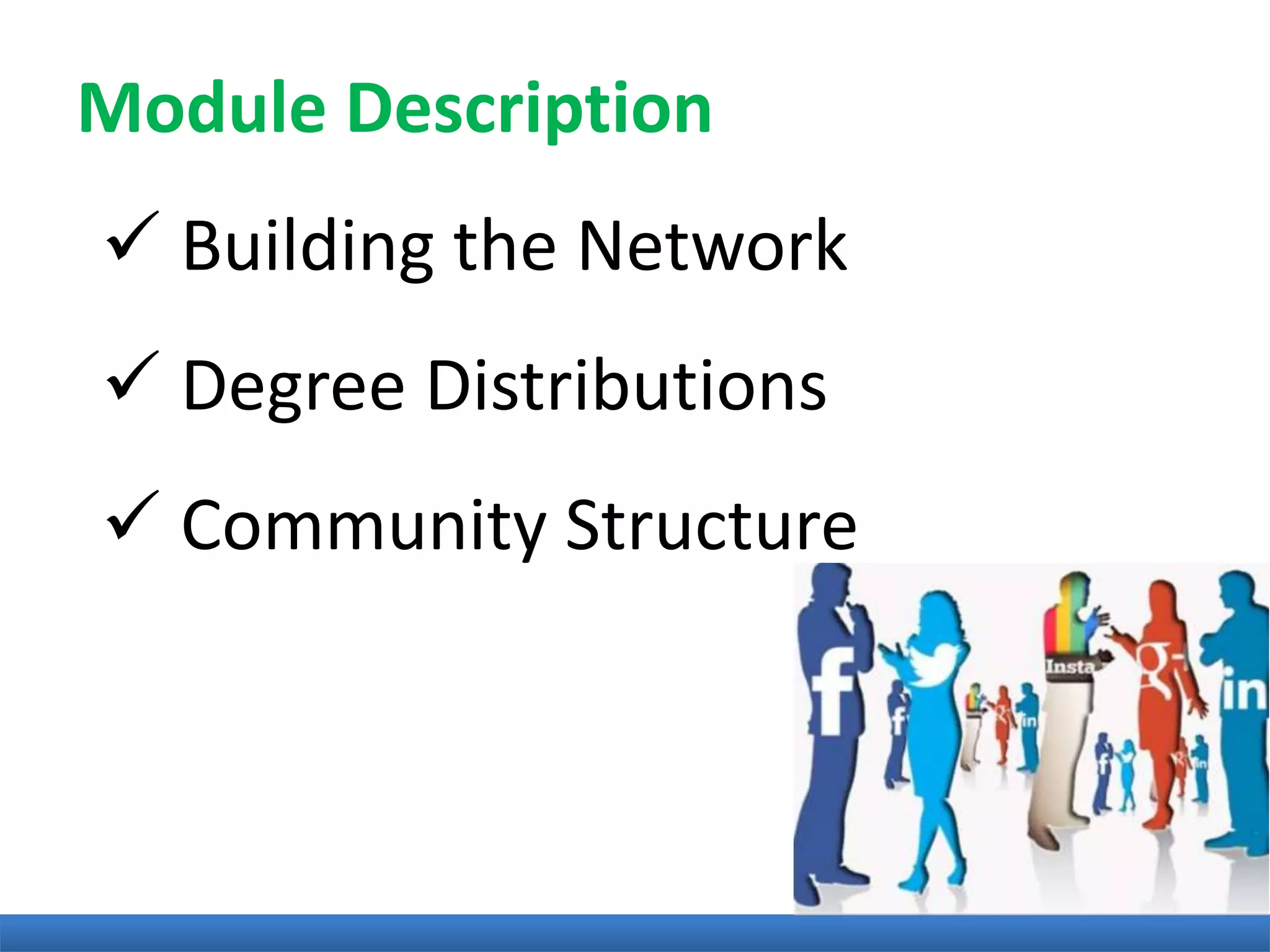
Module Description
 Building the Network
 Degree Distributions
 Community Structure
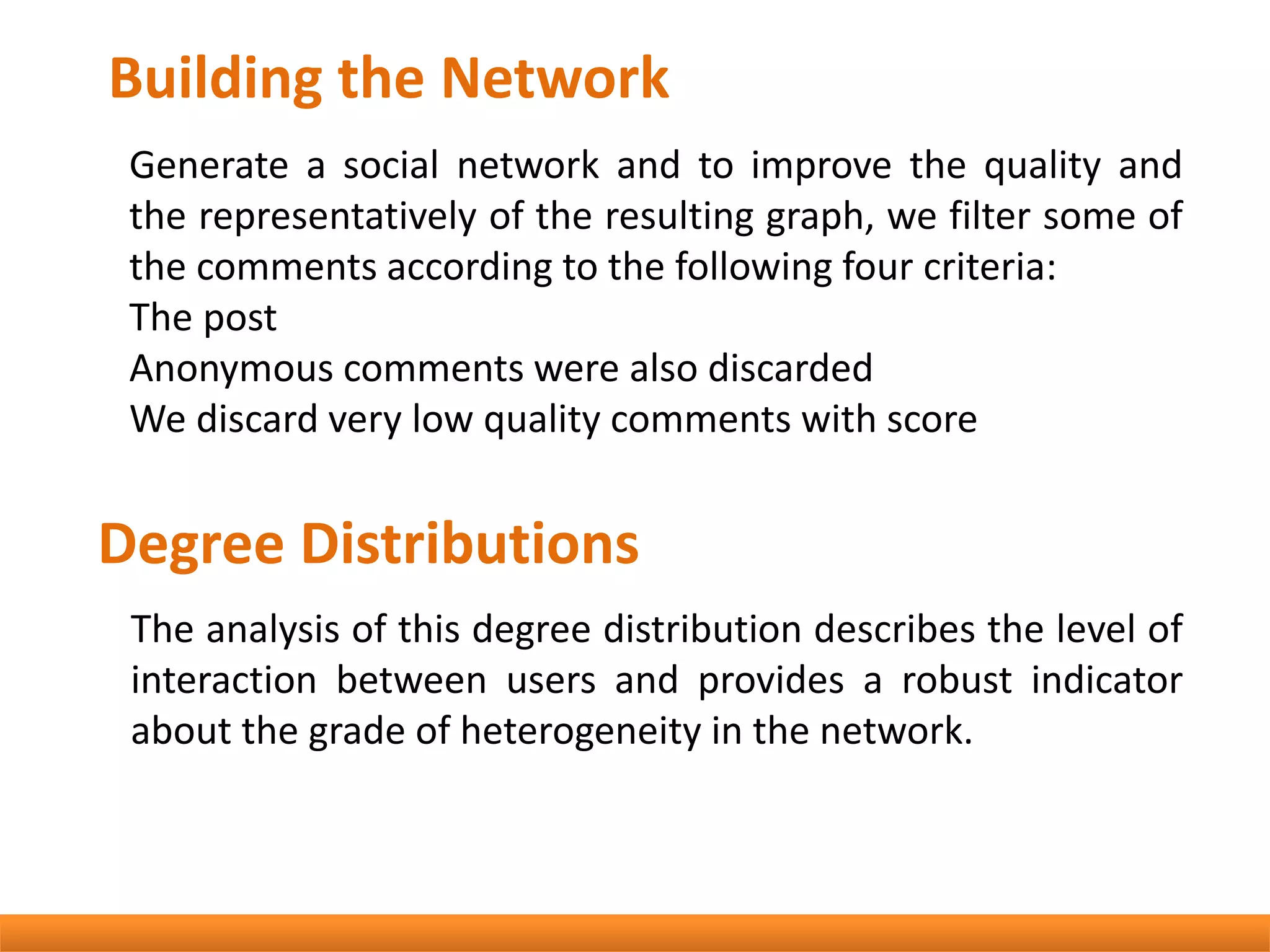
Building the Network
Generate a social network and to improve the quality and
the representatively of the resulting graph, we filter some of
the comments according to the following four criteria:
The post
Anonymous comments were also discarded
We discard very low quality comments with score
Degree Distributions
The analysis of this degree distribution describes the level of
interaction between users and provides a robust indicator
about the grade of heterogeneity in the network.
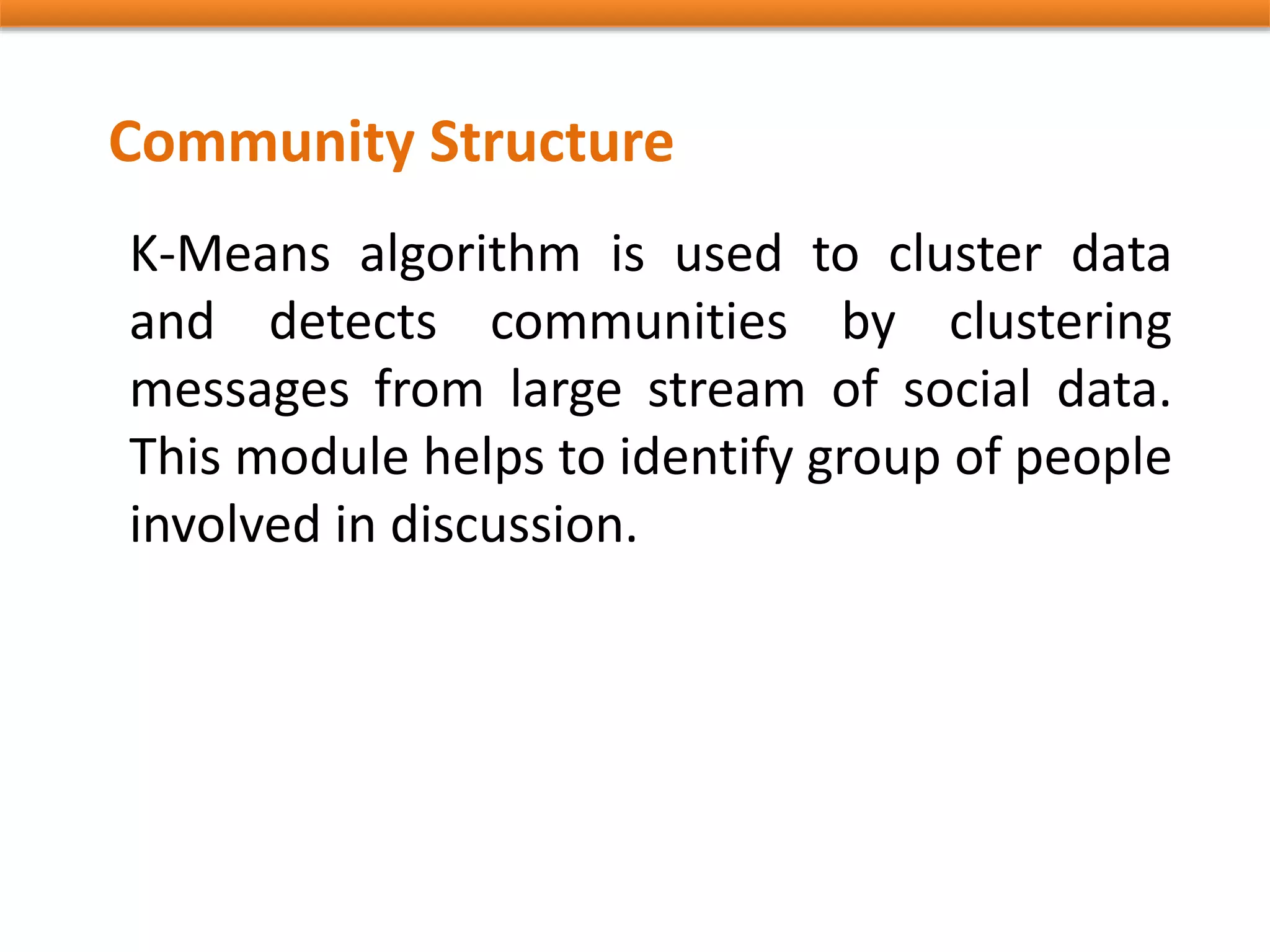
Community Structure
K-Means algorithm is used to cluster data
and detects communities by clustering
messages from large stream of social data.
This module helps to identify group of people
involved in discussion.
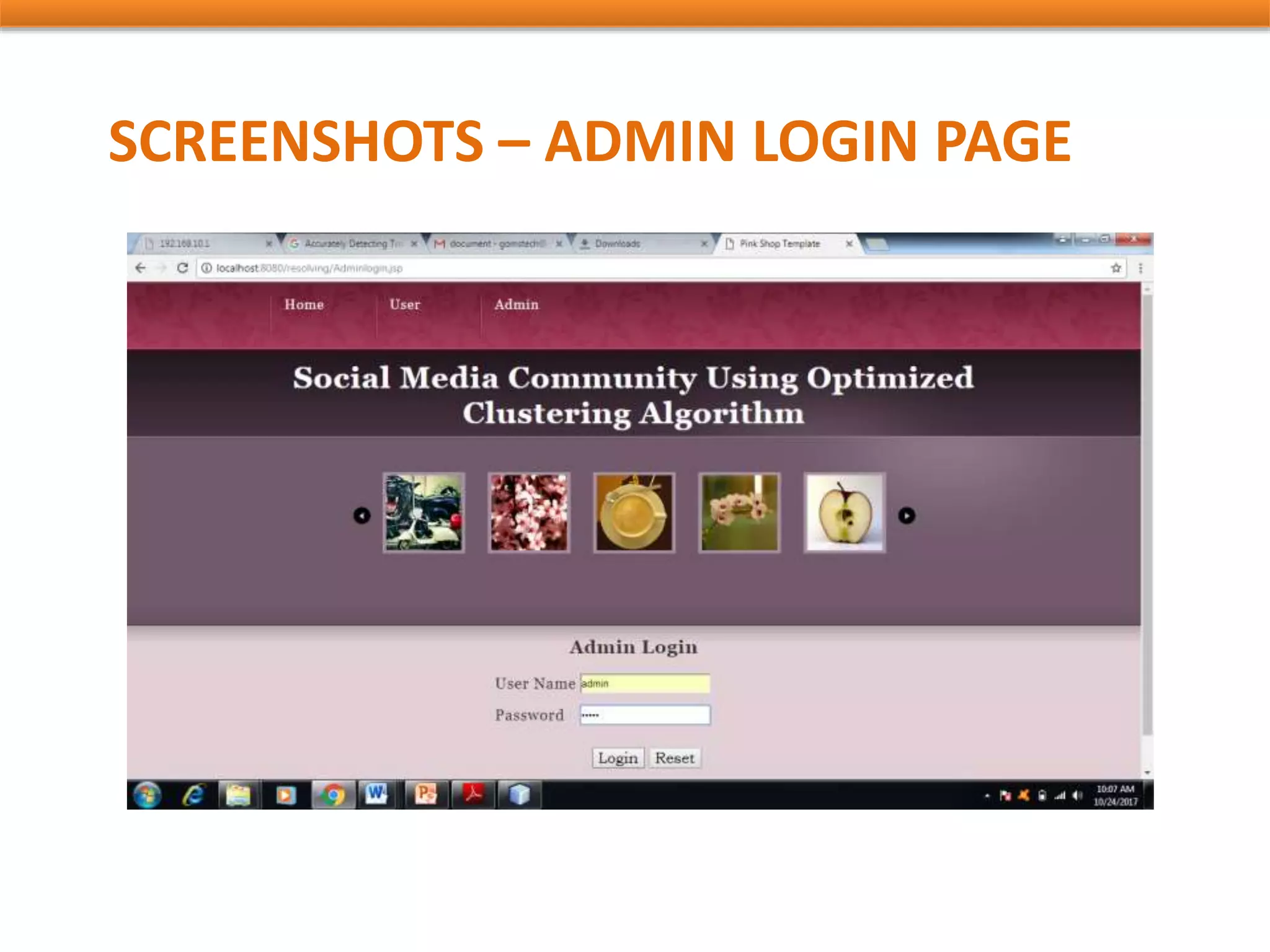
SCREENSHOTS – ADMIN LOGIN PAGE
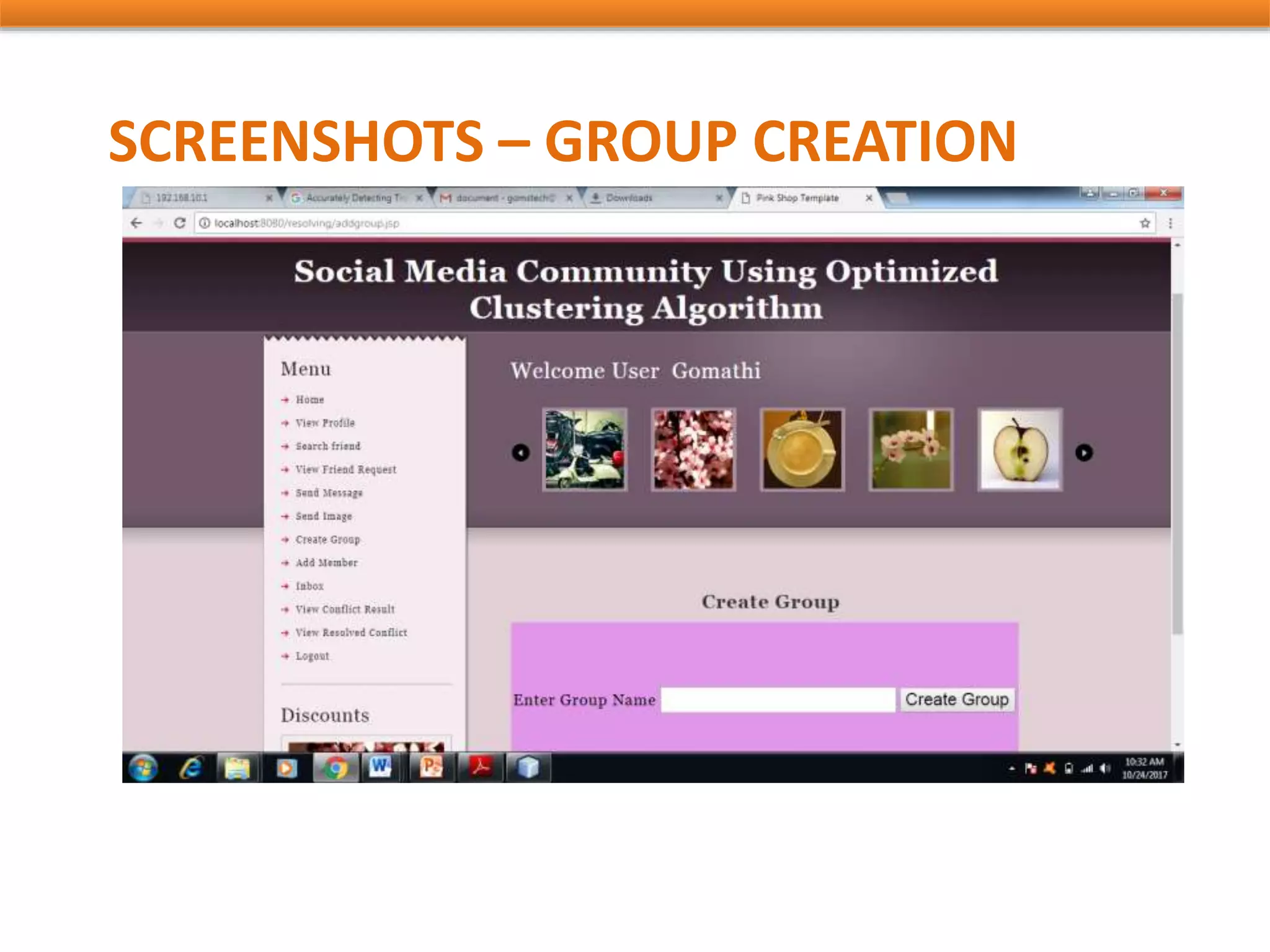
SCREENSHOTS – GROUP CREATION
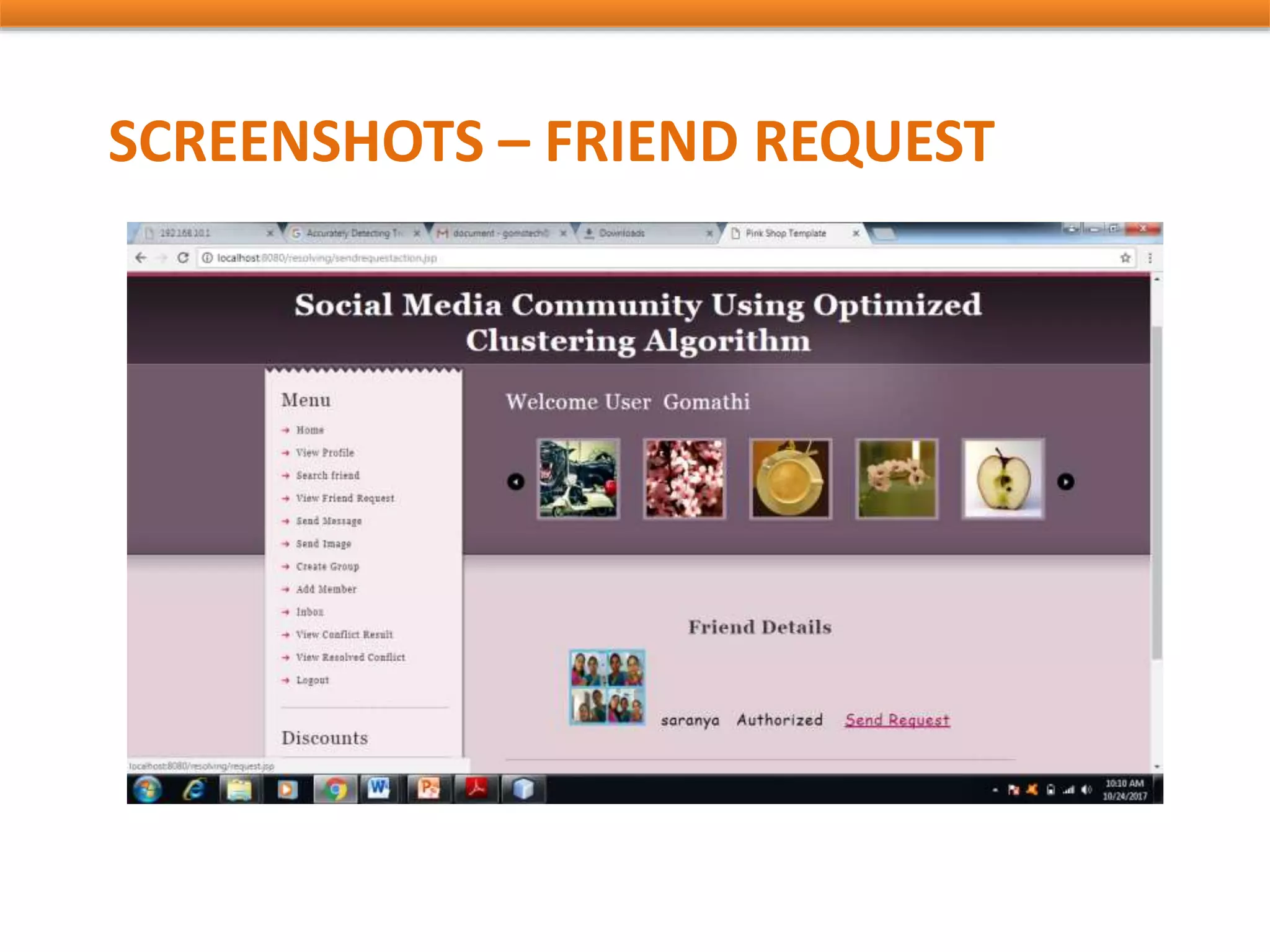
SCREENSHOTS – FRIEND REQUEST
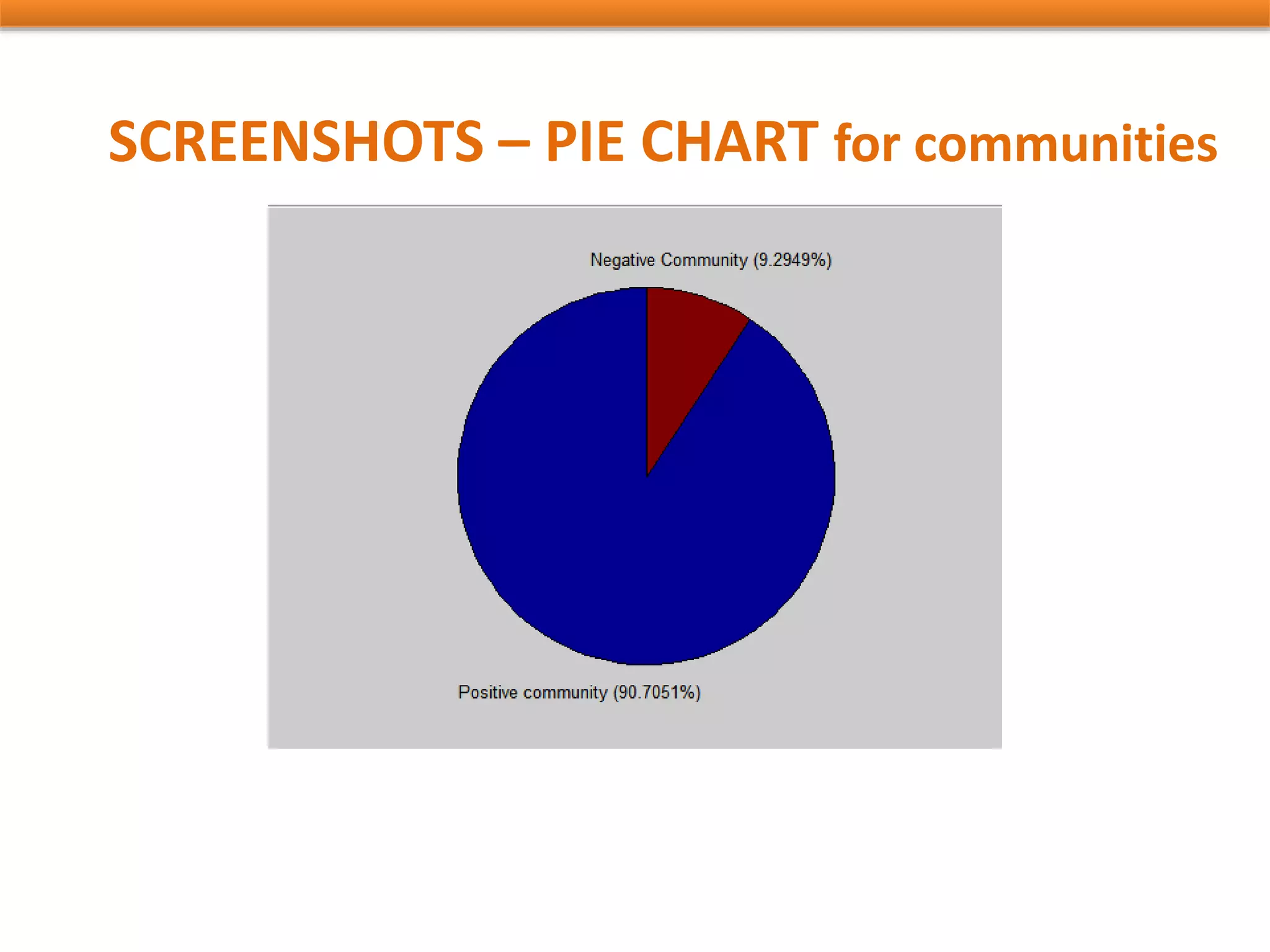
SCREENSHOTS – PIE CHART for communities
APPLICATIONS
• Retail companies market via social networks to is
cover what consumers think about branding,
customer relationship management, and other
strategies including risk prevention.
• Polling within groups and early detection of
emerging events
• Track health issues
CONCLUSION
This project proposes a novel method to analyze social
media data. In this method ,the method used to fetch
data is face pager .The fetched data will be export into
csv files.
By separating the post comments according to the
activities and find the result and make the
communities based on the result of post comments.
REFERENCE
• A Frame Work for Communities Detection in Social Media
Networks by K.Gowthami M.Tech, Dept. of C.S.E., Adikavi
Nannaya University College of Engg, Rajahmundry, India
• Online Extremist Community Detection, Analysis, and
Intervention by Lieutenant Colonel Matthew Curran Benigni
June 2016
• Social Network Clustering by Narges Azizifard Department of
Computer Science and Engineering of Islamic Azad University
of Qazvin Branch, Qazvin, Iran
Thank You…

M.Tech Project Social media community using optimized algorithm by M. Gomathi / Lecturer

  • 1.
    SOCIAL MEDIA COMMUNITYUSING OPTIMIZED CLUSTERING ALGORITHM M.GOMATHI M.Tech., (Information Technology) PHASE I
  • 2.
    • A frameworkfor the novel task of detecting communities by clustering messages from large streams of social data. Our framework uses K-Means clustering algorithm along with Genetic algorithm and Optimized Cluster Distance (OCD) method to cluster data. Abstract
  • 3.
    Introduction Social media servesas a ubiquitous public platform which remains accessible to users as a multiple group of internet applications. Within the applications, the user creates individual and unique expression for data exchange. The study of this data by industry specialists seeking new and inventive methods to collect data for analysis remains important to the future of social media.
  • 4.
    Existing System The problemof community detection has been widely studied within the context of large-scale. Community detection algorithms attempt to identify groups of vertices more densely connected to one another than to the rest of the network. Social networks extracted from social media however present unique challenges due to their size and high clustering coefficients.
  • 5.
    • Inability toaccount for high social dimension and return results that are precise enough to be useful in OEC (Online Extremist Community) detection. DISADVANTAGES FOR EXISTING SYSTEM
  • 6.
    Proposed System Clustering structuresthe data into a collection of objects that are similar or dissimilar and is considered an unsupervised learning. The application of our method is mainly on finding user groups based on activities and attitude features as suggested in the authority model..
  • 7.
     This systemhelps to categorize group of people.  This system helps to identify group of people participated in discussion.  This system helps to approach targeted crowd.  We had used an effective algorithm which will provide accurate result. ADVANTAGES OF PROPOSED SYSTEM
  • 8.
    HARDWARE REQUIRMENTS SOFTWARE REQUIRMENTS System: Intel Core i3 2.2 GHz Hard Disk : 40 GB Monitor : 14 inch Mouse : Zebronics. RAM : 256 MB O/S : Windows 7 Professional 32bit Language : Java Data Base : MySQL IDE : Net Beans IDE 8.2
  • 9.
  • 10.
    Module Description  Buildingthe Network  Degree Distributions  Community Structure
  • 11.
    Building the Network Generatea social network and to improve the quality and the representatively of the resulting graph, we filter some of the comments according to the following four criteria: The post Anonymous comments were also discarded We discard very low quality comments with score Degree Distributions The analysis of this degree distribution describes the level of interaction between users and provides a robust indicator about the grade of heterogeneity in the network.
  • 12.
    Community Structure K-Means algorithmis used to cluster data and detects communities by clustering messages from large stream of social data. This module helps to identify group of people involved in discussion.
  • 13.
  • 14.
  • 15.
  • 16.
    SCREENSHOTS – PIECHART for communities
  • 17.
    APPLICATIONS • Retail companiesmarket via social networks to is cover what consumers think about branding, customer relationship management, and other strategies including risk prevention. • Polling within groups and early detection of emerging events • Track health issues
  • 18.
    CONCLUSION This project proposesa novel method to analyze social media data. In this method ,the method used to fetch data is face pager .The fetched data will be export into csv files. By separating the post comments according to the activities and find the result and make the communities based on the result of post comments.
  • 19.
    REFERENCE • A FrameWork for Communities Detection in Social Media Networks by K.Gowthami M.Tech, Dept. of C.S.E., Adikavi Nannaya University College of Engg, Rajahmundry, India • Online Extremist Community Detection, Analysis, and Intervention by Lieutenant Colonel Matthew Curran Benigni June 2016 • Social Network Clustering by Narges Azizifard Department of Computer Science and Engineering of Islamic Azad University of Qazvin Branch, Qazvin, Iran
  • 20.