SOCIAL MEDIA 101
Matt Geurtsen
Social Media Manager
YMCA Camp Ockanickon, Inc.
WHO AM I?
• Social Media Manager
• Family Programs Coordinator
• Trips Program Coordinator
• Likeable guy?
TAKEAWAYS
• Which apps you should be using now and how to use them
• The best supporting apps to make your social media life easier (it’s possible)
• Psychology of social media marketing
• Social media strategy template
• Not-so-obvious app considerations and how we can use them
THE ESSENTIALS
FACEBOOK
• Who you are engaging:
• Parents, grandparents, community members, potential customers
• Types of posts:
• Photos, videos, ads, updates, links to other platforms/website
• Frequency of posts:
• 4-7 a week, depending on the season. Learn your audience and learn what level of saturation
is appropriate. Consistency is more important than a constant stream
• Special Considerations:
• This is NOT a way to engage kids. Facebook is too old to be used consistently by anyone
under the age of 17
INSTAGRAM
• Who you are engaging:
• Kids, some parents
• Types of posts:
• Pictures, videos, Instagram ads
• Frequency of posts:
• As often as you have a good picture. Daily, weekly, hashtag related days
• Special considerations:
• If able, create fun and easy hashtags so kids can collate their memories in one easy-to-find
spot
TWITTER
• Who you are engaging:
• Young adults, some parents, older teens
• Types of posts:
• Quote of the day, collated posts to links, pictures, live tweet events, countdowns
• Frequency of posts:
• 2-3 a day
• Special considerations:
• This is the one platform where posting frequently is “allowed.” Just keep a 15-30 minute
buffer between posts
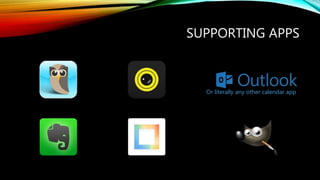
SUPPORTING APPS
Or literally any other calendar app
PSYCHOLOGY OF
SOCIAL MEDIA MARKETING
TRIGGERS
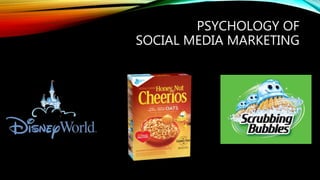
• Brand association from environmental factors or an outside influence
• Friday by Rebecca Black, Cheerios from breakfast, Corona on the beach
• What could your brand use as a trigger?
• Remember to think like Cheerios, not like Disney (*gasp!*)
THE ENDOWMENT EFFECT
“When we own something, we tend to value it more highly. If we have to sell it, we
want more than it is really worth.”
Takeaway:
• Encourage ownership by asking for feedback and suggestions
RECIPROCITY
“We feel obliged to give back to people who have given to us.”
Takeaway:
• Give things away! #randomactsofcamping, recipes, power tips
THE FOOT-IN-THE-DOOR METHOD
“When asked to make a small commitment first, we are more likely to agree to a
larger request later.”
Takeaway:
• The more people interact with your social, the more likely they are to agree to
sharing with friends.
FRAMING EFFECT
“We react differently to a situation on whether we perceive the situation to be a loss
or gain.”
Takeaway:
• Remember your language. Engage people with positive and open words that are
accessible to people outside of camp culture
LOSS AVERSION
“We feel the negative effects of loss more strongly than we feel the positive effects of
an equal gain.”
Takeaway:
• Try to alleviate concerns of risk upfront. Remove the fear of loss by posting
examples of positive experiences
MERE EXPOSURE THEORY
“The more we are exposed to something, the more we like it.”
Takeaway:
• Don’t be afraid to repeat posts (i.e. boosting the most popular post of the week or
tweeting a similar tweet at a later time).
INFORMATIONAL SOCIAL
INFLUENCE
“When we do not know how to behave, we copy other people.”
Takeaway:
• Use the experience of others to help people see the benefits of your camp.
PROPINQUITY EFFECT
“The more we meet and interact with people, the more likely we are to become
friends with them.”
Takeaway:
• Be a consistent presence in the social stream.
SOCIAL MEDIA STRATEGY OUTLINE
• Why have it?
• What does it do?
• What should I include in my social media strategy?
EXECUTIVE SUMMARY
• Objective
• 2-3 strategies to support the main objective
Example: The primary focus will be to support revenue goals through driving more
traffic to our website by sharing more engaging, relevant content and building deeper
relationships with our customers.
SOCIAL MEDIA AUDIT
• Social Networks used
• Follower count
• Average weekly activity & engagement rate
• Traffic sources & traffic summary
• Assessment of data
COMPETITOR ASSESSMENT
• At least 3 comparable businesses
• At least 1 business that does it better
• Strengths and weaknesses chart
SOCIAL MEDIA OBJECTIVES
• Quantifiable goals (i.e. 20% more traffic to website from Twitter)
• KPI or Key Performance Indicator (i.e. unique visitors, followers, # of comments, etc.)
• Key messages (i.e. Camp is a safe environment for ALL)
ONLINE BRAND
PERSONA AND VOICE
• 4-5 adjectives to describe your brand
• Safe, fun, encouraging, supportive
• Customer interaction key words
• Friendly, honest, solution-oriented
STRATEGIES AND TOOLS
• Paid
• Subscription services, potential ad campaigns, planned weekly boosting
• Owned
• Hashtags, user-generated content, links in all newsletters and emails
• Tools
• Hootsuite, uberVU, kapost, etc.
TIMING AND KEY DATES
• Key dates for campaigns and count downs
• Reporting dates
• Quarterly summaries, monthly growth check-in
SOCIAL MEDIA
ROLES AND RESPONSIBILITIES
• Concrete hierarchy of social jobs
• Manager > Coordinator > Specialists
• Supporting social team members
• CEO, other directors
SOCIAL MEDIA POLICY
• Do’s and don’ts
• Binding HR agreement for anyone granted access to social
• Simple guidelines for posts
CRITICAL RESPONSE PLAN
• Potential scenarios (inappropriate post, health concern, near miss)
• Action plan
• Pre-approved messaging
• Hierarchy or reporting
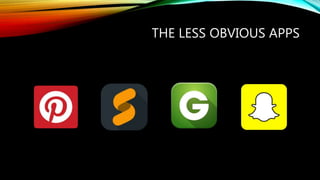
THE LESS OBVIOUS APPS
QUESTIONS?
•matt@ycamp.org
or
•Stick around after the presentation!
or
•Dinner, the social, breakfast or lunch

Social media 101

  • 1.
    SOCIAL MEDIA 101 MattGeurtsen Social Media Manager YMCA Camp Ockanickon, Inc.
  • 2.
    WHO AM I? •Social Media Manager • Family Programs Coordinator • Trips Program Coordinator • Likeable guy?
  • 3.
    TAKEAWAYS • Which appsyou should be using now and how to use them • The best supporting apps to make your social media life easier (it’s possible) • Psychology of social media marketing • Social media strategy template • Not-so-obvious app considerations and how we can use them
  • 4.
  • 5.
    FACEBOOK • Who youare engaging: • Parents, grandparents, community members, potential customers • Types of posts: • Photos, videos, ads, updates, links to other platforms/website • Frequency of posts: • 4-7 a week, depending on the season. Learn your audience and learn what level of saturation is appropriate. Consistency is more important than a constant stream • Special Considerations: • This is NOT a way to engage kids. Facebook is too old to be used consistently by anyone under the age of 17
  • 6.
    INSTAGRAM • Who youare engaging: • Kids, some parents • Types of posts: • Pictures, videos, Instagram ads • Frequency of posts: • As often as you have a good picture. Daily, weekly, hashtag related days • Special considerations: • If able, create fun and easy hashtags so kids can collate their memories in one easy-to-find spot
  • 7.
    TWITTER • Who youare engaging: • Young adults, some parents, older teens • Types of posts: • Quote of the day, collated posts to links, pictures, live tweet events, countdowns • Frequency of posts: • 2-3 a day • Special considerations: • This is the one platform where posting frequently is “allowed.” Just keep a 15-30 minute buffer between posts
  • 8.
    SUPPORTING APPS Or literallyany other calendar app
  • 9.
  • 10.
    TRIGGERS • Brand associationfrom environmental factors or an outside influence • Friday by Rebecca Black, Cheerios from breakfast, Corona on the beach • What could your brand use as a trigger? • Remember to think like Cheerios, not like Disney (*gasp!*)
  • 11.
    THE ENDOWMENT EFFECT “Whenwe own something, we tend to value it more highly. If we have to sell it, we want more than it is really worth.” Takeaway: • Encourage ownership by asking for feedback and suggestions
  • 12.
    RECIPROCITY “We feel obligedto give back to people who have given to us.” Takeaway: • Give things away! #randomactsofcamping, recipes, power tips
  • 13.
    THE FOOT-IN-THE-DOOR METHOD “Whenasked to make a small commitment first, we are more likely to agree to a larger request later.” Takeaway: • The more people interact with your social, the more likely they are to agree to sharing with friends.
  • 14.
    FRAMING EFFECT “We reactdifferently to a situation on whether we perceive the situation to be a loss or gain.” Takeaway: • Remember your language. Engage people with positive and open words that are accessible to people outside of camp culture
  • 15.
    LOSS AVERSION “We feelthe negative effects of loss more strongly than we feel the positive effects of an equal gain.” Takeaway: • Try to alleviate concerns of risk upfront. Remove the fear of loss by posting examples of positive experiences
  • 16.
    MERE EXPOSURE THEORY “Themore we are exposed to something, the more we like it.” Takeaway: • Don’t be afraid to repeat posts (i.e. boosting the most popular post of the week or tweeting a similar tweet at a later time).
  • 17.
    INFORMATIONAL SOCIAL INFLUENCE “When wedo not know how to behave, we copy other people.” Takeaway: • Use the experience of others to help people see the benefits of your camp.
  • 18.
    PROPINQUITY EFFECT “The morewe meet and interact with people, the more likely we are to become friends with them.” Takeaway: • Be a consistent presence in the social stream.
  • 19.
    SOCIAL MEDIA STRATEGYOUTLINE • Why have it? • What does it do? • What should I include in my social media strategy?
  • 20.
    EXECUTIVE SUMMARY • Objective •2-3 strategies to support the main objective Example: The primary focus will be to support revenue goals through driving more traffic to our website by sharing more engaging, relevant content and building deeper relationships with our customers.
  • 21.
    SOCIAL MEDIA AUDIT •Social Networks used • Follower count • Average weekly activity & engagement rate • Traffic sources & traffic summary • Assessment of data
  • 22.
    COMPETITOR ASSESSMENT • Atleast 3 comparable businesses • At least 1 business that does it better • Strengths and weaknesses chart
  • 23.
    SOCIAL MEDIA OBJECTIVES •Quantifiable goals (i.e. 20% more traffic to website from Twitter) • KPI or Key Performance Indicator (i.e. unique visitors, followers, # of comments, etc.) • Key messages (i.e. Camp is a safe environment for ALL)
  • 24.
    ONLINE BRAND PERSONA ANDVOICE • 4-5 adjectives to describe your brand • Safe, fun, encouraging, supportive • Customer interaction key words • Friendly, honest, solution-oriented
  • 25.
    STRATEGIES AND TOOLS •Paid • Subscription services, potential ad campaigns, planned weekly boosting • Owned • Hashtags, user-generated content, links in all newsletters and emails • Tools • Hootsuite, uberVU, kapost, etc.
  • 26.
    TIMING AND KEYDATES • Key dates for campaigns and count downs • Reporting dates • Quarterly summaries, monthly growth check-in
  • 27.
    SOCIAL MEDIA ROLES ANDRESPONSIBILITIES • Concrete hierarchy of social jobs • Manager > Coordinator > Specialists • Supporting social team members • CEO, other directors
  • 28.
    SOCIAL MEDIA POLICY •Do’s and don’ts • Binding HR agreement for anyone granted access to social • Simple guidelines for posts
  • 29.
    CRITICAL RESPONSE PLAN •Potential scenarios (inappropriate post, health concern, near miss) • Action plan • Pre-approved messaging • Hierarchy or reporting
  • 30.
  • 31.
    QUESTIONS? •matt@ycamp.org or •Stick around afterthe presentation! or •Dinner, the social, breakfast or lunch