Krumboltz and Associates
Mary Florence C. Valencia
August 7, 2010
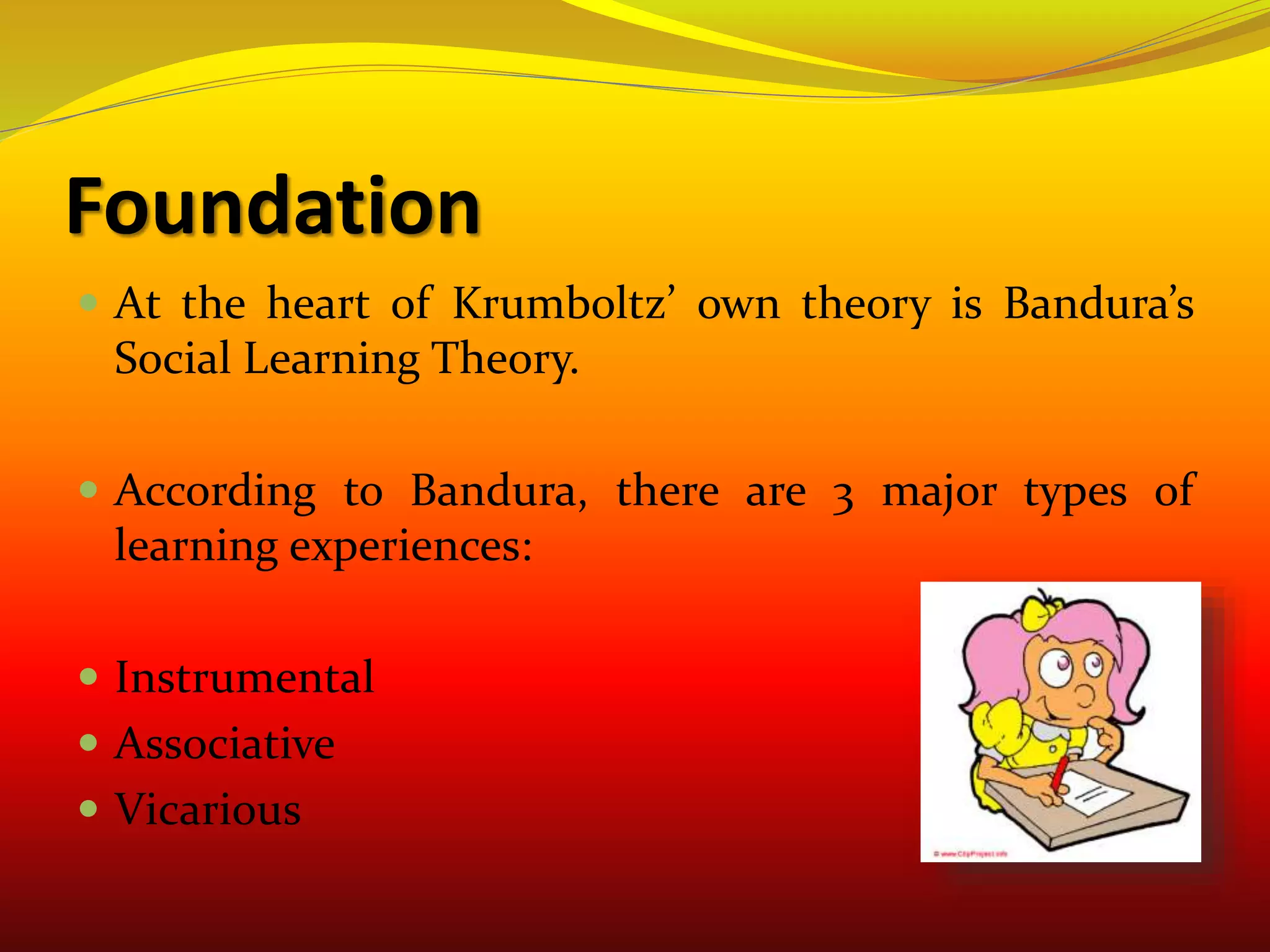
Foundation
 At the heart of Krumboltz’ own theory is Bandura’s
Social Learning Theory.
 According to Bandura, there are 3 major types of
learning experiences:
 Instrumental
 Associative
 Vicarious
Glossary of Terminologies
 Triadic Reciprocal Interaction
Social Learning Theory of Career
Decision-Making
 focuses on teaching clients’ career decision-making
alternatives
 makes use of the concept of “triadic reciprocal
interaction”
 emphasises the role of instrumental & associative
learning
Social Learning Theory of Career
Decision-Making
Developed to address the following questions:
 Why do people enter particular courses or jobs?
 Why do people change direction during their lives?
 Why do people express various preferences for
different activities at different point of their lives?
A. Influential Factors in
Career Decision-Making
 Genetic Endowment and Special Abilities
 Environmental Conditions and Events
 Learning Experiences
 Task Approach Skills
B. Resulting Cognitions, Beliefs,
Skills and Actions
Complex interactions between the four preceding
types of influencing factors results in people forming
generalizations (beliefs) which represent their own
reality.
Self-Observed Generalizations
World-View Generalizations
C. Task Approach Skills and Career
Decision-Making
 Krumboltz’ seven stage career decision-making model:
Define the Problem
Establish the Action Plan
Clarify the Values
Identify Alternatives
Discover Probable Outcomes
Eliminate Alternatives
Start Action
Potential Problems
 Failing to recognize that a problem exists
 Failing to make a decision or to solve a problem
 Eliminating a potentially satisfying alternative for
inappropriate reasons
 Choosing poor alternatives for inappropriate reasons
 Become anxious over perceived inability to achieve goals.
Krumboltz and Associates
Mary Florence C. Valencia
August 7, 2010
Social learning theory

Social learning theory

  • 1.
    Krumboltz and Associates MaryFlorence C. Valencia August 7, 2010
  • 2.
    Foundation  At theheart of Krumboltz’ own theory is Bandura’s Social Learning Theory.  According to Bandura, there are 3 major types of learning experiences:  Instrumental  Associative  Vicarious
  • 3.
    Glossary of Terminologies Triadic Reciprocal Interaction
  • 4.
    Social Learning Theoryof Career Decision-Making  focuses on teaching clients’ career decision-making alternatives  makes use of the concept of “triadic reciprocal interaction”  emphasises the role of instrumental & associative learning
  • 5.
    Social Learning Theoryof Career Decision-Making Developed to address the following questions:  Why do people enter particular courses or jobs?  Why do people change direction during their lives?  Why do people express various preferences for different activities at different point of their lives?
  • 6.
    A. Influential Factorsin Career Decision-Making  Genetic Endowment and Special Abilities  Environmental Conditions and Events  Learning Experiences  Task Approach Skills
  • 7.
    B. Resulting Cognitions,Beliefs, Skills and Actions Complex interactions between the four preceding types of influencing factors results in people forming generalizations (beliefs) which represent their own reality. Self-Observed Generalizations World-View Generalizations
  • 8.
    C. Task ApproachSkills and Career Decision-Making  Krumboltz’ seven stage career decision-making model: Define the Problem Establish the Action Plan Clarify the Values Identify Alternatives Discover Probable Outcomes Eliminate Alternatives Start Action
  • 9.
    Potential Problems  Failingto recognize that a problem exists  Failing to make a decision or to solve a problem  Eliminating a potentially satisfying alternative for inappropriate reasons  Choosing poor alternatives for inappropriate reasons  Become anxious over perceived inability to achieve goals.
  • 11.
    Krumboltz and Associates MaryFlorence C. Valencia August 7, 2010