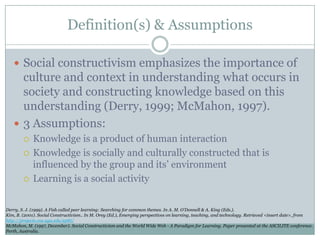
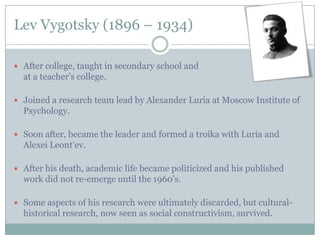
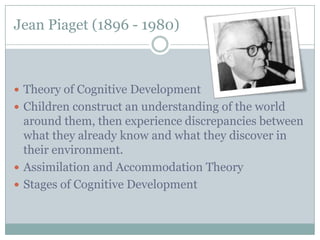
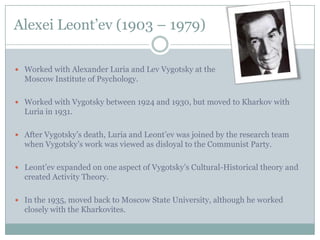
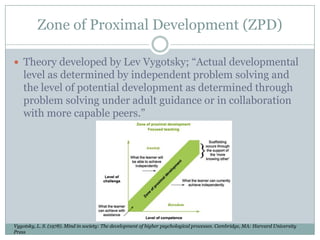
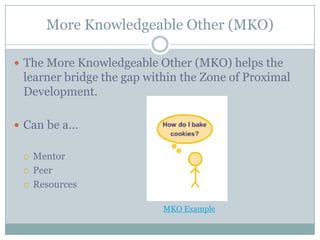
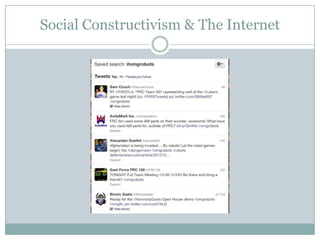
Social Constructivism emphasizes that knowledge is socially constructed through human interactions and culture. It is based on three main assumptions: that knowledge is a product of human interactions, knowledge is socially and culturally influenced, and learning is a social activity. Key theorists who contributed to social constructivism include Vygotsky, Piaget, Leont'ev, Bruner, and Engestrom. Central concepts include the zone of proximal development and the role of more knowledgeable others in scaffolding learning.