SLTC09, Heriot-Watt, June 2009

  So you want your students to
     produce digital videos?
  - some practical guidance -
Dr Chris Cane                    Dr Chris Willmott
Dept of Genetics,           Dept of Biochemistry,
University of Leicester    University of Leicester
crc@le.ac.uk                        cjrw2@le.ac.uk
                                            University of
                                            Leicester
                          THE University of the Year 2008
Introduction: why video?
• Video = engaging media
          (not new, not rocket science)
• The YouTube phenomenon
• Opportunities for creativity
• Prices 
• Ease of editing 
• Attractive alternative to essays
  and/or questionnaires
Outline of session
• Example uses: Two recent projects at Leicester
• A chance to have a go at filming or editing
• Feedback, Q&A
• Some practical advice (including some
  learnt the hard way!)
Example 1: Student experience project
• As shown by Paul Green presentation yesterday
• Students issued with a video camera to record
  video diaries
• Submit weekly video (and take part in 3-4 focus
  groups)
• Not an assessed activity, entirely a research project
• Students keep camera at end of project
Example 2: Bioethics videos
• Second year Medical Biochemistry students (n=30)
• Produce 2 to 5 minute film on science and ethics of

 a current development in biomedicine (assigned)
• Allocated to teams of 4 or 5
• Given approximately 6 weeks to complete
• Marking:
     70% for accuracy and clarity
     30% for creativity and production
• Peer-weighting applied after team mark awarded
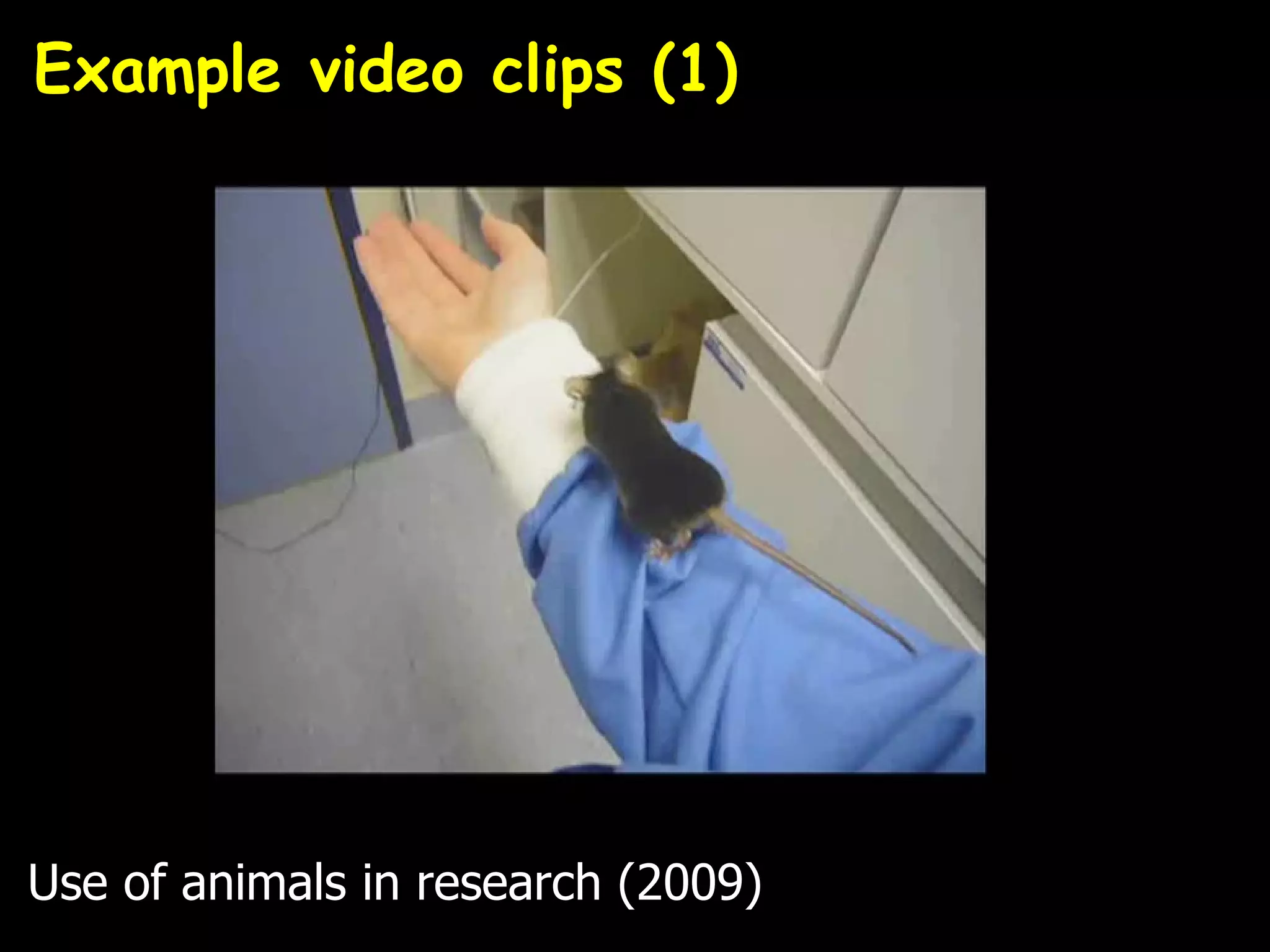
Example video clips (1)


Use of animals in research (2009)
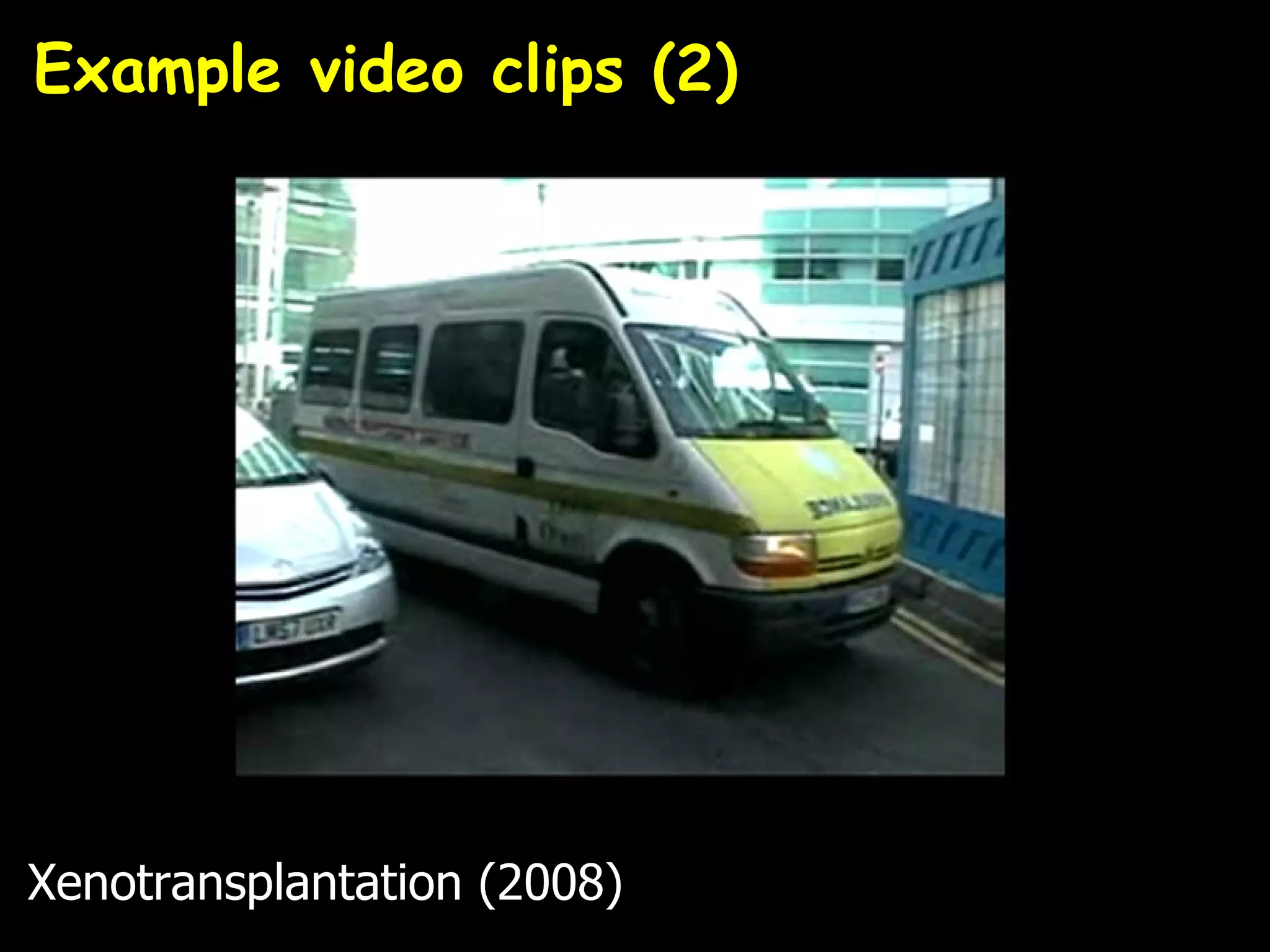
Example video clips (2)


Xenotransplantation (2008)
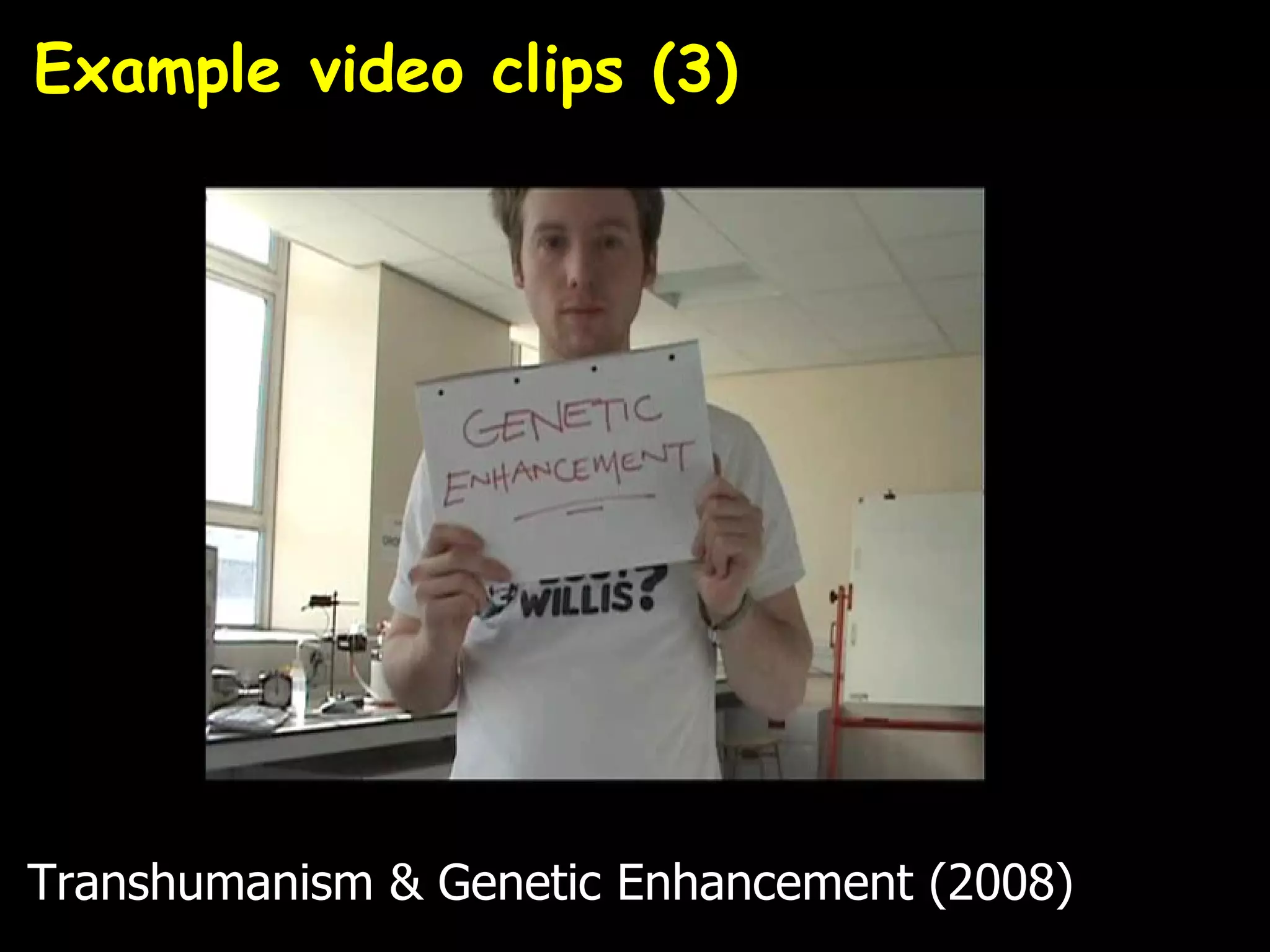
Example video clips (3)


Transhumanism & Genetic Enhancement (2008)
Example video clip (4)


Gene therapy (2009)
Example video clips (5a)


Cognitive Enhancement (2009, part 1)
Example video clips (5b)


Cognitive Enhancement (2009, part 2)
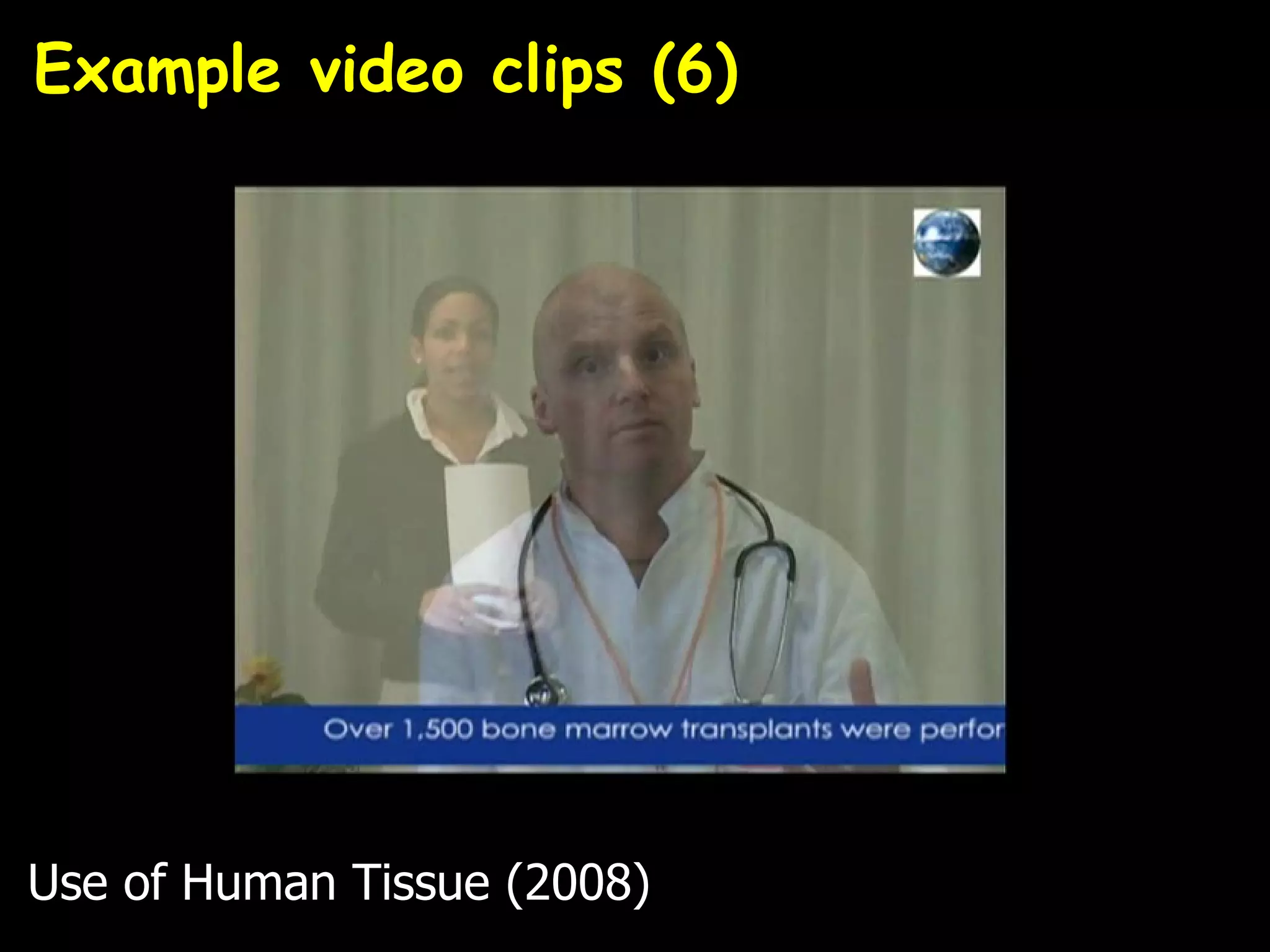
Example video clips (6)


Use of Human Tissue (2008)
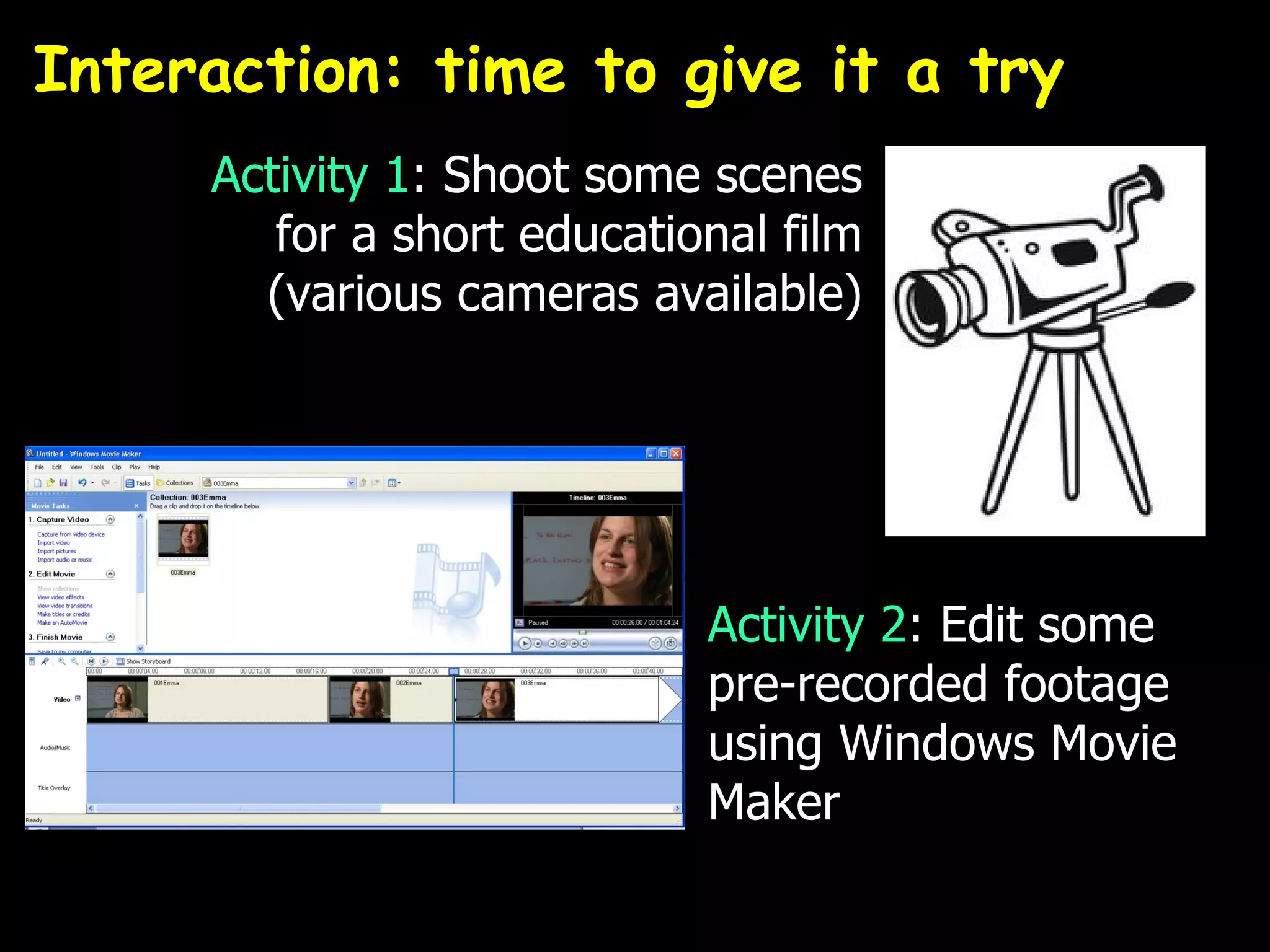
Interaction: time to give it a try
     Activity 1: Shoot some scenes
        for a short educational film
       (various cameras available)


                            Activity 2: Edit some
                            pre-recorded footage
                            using Windows Movie
                            Maker
Comments, feedback, questions

 Formation of teams                 Copyright, ethical
      and topics                      approval, etc
                  What training are
                  students offered?
                                        What
More examples
                    Issues we         software?
of student films
                     could discuss
                                        Allocation of
Choice of cameras:                    individual marks
  what and why?                       for team activity
          Scepticism from
                                 Other ideas?
        Colleagues/Students
Equipment: which cameras?
• Choice of camera depends on several factors inc.
     - budget
     - type of project
     - DV tape v storage card?
• For video diary portability and ease of data
  exchange key (hand in one SD card, issued new)
• Sound quality is vital, especially for ‘content driven’
  project, external microphone jack essential
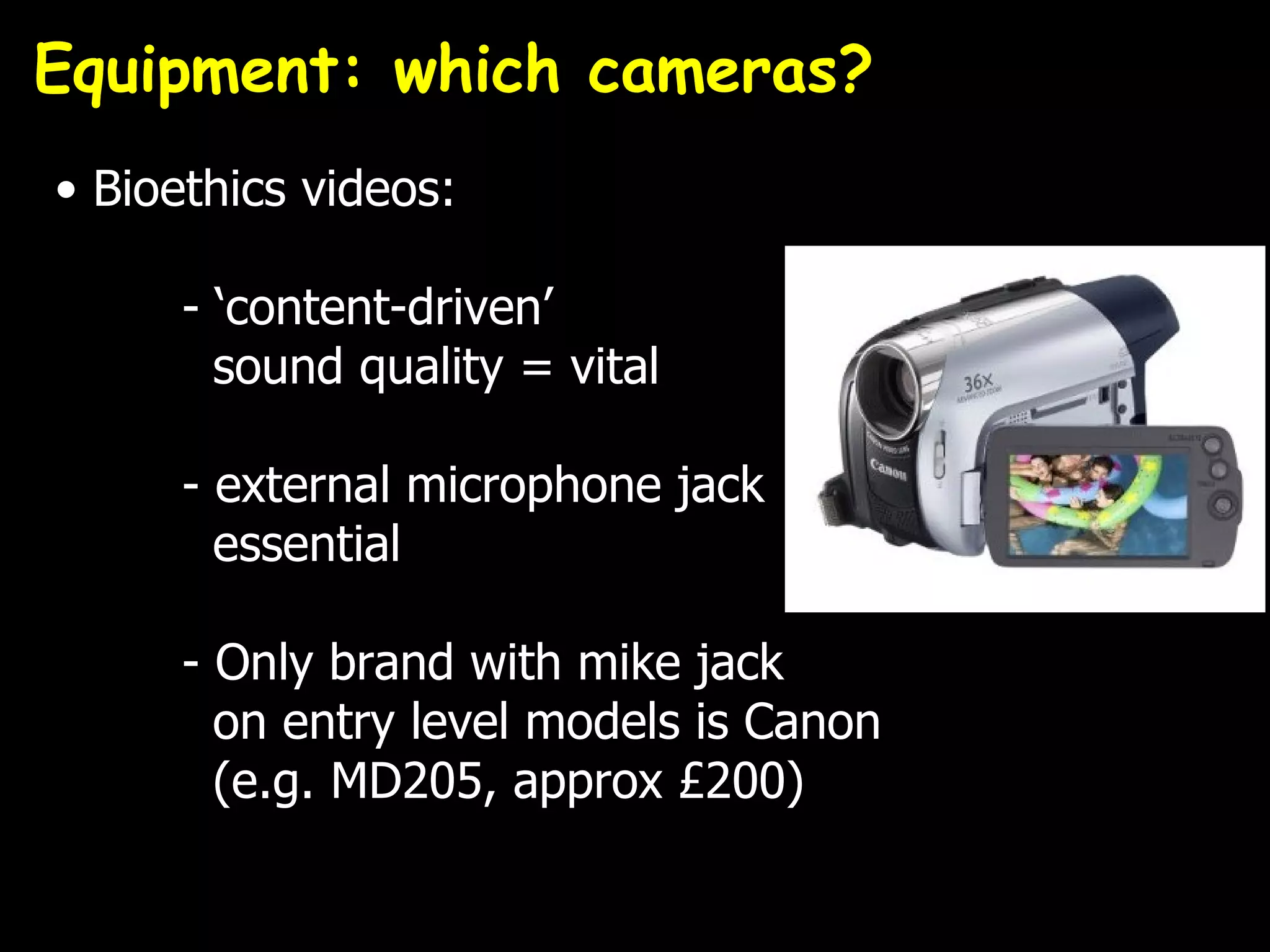
• Only brand with mike jack on entry level models is
  Canon (e.g. Canon MD205, approx £200)
Equipment: which cameras?
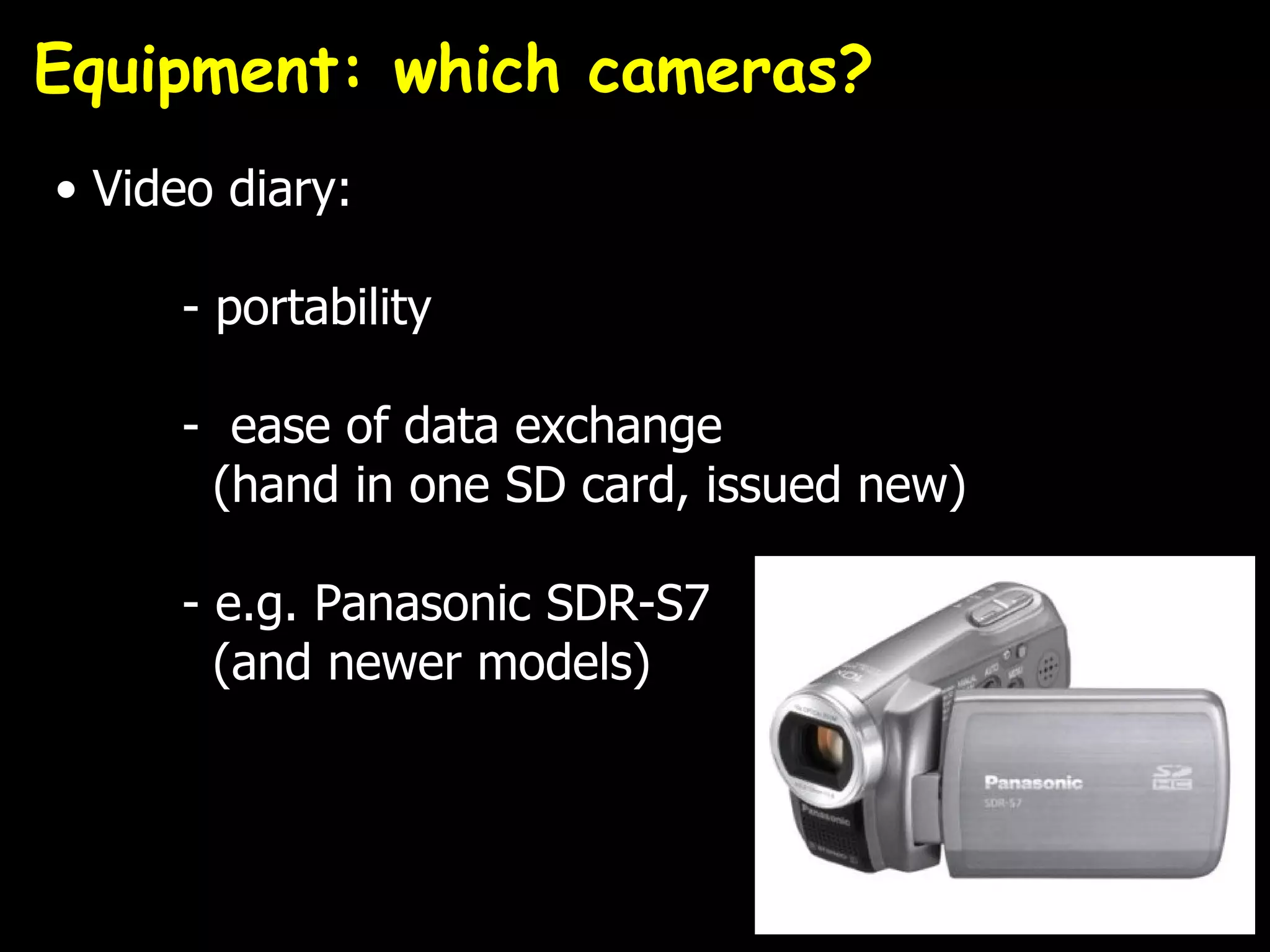
• Video diary:

     - portability

     - ease of data exchange
      (hand in one SD card, issued new)

     - e.g. Panasonic SDR-S7
       (and newer models)
Equipment: which cameras?
• Bioethics videos:

      - ‘content-driven’
        sound quality = vital

      - external microphone jack
        essential

      - Only brand with mike jack
        on entry level models is Canon
        (e.g. MD205, approx £200)
Training
• Clips:
      - example film from YouTube etc (not all good)
         Patrick Dixon (http://tinyurl.com/ndg77w)
         Common Craft (http://tinyurl.com/yvdezp)
         Josh & Adam (http://tinyurl.com/nevag4)

      - previous student films
• Recommended websites
• Discussion of roles within project
• Indicative milestones
• Briefing sheet
Training: online advice and tutorials
• Fourdocs (http://tinyurl.com/FourDocs)
• BBC Good Shooting (http://tinyurl.com/GoodShoot)
• Mashable (http://tinyurl.com/MashableMix)
• Videomaker (http://www.videomaker.com)
Issues: colleagues perception?
• “How can you say anything meaningful in a four
  minute film? Better to set an essay”
• You can say a lot in four minutes
• Evidence students actually need good grasp of the
  issues to decide what to include
Issues: copyright and permissions
• Assessment v Wider usage?
      - limited use of copyrighted images and/or
        sound allowed for assessed activities but not
        wider distribution
• Encouraged to be copyright-free
• Informed Written Consent from interviewees to
  allow use on the internet
Teamwork – allocation of teams
• Bioethics film production > individual task
• Pre-activity questionnaire inc prior experience qn
• Semester 1 scores in biochem module
• Friendship groups? (seats in lecture #1?)
• Allocation of weak students?
      - distributed?
      - form one group?
Teamwork – allocation of marks
• Each team awarded a mark for their project
  (70% content, 30% production & creativity)
• Peer-generated weighting then applied to mark to
  produce mark for each team member
• Conway et al (1993) Peer assessment of an
  individual’s contribution to a group project
  Assessment and Evaluation in Higher Education
  18:45-56
• Details available on request
Equipment: storage & distribution
• Will student/team be issued with camera for
  duration of project or will they be signed in/out?
• If signed in/out where will they be stored and how
  will this be administered?
• Security? Damage? Insurance?
• Penalty for late return of kit?
Alternative ideas
• Full-blown video too complex/too expensive?
• Combine audio soundtrack with still photos
     = form of “digital storytelling”
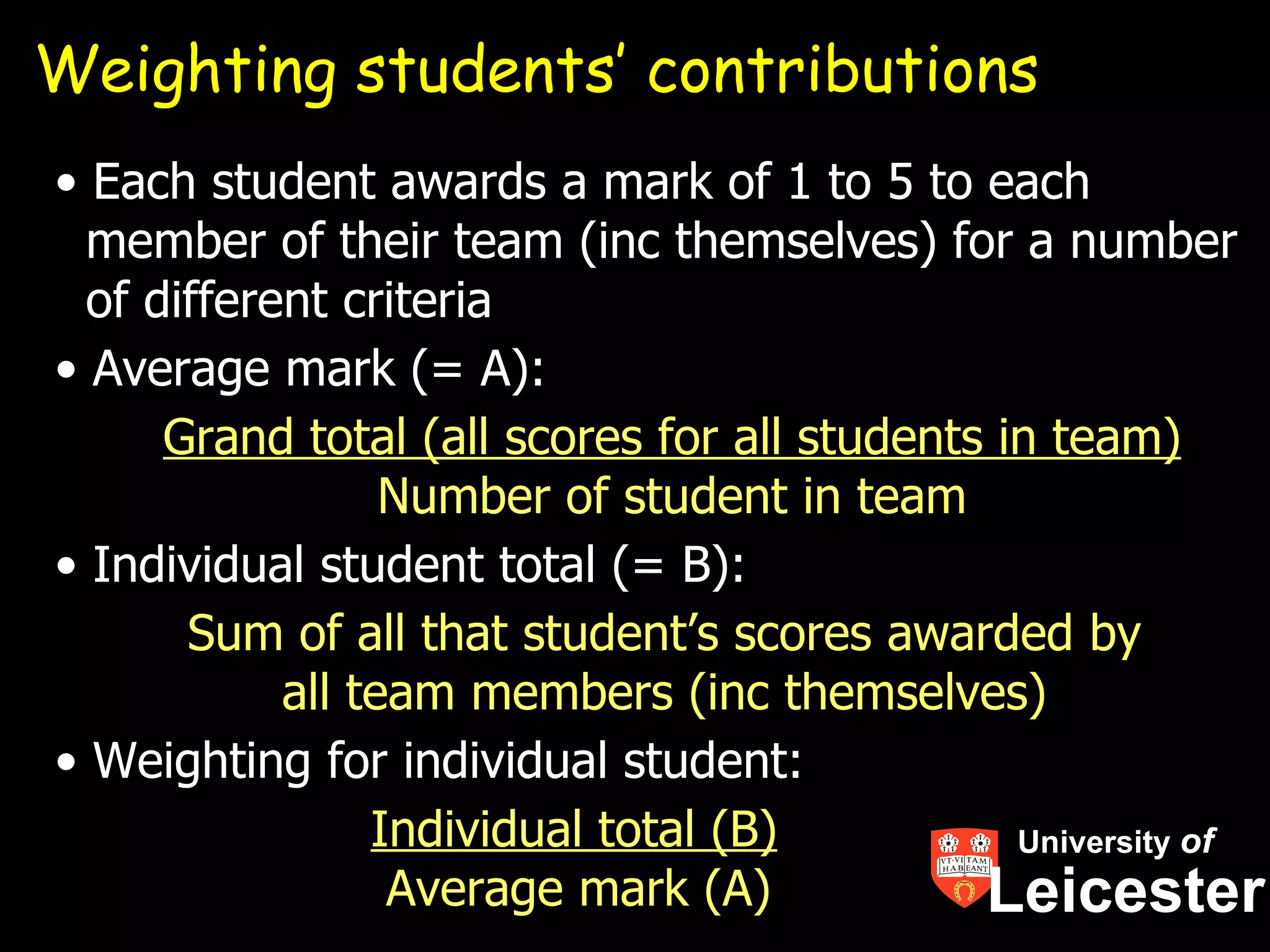
Weighting students’ contributions
• Each student awards a mark of 1 to 5 to each
  member of their team (inc themselves) for a number
  of different criteria
• Average mark (= A):
      Grand total (all scores for all students in team)
                  Number of student in team
• Individual student total (= B):
       Sum of all that student’s scores awarded by
            all team members (inc themselves)
• Weighting for individual student:
                 Individual total (B)           University of
                  Average mark (A)            Leicester

So you want your students to produce digital video: some practical guidance

  • 1.
    SLTC09, Heriot-Watt, June2009 So you want your students to produce digital videos? - some practical guidance - Dr Chris Cane Dr Chris Willmott Dept of Genetics, Dept of Biochemistry, University of Leicester University of Leicester crc@le.ac.uk cjrw2@le.ac.uk University of Leicester THE University of the Year 2008
  • 2.
    Introduction: why video? •Video = engaging media (not new, not rocket science) • The YouTube phenomenon • Opportunities for creativity • Prices  • Ease of editing  • Attractive alternative to essays and/or questionnaires
  • 3.
    Outline of session •Example uses: Two recent projects at Leicester • A chance to have a go at filming or editing • Feedback, Q&A • Some practical advice (including some learnt the hard way!)
  • 4.
    Example 1: Studentexperience project • As shown by Paul Green presentation yesterday • Students issued with a video camera to record video diaries • Submit weekly video (and take part in 3-4 focus groups) • Not an assessed activity, entirely a research project • Students keep camera at end of project
  • 5.
    Example 2: Bioethicsvideos • Second year Medical Biochemistry students (n=30) • Produce 2 to 5 minute film on science and ethics of a current development in biomedicine (assigned) • Allocated to teams of 4 or 5 • Given approximately 6 weeks to complete • Marking: 70% for accuracy and clarity 30% for creativity and production • Peer-weighting applied after team mark awarded
  • 6.
    Example video clips(1) Use of animals in research (2009)
  • 7.
    Example video clips(2) Xenotransplantation (2008)
  • 8.
    Example video clips(3) Transhumanism & Genetic Enhancement (2008)
  • 9.
    Example video clip(4) Gene therapy (2009)
  • 10.
    Example video clips(5a) Cognitive Enhancement (2009, part 1)
  • 11.
    Example video clips(5b) Cognitive Enhancement (2009, part 2)
  • 12.
    Example video clips(6) Use of Human Tissue (2008)
  • 13.
    Interaction: time togive it a try Activity 1: Shoot some scenes for a short educational film (various cameras available) Activity 2: Edit some pre-recorded footage using Windows Movie Maker
  • 14.
    Comments, feedback, questions Formation of teams Copyright, ethical and topics approval, etc What training are students offered? What More examples Issues we software? of student films could discuss Allocation of Choice of cameras: individual marks what and why? for team activity Scepticism from Other ideas? Colleagues/Students
  • 15.
    Equipment: which cameras? •Choice of camera depends on several factors inc. - budget - type of project - DV tape v storage card? • For video diary portability and ease of data exchange key (hand in one SD card, issued new) • Sound quality is vital, especially for ‘content driven’ project, external microphone jack essential • Only brand with mike jack on entry level models is Canon (e.g. Canon MD205, approx £200)
  • 16.
    Equipment: which cameras? •Video diary: - portability - ease of data exchange (hand in one SD card, issued new) - e.g. Panasonic SDR-S7 (and newer models)
  • 17.
    Equipment: which cameras? •Bioethics videos: - ‘content-driven’ sound quality = vital - external microphone jack essential - Only brand with mike jack on entry level models is Canon (e.g. MD205, approx £200)
  • 18.
    Training • Clips: - example film from YouTube etc (not all good) Patrick Dixon (http://tinyurl.com/ndg77w) Common Craft (http://tinyurl.com/yvdezp) Josh & Adam (http://tinyurl.com/nevag4) - previous student films • Recommended websites • Discussion of roles within project • Indicative milestones • Briefing sheet
  • 19.
    Training: online adviceand tutorials • Fourdocs (http://tinyurl.com/FourDocs) • BBC Good Shooting (http://tinyurl.com/GoodShoot) • Mashable (http://tinyurl.com/MashableMix) • Videomaker (http://www.videomaker.com)
  • 20.
    Issues: colleagues perception? •“How can you say anything meaningful in a four minute film? Better to set an essay” • You can say a lot in four minutes • Evidence students actually need good grasp of the issues to decide what to include
  • 21.
    Issues: copyright andpermissions • Assessment v Wider usage? - limited use of copyrighted images and/or sound allowed for assessed activities but not wider distribution • Encouraged to be copyright-free • Informed Written Consent from interviewees to allow use on the internet
  • 22.
    Teamwork – allocationof teams • Bioethics film production > individual task • Pre-activity questionnaire inc prior experience qn • Semester 1 scores in biochem module • Friendship groups? (seats in lecture #1?) • Allocation of weak students? - distributed? - form one group?
  • 23.
    Teamwork – allocationof marks • Each team awarded a mark for their project (70% content, 30% production & creativity) • Peer-generated weighting then applied to mark to produce mark for each team member • Conway et al (1993) Peer assessment of an individual’s contribution to a group project Assessment and Evaluation in Higher Education 18:45-56 • Details available on request
  • 24.
    Equipment: storage &distribution • Will student/team be issued with camera for duration of project or will they be signed in/out? • If signed in/out where will they be stored and how will this be administered? • Security? Damage? Insurance? • Penalty for late return of kit?
  • 25.
    Alternative ideas • Full-blownvideo too complex/too expensive? • Combine audio soundtrack with still photos = form of “digital storytelling”
  • 26.
    Weighting students’ contributions •Each student awards a mark of 1 to 5 to each member of their team (inc themselves) for a number of different criteria • Average mark (= A): Grand total (all scores for all students in team) Number of student in team • Individual student total (= B): Sum of all that student’s scores awarded by all team members (inc themselves) • Weighting for individual student: Individual total (B) University of Average mark (A) Leicester