UNIVERSIDAD TECNOLÓGICA DE PEREIRA
LICENCIATURA EN LENGUA INGLESA
PRONUNCIACIÓN II
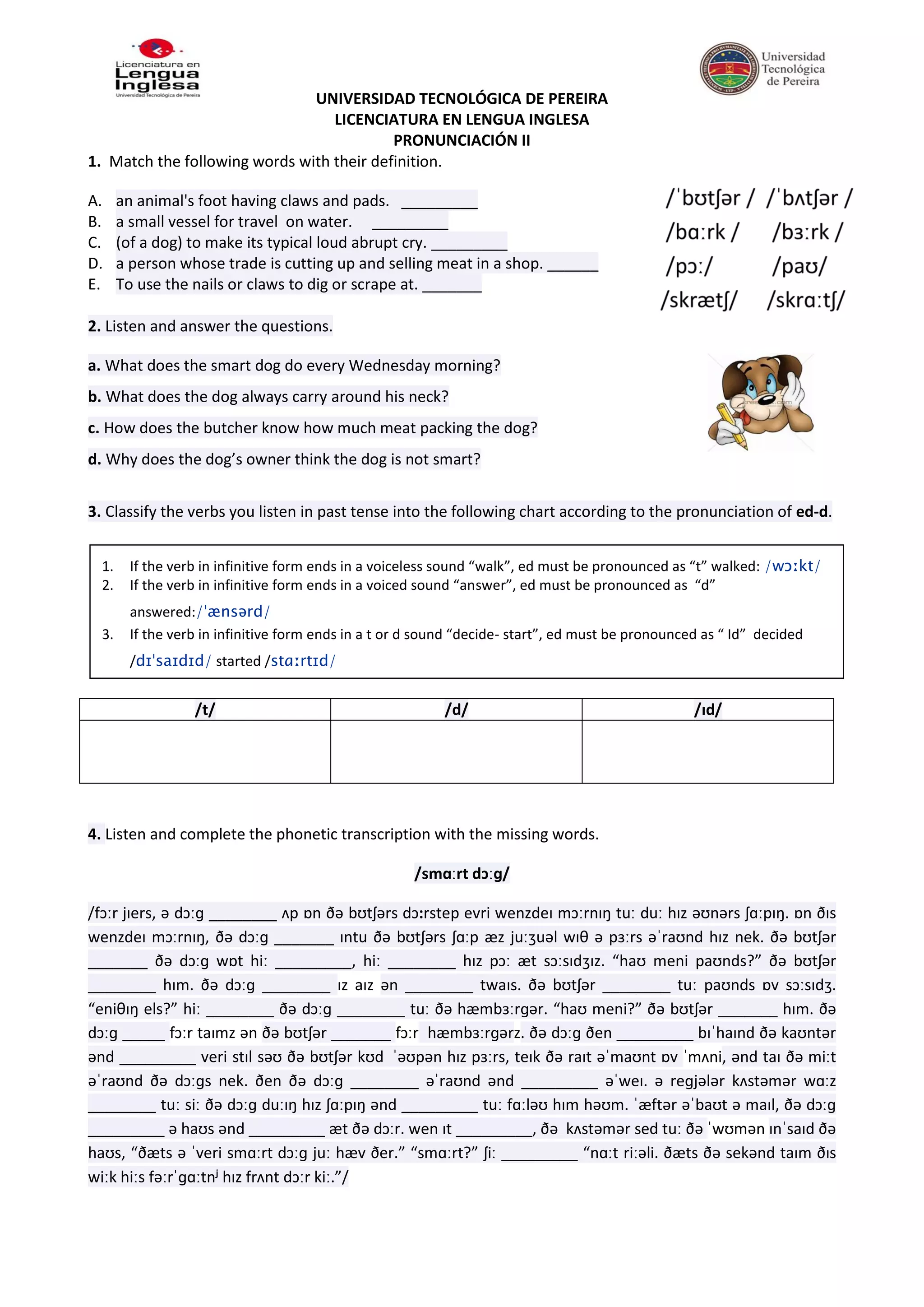
1. Match the following words with their definition.
A.
B.
C.
D.
E.

an animal's foot having claws and pads. _________
a small vessel for travel on water. _________
(of a dog) to make its typical loud abrupt cry. _________
a person whose trade is cutting up and selling meat in a shop. ______
To use the nails or claws to dig or scrape at. _______

2. Listen and answer the questions.
a. What does the smart dog do every Wednesday morning?
b. What does the dog always carry around his neck?
c. How does the butcher know how much meat packing the dog?
d. Why does the dog’s owner think the dog is not smart?
3. Classify the verbs you listen in past tense into the following chart according to the pronunciation of ed-d.
1.
2.

If the verb in infinitive form ends in a voiceless sound “walk”, ed must be pronounced as “t” walked: /wɔːkt/
If the verb in infinitive form ends in a voiced sound “answer”, ed must be pronounced as “d”

3.

answered:/ˈænsərd/
If the verb in infinitive form ends in a t or d sound “decide- start”, ed must be pronounced as “ Id” decided
/dɪˈsaɪdɪd/ started /stɑːrtɪd/

/t/

/d/

/ɪd/

4. Listen and complete the phonetic transcription with the missing words.
/smɑːrt dɔːɡ/
/fɔːr jɪers, ə dɔːɡ ________ ʌp ɒn ðə bʊtʃərs dɔ:rstep evri wenzdeɪ mɔːrnɪŋ tuː duː hɪz əʊnərs ʃɑːpɪŋ. ɒn ðɪs
wenzdeɪ mɔːrnɪŋ, ðə dɔːɡ _______ ɪntu ðə bʊtʃərs ʃɑːp æz juːʒuəl wɪθ ə pɜːrs əˈraʊnd hɪz nek. ðə bʊtʃər
_______ ðə dɔːɡ wɒt hiː _________, hiː ________ hɪz pɔː æt sɔːsɪdʒɪz. “haʊ meni paʊnds?” ðə bʊtʃər
________ hɪm. ðə dɔːɡ ________ ɪz aɪz ən ________ twaɪs. ðə bʊtʃər ________ tuː paʊnds ɒv sɔːsɪdʒ.
“eniθɪŋ els?” hiː ________ ðə dɔːɡ ________ tuː ðə hæmbɜːrɡər. “haʊ meni?” ðə bʊtʃər _______ hɪm. ðə
dɔːɡ _____ fɔːr taɪmz ən ðə bʊtʃər _______ fɔːr hæmbɜːrɡərz. ðə dɔːɡ ðen _________ bɪˈhaɪnd ðə kaʊntər
ənd _________ veri stɪl səʊ ðə bʊtʃər kʊd ˈəʊpən hɪz pɜːrs, teɪk ðə raɪt əˈmaʊnt ɒv ˈmʌni, ənd taɪ ðə miːt
əˈraʊnd ðə dɔːɡs nek. ðen ðə dɔːɡ ________ əˈraʊnd ənd _________ əˈweɪ. ə reɡjələr kʌstəmər wɑːz
________ tuː siː ðə dɔːɡ duːɪŋ hɪz ʃɑːpɪŋ ənd _________ tuː fɑːləʊ hɪm həʊm. ˈæftər əˈbaʊt ə maɪl, ðə dɔːɡ
_________ ə haʊs ənd _________ æt ðə dɔːr. wen ɪt _________, ðə kʌstəmər sed tuː ðə ˈwʊmən ɪnˈsaɪd ðə
haʊs, “ðæts ə ˈveri smɑːrt dɔːɡ juː hæv ðer.” “smɑːrt?” ʃiː _________ “nɑːt riːəli. ðæts ðə sekənd taɪm ðɪs
wiːk hiːs fəːrˈɡɑːtnʲ hɪz frʌnt dɔːr kiː.”/

Smart dog (worksheet)

  • 1.
    UNIVERSIDAD TECNOLÓGICA DEPEREIRA LICENCIATURA EN LENGUA INGLESA PRONUNCIACIÓN II 1. Match the following words with their definition. A. B. C. D. E. an animal's foot having claws and pads. _________ a small vessel for travel on water. _________ (of a dog) to make its typical loud abrupt cry. _________ a person whose trade is cutting up and selling meat in a shop. ______ To use the nails or claws to dig or scrape at. _______ 2. Listen and answer the questions. a. What does the smart dog do every Wednesday morning? b. What does the dog always carry around his neck? c. How does the butcher know how much meat packing the dog? d. Why does the dog’s owner think the dog is not smart? 3. Classify the verbs you listen in past tense into the following chart according to the pronunciation of ed-d. 1. 2. If the verb in infinitive form ends in a voiceless sound “walk”, ed must be pronounced as “t” walked: /wɔːkt/ If the verb in infinitive form ends in a voiced sound “answer”, ed must be pronounced as “d” 3. answered:/ˈænsərd/ If the verb in infinitive form ends in a t or d sound “decide- start”, ed must be pronounced as “ Id” decided /dɪˈsaɪdɪd/ started /stɑːrtɪd/ /t/ /d/ /ɪd/ 4. Listen and complete the phonetic transcription with the missing words. /smɑːrt dɔːɡ/ /fɔːr jɪers, ə dɔːɡ ________ ʌp ɒn ðə bʊtʃərs dɔ:rstep evri wenzdeɪ mɔːrnɪŋ tuː duː hɪz əʊnərs ʃɑːpɪŋ. ɒn ðɪs wenzdeɪ mɔːrnɪŋ, ðə dɔːɡ _______ ɪntu ðə bʊtʃərs ʃɑːp æz juːʒuəl wɪθ ə pɜːrs əˈraʊnd hɪz nek. ðə bʊtʃər _______ ðə dɔːɡ wɒt hiː _________, hiː ________ hɪz pɔː æt sɔːsɪdʒɪz. “haʊ meni paʊnds?” ðə bʊtʃər ________ hɪm. ðə dɔːɡ ________ ɪz aɪz ən ________ twaɪs. ðə bʊtʃər ________ tuː paʊnds ɒv sɔːsɪdʒ. “eniθɪŋ els?” hiː ________ ðə dɔːɡ ________ tuː ðə hæmbɜːrɡər. “haʊ meni?” ðə bʊtʃər _______ hɪm. ðə dɔːɡ _____ fɔːr taɪmz ən ðə bʊtʃər _______ fɔːr hæmbɜːrɡərz. ðə dɔːɡ ðen _________ bɪˈhaɪnd ðə kaʊntər ənd _________ veri stɪl səʊ ðə bʊtʃər kʊd ˈəʊpən hɪz pɜːrs, teɪk ðə raɪt əˈmaʊnt ɒv ˈmʌni, ənd taɪ ðə miːt əˈraʊnd ðə dɔːɡs nek. ðen ðə dɔːɡ ________ əˈraʊnd ənd _________ əˈweɪ. ə reɡjələr kʌstəmər wɑːz ________ tuː siː ðə dɔːɡ duːɪŋ hɪz ʃɑːpɪŋ ənd _________ tuː fɑːləʊ hɪm həʊm. ˈæftər əˈbaʊt ə maɪl, ðə dɔːɡ _________ ə haʊs ənd _________ æt ðə dɔːr. wen ɪt _________, ðə kʌstəmər sed tuː ðə ˈwʊmən ɪnˈsaɪd ðə haʊs, “ðæts ə ˈveri smɑːrt dɔːɡ juː hæv ðer.” “smɑːrt?” ʃiː _________ “nɑːt riːəli. ðæts ðə sekənd taɪm ðɪs wiːk hiːs fəːrˈɡɑːtnʲ hɪz frʌnt dɔːr kiː.”/