1
Topics to be covered
2
 Introduction
 Meaning of Smart City
 Features of Smart City
 Smart Solutions
 Strategy
 Selection Process
 Mission Monitoring
 Financing of Smart Cities
 Additional Sources of Finance
 Challenges
 Conclusion
 References
Introduction
3
Smart Cities Mission is an urban renewal and retrofitting
program by the Government of India with a mission to
develop 100 cities all over the country making them
citizen friendly and sustainable.
Launched – 25th June, 2015
Ministry – Ministry of Urban Development (MoUD)
Funding – Rs. 98,000 crore (US $15 Billion)
What is a Smart City?
4
A Smart City has-
 basic infrastructure,
 uses ‘smart’ solutions to make infrastructure and services
better
 relies on Area based development
 good governance especially e-governance
 sustainable environment.
Features of Smart City
5
 Promoting mixed land use in area based development.
 Housing and inclusiveness.
 Preserving and developing open spaces.
 Promoting a variety of transport options.
 Making governance citizen friendly and cost effective.
 Giving an identity to the city.
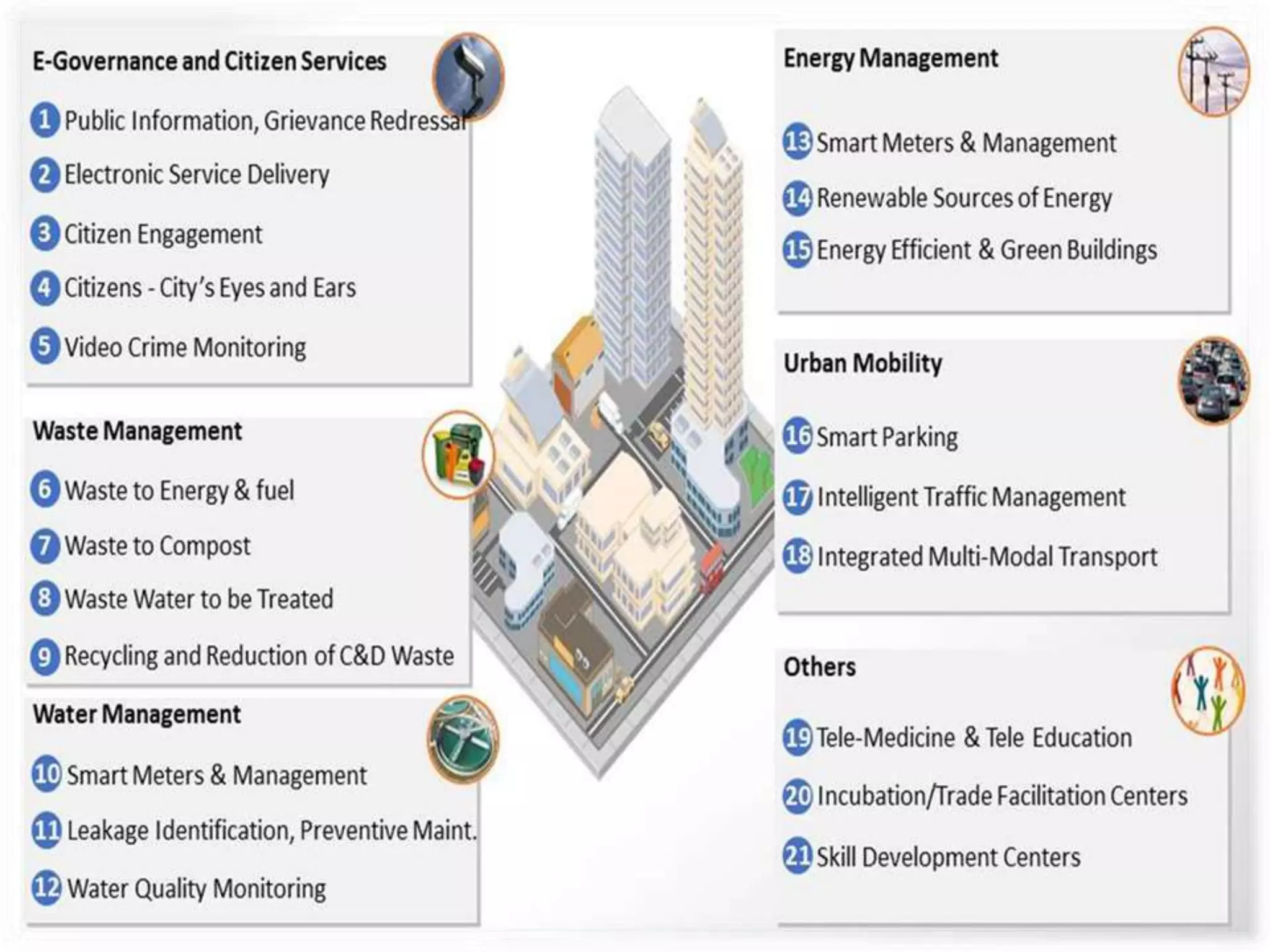
Smart Solutions
6
Smart solutions are application of IT&C to municipal
services and infrastructure to make them better.
Slide 11
Strategy
7
The strategic components of area-based development in
the smart cities are :-
MODELS OF
AREA-BASED
DEVELOPMENT
Retrofitting
(City
Improvement)
Redevelopment
(City Renewal)
Greenfield
Development (City
Extension)
Selection Process (cont.)
Stage-I Competition (within state)
8
Number of potential smart cities will be
intimated to each State, based on an
equitable & objective based formula.
An intra-state competition to select
proposed Smart Cities, based on the
Stage-I criteria.
The selected will be called the short
listed Smart Cities.
Stage II- City Selection Criteria
9
The 100 shortlisted potential smart Cities are selected
through an inter-state competition
The 100 selected cities prepare their proposals for All
India Competition with capacity assistance
Based on pre-defined Stage 2 criteria, the evaluation is
done by national and international organisations
Winners declared for Round-1
Mission Monitoring
10
National Level- Apex Committee (AC) headed by the
Secretary
State Level- State Level High Powered Steering Committee
(HPSC) Chaired by the Chief Secretary
City Level- CEO of the SPV is convener of the Smart City
Forum
Financing of Smart Cities
11
 Centre will invest a total of Rs. 48,000 crore in 100 cities
across the country for 5 years – each smart city will get Rs.
100 crore each for five years.
 Advance of Rs. 2 crore to shortlisted cities to prepare SCP.
 First year Rs. 200 crore, thereafter Rs. 100 crore every year.
 Funds can be used as follows-
Project funds – 93%,
State/ULB (Administrative & Office Expenses) – 5%,
MoUD (Administrative & Office Expenses) – 2%.
Additional Sources of Finance
12
Challenges
13
 This is the first time, MoUD programme is using
‘Challenge’ or competition method to select cities for
funding.
 Strategy of area-based development.
 States and ULBs will play a key supportive role in the
development of Smart Cities.
 Citizen involvement is a key to the success of the Smart
Cities Mission.
Conclusion
14
Making cities smart will take time and effort. It is critical
to create an enabling policy and regulatory environment.
Many countries are interested in partnering with Indian
firms on smart city ventures. Foreign investment is
crucial and required. However cities need to be
empowered and capacitated to decide on the specific
aspect to invest upon, along with the modalities and
timing of that investment.
References
15
 www.smartcities.gov.in
 www.indianexpress.com/india
 www.smartcities.eu/download/final
 CSTEP Report Smart Cities Framework
THANK YOU
16
17

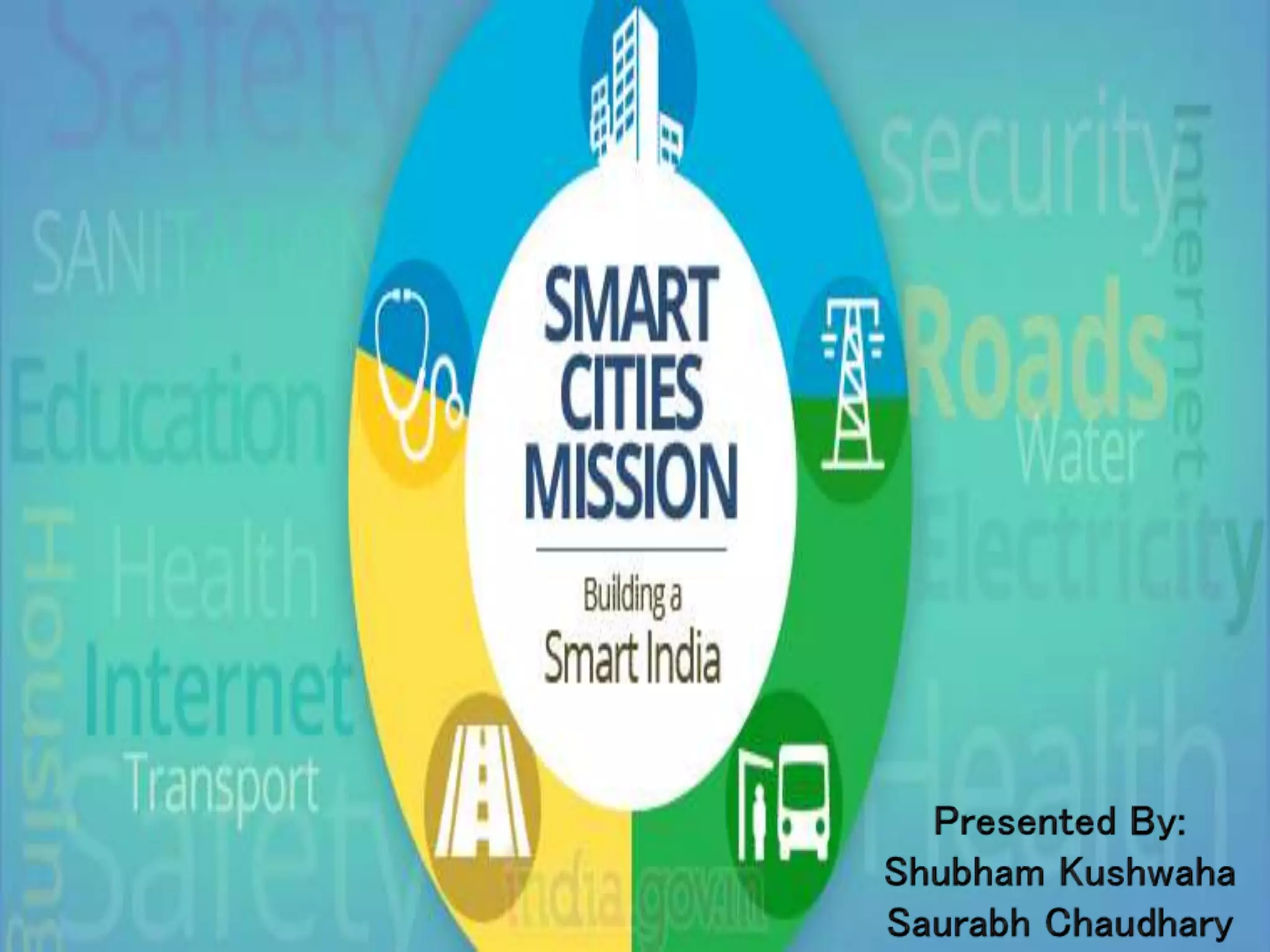
Smart City Mission- Building a Smart India

  • 1.
  • 2.
    Topics to becovered 2  Introduction  Meaning of Smart City  Features of Smart City  Smart Solutions  Strategy  Selection Process  Mission Monitoring  Financing of Smart Cities  Additional Sources of Finance  Challenges  Conclusion  References
  • 3.
    Introduction 3 Smart Cities Missionis an urban renewal and retrofitting program by the Government of India with a mission to develop 100 cities all over the country making them citizen friendly and sustainable. Launched – 25th June, 2015 Ministry – Ministry of Urban Development (MoUD) Funding – Rs. 98,000 crore (US $15 Billion)
  • 4.
    What is aSmart City? 4 A Smart City has-  basic infrastructure,  uses ‘smart’ solutions to make infrastructure and services better  relies on Area based development  good governance especially e-governance  sustainable environment.
  • 5.
    Features of SmartCity 5  Promoting mixed land use in area based development.  Housing and inclusiveness.  Preserving and developing open spaces.  Promoting a variety of transport options.  Making governance citizen friendly and cost effective.  Giving an identity to the city.
  • 6.
    Smart Solutions 6 Smart solutionsare application of IT&C to municipal services and infrastructure to make them better. Slide 11
  • 7.
    Strategy 7 The strategic componentsof area-based development in the smart cities are :- MODELS OF AREA-BASED DEVELOPMENT Retrofitting (City Improvement) Redevelopment (City Renewal) Greenfield Development (City Extension)
  • 8.
    Selection Process (cont.) Stage-ICompetition (within state) 8 Number of potential smart cities will be intimated to each State, based on an equitable & objective based formula. An intra-state competition to select proposed Smart Cities, based on the Stage-I criteria. The selected will be called the short listed Smart Cities.
  • 9.
    Stage II- CitySelection Criteria 9 The 100 shortlisted potential smart Cities are selected through an inter-state competition The 100 selected cities prepare their proposals for All India Competition with capacity assistance Based on pre-defined Stage 2 criteria, the evaluation is done by national and international organisations Winners declared for Round-1
  • 10.
    Mission Monitoring 10 National Level-Apex Committee (AC) headed by the Secretary State Level- State Level High Powered Steering Committee (HPSC) Chaired by the Chief Secretary City Level- CEO of the SPV is convener of the Smart City Forum
  • 11.
    Financing of SmartCities 11  Centre will invest a total of Rs. 48,000 crore in 100 cities across the country for 5 years – each smart city will get Rs. 100 crore each for five years.  Advance of Rs. 2 crore to shortlisted cities to prepare SCP.  First year Rs. 200 crore, thereafter Rs. 100 crore every year.  Funds can be used as follows- Project funds – 93%, State/ULB (Administrative & Office Expenses) – 5%, MoUD (Administrative & Office Expenses) – 2%.
  • 12.
  • 13.
    Challenges 13  This isthe first time, MoUD programme is using ‘Challenge’ or competition method to select cities for funding.  Strategy of area-based development.  States and ULBs will play a key supportive role in the development of Smart Cities.  Citizen involvement is a key to the success of the Smart Cities Mission.
  • 14.
    Conclusion 14 Making cities smartwill take time and effort. It is critical to create an enabling policy and regulatory environment. Many countries are interested in partnering with Indian firms on smart city ventures. Foreign investment is crucial and required. However cities need to be empowered and capacitated to decide on the specific aspect to invest upon, along with the modalities and timing of that investment.
  • 15.
    References 15  www.smartcities.gov.in  www.indianexpress.com/india www.smartcities.eu/download/final  CSTEP Report Smart Cities Framework
  • 16.
  • 17.