

If learning  is the real concern … Kai-ming Cheng Faculty of Education, University of Hong Kong November 7, 2004
If learning is the real concern, then I have nothing to add. However, … were
Do we know what we are debating?
Are we debating about the pros and cons of small class teaching? NO!
Nature of the debate … Political debate Whether or not Korean society is ready to bear the social cost of teacher layoff? Professional debate Whether or not reduction of class size is a priority policy move at this moment? Let us be Frank!!!
Different implications,   If small classes won the case … Political debate: Enough number of small classes to offset teacher layoff Professional debate All classes should be small
The political debate … The social cost of teacher layoff : teacher unemployment teacher unrest  unionism The financial cost of smaller classes : increase of student unit cost increase of the weight of teacher salaries deprivation of other developments Where is the balance?
The Shanghai case … Social cost  >  Financial cost Positively promote small class In incremental (experimental) steps A conscious strategic decision!
The professional debate … Questions to answer What is the optimal size of a learning community? When are smaller classes better? What are the priorities in improving student learning?
1.  The Learning Community: Optimal Mode 30 in Japanese Kindergartens “Better to have a class of 10-12?” “No, maybe better for the teacher, but not for the children.” Home-schooling in US  120 in Western Australia The case for Collaborative Learning! A matter of Culture!
2 . When are small classes better? HK:  45 >>35  Improvement in learning? Reduction in teacher workload? “Small classes are better”: Common sense?
2 . When are small classes better? When does good learning take place? Students are motivated Students receive individual care Students learn from the group Ample learning resources Environments conducive to learning
2 . When are small classes better? When will good learning  not  take place? Lessons are boring Students are not engaged Assignments are repetitive and routine There is no individual care There is no interaction in class Messages are discouraging …… ..
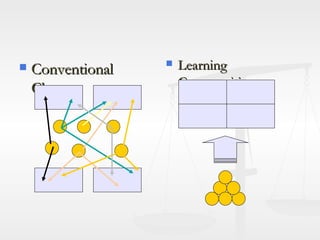
2 . When are small classes better? Underpinning paradigms Teachers transmit knowledge to students Students are passive receivers of knowledge Students learn as isolated individuals Class size is a teachers’ concern
Conventional Classes Learning Communities
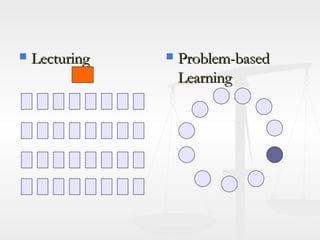
Lecturing Problem-based Learning
2 . When are small classes better? Challenging the assumptions: Is class a everlasting concept? Is class the temple of learning?
3.  The priorities The notion of priorities A is very good B, C, D are also very good What should we do?
3.  The priorities Policy agenda : Smaller classes Better teachers More resourceful learning environments More diverse learning experience More education for more students Stronger higher education ………
3.  The priorities Cost of Smaller Classes  (32/37 >>25) Increase in teacher-student ratio  (1:18/19) Increase in student unit cost Increase in overall expenditures in the school sector
3.  The priorities Opportunity costs More resources in basic education vis-à-vis  developments beyond basic education  More resources for teachers’ salaries vis-à-vis  more resources for student learning More resources in classrooms vis-à-vis  learning experiences beyond classrooms
3.  The priorities Are we ready to tolerate all these opportunity costs? Fewer people with more education? Less resources for students but more on teacher salaries? More resources in classrooms and less for other learning experiences?
Should we go for smaller classes? … if we are convinced that teacher layoff and unrest is something we could not tolerate. Let us be Frank?
Let us tell citizens the truth! Let them know the real debate! Let them decide!
Don’t cheat! Don’t raise false hopes! Thank you!

Small Class Size Debate

  • 1.
    If learning is the real concern … Kai-ming Cheng Faculty of Education, University of Hong Kong November 7, 2004
  • 2.
    If learning isthe real concern, then I have nothing to add. However, … were
  • 3.
    Do we knowwhat we are debating?
  • 4.
    Are we debatingabout the pros and cons of small class teaching? NO!
  • 5.
    Nature of thedebate … Political debate Whether or not Korean society is ready to bear the social cost of teacher layoff? Professional debate Whether or not reduction of class size is a priority policy move at this moment? Let us be Frank!!!
  • 6.
    Different implications, If small classes won the case … Political debate: Enough number of small classes to offset teacher layoff Professional debate All classes should be small
  • 7.
    The political debate… The social cost of teacher layoff : teacher unemployment teacher unrest unionism The financial cost of smaller classes : increase of student unit cost increase of the weight of teacher salaries deprivation of other developments Where is the balance?
  • 8.
    The Shanghai case… Social cost > Financial cost Positively promote small class In incremental (experimental) steps A conscious strategic decision!
  • 9.
    The professional debate… Questions to answer What is the optimal size of a learning community? When are smaller classes better? What are the priorities in improving student learning?
  • 10.
    1. TheLearning Community: Optimal Mode 30 in Japanese Kindergartens “Better to have a class of 10-12?” “No, maybe better for the teacher, but not for the children.” Home-schooling in US 120 in Western Australia The case for Collaborative Learning! A matter of Culture!
  • 11.
    2 . Whenare small classes better? HK: 45 >>35 Improvement in learning? Reduction in teacher workload? “Small classes are better”: Common sense?
  • 12.
    2 . Whenare small classes better? When does good learning take place? Students are motivated Students receive individual care Students learn from the group Ample learning resources Environments conducive to learning
  • 13.
    2 . Whenare small classes better? When will good learning not take place? Lessons are boring Students are not engaged Assignments are repetitive and routine There is no individual care There is no interaction in class Messages are discouraging …… ..
  • 14.
    2 . Whenare small classes better? Underpinning paradigms Teachers transmit knowledge to students Students are passive receivers of knowledge Students learn as isolated individuals Class size is a teachers’ concern
  • 15.
  • 16.
  • 17.
    2 . Whenare small classes better? Challenging the assumptions: Is class a everlasting concept? Is class the temple of learning?
  • 18.
    3. Thepriorities The notion of priorities A is very good B, C, D are also very good What should we do?
  • 19.
    3. Thepriorities Policy agenda : Smaller classes Better teachers More resourceful learning environments More diverse learning experience More education for more students Stronger higher education ………
  • 20.
    3. Thepriorities Cost of Smaller Classes (32/37 >>25) Increase in teacher-student ratio (1:18/19) Increase in student unit cost Increase in overall expenditures in the school sector
  • 21.
    3. Thepriorities Opportunity costs More resources in basic education vis-à-vis developments beyond basic education More resources for teachers’ salaries vis-à-vis more resources for student learning More resources in classrooms vis-à-vis learning experiences beyond classrooms
  • 22.
    3. Thepriorities Are we ready to tolerate all these opportunity costs? Fewer people with more education? Less resources for students but more on teacher salaries? More resources in classrooms and less for other learning experiences?
  • 23.
    Should we gofor smaller classes? … if we are convinced that teacher layoff and unrest is something we could not tolerate. Let us be Frank?
  • 24.
    Let us tellcitizens the truth! Let them know the real debate! Let them decide!
  • 25.
    Don’t cheat! Don’traise false hopes! Thank you!