Supporting Students
with Special Needs
Inclusion Strategies for Secondary Classrooms
Chapter 5
Teaching the Concepts and Vocabulary of Our Disciplines
Presentation by Nicole Gockel
Teaching the Concepts and Vocabulary of
Our Disciplines
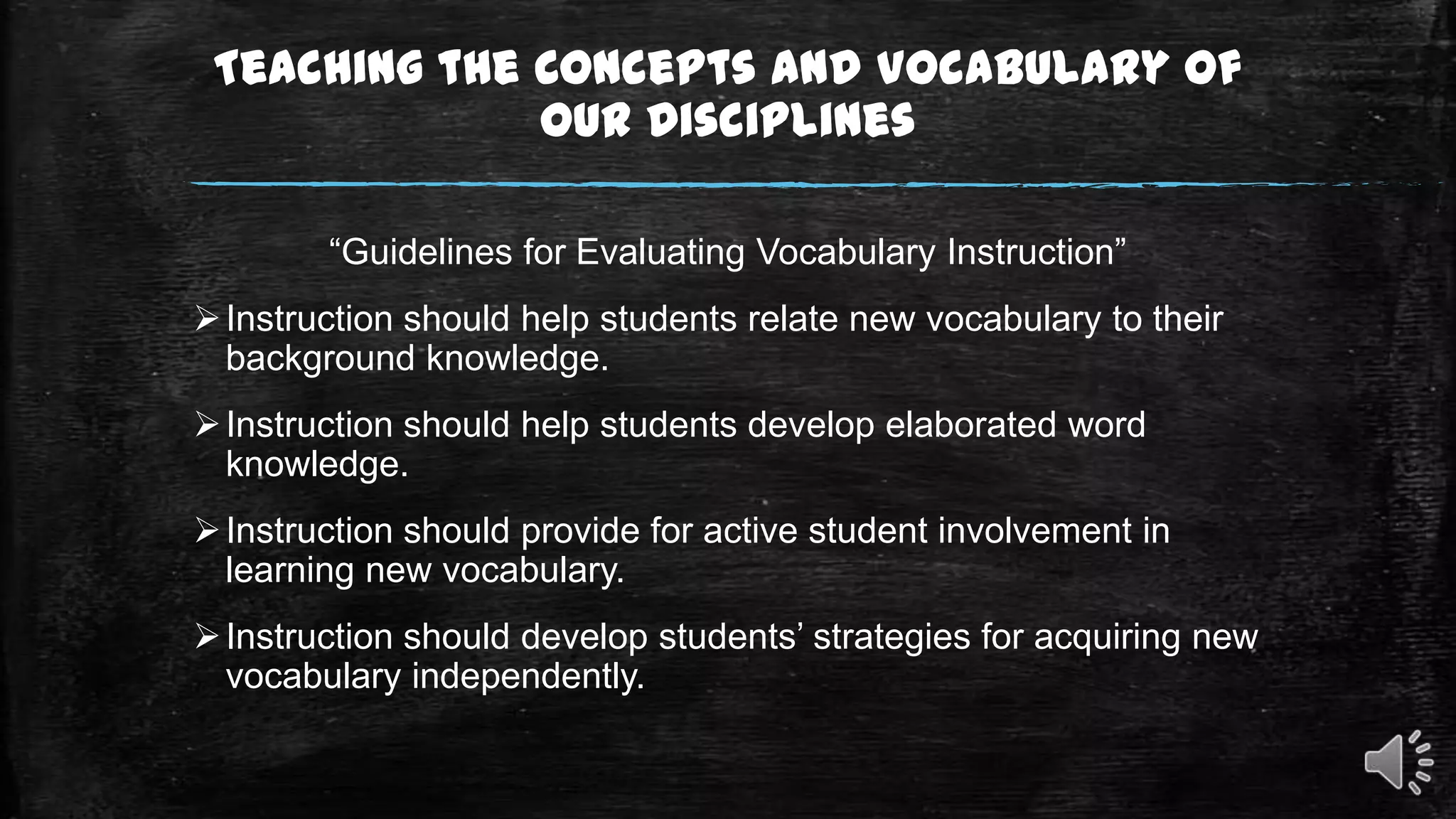
“Guidelines for Evaluating Vocabulary Instruction”

 Instruction should help students relate new vocabulary to their
background knowledge.
 Instruction should help students develop elaborated word
knowledge.
 Instruction should provide for active student involvement in
learning new vocabulary.
 Instruction should develop students’ strategies for acquiring new
vocabulary independently.
Multisensory Strategies to Help ELN
Students Learn Concepts and Vocabulary
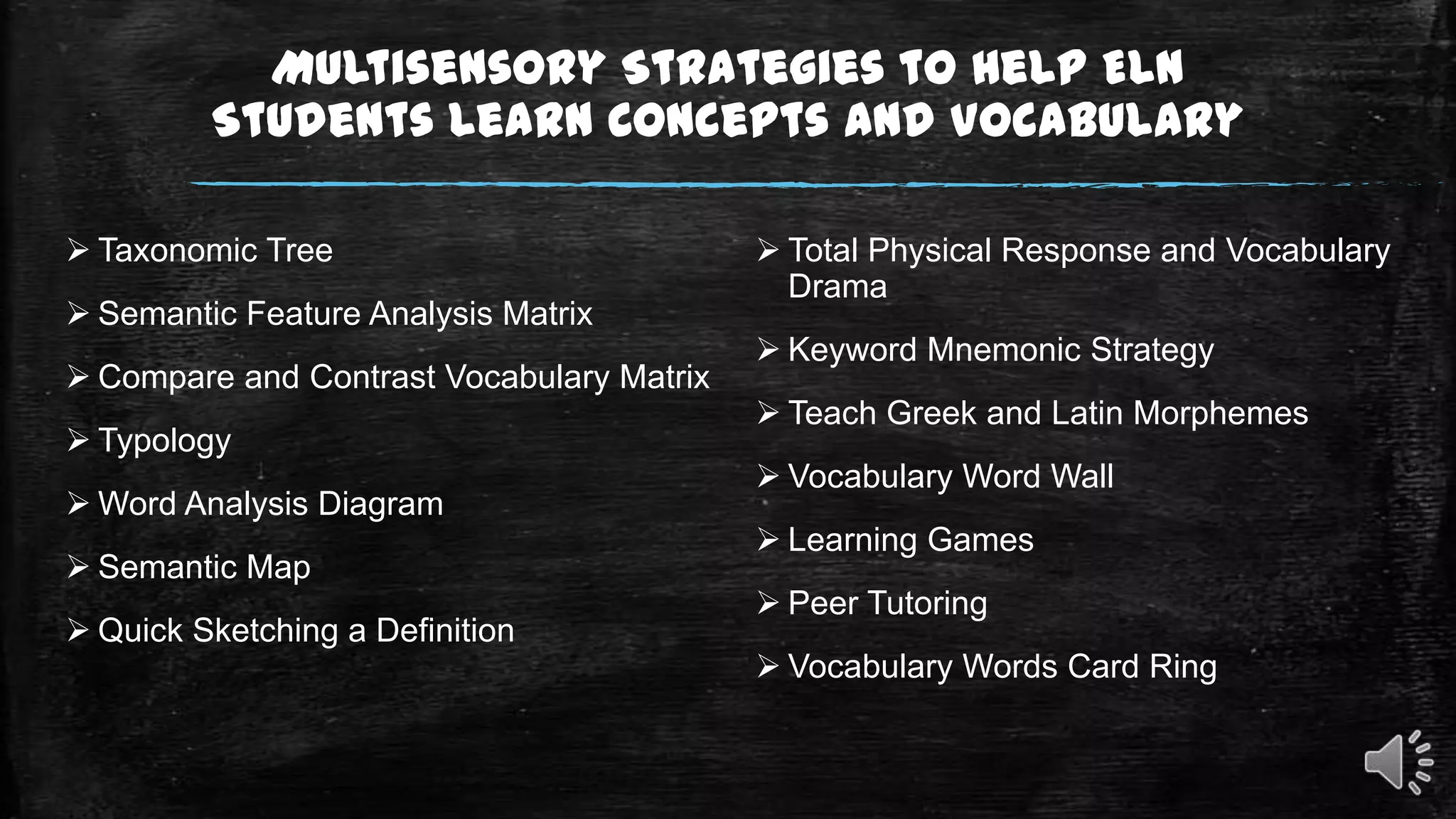
 Taxonomic Tree

 Semantic Feature Analysis Matrix
 Compare and Contrast Vocabulary Matrix
 Typology
 Word Analysis Diagram
 Semantic Map
 Quick Sketching a Definition

 Total Physical Response and Vocabulary
Drama
 Keyword Mnemonic Strategy
 Teach Greek and Latin Morphemes
 Vocabulary Word Wall
 Learning Games
 Peer Tutoring

 Vocabulary Words Card Ring
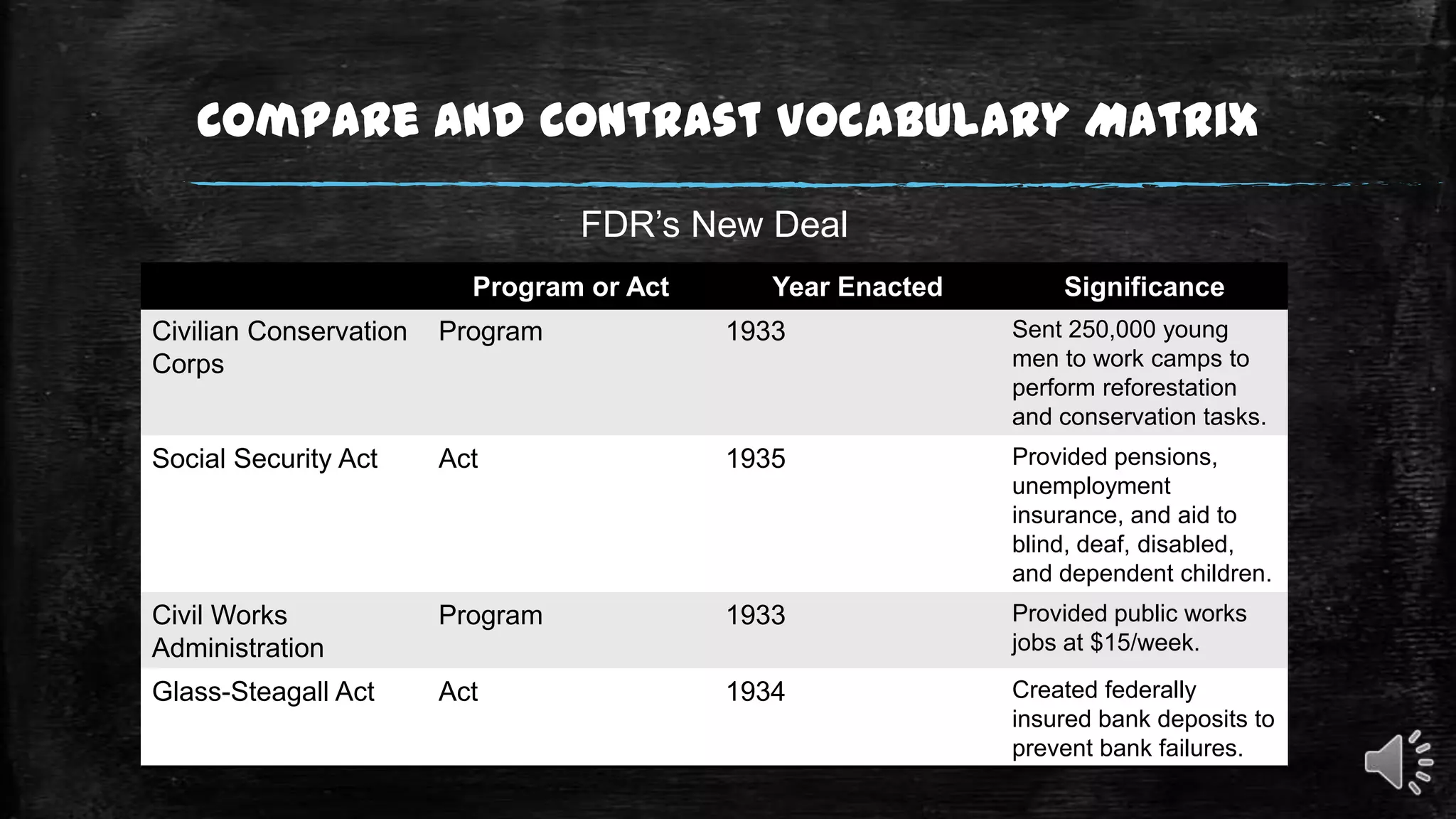
Compare and Contrast Vocabulary Matrix
FDR’s New Deal
Program or Act

Year Enacted

Significance

Civilian Conservation
Corps

Program

1933

Sent 250,000 young
men to work camps to
perform reforestation
and conservation tasks.

Social Security Act

Act

1935

Provided pensions,
unemployment
insurance, and aid to
blind, deaf, disabled,
and dependent children.

Civil Works
Administration

Program

1933

Provided public works
jobs at $15/week.

Glass-Steagall Act

Act

1934

Created federally
insured bank deposits to
prevent bank failures.
Quick Sketching a Definition
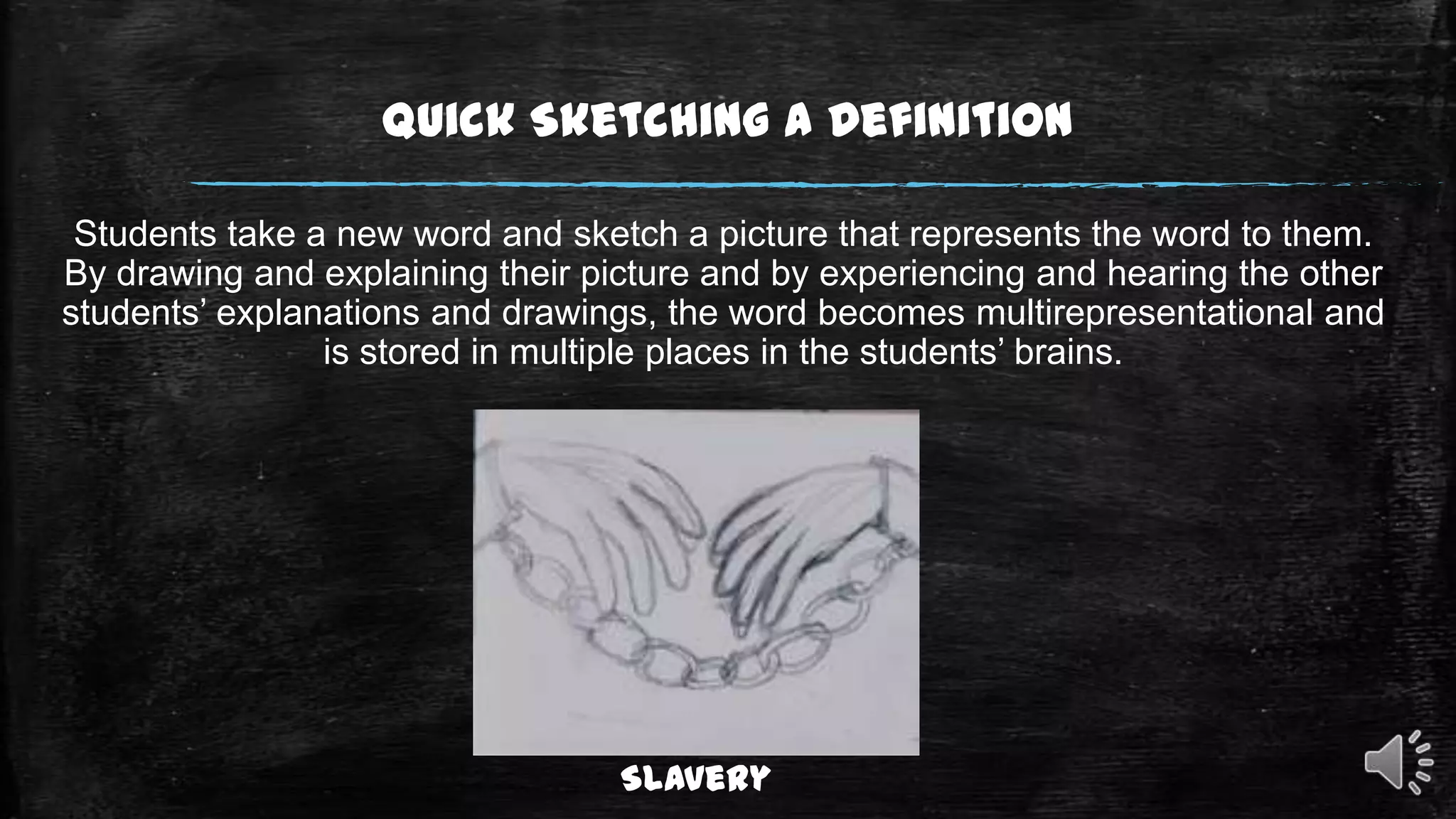
Students take a new word and sketch a picture that represents the word to them.
By drawing and explaining their picture and by experiencing and hearing the other
students’ explanations and drawings, the word becomes multirepresentational and
is stored in multiple places in the students’ brains.

Slavery
Total Physical Response and Vocabulary
Drama
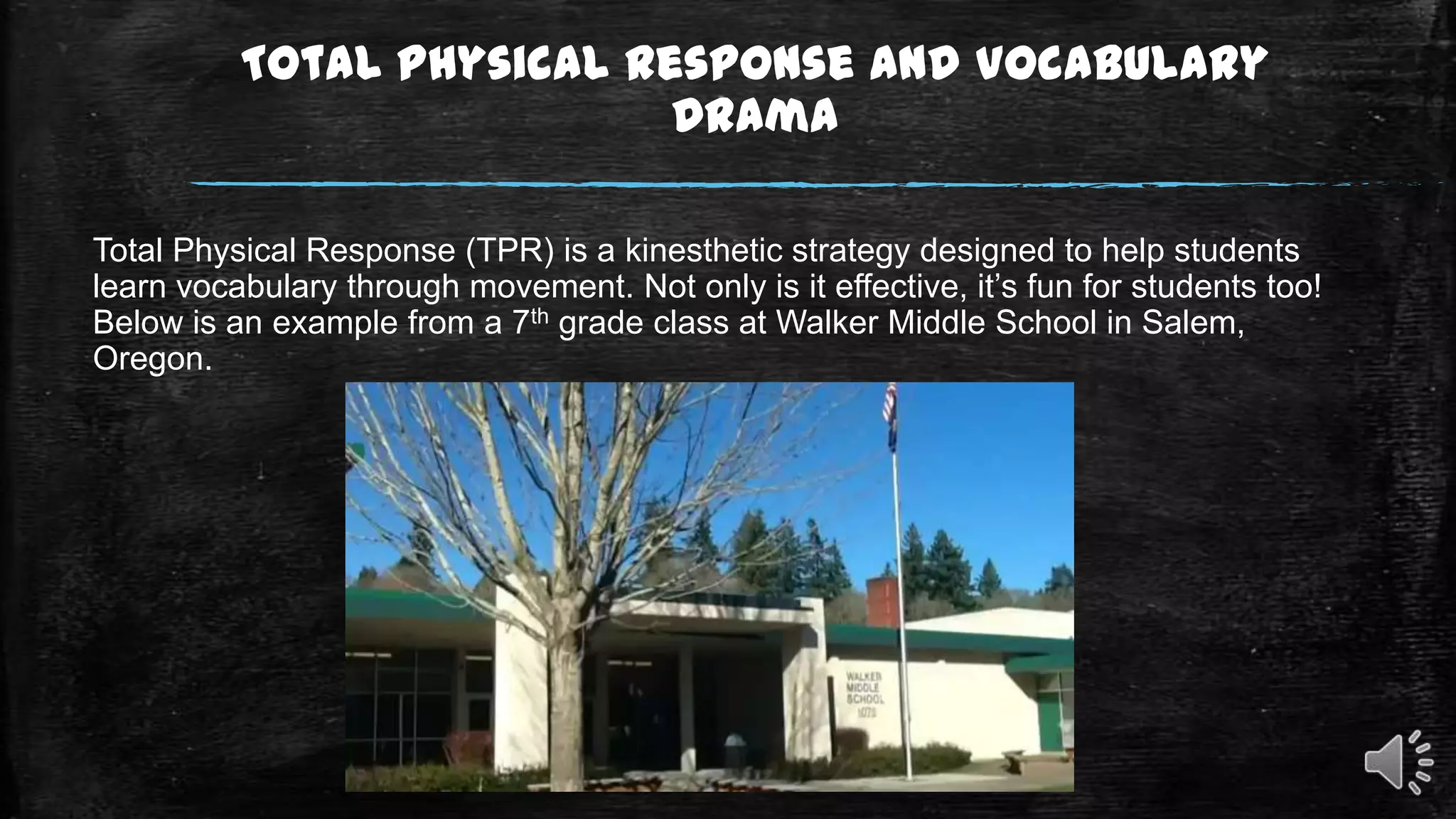
Total Physical Response (TPR) is a kinesthetic strategy designed to help students
learn vocabulary through movement. Not only is it effective, it’s fun for students too!
Below is an example from a 7th grade class at Walker Middle School in Salem,
Oregon.
Vocabulary Word Wall
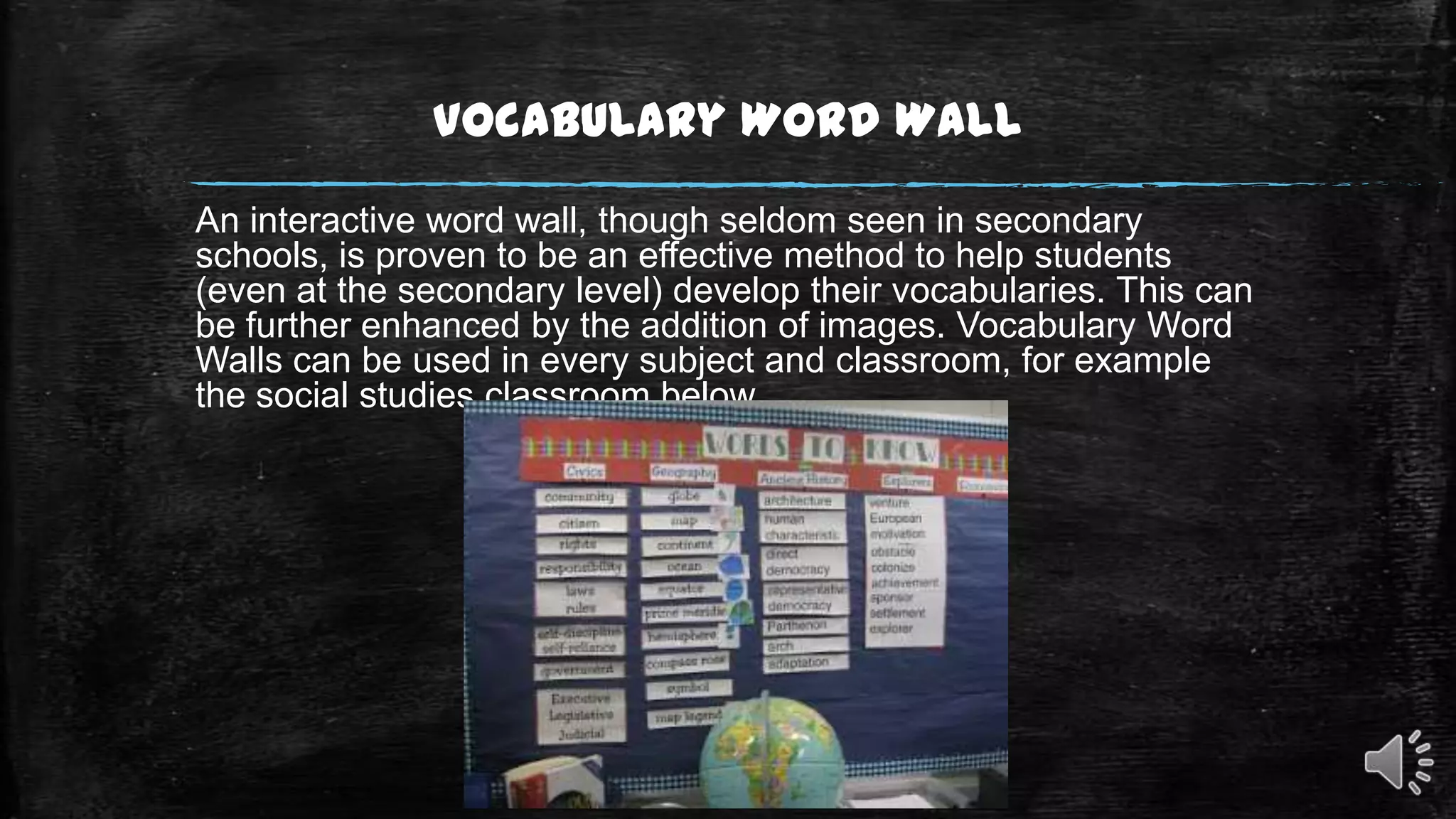
An interactive word wall, though seldom seen in secondary
schools, is proven to be an effective method to help students
(even at the secondary level) develop their vocabularies. This can
be further enhanced by the addition of images. Vocabulary Word
Walls can be used in every subject and classroom, for example
the social studies classroom below.
Learning Games

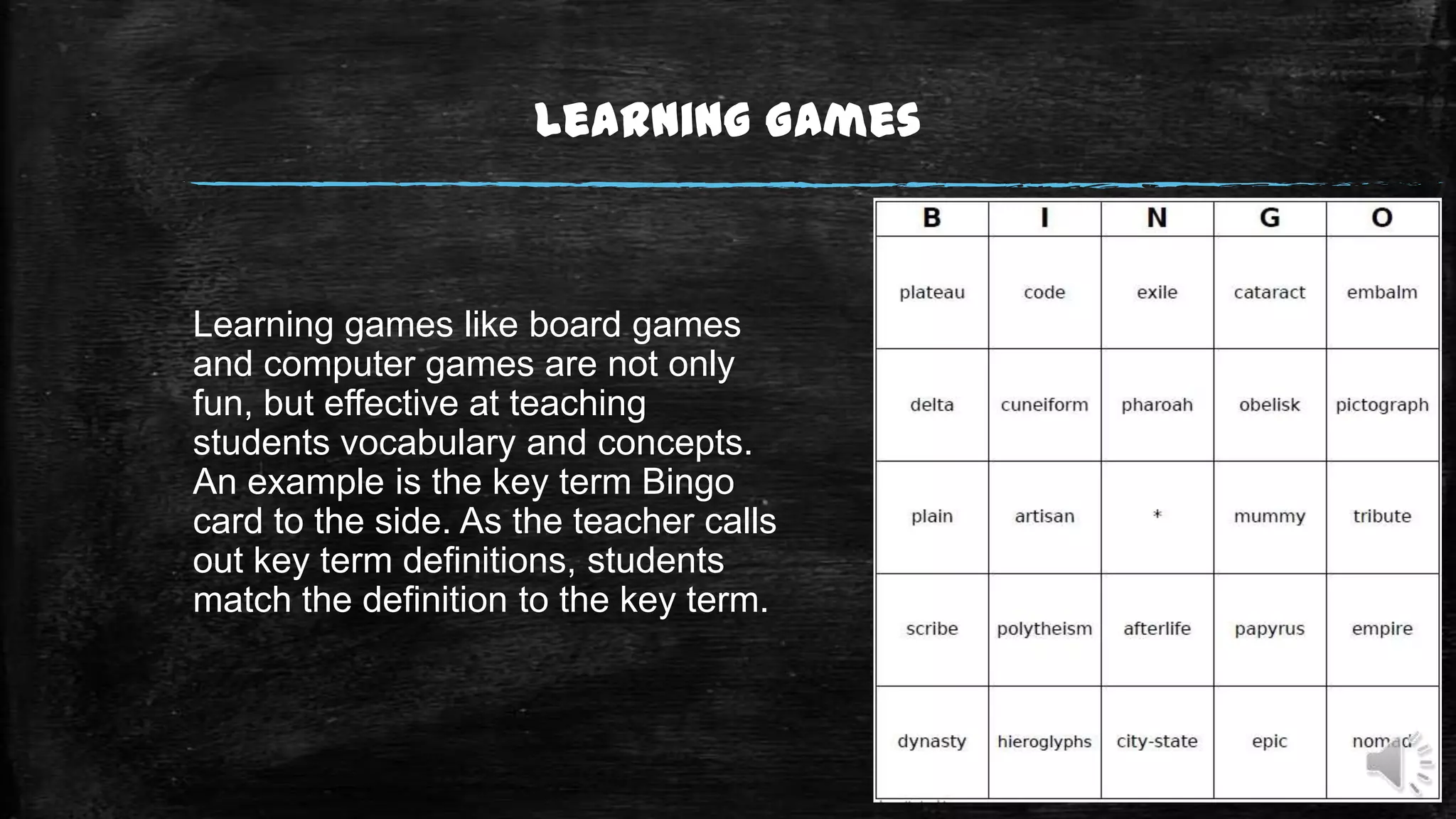
Learning games like board games
and computer games are not only
fun, but effective at teaching
students vocabulary and concepts.
An example is the key term Bingo
card to the side. As the teacher calls
out key term definitions, students
match the definition to the key term.
Peer Tutoring
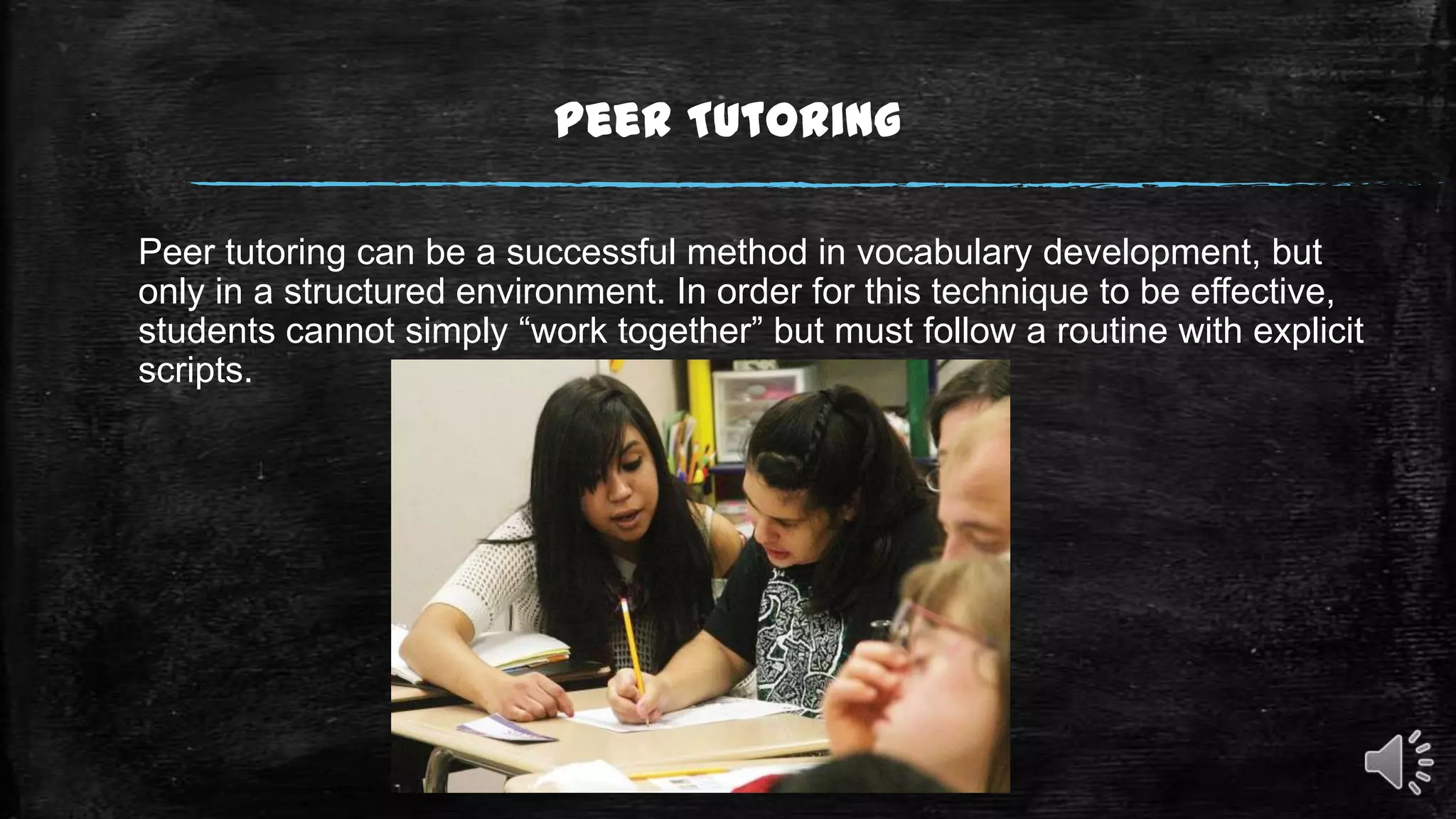
Peer tutoring can be a successful method in vocabulary development, but
only in a structured environment. In order for this technique to be effective,
students cannot simply “work together” but must follow a routine with explicit
scripts.
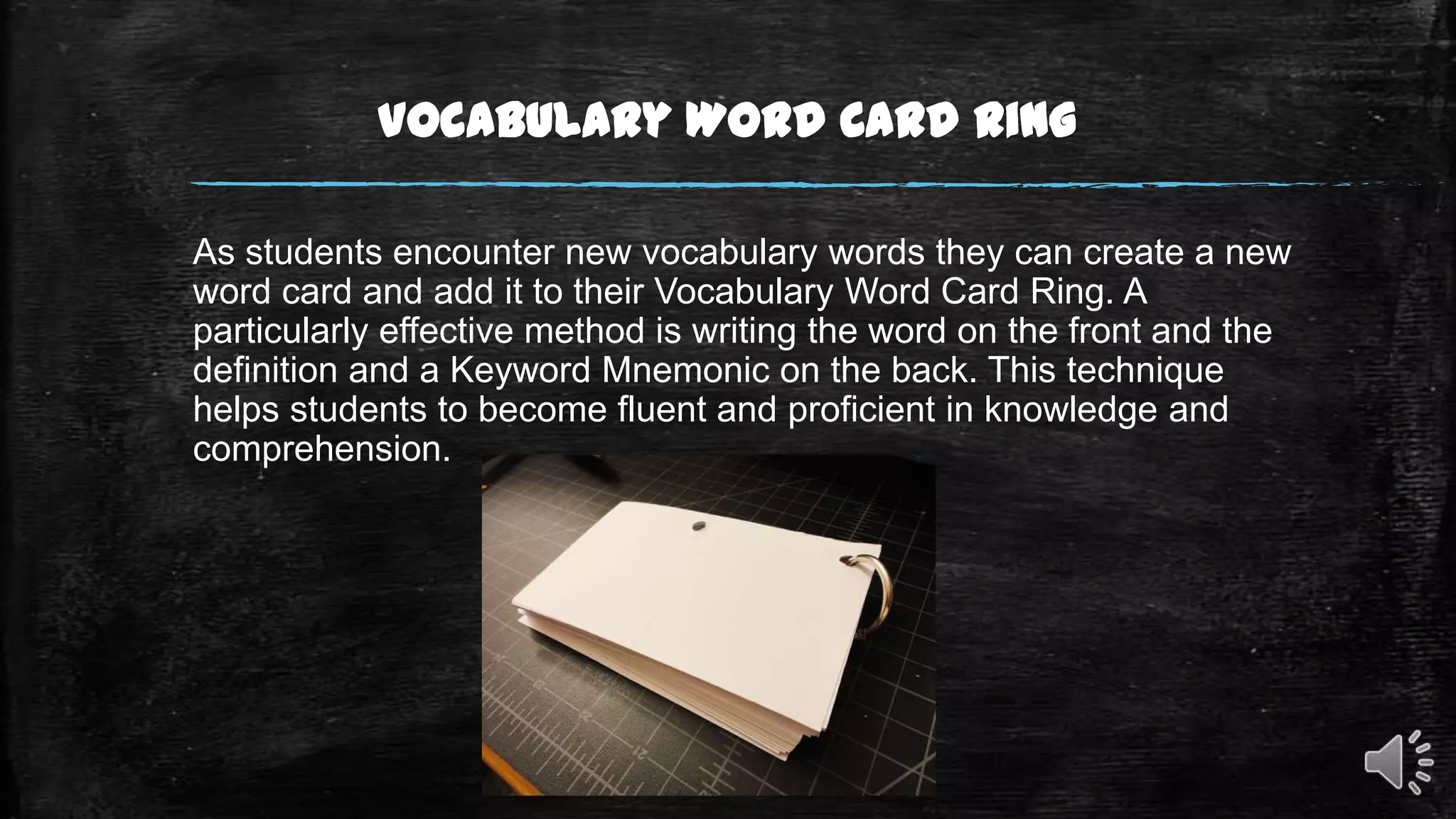
Vocabulary Word Card Ring
As students encounter new vocabulary words they can create a new
word card and add it to their Vocabulary Word Card Ring. A
particularly effective method is writing the word on the front and the
definition and a Keyword Mnemonic on the back. This technique
helps students to become fluent and proficient in knowledge and
comprehension.

Supporting Students with Special Needs EDSC 310 Presentation

  • 1.
    Supporting Students with SpecialNeeds Inclusion Strategies for Secondary Classrooms Chapter 5 Teaching the Concepts and Vocabulary of Our Disciplines Presentation by Nicole Gockel
  • 2.
    Teaching the Conceptsand Vocabulary of Our Disciplines “Guidelines for Evaluating Vocabulary Instruction”  Instruction should help students relate new vocabulary to their background knowledge.  Instruction should help students develop elaborated word knowledge.  Instruction should provide for active student involvement in learning new vocabulary.  Instruction should develop students’ strategies for acquiring new vocabulary independently.
  • 3.
    Multisensory Strategies toHelp ELN Students Learn Concepts and Vocabulary  Taxonomic Tree  Semantic Feature Analysis Matrix  Compare and Contrast Vocabulary Matrix  Typology  Word Analysis Diagram  Semantic Map  Quick Sketching a Definition  Total Physical Response and Vocabulary Drama  Keyword Mnemonic Strategy  Teach Greek and Latin Morphemes  Vocabulary Word Wall  Learning Games  Peer Tutoring  Vocabulary Words Card Ring
  • 4.
    Compare and ContrastVocabulary Matrix FDR’s New Deal Program or Act Year Enacted Significance Civilian Conservation Corps Program 1933 Sent 250,000 young men to work camps to perform reforestation and conservation tasks. Social Security Act Act 1935 Provided pensions, unemployment insurance, and aid to blind, deaf, disabled, and dependent children. Civil Works Administration Program 1933 Provided public works jobs at $15/week. Glass-Steagall Act Act 1934 Created federally insured bank deposits to prevent bank failures.
  • 5.
    Quick Sketching aDefinition Students take a new word and sketch a picture that represents the word to them. By drawing and explaining their picture and by experiencing and hearing the other students’ explanations and drawings, the word becomes multirepresentational and is stored in multiple places in the students’ brains. Slavery
  • 6.
    Total Physical Responseand Vocabulary Drama Total Physical Response (TPR) is a kinesthetic strategy designed to help students learn vocabulary through movement. Not only is it effective, it’s fun for students too! Below is an example from a 7th grade class at Walker Middle School in Salem, Oregon.
  • 7.
    Vocabulary Word Wall Aninteractive word wall, though seldom seen in secondary schools, is proven to be an effective method to help students (even at the secondary level) develop their vocabularies. This can be further enhanced by the addition of images. Vocabulary Word Walls can be used in every subject and classroom, for example the social studies classroom below.
  • 8.
    Learning Games Learning gameslike board games and computer games are not only fun, but effective at teaching students vocabulary and concepts. An example is the key term Bingo card to the side. As the teacher calls out key term definitions, students match the definition to the key term.
  • 9.
    Peer Tutoring Peer tutoringcan be a successful method in vocabulary development, but only in a structured environment. In order for this technique to be effective, students cannot simply “work together” but must follow a routine with explicit scripts.
  • 10.
    Vocabulary Word CardRing As students encounter new vocabulary words they can create a new word card and add it to their Vocabulary Word Card Ring. A particularly effective method is writing the word on the front and the definition and a Keyword Mnemonic on the back. This technique helps students to become fluent and proficient in knowledge and comprehension.