The Reduction of Class Size in EducationBy Kevin Teays
IntroductionReducing class size is a key argument in education today.Students’ learning efficiency will benefit
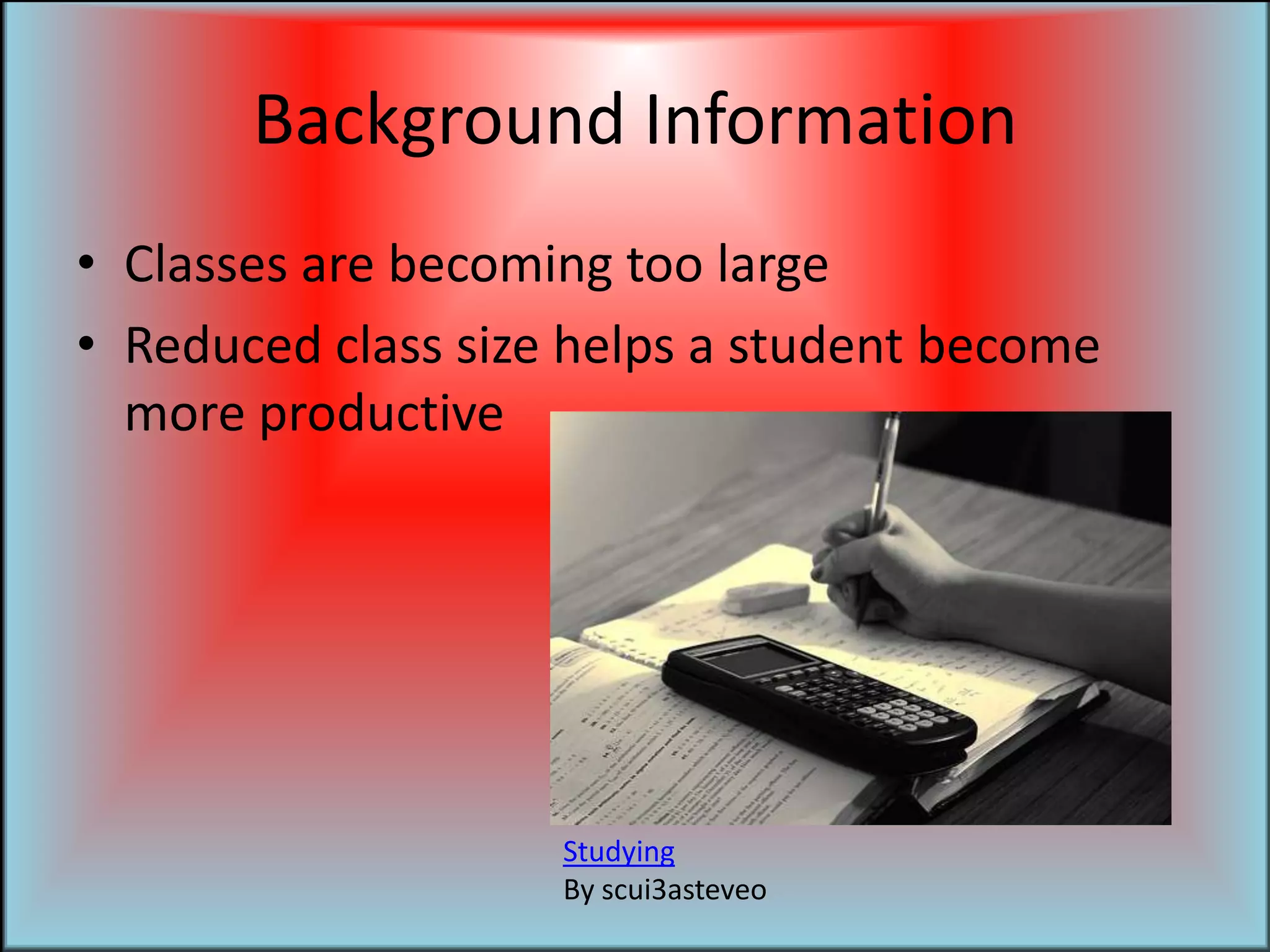
Background InformationClasses are becoming too largeReduced class size helps a student become more productiveStudyingBy scui3asteveo
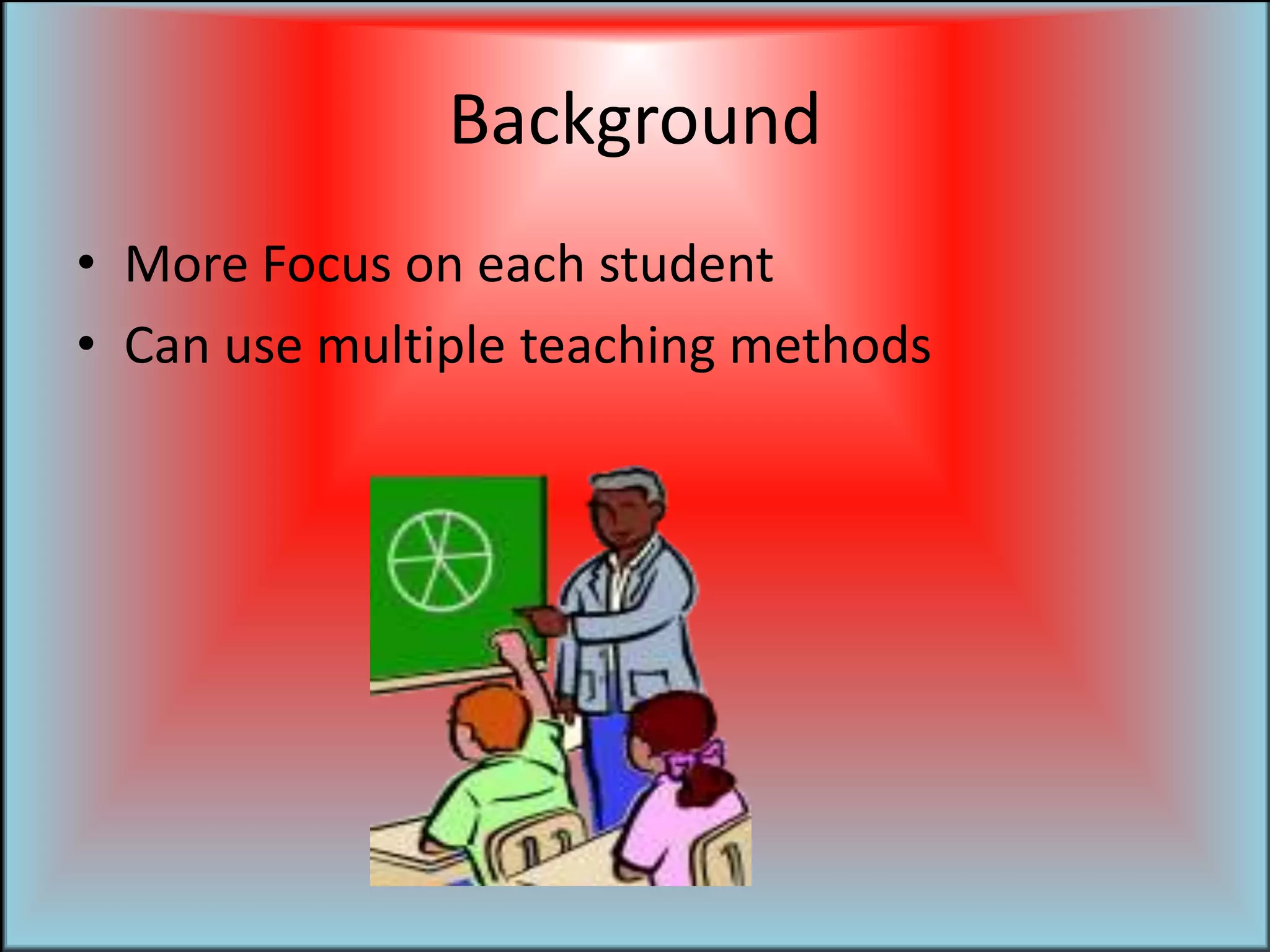
BackgroundMore Focus on each studentCan use multiple teaching methods
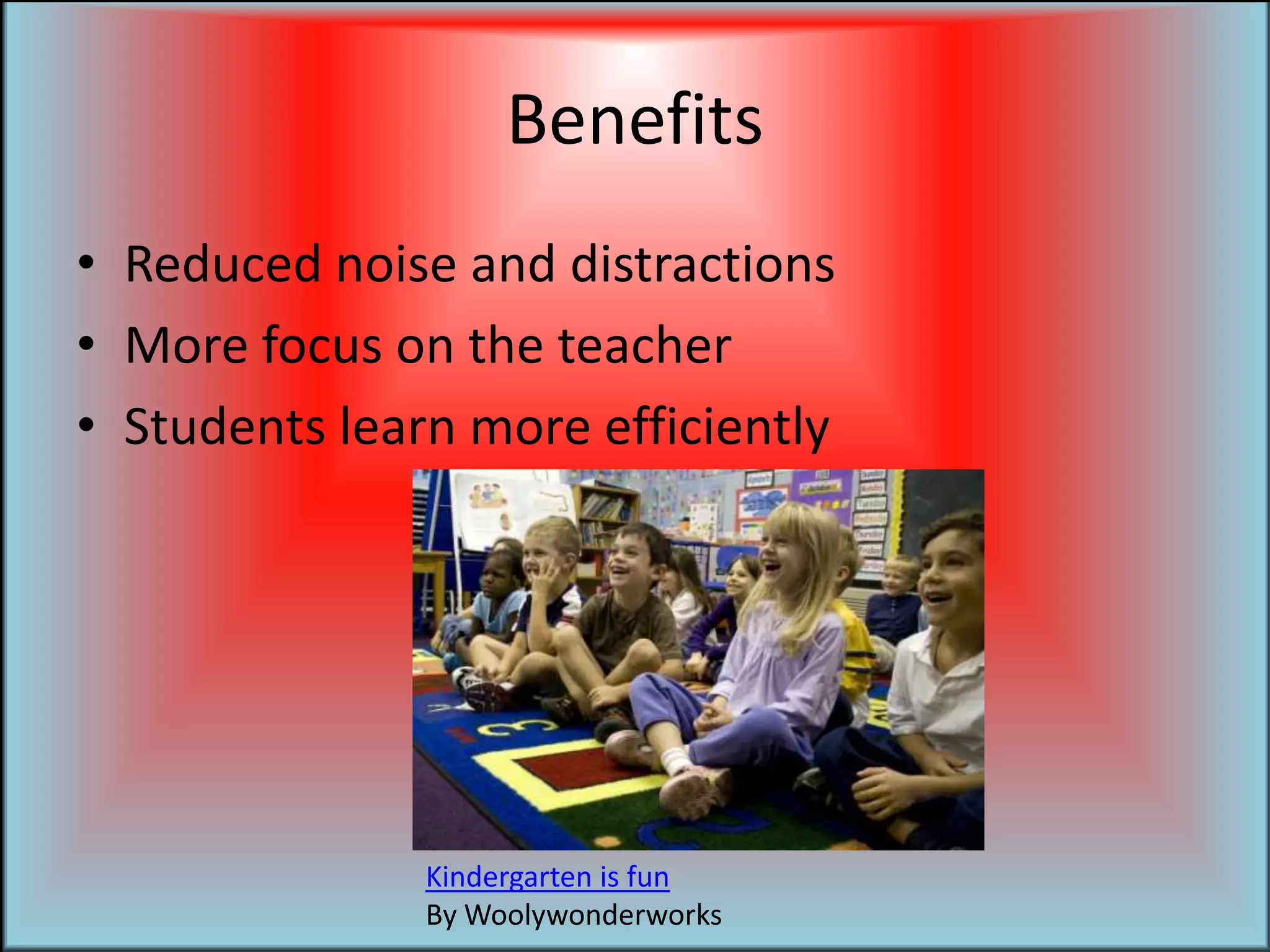
BenefitsReduced noise and distractionsMore focus on the teacherStudents learn more efficientlyKindergarten is funBy Woolywonderworks
Disadvantages It is expensiveTeachers need to change the way they teachLack of qualified/prepared teachersMoneyBy AMagill
Impact on EducationIt raises the cost for schools but the students get the benefits they needMore teacher/student interaction	Classroom lecture in Santiago, Dominican Republichttp://www.flickr.com/photos/ken_mayer/3519982628/By Ken_Mayer
ImpactsWith smaller classes teachers can try new thingsUse different methodsSuccess with every subject
Addressing the IssueFive years ago 40 states were trying to reduce class sizeFlorida’s class size amendment Florida page 1046 to 1047By perpetualplum
Addressing the IssueEither class sizes will go up or downIf it becomes too expensive class size will rise
ConclusionReducing class size is expensive for schoolsBut very effective for students learningTeachers and students benefit
ReferencesThe Public Schools Parent’s Network. (1999). Does class size matter in public schools?. Retrieved March 22, 2010, from http://www.psparents.net/ClassSize.htmCromwell, S. (1998). Are smaller classes the answer?. Retrieved March 22, 2010, from http://www.educationworld.com/a_issues/issues044.shtmlEPE Research Center. (2004). Class size. Retrieved March 22, 2010, fromhttp://www.edweek.org/rc/issues/class-size/Champion, L. (2010) Class size amendment. Retrieved March 23, 2010, from http://www.fldoe.org/classsize/Ehrenberg, R., Brewer, D., Gamoran, A., and J. Douglas Willms. (2001). Class size and student achievement. Retrieved February 16, 2010, from http://www.psychologicalscience.org/journals/pspi/pdf/pspi2_1.pdf

Class Size Reduction

  • 1.
    The Reduction ofClass Size in EducationBy Kevin Teays
  • 2.
    IntroductionReducing class sizeis a key argument in education today.Students’ learning efficiency will benefit
  • 3.
    Background InformationClasses arebecoming too largeReduced class size helps a student become more productiveStudyingBy scui3asteveo
  • 4.
    BackgroundMore Focus oneach studentCan use multiple teaching methods
  • 5.
    BenefitsReduced noise anddistractionsMore focus on the teacherStudents learn more efficientlyKindergarten is funBy Woolywonderworks
  • 6.
    Disadvantages It isexpensiveTeachers need to change the way they teachLack of qualified/prepared teachersMoneyBy AMagill
  • 7.
    Impact on EducationItraises the cost for schools but the students get the benefits they needMore teacher/student interaction Classroom lecture in Santiago, Dominican Republichttp://www.flickr.com/photos/ken_mayer/3519982628/By Ken_Mayer
  • 8.
    ImpactsWith smaller classesteachers can try new thingsUse different methodsSuccess with every subject
  • 9.
    Addressing the IssueFiveyears ago 40 states were trying to reduce class sizeFlorida’s class size amendment Florida page 1046 to 1047By perpetualplum
  • 10.
    Addressing the IssueEitherclass sizes will go up or downIf it becomes too expensive class size will rise
  • 11.
    ConclusionReducing class sizeis expensive for schoolsBut very effective for students learningTeachers and students benefit
  • 12.
    ReferencesThe Public SchoolsParent’s Network. (1999). Does class size matter in public schools?. Retrieved March 22, 2010, from http://www.psparents.net/ClassSize.htmCromwell, S. (1998). Are smaller classes the answer?. Retrieved March 22, 2010, from http://www.educationworld.com/a_issues/issues044.shtmlEPE Research Center. (2004). Class size. Retrieved March 22, 2010, fromhttp://www.edweek.org/rc/issues/class-size/Champion, L. (2010) Class size amendment. Retrieved March 23, 2010, from http://www.fldoe.org/classsize/Ehrenberg, R., Brewer, D., Gamoran, A., and J. Douglas Willms. (2001). Class size and student achievement. Retrieved February 16, 2010, from http://www.psychologicalscience.org/journals/pspi/pdf/pspi2_1.pdf

Editor's Notes

  • #3 Reducing class size is an argument that has been talked about heavily at least the past two decades. It is the argument that students and teachers will benefit from the smaller number of students in each class. If there are fewer students in a classroom the teacher will be able to interact with each student for longer periods of time and the students learning will be greatly benefitted.
  • #4 Class size has been growing the last couple of decades. But if we reduce the class size more students will benefit from the lowered amount of students in each classroom. There will be less distraction and more focus from each student.
  • #5 For a teacher a smaller class can be a good thing also. Teachers can us all the methods of teaching to their students; auditory, visual or kinesthetic. They have more time to focus on each students needs and this also furthers the students’ learning.
  • #6 There are many benefits to having a reduced class size. The noise and distractions are reduced immensely because of the lowered amount of students. This leads the students to focus more on the teacher rather than what their classmates are up to. When a student focuses on what is being taught by the teacher alone they retain the knowledge better. The limited bodies in a classroom really helps a student retain more information.
  • #7 For school systems this is expensive because of the extra teachers, classrooms and materials that are needed to teach the students. Teachers may also be under qualified or not prepared to teach to a smaller class. They may have to learn how to teach multiple styles to get the best out of their students.
  • #8 Costs will be raised for the school systems but it is worth it because the students will learn more. With the smaller number of students in each class teachers will have more time to interact with each individual student. This helps enhance a students learning ability because of the focus from the teacher. The student will do better because the teacher is able to help more students because of the lower numbers. The teacher can be more efficient at making time for each child in class.
  • #9 A smaller class means more time to try different methods of teaching. Some teachers say that they have more time to experiment and see how different activities help students learn in their classrooms. They have more time to focus on learning games, projects and get to learn more about each student because there are less of them. Another impact is that there is success with every subject, overall reducing classes helps in every type of class; science, math, social studies etc. This is because of the increased one on one time and less distractions.
  • #10 In the last few years forty states in the U.S. have been trying to initiate reducing class size in schools. For example Florida has a state amendment that will require only 18 students in k-3, 22 in 4-8 and no more than 25 students in grades 9-12.
  • #11 In the future class size will only end up being reduced or the sizes will rise. The rise of class size will be due to the amount of funds a school has. If funds run out class size will increase.
  • #12 Reducing class size is expensive for schools but it is very effective for teachers and students. Students will have less distractions in class and the teachers can focus on each individual student more. This will increase the the students ability to learn. In the end students will get more out of their education and the teachers will be able to teach more efficiently to their students.