





THE CAMBRIDGE
GUIDE TO SECOND
LANGUAGE TEACHER
EDUCATION
ANNE BURNS
JACK RICHARDS

A Review
Atula Ahuja
CONTENT
The book brings together key issues,
debates and articles by prominent
academics and researchers on a wide
range of issues and contexts in the
field related to SLTE.
English language skills are vital for any
country that wants to be an active
participant in the global economy and has
access to information or knowledge
pertaining to social and economic
development.
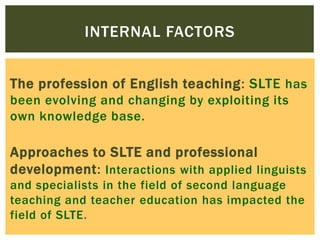
FACTORS AFFECTING SLTE

• The profession of English teaching

Internal
factors

External
factors

• Effective approaches to their
preparation and professional
development.

• Globalization
• Demand for new language teaching
policies & central control.
INTERNAL FACTORS
The profession of English teaching: SLTE has
been evolving and changing by exploiting its
own knowledge base.

Approaches to SLTE and professional
development: Interactions with applied linguists
and specialists in the field of second language
teaching and teacher education has impacted the
field of SLTE.
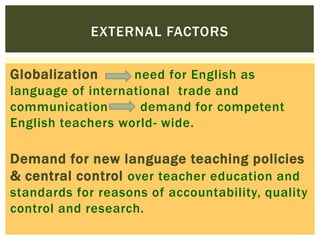
EXTERNAL FACTORS
Globalization

need for English as
language of international trade and
communication
demand for competent
English teachers world- wide.

Demand for new language teaching policies
& central control over teacher education and
standards for reasons of accountability, quality
control and research.
CHAPTERS & THEMES
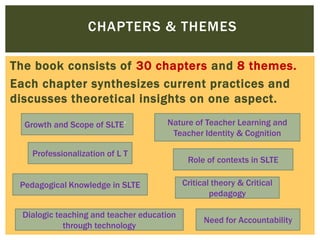
The book consists of 30 chapters and 8 themes.
Each chapter synthesizes current practices and
discusses theoretical insights on one aspect.
Growth and Scope of SLTE’

Nature of Teacher Learning and
Teacher Identity & Cognition

Professionalization of L T
Pedagogical Knowledge in SLTE

Dialogic teaching and teacher education
through technology

Role of contexts in SLTE
Critical theory & Critical
pedagogy
Need for Accountability
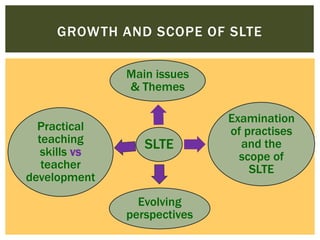
GROWTH AND SCOPE OF SLTE
Main issues
& Themes

.

Practical
teaching
skills vs
teacher
development

SLTE

Evolving
perspectives

Examination
of practises
and the
scope of
SLTE
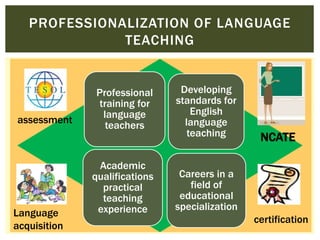
PROFESSIONALIZATION OF LANGUAGE
TEACHING

assessment

Language
acquisition

Professional
training for
language
teachers

Developing
standards for
English
language
teaching

Academic
qualifications
practical
teaching
experience

Careers in a
field of
educational
specialization

NCATE

certification
PEDAGOGICAL KNOWLEDGE IN SECOND
LANGUAGE TEACHER EDUCATION
• Examines content be taught on teacher education
programs
• Highlights knowledge about language, language
acquisition and professional discourse.

• Deals with classroom teaching skills and pedagogic
issues and issues related to content knowledge and
practical knowledge.
• Provides information to enable distinction between
explicit knowledge and implicit knowledge, and concepts
of knowledge about and knowledge how.
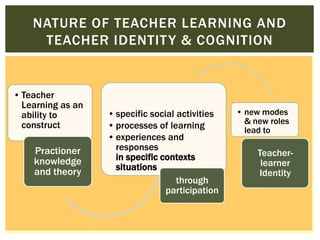
NATURE OF TEACHER LEARNING AND
TEACHER IDENTIT Y & COGNITION

• Teacher
Learning as an
ability to
construct

Practioner
knowledge
and theory

• specific social activities
• processes of learning
• experiences and
responses
in specific contexts
situations
through
participation

• new modes
& new roles
lead to

Teacherlearner
Identity
NATURE OF TEACHER LEARNING &
TEACHER IDENTIT Y & COGNITION
This section also:

 examines mental processes involved in teacher
learning
 acknowledges the role of teacher cognition in
SLTE.

Discussions on traits of novice and expert
teachers and explains the difference between
‘learning to teach’ and ‘learning to be a teacher’
ROLE OF CONTEXTS IN SLTE
Sociocultural perspectives on learning emphasize
that learning is situated. Contexts in which learning
takes place shape it and create different potentials
for learning .
Contexts could be:
 class room in the teacher training institute
 distance learning through technology
 school where practical teaching takes place
Several chapters discuss the problem that exists in
relating campus based and school- based learning due
to the gap between theoretical course work and
practical component at school. It is acknowledged that
expertise occurs through experience and practice
DIALOGIC TEACHING & TEACHER
EDUCATION THROUGH TECHNOLOGY
This theme centres around conversations with other
teachers and collaborative planning and explores the
role of collaboration, team mentoring, supervision
problem solving and decision making.
Advancement in technology has created possibilities for
distance teaching through online learning and internet based
resources.
Dialogic teaching makes it possible for globalized teaching
communities to come together with their own cultural,
social, professional, and personal outlooks.
CRITICAL LANGUAGE TEACHER EDUCATION
Through this theme the authors talk about raising
awareness about how power relations are
constructed and how they function in a society.

Teachers are encouraged to engage in critical
self reflection about their own identities and
positioning in society and among their students.
NEED FOR ACCOUNTABILITY
Since English teaching has become a world wide
phenomenon now, there is a greater need for
accountability in SLTE practices and assessment.
To ensure quality there has to be a central control
on competencies of teachers and components and
contents of curriculum.
Internationally recognized standards and
specifications need to be developed to ensure
accountability, validity and reliability, hence a need
for a central body that can monitor all aspects.
CONCLUSION
It is an informative book that has put forth some
important issues and debates in the field of second
language teaching effectively. However, some
information about the professional background of the
chapter authors would have been beneficial to readers.
The book makes a vital contribution of our
understanding about how this field has expanded
considerably since its initiation in the 1960s and has
redefined its scope, goals curriculum, teaching
approaches and methods.
The book should benefit scholars of language education and
applied linguistics and prove very useful to the teaching
fraternity
and master ’s and doctoral students in these fields.
Thank you!

Cambridge Guide to Second Language Teacher Education review by Atula Ahuja

  • 1.
    THE CAMBRIDGE GUIDE TOSECOND LANGUAGE TEACHER EDUCATION ANNE BURNS JACK RICHARDS A Review Atula Ahuja
  • 2.
    CONTENT The book bringstogether key issues, debates and articles by prominent academics and researchers on a wide range of issues and contexts in the field related to SLTE. English language skills are vital for any country that wants to be an active participant in the global economy and has access to information or knowledge pertaining to social and economic development.
  • 3.
    FACTORS AFFECTING SLTE •The profession of English teaching Internal factors External factors • Effective approaches to their preparation and professional development. • Globalization • Demand for new language teaching policies & central control.
  • 4.
    INTERNAL FACTORS The professionof English teaching: SLTE has been evolving and changing by exploiting its own knowledge base. Approaches to SLTE and professional development: Interactions with applied linguists and specialists in the field of second language teaching and teacher education has impacted the field of SLTE.
  • 5.
    EXTERNAL FACTORS Globalization need forEnglish as language of international trade and communication demand for competent English teachers world- wide. Demand for new language teaching policies & central control over teacher education and standards for reasons of accountability, quality control and research.
  • 6.
    CHAPTERS & THEMES Thebook consists of 30 chapters and 8 themes. Each chapter synthesizes current practices and discusses theoretical insights on one aspect. Growth and Scope of SLTE’ Nature of Teacher Learning and Teacher Identity & Cognition Professionalization of L T Pedagogical Knowledge in SLTE Dialogic teaching and teacher education through technology Role of contexts in SLTE Critical theory & Critical pedagogy Need for Accountability
  • 7.
    GROWTH AND SCOPEOF SLTE Main issues & Themes . Practical teaching skills vs teacher development SLTE Evolving perspectives Examination of practises and the scope of SLTE
  • 8.
    PROFESSIONALIZATION OF LANGUAGE TEACHING assessment Language acquisition Professional trainingfor language teachers Developing standards for English language teaching Academic qualifications practical teaching experience Careers in a field of educational specialization NCATE certification
  • 9.
    PEDAGOGICAL KNOWLEDGE INSECOND LANGUAGE TEACHER EDUCATION • Examines content be taught on teacher education programs • Highlights knowledge about language, language acquisition and professional discourse. • Deals with classroom teaching skills and pedagogic issues and issues related to content knowledge and practical knowledge. • Provides information to enable distinction between explicit knowledge and implicit knowledge, and concepts of knowledge about and knowledge how.
  • 10.
    NATURE OF TEACHERLEARNING AND TEACHER IDENTIT Y & COGNITION • Teacher Learning as an ability to construct Practioner knowledge and theory • specific social activities • processes of learning • experiences and responses in specific contexts situations through participation • new modes & new roles lead to Teacherlearner Identity
  • 11.
    NATURE OF TEACHERLEARNING & TEACHER IDENTIT Y & COGNITION This section also:  examines mental processes involved in teacher learning  acknowledges the role of teacher cognition in SLTE. Discussions on traits of novice and expert teachers and explains the difference between ‘learning to teach’ and ‘learning to be a teacher’
  • 12.
    ROLE OF CONTEXTSIN SLTE Sociocultural perspectives on learning emphasize that learning is situated. Contexts in which learning takes place shape it and create different potentials for learning . Contexts could be:  class room in the teacher training institute  distance learning through technology  school where practical teaching takes place Several chapters discuss the problem that exists in relating campus based and school- based learning due to the gap between theoretical course work and practical component at school. It is acknowledged that expertise occurs through experience and practice
  • 13.
    DIALOGIC TEACHING &TEACHER EDUCATION THROUGH TECHNOLOGY This theme centres around conversations with other teachers and collaborative planning and explores the role of collaboration, team mentoring, supervision problem solving and decision making. Advancement in technology has created possibilities for distance teaching through online learning and internet based resources. Dialogic teaching makes it possible for globalized teaching communities to come together with their own cultural, social, professional, and personal outlooks.
  • 14.
    CRITICAL LANGUAGE TEACHEREDUCATION Through this theme the authors talk about raising awareness about how power relations are constructed and how they function in a society. Teachers are encouraged to engage in critical self reflection about their own identities and positioning in society and among their students.
  • 15.
    NEED FOR ACCOUNTABILITY SinceEnglish teaching has become a world wide phenomenon now, there is a greater need for accountability in SLTE practices and assessment. To ensure quality there has to be a central control on competencies of teachers and components and contents of curriculum. Internationally recognized standards and specifications need to be developed to ensure accountability, validity and reliability, hence a need for a central body that can monitor all aspects.
  • 16.
    CONCLUSION It is aninformative book that has put forth some important issues and debates in the field of second language teaching effectively. However, some information about the professional background of the chapter authors would have been beneficial to readers. The book makes a vital contribution of our understanding about how this field has expanded considerably since its initiation in the 1960s and has redefined its scope, goals curriculum, teaching approaches and methods. The book should benefit scholars of language education and applied linguistics and prove very useful to the teaching fraternity and master ’s and doctoral students in these fields.
  • 17.

Editor's Notes

  • #2 Good morning everyone. My topic of presentation today is Second Language Teacher Education and I am reviewing the book…
  • #3 It talks about how English Language skills……
  • #4 The profession of English teaching: has been evolving and changing by exploiting its own knowledge baseThe Common European Framework makes an attempt to respondto external pressures of this kind.
  • #7 LT- language teaching
  • #8 This part focuses onbrief overview of the main issues and themes Donald Freeman’s examination of how practices and the scope of SLTE have changed over last 50 years. Karren Johnson identifies evolving perspectives of language teacher preparation under the topic “Trends in Second Language Teacher Education.Chapter 2 explores the distinction between teacher training, practical teaching skills and teacher development.
  • #9 This part is all about professionalism in ELTIt also discusses topics such standards, certification, assessments, language acquisition which provide necessary information for National Council for the Accreditation of Teacher EducationIt also discusses topics such standards, certification, assessments, language acquisition which provide necessary information for National Council for the Accreditation of Teacher Education (NCATE)
  • #12 body movements help coordinate mental abilities
  • #13 body movements help coordinate mental abilities
  • #14 Jane Carlson- Pickering specializes on MI pedagogy