Royal University of Phnom Penh
     ដដដដដដដដដដដ Mr Kean Tak
      ដដដដដដដដដដដ
Member Group
1. Chan Pisey
2.   Chhann Seakquech
3.   Bun Seng
4.   Choun Mengcheng
5.   Bun Panha
6.   Choun Mengcheng
7.   Chheang Chhayheng
8.   Chea Sovathana
9.   Chea Vuthu
I.
                  Content
     Storing and Retrieving Data

II. Manipulating Data and Generating Report

III. Database Administration

IV. Popular Database Management Systems

V. Special –Purpose Database Systems

VI. Selecting a Data Management System
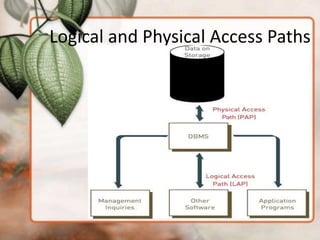
Storing and Retrieving Data
When an application program request data
 from DBMS, the application program
 follows a logical access path

When the DBMS goes to a storage device
 to retrieve the requested data, it follows a
 path to the physical location (physical
 access path) where the data is stored
Logical and Physical Access Paths
Manipulating Data and
           Generating Reports
 Data manipulation language (DML): the
  commands that are used to manipulate the data
  in a database
 Structured Query Language (SQL): adopted by the
  American National Standards Institute (ANSI) as the
  standard query language for relational databases

Once a database has been set up and loaded
 with data, it can produce reports, documents,
 and other outputs
Database Administration
 DBA
  Works with users to decide the content of the database

 Works with programmers as they build applications
  to ensure that their programs comply with database
  management system standards and conventions

 Data administrator:
  Responsible for defining and implementing
   consistent principles for a variety of data issues
Popular Database Management
                   Systems
Popular DBMSs for end users include
 Microsoft’s Access and Corel’s Paradox
 The complete database management software market
  includes databases by IBM, Oracle, and Microsoft
Examples of open-source database systems:
 PostgreSQL and MySQL
Many traditional database programs are now
 available on open-source operating systems
Special-Purpose Database Systems
Some specialized database packges are used .
 for specific purposes or in specific industries:

 Rex-book from Urbanspoon
Morphbank(www.morphbank.net):
 Allows researchers to continually update and expand a
 library of more than 96.000 biological images
Selecting a Database Management
            System (continued)
Important characteristics of databases to
 consider
   Database size
   Database Cost
   Database users
   Performance
   Integration
   Vendor
ដដដដ
ដដដដ

Slide1 mis update

  • 1.
    Royal University ofPhnom Penh ដដដដដដដដដដដ Mr Kean Tak ដដដដដដដដដដដ Member Group 1. Chan Pisey 2. Chhann Seakquech 3. Bun Seng 4. Choun Mengcheng 5. Bun Panha 6. Choun Mengcheng 7. Chheang Chhayheng 8. Chea Sovathana 9. Chea Vuthu
  • 2.
    I. Content Storing and Retrieving Data II. Manipulating Data and Generating Report III. Database Administration IV. Popular Database Management Systems V. Special –Purpose Database Systems VI. Selecting a Data Management System
  • 3.
    Storing and RetrievingData When an application program request data from DBMS, the application program follows a logical access path When the DBMS goes to a storage device to retrieve the requested data, it follows a path to the physical location (physical access path) where the data is stored
  • 4.
  • 5.
    Manipulating Data and Generating Reports  Data manipulation language (DML): the commands that are used to manipulate the data in a database  Structured Query Language (SQL): adopted by the American National Standards Institute (ANSI) as the standard query language for relational databases Once a database has been set up and loaded with data, it can produce reports, documents, and other outputs
  • 6.
    Database Administration  DBA  Works with users to decide the content of the database  Works with programmers as they build applications to ensure that their programs comply with database management system standards and conventions  Data administrator:  Responsible for defining and implementing consistent principles for a variety of data issues
  • 7.
    Popular Database Management Systems Popular DBMSs for end users include Microsoft’s Access and Corel’s Paradox  The complete database management software market includes databases by IBM, Oracle, and Microsoft Examples of open-source database systems: PostgreSQL and MySQL Many traditional database programs are now available on open-source operating systems
  • 8.
    Special-Purpose Database Systems Somespecialized database packges are used . for specific purposes or in specific industries: Rex-book from Urbanspoon Morphbank(www.morphbank.net): Allows researchers to continually update and expand a library of more than 96.000 biological images
  • 9.
    Selecting a DatabaseManagement System (continued) Important characteristics of databases to consider  Database size  Database Cost  Database users  Performance  Integration  Vendor
  • 10.