Introduction to Database 1
Introduction to database
Prepared and Presented by: Solomon merhawi
January 14,2025
Asmara
Introduction to Database 2
Database
Introduction to database
Learning Outcomes
• participants will be able to know the concept of
database.
Introduction to Database 4
Introduction to databases
➢Information management
➢Why Study databases?
➢Databases
➢Databases Systems
➢Types of Database
➢Users
➢Examples of Database Applications
➢Conclusion
➢Recommendation
Introduction to Database 5
Information
management
Introduction to databases
Introduction to Database
Computer systems
• In computer systems information is
represented by means of data
• the data are raw symbols which have to
be interpreted and correlated to provide
information
• Example
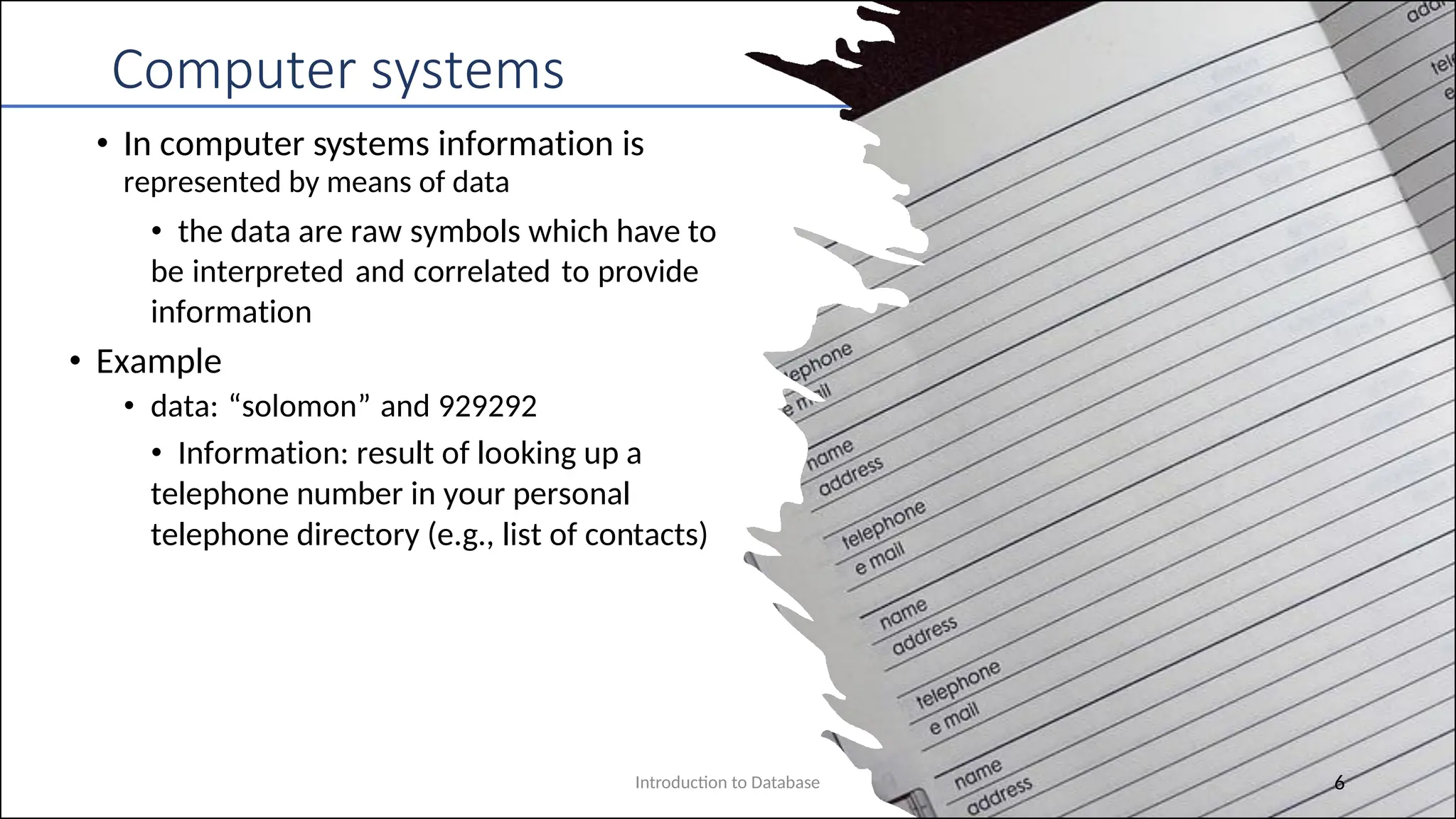
• data: “solomon” and 929292
• Information: result of looking up a
telephone number in your personal
telephone directory (e.g., list of contacts)
6
Introduction to Database 7
Why Study Databases?
• Databases are useful
• Many computing applications deal with large amounts of information.
• Database systems give a set of tools for storing, searching and managing this
information.
Introduction to Database 8
Databases
Introduction to databases
What is a Database?
• A set of information held in a computer.
• One or more large structured sets of persistent data.
• A collection of data arranged for ease and speed of search and retrieval.
• usually associated with software to update and query the data.
General definition
“Technical” definition
• A database is a collection of data managed by a DBMS (Database
Management System)
Introduction to Database 9
Introduction to Database 10
Database Systems
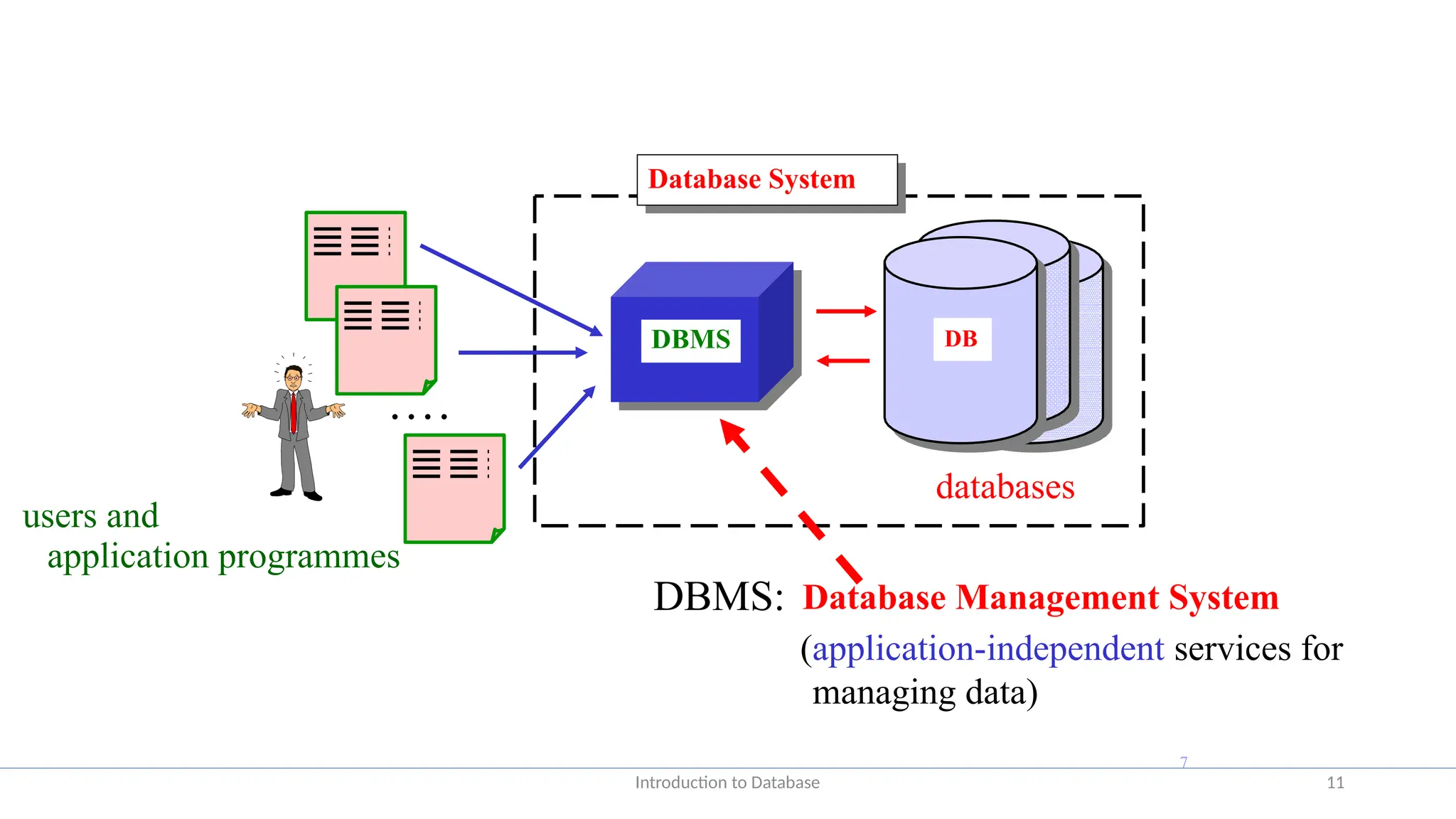
• A database system consists of
• Data (the database)
• Software
• Hardware
• Users
• Database systems allow users to
• Store
• Update
• Retrieve
• Organise
• Protect
their data.
Introduction to Database 11
Database System
. . . .
users and
application programmes
DBMS: Database Management System
(application-independent services for
managing data)
7
Database System
DBMS DB
databases
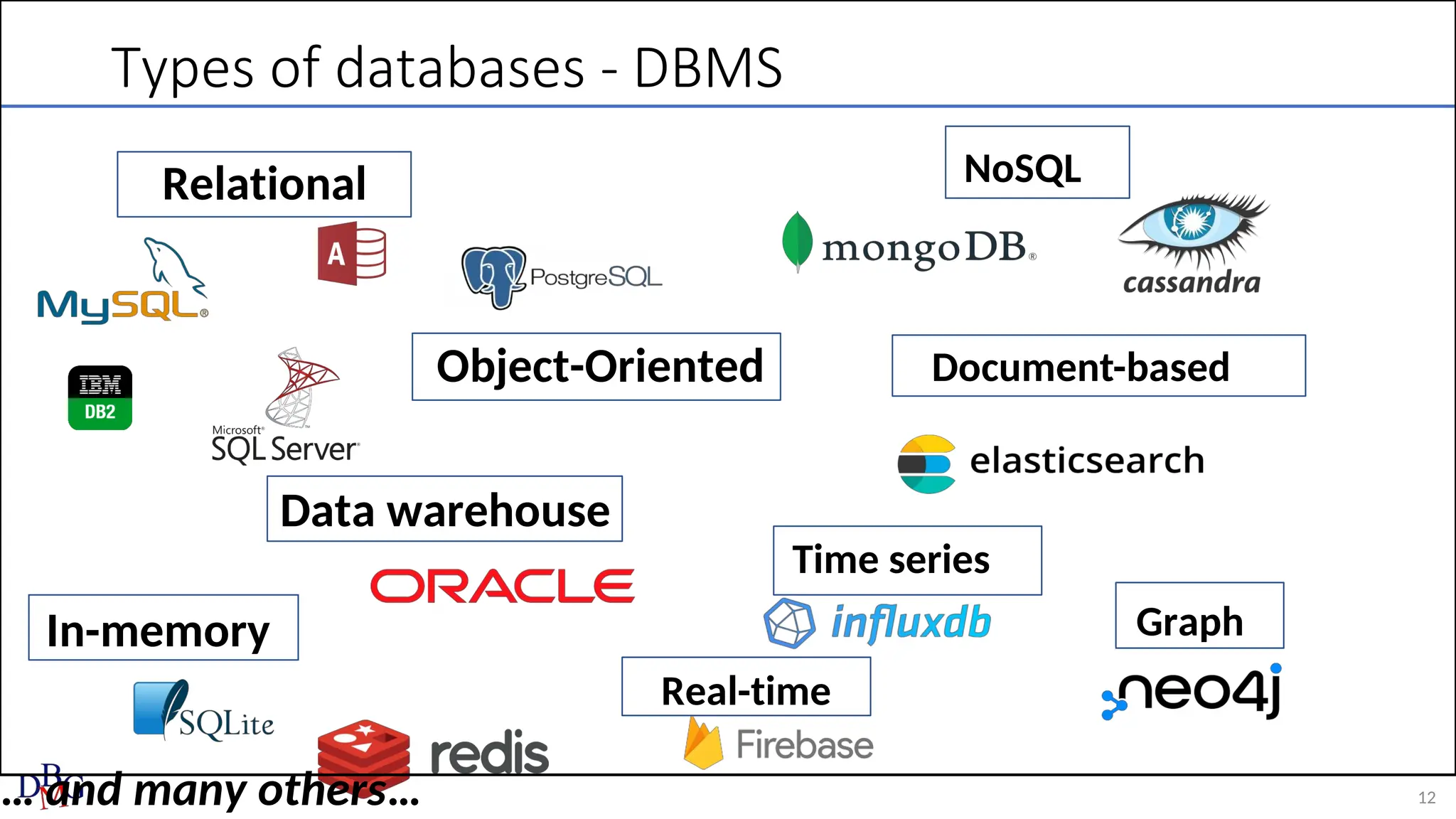
Types of databases - DBMS
Relational NoSQL
Object-Oriented Document-based
Data warehouse
Time series
In-memory Graph
Real-time
… and many others… 12
Introduction to Database 13
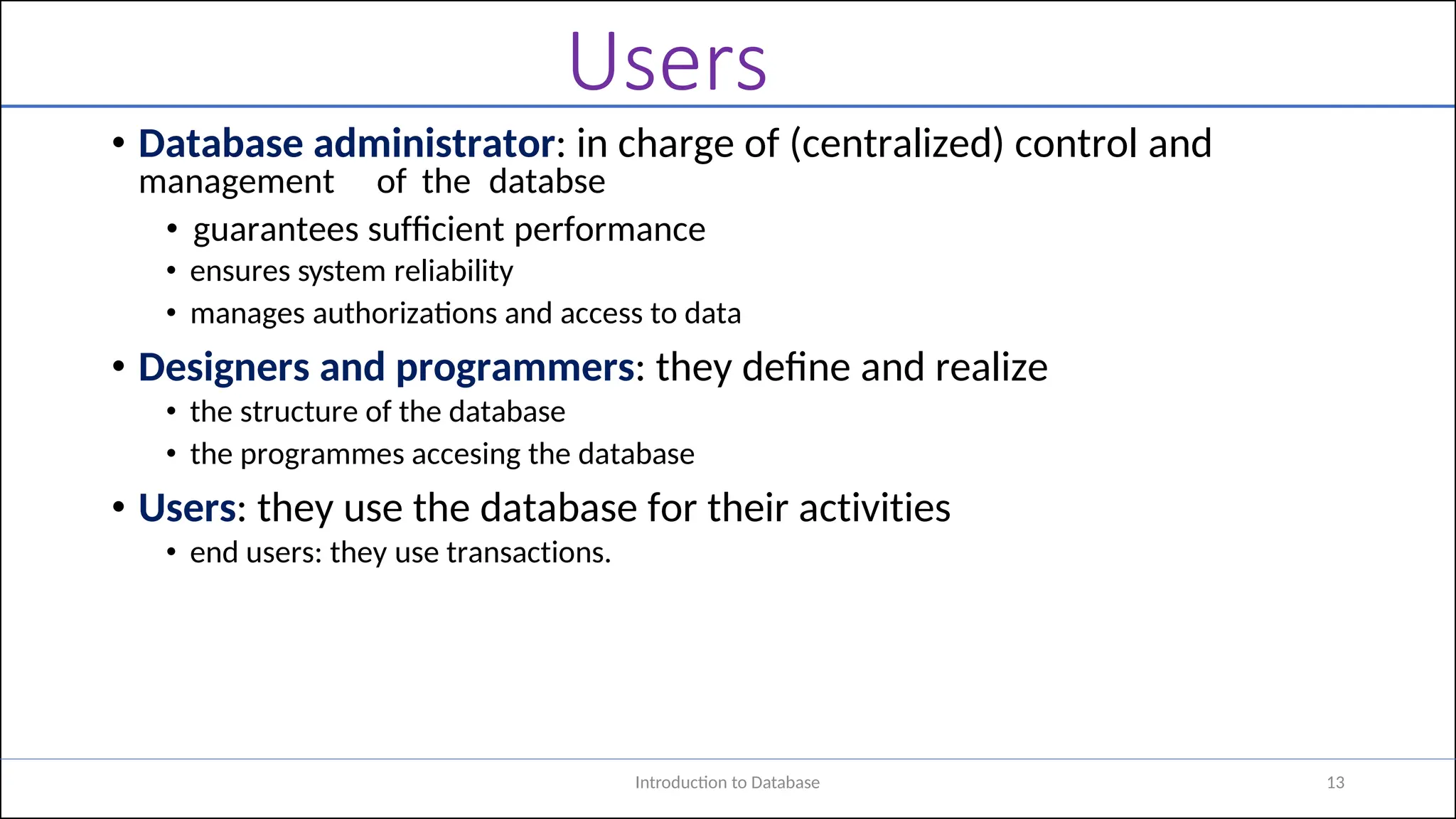
management of the databse
Users
• Database administrator: in charge of (centralized) control and
• guarantees sufficient performance
• ensures system reliability
• manages authorizations and access to data
• Designers and programmers: they define and realize
• the structure of the database
• the programmes accesing the database
• Users: they use the database for their activities
• end users: they use transactions.
Introduction to Database 14
Examples of Database Applications

Purchases from the supermarket

Purchases using your credit card

Booking a holiday at the travel agents

Using the local library

Taking out insurance

Renting a video

Using the Internet

Studying at university
• Web indexes
• Library catalogues
• Medical records
• Bank accounts
• Stock control
• Personnel systems
• Product catalogues
• Telephone directories
Introduction to Database 15
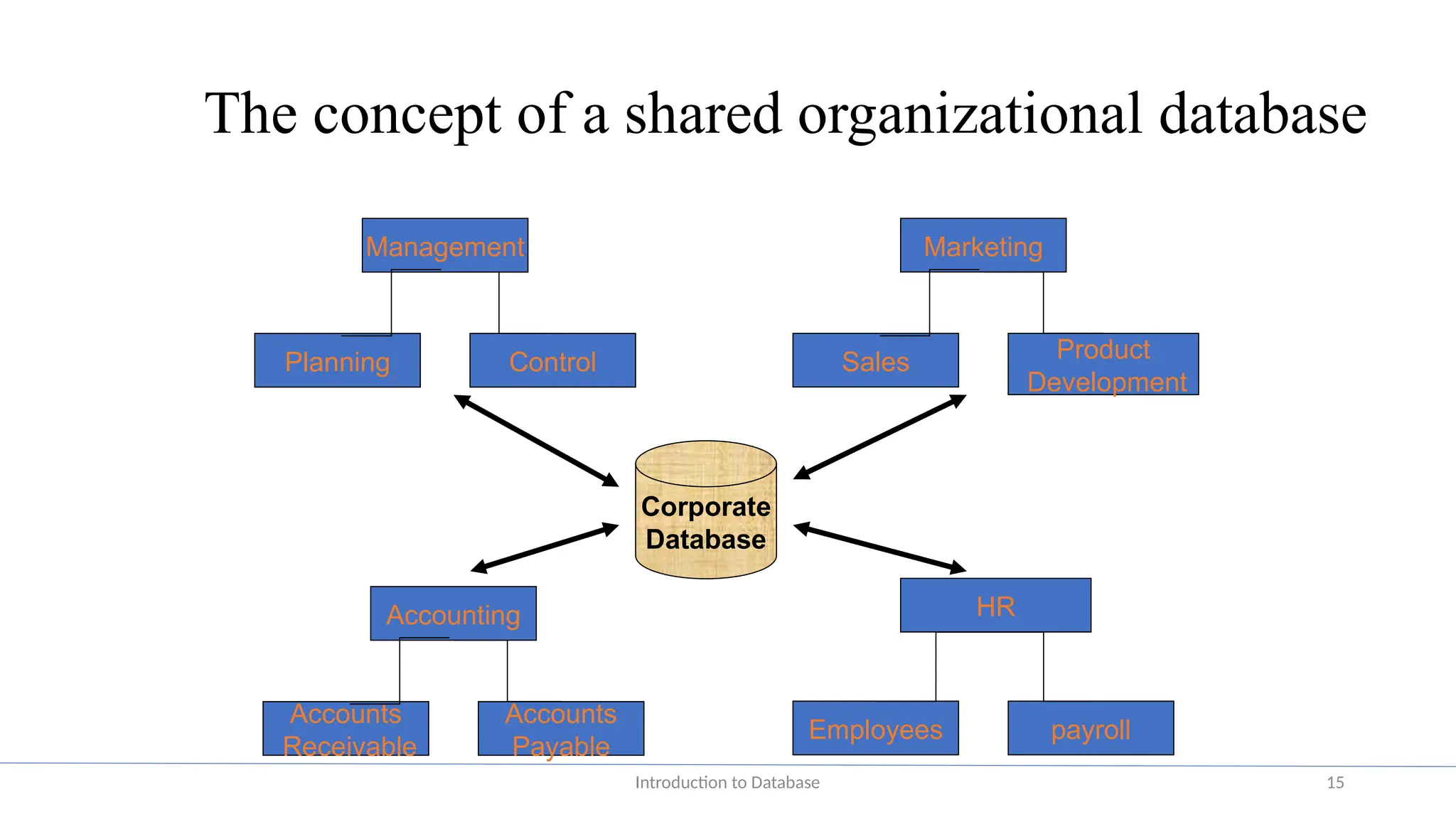
The concept of a shared organizational database
Accounting
Accounts
Payable
Accounts
Receivable
Management
Control
Planning
HR
payroll
Employees
Marketing
Product
Development
Sales
Corporate
Database
Introduction to Database 16
Conclusion
A database is an organized collection of structured information, or data,
typically stored electronically in a computer system.
 A database is usually controlled by a database management system
(DBMS).
 Databases provide a structured way to store, retrieve, and analyse
information, allowing businesses to make informed decisions.
 With the increasing volume and complexity of data in today's digital age,
databases are essential for storing and accessing data in a secure and
scalable manner.
 A Database Management System (DBMS) is a systematic operational
system that consists of tools that make data collection, storage, and
manipulation easier.
Introduction to Database 17
Recommendations
Database systems play a vital role in managing and organizing vast amounts
of data efficiently.
Understanding the fundamentals of database systems, such as RDBMS, SQL,
normalization, and security, is crucial for anyone working with data.
Databases are a fundamental tool for storing and managing data
efficiently.
 It is important to be aware of potential database issues that may arise,
such as data security and integrity.
Organizations rely on databases to streamline their operations, improve
productivity, and enhance customer experiences.
Introduction to database database concept

  • 1.
    Introduction to Database1 Introduction to database Prepared and Presented by: Solomon merhawi January 14,2025 Asmara
  • 2.
    Introduction to Database2 Database Introduction to database
  • 3.
    Learning Outcomes • participantswill be able to know the concept of database.
  • 4.
    Introduction to Database4 Introduction to databases ➢Information management ➢Why Study databases? ➢Databases ➢Databases Systems ➢Types of Database ➢Users ➢Examples of Database Applications ➢Conclusion ➢Recommendation
  • 5.
    Introduction to Database5 Information management Introduction to databases
  • 6.
    Introduction to Database Computersystems • In computer systems information is represented by means of data • the data are raw symbols which have to be interpreted and correlated to provide information • Example • data: “solomon” and 929292 • Information: result of looking up a telephone number in your personal telephone directory (e.g., list of contacts) 6
  • 7.
    Introduction to Database7 Why Study Databases? • Databases are useful • Many computing applications deal with large amounts of information. • Database systems give a set of tools for storing, searching and managing this information.
  • 8.
    Introduction to Database8 Databases Introduction to databases
  • 9.
    What is aDatabase? • A set of information held in a computer. • One or more large structured sets of persistent data. • A collection of data arranged for ease and speed of search and retrieval. • usually associated with software to update and query the data. General definition “Technical” definition • A database is a collection of data managed by a DBMS (Database Management System) Introduction to Database 9
  • 10.
    Introduction to Database10 Database Systems • A database system consists of • Data (the database) • Software • Hardware • Users • Database systems allow users to • Store • Update • Retrieve • Organise • Protect their data.
  • 11.
    Introduction to Database11 Database System . . . . users and application programmes DBMS: Database Management System (application-independent services for managing data) 7 Database System DBMS DB databases
  • 12.
    Types of databases- DBMS Relational NoSQL Object-Oriented Document-based Data warehouse Time series In-memory Graph Real-time … and many others… 12
  • 13.
    Introduction to Database13 management of the databse Users • Database administrator: in charge of (centralized) control and • guarantees sufficient performance • ensures system reliability • manages authorizations and access to data • Designers and programmers: they define and realize • the structure of the database • the programmes accesing the database • Users: they use the database for their activities • end users: they use transactions.
  • 14.
    Introduction to Database14 Examples of Database Applications  Purchases from the supermarket  Purchases using your credit card  Booking a holiday at the travel agents  Using the local library  Taking out insurance  Renting a video  Using the Internet  Studying at university • Web indexes • Library catalogues • Medical records • Bank accounts • Stock control • Personnel systems • Product catalogues • Telephone directories
  • 15.
    Introduction to Database15 The concept of a shared organizational database Accounting Accounts Payable Accounts Receivable Management Control Planning HR payroll Employees Marketing Product Development Sales Corporate Database
  • 16.
    Introduction to Database16 Conclusion A database is an organized collection of structured information, or data, typically stored electronically in a computer system.  A database is usually controlled by a database management system (DBMS).  Databases provide a structured way to store, retrieve, and analyse information, allowing businesses to make informed decisions.  With the increasing volume and complexity of data in today's digital age, databases are essential for storing and accessing data in a secure and scalable manner.  A Database Management System (DBMS) is a systematic operational system that consists of tools that make data collection, storage, and manipulation easier.
  • 17.
    Introduction to Database17 Recommendations Database systems play a vital role in managing and organizing vast amounts of data efficiently. Understanding the fundamentals of database systems, such as RDBMS, SQL, normalization, and security, is crucial for anyone working with data. Databases are a fundamental tool for storing and managing data efficiently.  It is important to be aware of potential database issues that may arise, such as data security and integrity. Organizations rely on databases to streamline their operations, improve productivity, and enhance customer experiences.