TOPIC :- Preparation a Power Point Presentation on TENSE
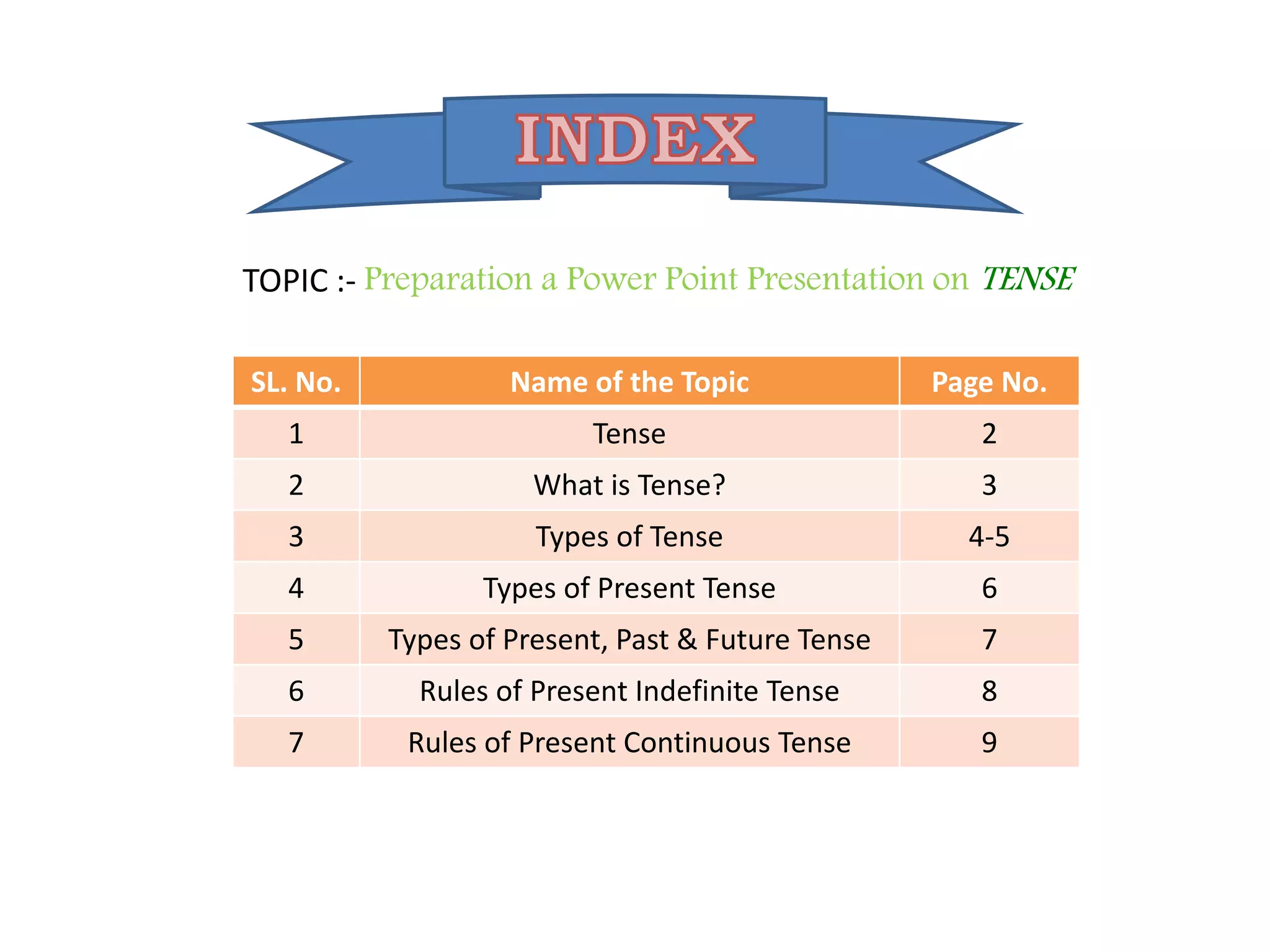
SL. No. Name of the Topic Page No.
1 Tense 2
2 What is Tense? 3
3 Types of Tense 4-5
4 Types of Present Tense 6
5 Types of Present, Past & Future Tense 7
6 Rules of Present Indefinite Tense 8
7 Rules of Present Continuous Tense 9
GRAMMAR
TENSE
TENSE
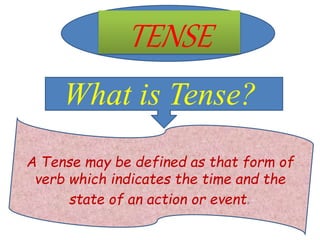
What is Tense?
A Tense may be defined as that form of
verb which indicates the time and the
state of an action or event.
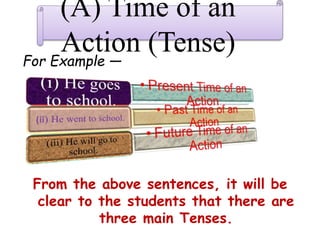
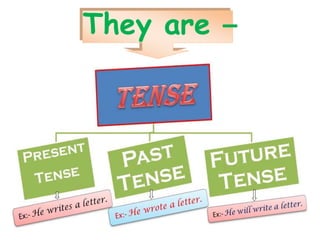
(A) Time of an
Action (Tense)For Example —
From the above sentences, it will be
clear to the students that there are
three main Tenses.
They are –
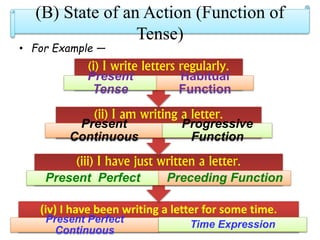
(B) State of an Action (Function of
Tense)
• For Example ―
(iv) I have been writing a letter for some time.
Present Perfect
Continuous
Time Expression
(iii) I have just written a letter.
Present Perfect Preceding Function
(ii) I am writing a letter.
Present
Continuous
Progressive
Function
(i) I write letters regularly.
Present
Tense
Habitual
Function
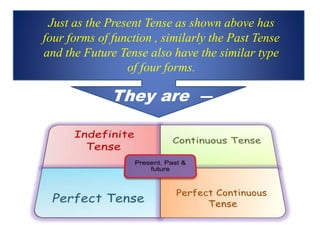
Just as the Present Tense as shown above has
four forms of function , similarly the Past Tense
and the Future Tense also have the similar type
of four forms.
They are ―
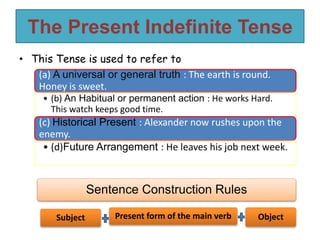
The Present Indefinite Tense
• This Tense is used to refer to
(a) A universal or general truth : The earth is round.
Honey is sweet.
• (b) An Habitual or permanent action : He works Hard.
This watch keeps good time.
(c) Historical Present : Alexander now rushes upon the
enemy.
• (d)Future Arrangement : He leaves his job next week.
Sentence Construction Rules
Subject Present form of the main verb Object
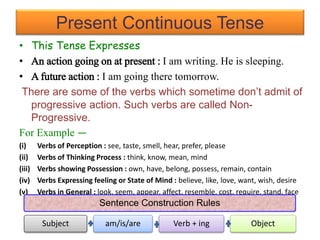
Present Continuous Tense
• This Tense Expresses
• An action going on at present : I am writing. He is sleeping.
• A future action : I am going there tomorrow.
There are some of the verbs which sometime don’t admit of
progressive action. Such verbs are called Non-
Progressive.
For Example —
(i) Verbs of Perception : see, taste, smell, hear, prefer, please
(ii) Verbs of Thinking Process : think, know, mean, mind
(iii) Verbs showing Possession : own, have, belong, possess, remain, contain
(iv) Verbs Expressing feeling or State of Mind : believe, like, love, want, wish, desire
(v) Verbs in General : look, seem, appear, affect, resemble, cost, require, stand, face
Sentence Construction Rules
Subject am/is/are Verb + ing Object

Slide presentation on english grammar tense

  • 1.
    TOPIC :- Preparationa Power Point Presentation on TENSE SL. No. Name of the Topic Page No. 1 Tense 2 2 What is Tense? 3 3 Types of Tense 4-5 4 Types of Present Tense 6 5 Types of Present, Past & Future Tense 7 6 Rules of Present Indefinite Tense 8 7 Rules of Present Continuous Tense 9
  • 2.
  • 3.
    TENSE What is Tense? ATense may be defined as that form of verb which indicates the time and the state of an action or event.
  • 4.
    (A) Time ofan Action (Tense)For Example — From the above sentences, it will be clear to the students that there are three main Tenses.
  • 5.
  • 6.
    (B) State ofan Action (Function of Tense) • For Example ― (iv) I have been writing a letter for some time. Present Perfect Continuous Time Expression (iii) I have just written a letter. Present Perfect Preceding Function (ii) I am writing a letter. Present Continuous Progressive Function (i) I write letters regularly. Present Tense Habitual Function
  • 7.
    Just as thePresent Tense as shown above has four forms of function , similarly the Past Tense and the Future Tense also have the similar type of four forms. They are ―
  • 8.
    The Present IndefiniteTense • This Tense is used to refer to (a) A universal or general truth : The earth is round. Honey is sweet. • (b) An Habitual or permanent action : He works Hard. This watch keeps good time. (c) Historical Present : Alexander now rushes upon the enemy. • (d)Future Arrangement : He leaves his job next week. Sentence Construction Rules Subject Present form of the main verb Object
  • 9.
    Present Continuous Tense •This Tense Expresses • An action going on at present : I am writing. He is sleeping. • A future action : I am going there tomorrow. There are some of the verbs which sometime don’t admit of progressive action. Such verbs are called Non- Progressive. For Example — (i) Verbs of Perception : see, taste, smell, hear, prefer, please (ii) Verbs of Thinking Process : think, know, mean, mind (iii) Verbs showing Possession : own, have, belong, possess, remain, contain (iv) Verbs Expressing feeling or State of Mind : believe, like, love, want, wish, desire (v) Verbs in General : look, seem, appear, affect, resemble, cost, require, stand, face Sentence Construction Rules Subject am/is/are Verb + ing Object

Editor's Notes

  • #2 TODAY WE WILL GET A BASIC KNOWLEDGE OF TENSE.
  • #3 TODAY WE WILL GET A BASIC KNOWLEDGE OF TENSE.
  • #9 If the subject is in third person and singular number then ‘s’ or ‘es’ must be added with the main verb.