
The Pros and Cons of
Service Level Agreements
(SLAs)
Joann Martin, Global Director of BPO and Vendor Management Pitney Bowes
o It is the first significant agreement on direction
between the two teams
o It is a legal agreement between your company and the
vendor.
o It should demonstrate to the vendor what is important
to your company
o It will demonstrate what you want the vendor to focus
on by defining initial performance standards
o It will be a tool to measure the success of the vendor
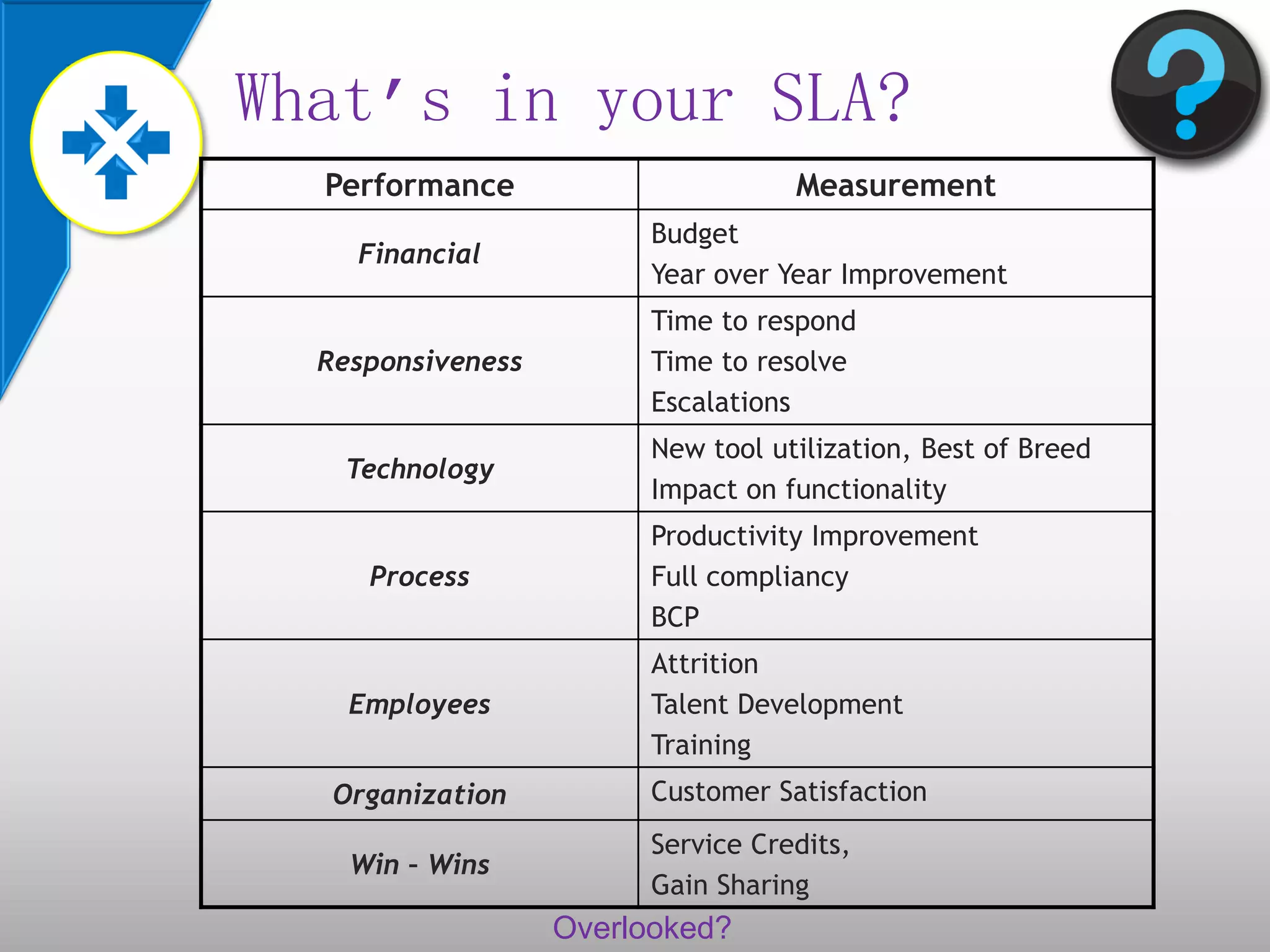
Performance Measurement
Financial
Budget
Year over Year Improvement
Responsiveness
Time to respond
Time to resolve
Escalations
Technology
New tool utilization, Best of Breed
Impact on functionality
Process
Productivity Improvement
Full compliancy
BCP
Employees
Attrition
Talent Development
Training
Organization Customer Satisfaction
Win – Wins
Service Credits,
Gain Sharing
What’s in your SLA?
Overlooked?
o You evaluate and measure the vendors
performance through attainment of
SLAs.
o You receive your expected services and
deliverables through the SLAs.
o You manage change in expectations
through improved SLAs.
Underutilized?
o The facility manager must spell out specific SLAs, the
expectations for the vendor; the technicians skills,
certifications, and qualifications being supplied by the vendor
and their companies; and the metrics that will be used to
measure the performance of the technicians and the companies
o For Maintenance a needs assessment must be the starting point
to agree on the necessary SLAs.
o SLAs can be utilized to bring in skilled and trained maintenance
personnel on a mobile basis providing substantial savings.
o SLAs must ensure the quality and training of the supplemental
workforce as well as the infrastructure and tool set need for the
delivery of the services
o Example SLAs
o Perform 100% of PM work at critical facilities
o 95% completion of scheduled PM requests each month
o No PM deferred more than one month.
o Emergency response within 15 minutes
o Determine within the first 30 minutes of a response whether
or not on-site critical facility staff can make repairs. If not,
follow escalation procedures immediately
o Notification to 95% of customers and announce scheduled
maintenance or repair events as needed
o Customer satisfaction scores 95% in the top two boxes
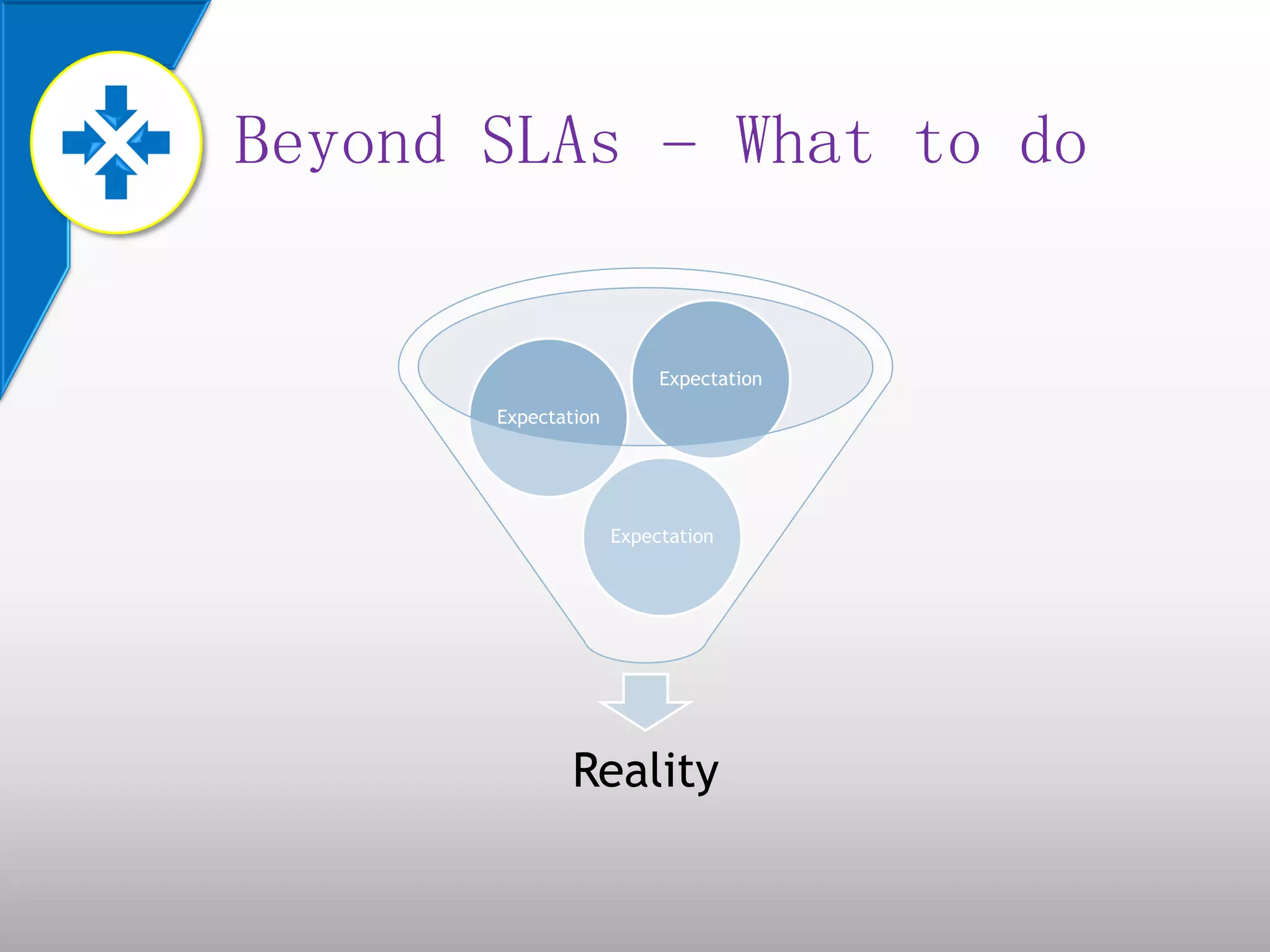
Reality
Expectation
Expectation
Expectation
Beyond SLAs – What to do
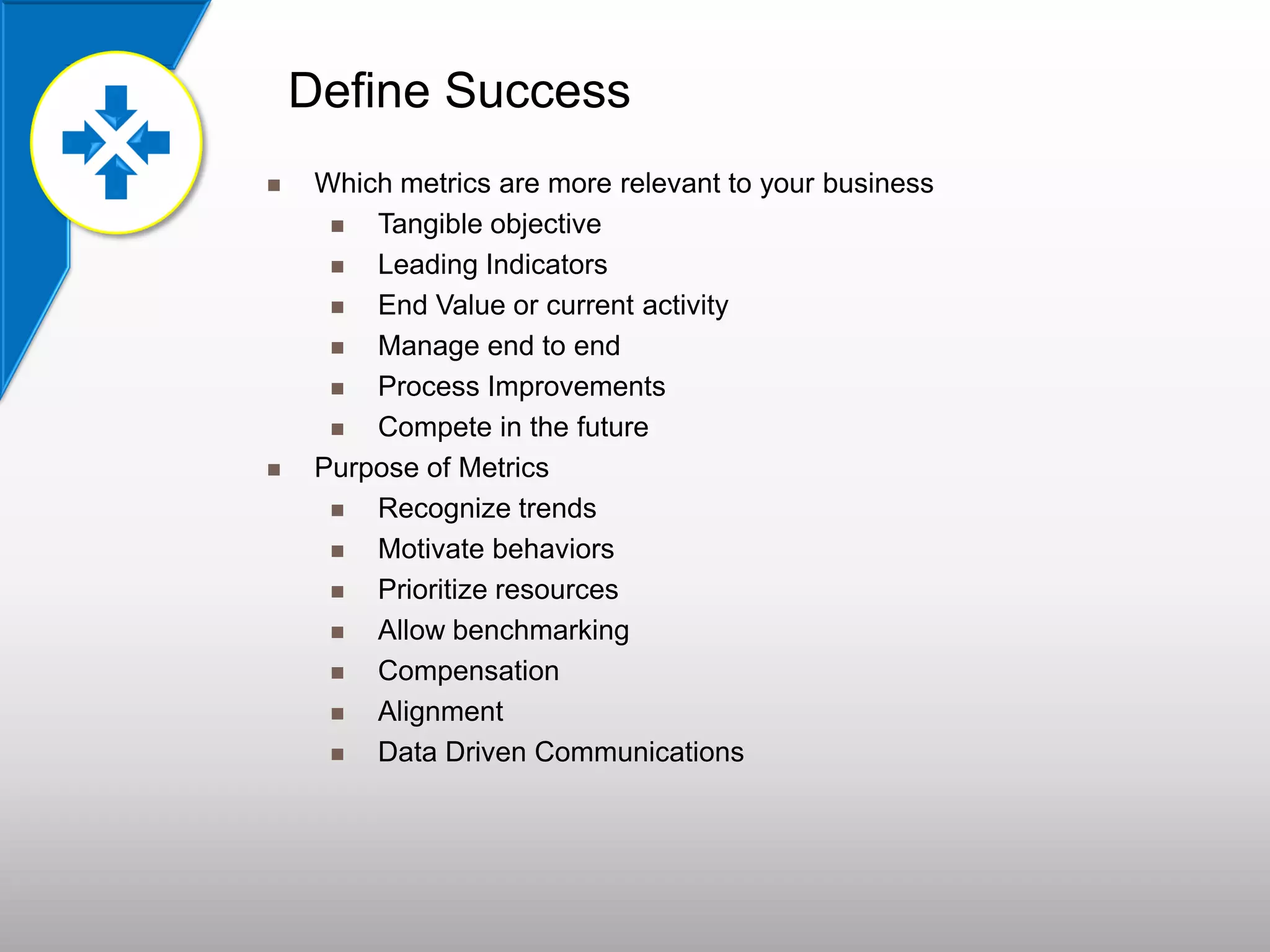
Define Success
 Which metrics are more relevant to your business
 Tangible objective
 Leading Indicators
 End Value or current activity
 Manage end to end
 Process Improvements
 Compete in the future
 Purpose of Metrics
 Recognize trends
 Motivate behaviors
 Prioritize resources
 Allow benchmarking
 Compensation
 Alignment
 Data Driven Communications
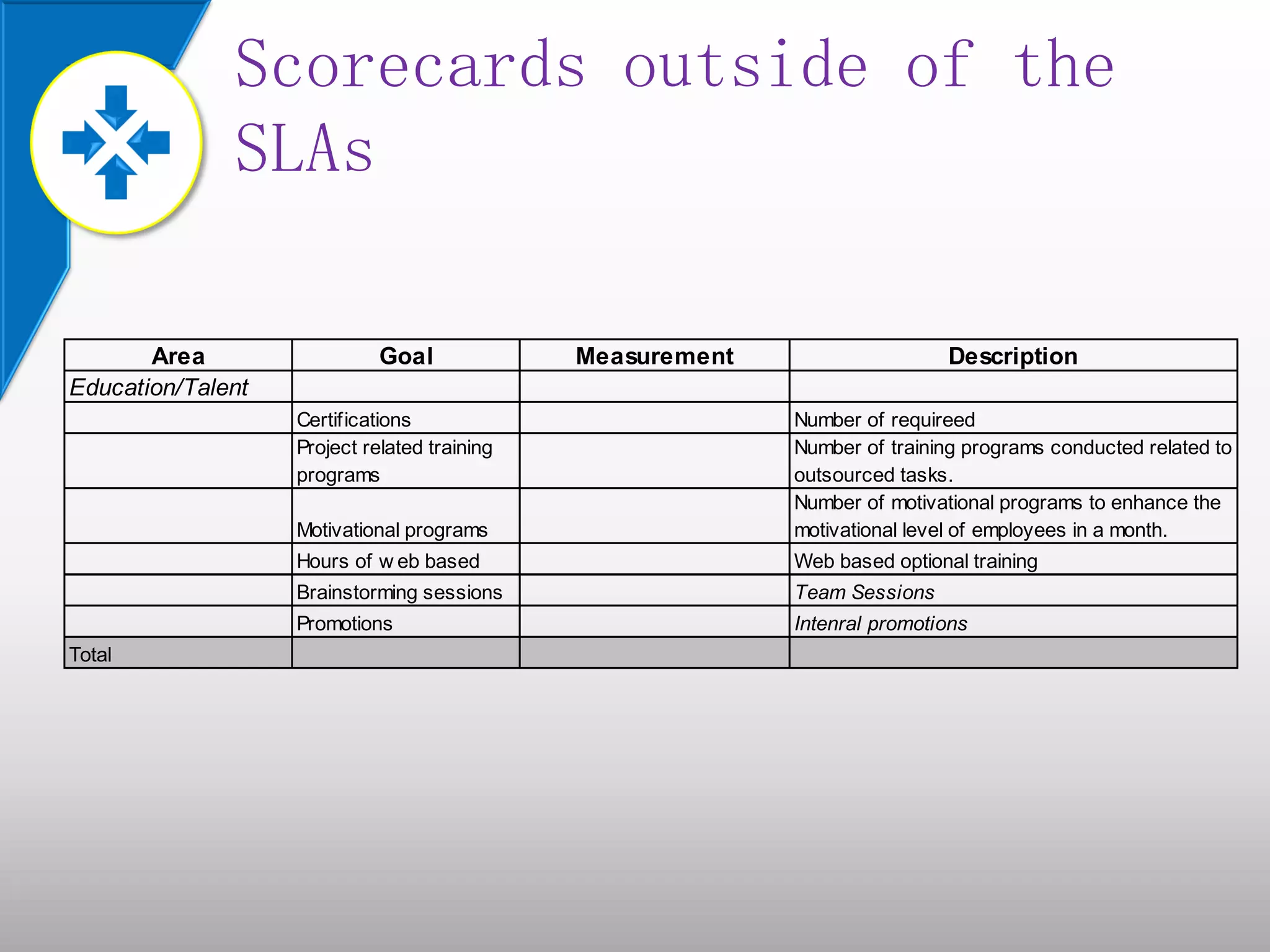
Scorecards outside of the
SLAs
Area Goal Measurement Description
Education/Talent
Certifications Number of requireed
Project related training
programs
Number of training programs conducted related to
outsourced tasks.
Motivational programs
Number of motivational programs to enhance the
motivational level of employees in a month.
Hours of w eb based Web based optional training
Brainstorming sessions Team Sessions
Promotions Intenral promotions
Total
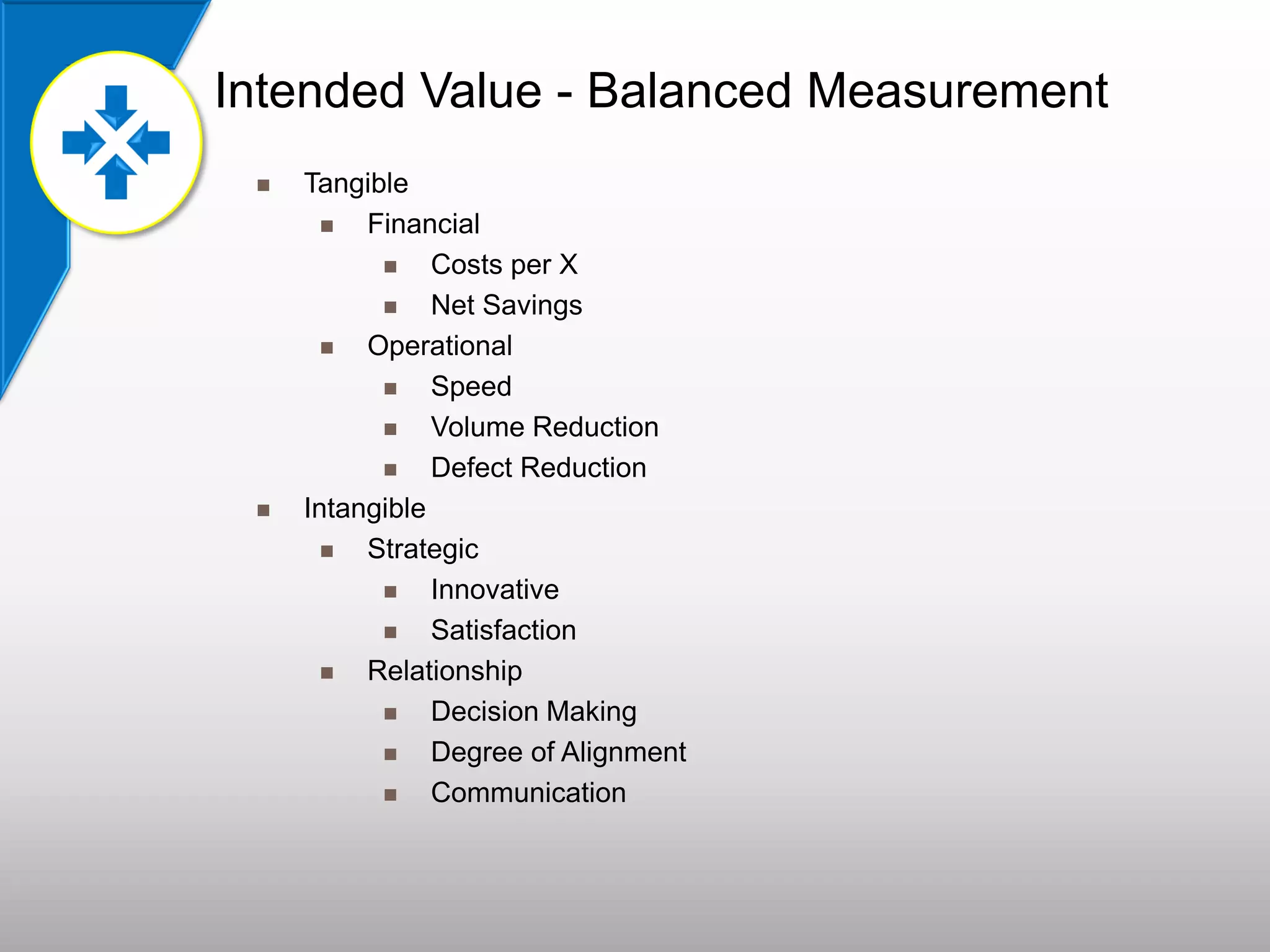
Intended Value - Balanced Measurement
 Tangible
 Financial
 Costs per X
 Net Savings
 Operational
 Speed
 Volume Reduction
 Defect Reduction
 Intangible
 Strategic
 Innovative
 Satisfaction
 Relationship
 Decision Making
 Degree of Alignment
 Communication
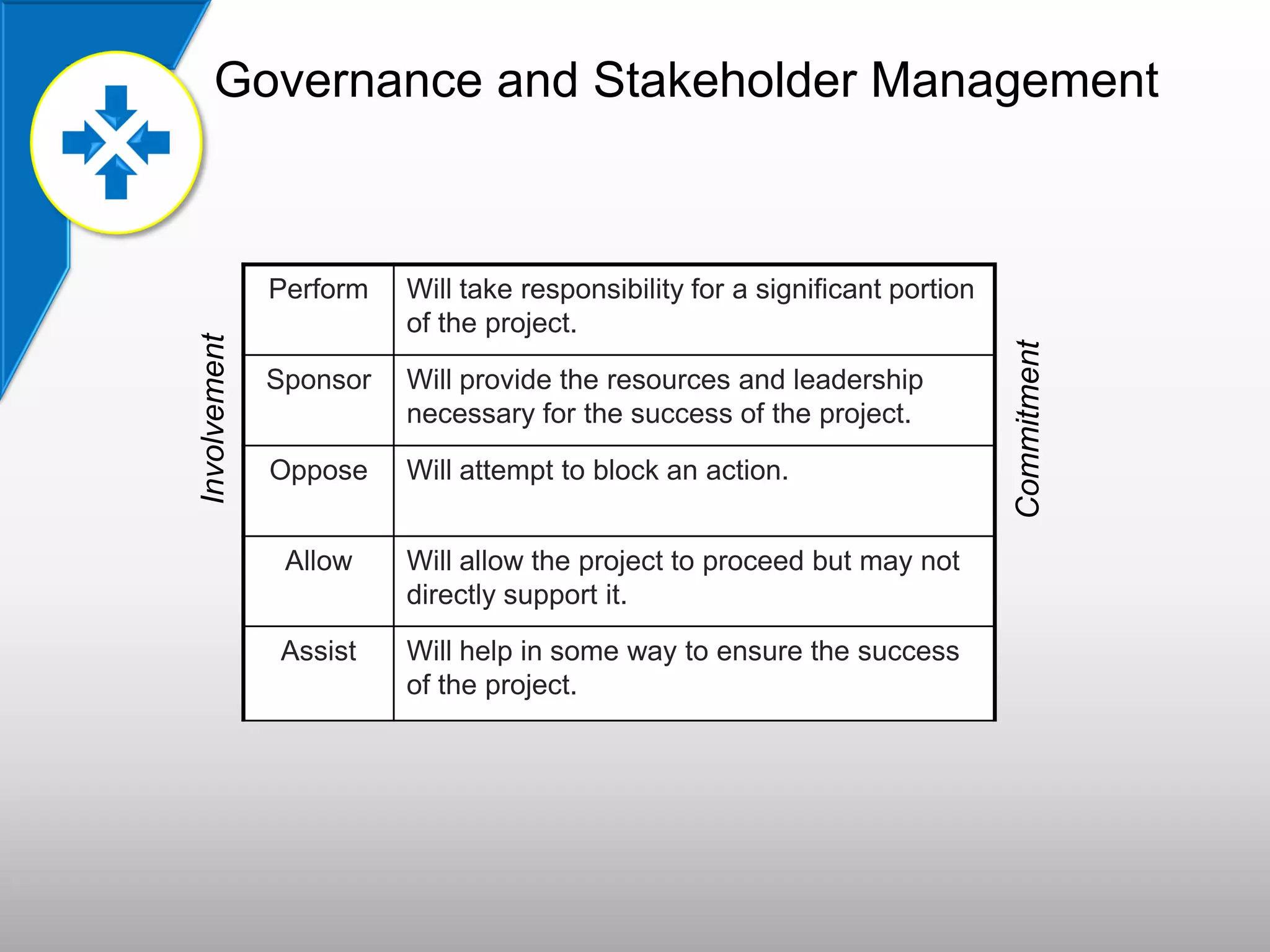
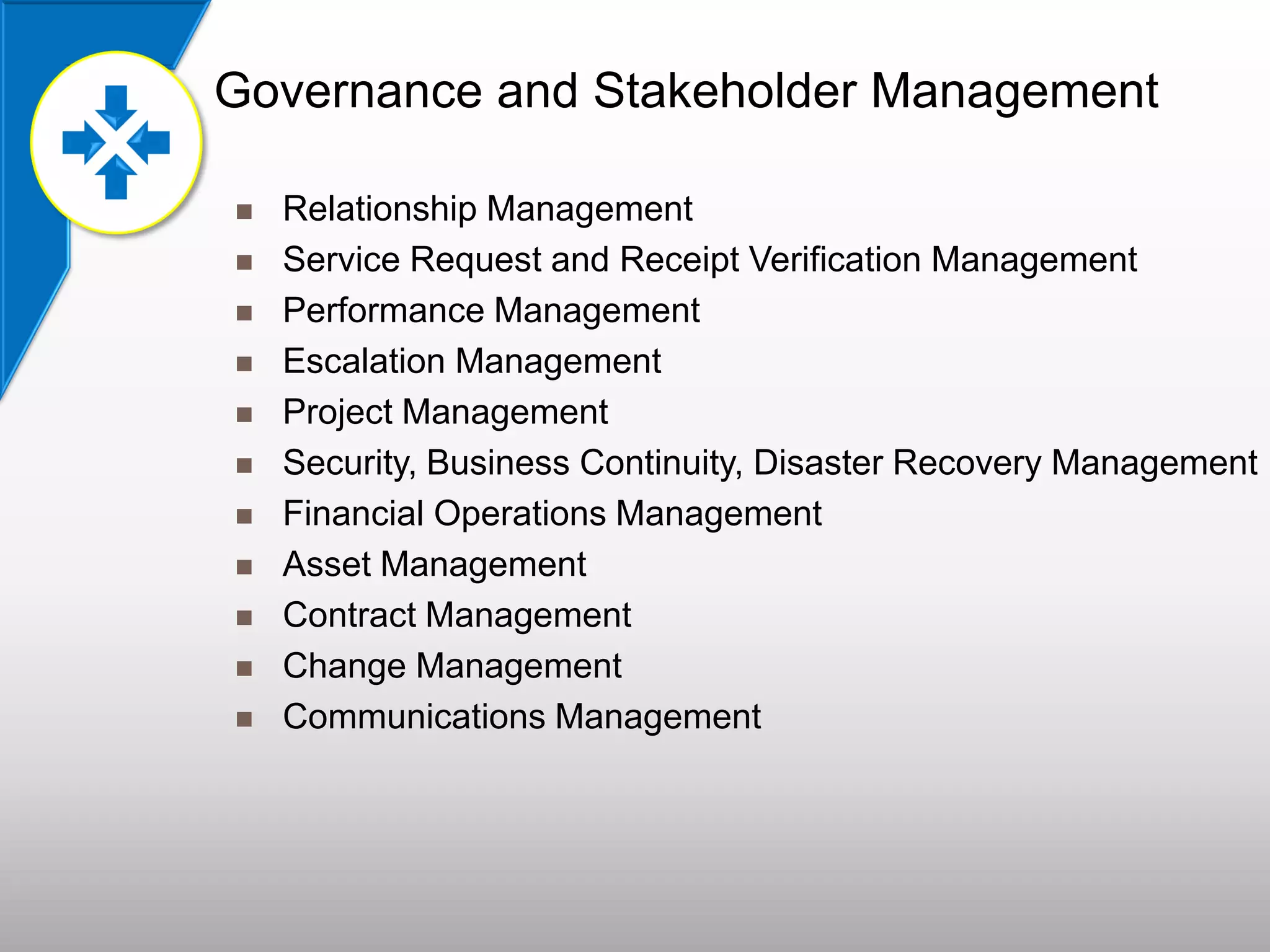
Governance and Stakeholder Management
Perform Will take responsibility for a significant portion
of the project.
Sponsor Will provide the resources and leadership
necessary for the success of the project.
Oppose Will attempt to block an action.
Allow Will allow the project to proceed but may not
directly support it.
Assist Will help in some way to ensure the success
of the project.
Involvement
Commitment
Governance and Stakeholder Management
 Relationship Management
 Service Request and Receipt Verification Management
 Performance Management
 Escalation Management
 Project Management
 Security, Business Continuity, Disaster Recovery Management
 Financial Operations Management
 Asset Management
 Contract Management
 Change Management
 Communications Management
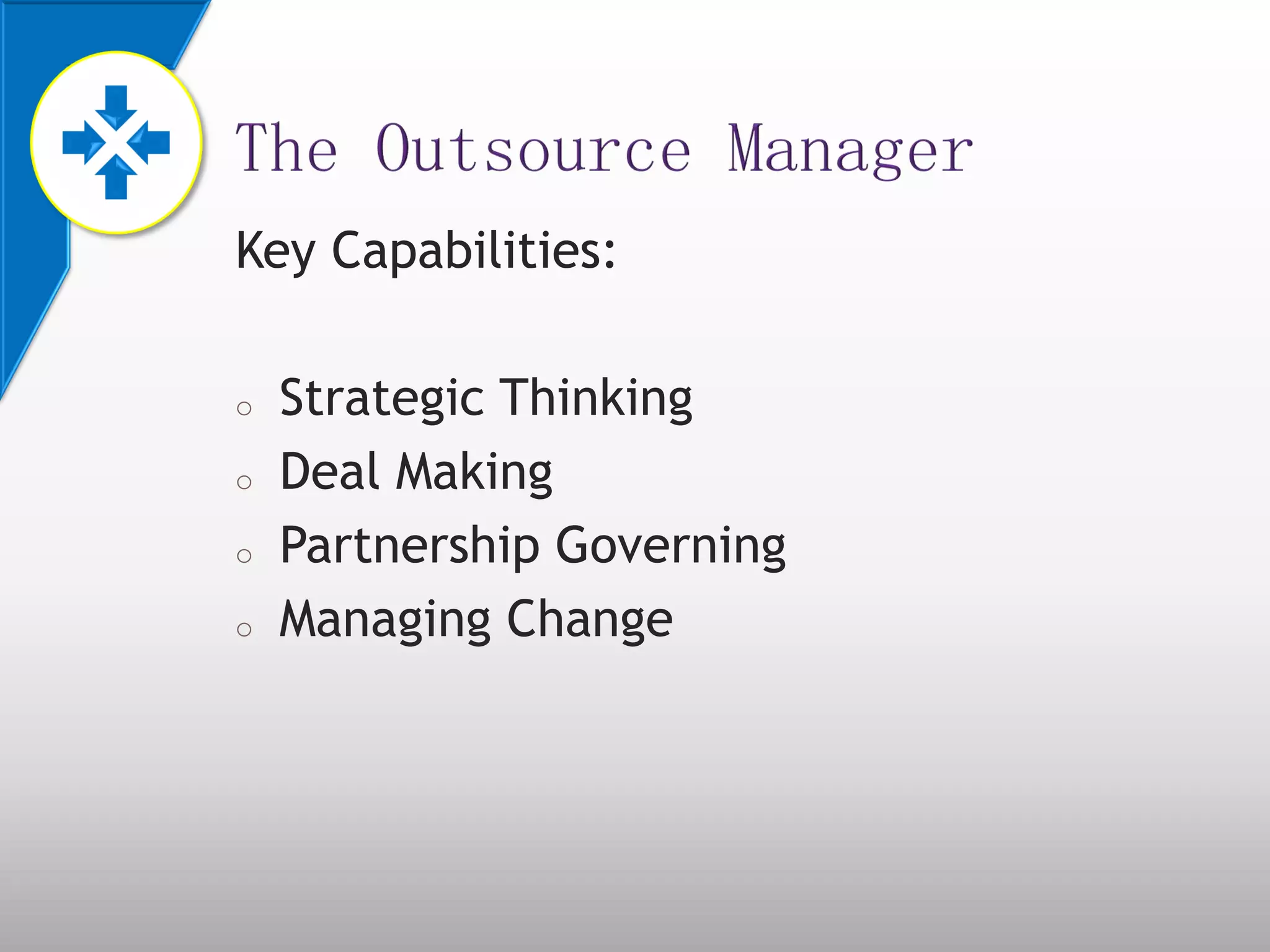
Key Capabilities:
o Strategic Thinking
o Deal Making
o Partnership Governing
o Managing Change
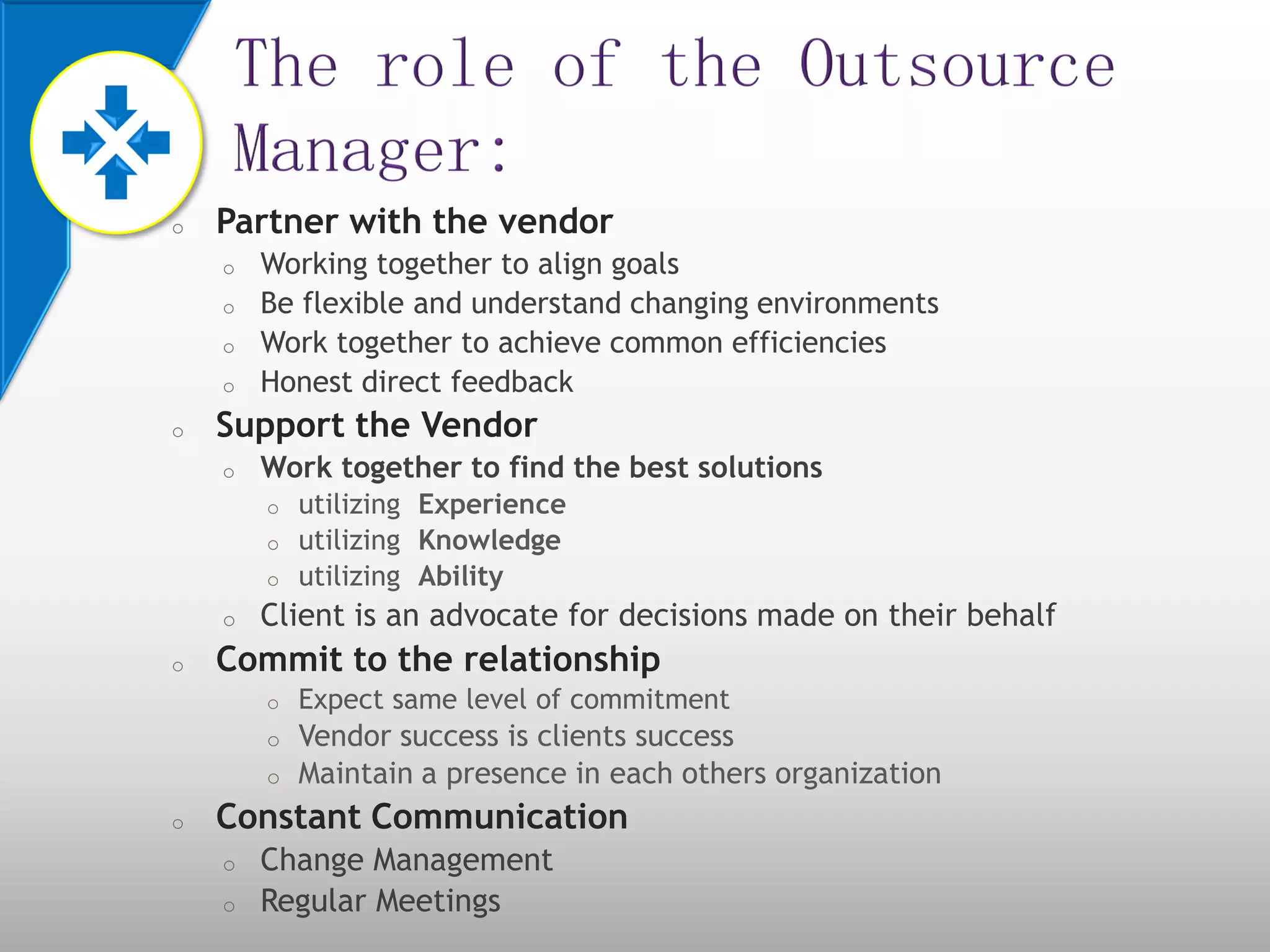
o Partner with the vendor
o Working together to align goals
o Be flexible and understand changing environments
o Work together to achieve common efficiencies
o Honest direct feedback
o Support the Vendor
o Work together to find the best solutions
o utilizing Experience
o utilizing Knowledge
o utilizing Ability
o Client is an advocate for decisions made on their behalf
o Commit to the relationship
o Expect same level of commitment
o Vendor success is clients success
o Maintain a presence in each others organization
o Constant Communication
o Change Management
o Regular Meetings
16
16
“A good alliance is like a unicorn. Everybody had
heard of them, but few have actually seen them.”
Tom Hooks Motorola

SLAs Pros and Cons

  • 1.
    The Pros andCons of Service Level Agreements (SLAs) Joann Martin, Global Director of BPO and Vendor Management Pitney Bowes
  • 3.
    o It isthe first significant agreement on direction between the two teams o It is a legal agreement between your company and the vendor. o It should demonstrate to the vendor what is important to your company o It will demonstrate what you want the vendor to focus on by defining initial performance standards o It will be a tool to measure the success of the vendor
  • 4.
    Performance Measurement Financial Budget Year overYear Improvement Responsiveness Time to respond Time to resolve Escalations Technology New tool utilization, Best of Breed Impact on functionality Process Productivity Improvement Full compliancy BCP Employees Attrition Talent Development Training Organization Customer Satisfaction Win – Wins Service Credits, Gain Sharing What’s in your SLA? Overlooked?
  • 5.
    o You evaluateand measure the vendors performance through attainment of SLAs. o You receive your expected services and deliverables through the SLAs. o You manage change in expectations through improved SLAs. Underutilized?
  • 6.
    o The facilitymanager must spell out specific SLAs, the expectations for the vendor; the technicians skills, certifications, and qualifications being supplied by the vendor and their companies; and the metrics that will be used to measure the performance of the technicians and the companies o For Maintenance a needs assessment must be the starting point to agree on the necessary SLAs. o SLAs can be utilized to bring in skilled and trained maintenance personnel on a mobile basis providing substantial savings. o SLAs must ensure the quality and training of the supplemental workforce as well as the infrastructure and tool set need for the delivery of the services
  • 7.
    o Example SLAs oPerform 100% of PM work at critical facilities o 95% completion of scheduled PM requests each month o No PM deferred more than one month. o Emergency response within 15 minutes o Determine within the first 30 minutes of a response whether or not on-site critical facility staff can make repairs. If not, follow escalation procedures immediately o Notification to 95% of customers and announce scheduled maintenance or repair events as needed o Customer satisfaction scores 95% in the top two boxes
  • 8.
  • 9.
    Define Success  Whichmetrics are more relevant to your business  Tangible objective  Leading Indicators  End Value or current activity  Manage end to end  Process Improvements  Compete in the future  Purpose of Metrics  Recognize trends  Motivate behaviors  Prioritize resources  Allow benchmarking  Compensation  Alignment  Data Driven Communications
  • 10.
    Scorecards outside ofthe SLAs Area Goal Measurement Description Education/Talent Certifications Number of requireed Project related training programs Number of training programs conducted related to outsourced tasks. Motivational programs Number of motivational programs to enhance the motivational level of employees in a month. Hours of w eb based Web based optional training Brainstorming sessions Team Sessions Promotions Intenral promotions Total
  • 11.
    Intended Value -Balanced Measurement  Tangible  Financial  Costs per X  Net Savings  Operational  Speed  Volume Reduction  Defect Reduction  Intangible  Strategic  Innovative  Satisfaction  Relationship  Decision Making  Degree of Alignment  Communication
  • 12.
    Governance and StakeholderManagement Perform Will take responsibility for a significant portion of the project. Sponsor Will provide the resources and leadership necessary for the success of the project. Oppose Will attempt to block an action. Allow Will allow the project to proceed but may not directly support it. Assist Will help in some way to ensure the success of the project. Involvement Commitment
  • 13.
    Governance and StakeholderManagement  Relationship Management  Service Request and Receipt Verification Management  Performance Management  Escalation Management  Project Management  Security, Business Continuity, Disaster Recovery Management  Financial Operations Management  Asset Management  Contract Management  Change Management  Communications Management
  • 14.
    Key Capabilities: o StrategicThinking o Deal Making o Partnership Governing o Managing Change
  • 15.
    o Partner withthe vendor o Working together to align goals o Be flexible and understand changing environments o Work together to achieve common efficiencies o Honest direct feedback o Support the Vendor o Work together to find the best solutions o utilizing Experience o utilizing Knowledge o utilizing Ability o Client is an advocate for decisions made on their behalf o Commit to the relationship o Expect same level of commitment o Vendor success is clients success o Maintain a presence in each others organization o Constant Communication o Change Management o Regular Meetings
  • 16.
    16 16 “A good allianceis like a unicorn. Everybody had heard of them, but few have actually seen them.” Tom Hooks Motorola