© 2019 Medline Industries, Inc.
Skin and the
Aging Process
© 2019 Medline Industries, Inc.
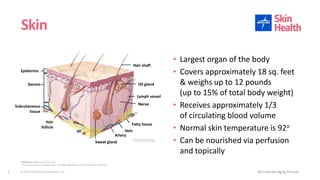
• Largest organ of the body
• Covers approximately 18 sq. feet
& weighs up to 12 pounds
(up to 15% of total body weight)
• Receives approximately 1/3
of circulating blood volume
• Normal skin temperature is 92o
• Can be nourished via perfusion
and topically
Skin
Skin and the Aging Process2
References: WOCN Core Curriculum
U.S. Census Bureau, An Aging Nation: The Older Population in the United States. May 2014
Artery
Dermis
Subcutaneous
tissue
Hair shaft
Epidermis
Hair
follicle
Oil gland
Lymph vessel
Nerve
Fatty tissue
Vein
Sweat gland
© 2019 Medline Industries, Inc.
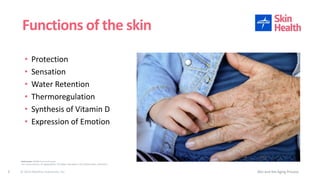
• Protection
• Sensation
• Water Retention
• Thermoregulation
• Synthesis of Vitamin D
• Expression of Emotion
Functions of the skin
Skin and the Aging Process3
References: WOCN Core Curriculum
U.S. Census Bureau, An Aging Nation: The Older Population in the United States. May 2014
© 2019 Medline Industries, Inc.
• Cellular Senescence – some cells no longer have the ability to reproduce
• Reduced Vitamin D Production – decline in vitamin D production
and vitamin D receptors
• Reduced Sensory Function – 30% reduction in nerve receptors in the skin
and reduction of neurotransmitters
• Delayed Wound Healing - affected by compromised fibroblasts, tissue
oxygenation, nutritional status
Age-related skin changes
Skin and the Aging Process4
References: WOCN Core Curriculum
U.S. Census Bureau, An Aging Nation: The Older Population in the United States. May 2014
© 2019 Medline Industries, Inc.
• Fibroblasts are fundamental for dermal structure and wound healing.
– Reduced in number
• A decrease results in dermal atrophy and prolonged collagen synthesis.
• Reduced in capacity to proliferate.
Altered fibroblast function
Skin and the Aging Process5
References: WOCN Core Curriculum
U.S. Census Bureau, An Aging Nation: The Older Population in the United States. May 2014
© 2019 Medline Industries, Inc.
• Normal inflammatory response in wound healing is 1-5 days
• Aging delays that process
• Increases risk for infection
• Reduced number of macrophages
Decreased inflammatory response
Skin and the Aging Process6
References: WOCN Core Curriculum
U.S. Census Bureau, An Aging Nation: The Older Population in the United States. May 2014
© 2019 Medline Industries, Inc.
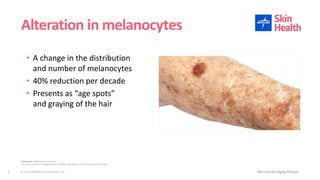
• A change in the distribution
and number of melanocytes
• 40% reduction per decade
• Presents as “age spots”
and graying of the hair
Alteration in melanocytes
Skin and the Aging Process7
References: WOCN Core Curriculum
U.S. Census Bureau, An Aging Nation: The Older Population in the United States. May 2014
© 2019 Medline Industries, Inc.
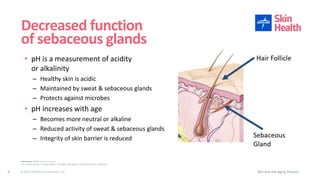
Decreased function
of sebaceous glands
Skin and the Aging Process8
References: WOCN Core Curriculum
U.S. Census Bureau, An Aging Nation: The Older Population in the United States. May 2014
• pH is a measurement of acidity
or alkalinity
– Healthy skin is acidic
– Maintained by sweat & sebaceous glands
– Protects against microbes
• pH increases with age
– Becomes more neutral or alkaline
– Reduced activity of sweat & sebaceous glands
– Integrity of skin barrier is reduced
© 2019 Medline Industries, Inc.
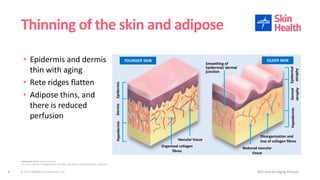
OLDER SKINYOUNGER SKIN• Epidermis and dermis
thin with aging
• Rete ridges flatten
• Adipose thins, and
there is reduced
perfusion
Thinning of the skin and adipose
Skin and the Aging Process9
References: WOCN Core Curriculum
U.S. Census Bureau, An Aging Nation: The Older Population in the United States. May 2014
Smoothing of
Epidermal/ dermal
junction
Reduced vascular
tissue
Disorganization and
loss of collagen fibresVascular tissue
Organized collagen
fibres
EpidermisDermisHypodermis
Epidermal
atrophy
Dermal
atrophy
Hypodermis
© 2019 Medline Industries, Inc.
• Protecting against MARSI (Medical Adhesive Related Skin Injury)
• Cleansing products that do not require rinsing
• Use of soft disposable wipes for bathing
• Refrain from aggressive rubbing or scrubbing of the skin
• Use antimicrobial cleansing agents with caution
• Routine use of emollients to maintain skin barrier
• Systemic hydration
Skin health considerations
Skin and the Aging Process10
References: WOCN Core Curriculum
U.S. Census Bureau, An Aging Nation: The Older Population in the United States. May 2014

Skin and the Aging Process

  • 1.
    © 2019 MedlineIndustries, Inc. Skin and the Aging Process
  • 2.
    © 2019 MedlineIndustries, Inc. • Largest organ of the body • Covers approximately 18 sq. feet & weighs up to 12 pounds (up to 15% of total body weight) • Receives approximately 1/3 of circulating blood volume • Normal skin temperature is 92o • Can be nourished via perfusion and topically Skin Skin and the Aging Process2 References: WOCN Core Curriculum U.S. Census Bureau, An Aging Nation: The Older Population in the United States. May 2014 Artery Dermis Subcutaneous tissue Hair shaft Epidermis Hair follicle Oil gland Lymph vessel Nerve Fatty tissue Vein Sweat gland
  • 3.
    © 2019 MedlineIndustries, Inc. • Protection • Sensation • Water Retention • Thermoregulation • Synthesis of Vitamin D • Expression of Emotion Functions of the skin Skin and the Aging Process3 References: WOCN Core Curriculum U.S. Census Bureau, An Aging Nation: The Older Population in the United States. May 2014
  • 4.
    © 2019 MedlineIndustries, Inc. • Cellular Senescence – some cells no longer have the ability to reproduce • Reduced Vitamin D Production – decline in vitamin D production and vitamin D receptors • Reduced Sensory Function – 30% reduction in nerve receptors in the skin and reduction of neurotransmitters • Delayed Wound Healing - affected by compromised fibroblasts, tissue oxygenation, nutritional status Age-related skin changes Skin and the Aging Process4 References: WOCN Core Curriculum U.S. Census Bureau, An Aging Nation: The Older Population in the United States. May 2014
  • 5.
    © 2019 MedlineIndustries, Inc. • Fibroblasts are fundamental for dermal structure and wound healing. – Reduced in number • A decrease results in dermal atrophy and prolonged collagen synthesis. • Reduced in capacity to proliferate. Altered fibroblast function Skin and the Aging Process5 References: WOCN Core Curriculum U.S. Census Bureau, An Aging Nation: The Older Population in the United States. May 2014
  • 6.
    © 2019 MedlineIndustries, Inc. • Normal inflammatory response in wound healing is 1-5 days • Aging delays that process • Increases risk for infection • Reduced number of macrophages Decreased inflammatory response Skin and the Aging Process6 References: WOCN Core Curriculum U.S. Census Bureau, An Aging Nation: The Older Population in the United States. May 2014
  • 7.
    © 2019 MedlineIndustries, Inc. • A change in the distribution and number of melanocytes • 40% reduction per decade • Presents as “age spots” and graying of the hair Alteration in melanocytes Skin and the Aging Process7 References: WOCN Core Curriculum U.S. Census Bureau, An Aging Nation: The Older Population in the United States. May 2014
  • 8.
    © 2019 MedlineIndustries, Inc. Decreased function of sebaceous glands Skin and the Aging Process8 References: WOCN Core Curriculum U.S. Census Bureau, An Aging Nation: The Older Population in the United States. May 2014 • pH is a measurement of acidity or alkalinity – Healthy skin is acidic – Maintained by sweat & sebaceous glands – Protects against microbes • pH increases with age – Becomes more neutral or alkaline – Reduced activity of sweat & sebaceous glands – Integrity of skin barrier is reduced
  • 9.
    © 2019 MedlineIndustries, Inc. OLDER SKINYOUNGER SKIN• Epidermis and dermis thin with aging • Rete ridges flatten • Adipose thins, and there is reduced perfusion Thinning of the skin and adipose Skin and the Aging Process9 References: WOCN Core Curriculum U.S. Census Bureau, An Aging Nation: The Older Population in the United States. May 2014 Smoothing of Epidermal/ dermal junction Reduced vascular tissue Disorganization and loss of collagen fibresVascular tissue Organized collagen fibres EpidermisDermisHypodermis Epidermal atrophy Dermal atrophy Hypodermis
  • 10.
    © 2019 MedlineIndustries, Inc. • Protecting against MARSI (Medical Adhesive Related Skin Injury) • Cleansing products that do not require rinsing • Use of soft disposable wipes for bathing • Refrain from aggressive rubbing or scrubbing of the skin • Use antimicrobial cleansing agents with caution • Routine use of emollients to maintain skin barrier • Systemic hydration Skin health considerations Skin and the Aging Process10 References: WOCN Core Curriculum U.S. Census Bureau, An Aging Nation: The Older Population in the United States. May 2014

Editor's Notes

  • #2 Learning Concept Introduce yourself and confirm with your audience that they all know each other Explain todays topic – Skin and the Aging Process
  • #3 Learning Concept Fundamental review of the skin as an organ of the body. Teaching Points The skin is the largest organ of the body. The average person may not think of the skin as an organ the way that they do their heart, lungs or gall bladder The skin covers about 18 square feet and can weigh up to 12 pounds – these numbers signify just how “large” this organ is The skin receives a 1/3 of our circulating blood volume, emphasizing the importance of circulation and blood flow The normal temperature of the skin is 92 degrees The skin as an organ of the body has the unique property of being able to impact its health topically, not just systemically, by what is put on it, or in some cases, NOT put on it Did you know? Frequent dressing changes, when not necessary, can impact healing by constantly exposing the wound to lower temperatures than the normal temperature of the skin at about 92 degrees.
  • #4 Learning Concept The functions of the skin. Teaching Points Briefly review each function as listed on the slide. Each will be discussed in more detail in upcoming slides The skin plays a key role in protection, protecting the body against microbes, toxins, mechanical injury and the caustic environment we all live in The skin also provides for sensation via nerve receptors Water retention by maintaining needed fluids and nutrients within the skin Thermoregulation via circulation and sweating Synthesis of Vitamin D in the presence of sunlight Expression of emotion Did you know? The skin is the only place in the body where Vitamin D is synthesized and occurs in the presence of sunlight.
  • #5 Learning Concept Understand age-related changes in the skin. Teaching Points Cellular Senescence – some cells no longer have the ability to reproduce and initiate cell division Reduced Vitamin D Production – decline in vitamin D production and vitamin D receptors Reduced Sensory Function – 30% reduction in nerve receptors in the skin and reduction of neurotransmitters leads to less awareness of pain, pressure, and exposure to heat and cold Delayed Wound Healing - affected by compromised fibroblasts, tissue oxygenation, nutritional status. The inflammatory phase of wound healing is changed by the body’s ability to recognize and destroy pathogens and malignant cells. Did you know? Some of the changes of aging skin can be potentiated by other co-morbidities associated with elderly patients.
  • #6 Learning Concept Understand age-related changes in the skin, related to altered fibroblast function. Teaching Points Fibroblasts are fundamental for dermal structure and wound healing Reduced in number in the aging skin The decrease results in dermal atrophy, deterioration of dermal elastin, thinning of dermal collagen, decreased dermal strength and elasticity There is also a reduction in the capacity of the fibroblasts to proliferate Did you know? A common analogy to explain the skin cells and lipids is comparing them to a brick wall, or “brick and mortar.”
  • #7 Learning Concept Understand age related changes in the skin related to decreased inflammatory response. Teaching Points Normal inflammatory response in wound healing is 1-5 days Aging delays that process The abnormal inflammatory response increases the risk for infection The reduced number of macrophages also contributes to potential for microbial invasion Did you know? Atrophy of the cutaneous vasculature and capillaries in the dermis leads to reduced perfusion.
  • #8 Learning Concept Understand age related changes in the skin related to alterations in melanocytes. Teaching Points Pigmentation changes occur in the aging skin This is caused by a change in the distribution and number of melanocytes 40% reduction per decade Presents as “age spots” and graying of the hair Did you know? Melanocytes produce melanin that give color to skin and hair. The lighter skinned individuals produce less melanin than darker skinned individuals.
  • #9 Learning Concept Understand age-related changes in the skin related to decreased function of the sebaceous glands. Teaching Points pH is a measurement of acidity or alkalinity Healthy skin is acidic – the “normal” range of our skins pH is 4.5- 5.5 pH is maintained by sweat and sebaceous glands The slight acidic level of “normal” skin protects against microbes pH of the skin increases with age The increase in the pH makes the skin becomes more neutral or alkaline This is caused by the reduced activity of sweat and sebaceous glands Integrity of skin barrier is reduced Did you know? The naturally slightly acidic level of our skin is called the “acid mantle.”
  • #10 Learning Concept Understanding the age related changes in the skin related to the thinning of the skin and adipose tissue. Teaching Points Epidermis and dermis thin and are more susceptible to damage Rete ridges flatten and make the skin more prone to skin tears Adipose thins and there is reduced perfusion. Less perfusion makes the skin more prone to damage and slower repair. Did you know? The dermal layer sustains the most structural and atrophic changes.
  • #11 Learning Concept Factors to consider in maintaining skin health in the elderly. Teaching Points MARSI is a common injury among elderly. Adhesives that are used and then removed can cause damage due to the thinning of the layers and the flattening of the epidermal-dermal junction. Consider the adhesives that are applied. Consider the types of cleansing that occurs. Use products that maintain an acidic pH, and do not require rinsing, when possible Use soft disposable wipes for bathing, and avoid excessive rubbing or scrubbing of the skin. Use of antimicrobial cleansing agents disrupts the normal flora of the skin, and should be used with caution. Routine use of emollients to maintain skin barrier and restore moisturization levels. Provide for adequate systemic hydration.