Micro Teaching
Skill of Explaining
Presenter
Dr. KIRAN KUMAR K.S
Assistant Professor
Kumadvathi College of Education
Shikaripur
Teaching Learning Process
What is learning &How learning
happens? ….:
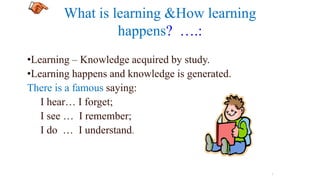
•Learning – Knowledge acquired by study.
•Learning happens and knowledge is generated.
There is a famous saying:
I hear… I forget;
I see … I remember;
I do … I understand.
5
How learning happens? ….:
We remember ..
20% of what we hear;
30% of what we see;
50% of what we see and hear;
90% of what we see, hear & do.
6
What is Explaining Skill
It can be defined as an activity to
bring about an understanding in
someone about the concept,
principle, etc that is, it is an activity
to fill up a gap in someone’s
understanding.
When a person comes across a new
phenomenon, he may it to the past experience.
Explaining involves filling up the gap in his
understanding of the new phenomenon by
relating it to his past experience
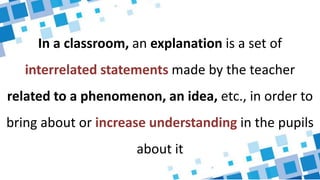
In a classroom, an explanation is a set of
interrelated statements made by the teacher
related to a phenomenon, an idea, etc., in order to
bring about or increase understanding in the pupils
about it
How you become an effective
explainer in the class room
There are so many techniques to
become good explainer
1. Question-Answer technique
2. Use of audio-visual aids
3. By making certain related statements
To develop a good skill of explaining skill we must follow some
DISIRABLE BEHAVIOURS and avoid UNDESIRABLE BEHAVIOURS
they are :
Desirable Behaviours
1. Using beginning
Statements
2. Using explaining links
3. Using Concluding
Statement
4. Testing pupil’s
Understanding
5. Questions Followed by
the Correct Response
Undesirable Behaviours
1. Stating Irrelevant
Statements
2. Lacking in continuity
in statements
3. Using Inappropriate
Vocabulary
4. Lacking in Fluency
5. Using vague words
and phrases.
Well begin is a half down
1. Using beginning Statement:
Sub : English (Prose)
Topic : Sir C V Raman
“My dear Students today in this class we shall study
about Childhood days and Educational Life of Raman
in the Lesson “Sir C.V. Raman” & Grammar Noun”
Subject : Science ( Physics)
Topic : ಕಾಂತದ ಗುಣಗಳು
“ಹಾಗದರೆ ಪ್
ರ ೀತಿಯ ವಿದ್ಯಾ ರ್ಥಿಗಳೇ ಇಾಂದಿನ
ತರಗತಿಯಲ್ಲ
ಿ ನಾವು ಕಾಂತದ ಅರ್ಿ ಮತ್ತ
ು ಅದರ
ಗುಣಗಳ ಬಗ್ಗೆ ಸವಿವರವಾಗಿ ತಿಳಿದುಕೊಳ್ಳ ೀಣ”
So Dear Students today in this class we shall
study about concept and characteristics of
Magnet.
Subject : Social Science ( History)
Unit : ವಿಜಯನಗರ ಸಾಮ್ರ
ರ ಜಾ
Topic : ಶ್
ರ ೀಕೃಷ್ಣ ದೇವರಾಯನ ಜೀವನ ಮತ್ತ
ು ಸಾಧನೆ.
“ಹಾಗಾದರೆ ಪ್
ರ ೀತಿಯ ವಿದ್ಯಾ ರ್ಥಿಗಳೇ ಇಾಂದಿನ
ತರಗತಿಯಲ್ಲ
ಿ ನಾವು ಶ್
ರ ೀಕೃಷ್ಣ ದೇವರಾಯನ ಆರಂಭಿಕ
ಜೀವನ ಹಾಗೂ ವಿಜಯನಗರ ಸಾಮ್ರ
ರ ಜಾ ದ
ವಿಸ
ು ರಣೆಯಲ್ಲ
ಿ ಅವರ ಪಾತ
ರ ದ ಕುರಿತ್ತ
ವಿಶ್
ಿ ೀಷ್ಣಾತಮ ಕವಾಗಿ ತಿಳಿದುಕೊಳ್ಳ ೀಣ”
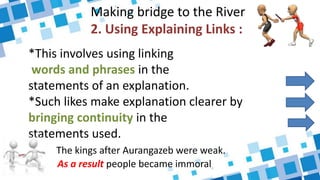
*This involves using linking
words and phrases in the
statements of an explanation.
*Such likes make explanation clearer by
bringing continuity in the
statements used.
Ex: The kings after Aurangazeb were weak.
As a result people became immoral
Making bridge to the River
2. Using Explaining Links :
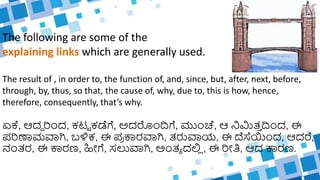
The following are some of the
explaining links which are generally used.
The result of , in order to, the function of, and, since, but, after, next, before,
through, by, thus, so that, the cause of, why, due to, this is how, hence,
therefore, consequently, that’s why.
ಏಕೆ, ಆದದ ರಿಾಂದ, ಕಟ್ಟ ಕಡೆಗ್ಗ, ಅದರಾಂದಿಗ್ಗ, ಮಾಂಚೆ, ಆ ನಿಮಿತ
ು ದಿಾಂದ, ಈ
ಪರಿಣಾಮವಾಗಿ, ಬಳಿಕ, ಈ ಪ
ರ ಕರವಾಗಿ, ತರುವಾಯ, ಈ ದೆಸೆಯಾಂದ, ಆದರೆ,
ನಂತರ, ಈ ಕರಣ, ಹೀಗ್ಗ, ಸಲುವಾಗಿ, ಅಾಂತಾ ದಲ್ಲ
ಿ , ಈ ರಿೀತಿ, ಆದ ಕರಣ.
Sub : English (Prose)
Topic : Sir C.V Raman
3. Using Concluding Statement:
“ So My dear Students today in this class we have
learnt about the childhood days and schooling of
Raman in the Lesson “Sir C.V. Raman” and
Grammar Noun”
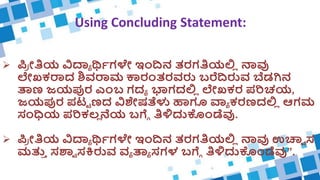
Using Concluding Statement:
 ಪ್
ರ ೀತಿಯ ವಿದ್ಯಾ ರ್ಥಿಗಳೇ ಇಂದಿನ ತರಗತಿಯಲ್ಲ
ಿ ನಾವು
ಲೇಖಕರಾದ ಶಿವರಾಮ ಕಾರಂತರವರು ಬರೆದಿರುವ ಬೆಡಗಿನ
ತಾಣ ಜಯಪುರ ಎಂಬ ಗದಾ ಭಾಗದಲ್ಲ
ಿ ಲೇಖಕರ ಪರಿಚಯ,
ಜಯಪುರ ಪಟ್ಟ ಣದ ವಿಶೇಷತೆಳು ಹಾಗೂ ವ್ಯಾ ಕರಣದಲ್ಲ
ಿ ಆಗಮ
ಸಂಧಿಯ ಪರಿಕಲ್
ಿ ನೆಯ ಬಗ್ಗೆ ತಿಳಿದುಕಂಡೆವು.
 ಪ್
ರ ೀತಿಯ ವಿದ್ಯಾ ರ್ಥಿಗಳೇ ಇಂದಿನ ತರಗತಿಯಲ್ಲ
ಿ ನಾವು ಉಚ್ವಾ ಸ
ಮತ್ತ
ು ಸಶ್ವಾ ಸಕಿರುವ ವಾ ತಾಾ ಸಗಳ ಬಗ್ಗೆ ತಿಳಿದುಕಂಡೆವು”.
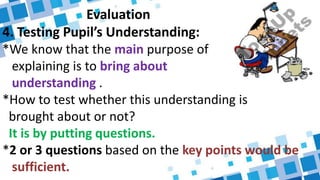
Evaluation
4. Testing Pupil’s Understanding:
*We know that the main purpose of
explaining is to bring about
understanding .
*How to test whether this understanding is
brought about or not?
It is by putting questions.
*2 or 3 questions based on the key points would be
sufficient.
This shows that how
the pupil’s response to
the question asked by the teacher about
the concept, either the concept was
understood correctly the response will be
high
5. Questions followed by the correct
Response :
Need of the hour
22
Working Together, We Can achieve our goal and
expected qualities in higher education
THE END!!!
Thank You

Skill of Explaining.pptx

  • 2.
    Micro Teaching Skill ofExplaining Presenter Dr. KIRAN KUMAR K.S Assistant Professor Kumadvathi College of Education Shikaripur
  • 4.
  • 5.
    What is learning&How learning happens? ….: •Learning – Knowledge acquired by study. •Learning happens and knowledge is generated. There is a famous saying: I hear… I forget; I see … I remember; I do … I understand. 5
  • 6.
    How learning happens?….: We remember .. 20% of what we hear; 30% of what we see; 50% of what we see and hear; 90% of what we see, hear & do. 6
  • 7.
    What is ExplainingSkill It can be defined as an activity to bring about an understanding in someone about the concept, principle, etc that is, it is an activity to fill up a gap in someone’s understanding.
  • 8.
    When a personcomes across a new phenomenon, he may it to the past experience. Explaining involves filling up the gap in his understanding of the new phenomenon by relating it to his past experience
  • 9.
    In a classroom,an explanation is a set of interrelated statements made by the teacher related to a phenomenon, an idea, etc., in order to bring about or increase understanding in the pupils about it
  • 10.
    How you becomean effective explainer in the class room There are so many techniques to become good explainer 1. Question-Answer technique 2. Use of audio-visual aids 3. By making certain related statements
  • 11.
    To develop agood skill of explaining skill we must follow some DISIRABLE BEHAVIOURS and avoid UNDESIRABLE BEHAVIOURS they are : Desirable Behaviours 1. Using beginning Statements 2. Using explaining links 3. Using Concluding Statement 4. Testing pupil’s Understanding 5. Questions Followed by the Correct Response Undesirable Behaviours 1. Stating Irrelevant Statements 2. Lacking in continuity in statements 3. Using Inappropriate Vocabulary 4. Lacking in Fluency 5. Using vague words and phrases.
  • 12.
    Well begin isa half down 1. Using beginning Statement: Sub : English (Prose) Topic : Sir C V Raman “My dear Students today in this class we shall study about Childhood days and Educational Life of Raman in the Lesson “Sir C.V. Raman” & Grammar Noun”
  • 13.
    Subject : Science( Physics) Topic : ಕಾಂತದ ಗುಣಗಳು “ಹಾಗದರೆ ಪ್ ರ ೀತಿಯ ವಿದ್ಯಾ ರ್ಥಿಗಳೇ ಇಾಂದಿನ ತರಗತಿಯಲ್ಲ ಿ ನಾವು ಕಾಂತದ ಅರ್ಿ ಮತ್ತ ು ಅದರ ಗುಣಗಳ ಬಗ್ಗೆ ಸವಿವರವಾಗಿ ತಿಳಿದುಕೊಳ್ಳ ೀಣ” So Dear Students today in this class we shall study about concept and characteristics of Magnet.
  • 14.
    Subject : SocialScience ( History) Unit : ವಿಜಯನಗರ ಸಾಮ್ರ ರ ಜಾ Topic : ಶ್ ರ ೀಕೃಷ್ಣ ದೇವರಾಯನ ಜೀವನ ಮತ್ತ ು ಸಾಧನೆ. “ಹಾಗಾದರೆ ಪ್ ರ ೀತಿಯ ವಿದ್ಯಾ ರ್ಥಿಗಳೇ ಇಾಂದಿನ ತರಗತಿಯಲ್ಲ ಿ ನಾವು ಶ್ ರ ೀಕೃಷ್ಣ ದೇವರಾಯನ ಆರಂಭಿಕ ಜೀವನ ಹಾಗೂ ವಿಜಯನಗರ ಸಾಮ್ರ ರ ಜಾ ದ ವಿಸ ು ರಣೆಯಲ್ಲ ಿ ಅವರ ಪಾತ ರ ದ ಕುರಿತ್ತ ವಿಶ್ ಿ ೀಷ್ಣಾತಮ ಕವಾಗಿ ತಿಳಿದುಕೊಳ್ಳ ೀಣ”
  • 15.
    *This involves usinglinking words and phrases in the statements of an explanation. *Such likes make explanation clearer by bringing continuity in the statements used. Ex: The kings after Aurangazeb were weak. As a result people became immoral Making bridge to the River 2. Using Explaining Links :
  • 16.
    The following aresome of the explaining links which are generally used. The result of , in order to, the function of, and, since, but, after, next, before, through, by, thus, so that, the cause of, why, due to, this is how, hence, therefore, consequently, that’s why. ಏಕೆ, ಆದದ ರಿಾಂದ, ಕಟ್ಟ ಕಡೆಗ್ಗ, ಅದರಾಂದಿಗ್ಗ, ಮಾಂಚೆ, ಆ ನಿಮಿತ ು ದಿಾಂದ, ಈ ಪರಿಣಾಮವಾಗಿ, ಬಳಿಕ, ಈ ಪ ರ ಕರವಾಗಿ, ತರುವಾಯ, ಈ ದೆಸೆಯಾಂದ, ಆದರೆ, ನಂತರ, ಈ ಕರಣ, ಹೀಗ್ಗ, ಸಲುವಾಗಿ, ಅಾಂತಾ ದಲ್ಲ ಿ , ಈ ರಿೀತಿ, ಆದ ಕರಣ.
  • 17.
    Sub : English(Prose) Topic : Sir C.V Raman 3. Using Concluding Statement: “ So My dear Students today in this class we have learnt about the childhood days and schooling of Raman in the Lesson “Sir C.V. Raman” and Grammar Noun”
  • 18.
    Using Concluding Statement: ಪ್ ರ ೀತಿಯ ವಿದ್ಯಾ ರ್ಥಿಗಳೇ ಇಂದಿನ ತರಗತಿಯಲ್ಲ ಿ ನಾವು ಲೇಖಕರಾದ ಶಿವರಾಮ ಕಾರಂತರವರು ಬರೆದಿರುವ ಬೆಡಗಿನ ತಾಣ ಜಯಪುರ ಎಂಬ ಗದಾ ಭಾಗದಲ್ಲ ಿ ಲೇಖಕರ ಪರಿಚಯ, ಜಯಪುರ ಪಟ್ಟ ಣದ ವಿಶೇಷತೆಳು ಹಾಗೂ ವ್ಯಾ ಕರಣದಲ್ಲ ಿ ಆಗಮ ಸಂಧಿಯ ಪರಿಕಲ್ ಿ ನೆಯ ಬಗ್ಗೆ ತಿಳಿದುಕಂಡೆವು.  ಪ್ ರ ೀತಿಯ ವಿದ್ಯಾ ರ್ಥಿಗಳೇ ಇಂದಿನ ತರಗತಿಯಲ್ಲ ಿ ನಾವು ಉಚ್ವಾ ಸ ಮತ್ತ ು ಸಶ್ವಾ ಸಕಿರುವ ವಾ ತಾಾ ಸಗಳ ಬಗ್ಗೆ ತಿಳಿದುಕಂಡೆವು”.
  • 19.
    Evaluation 4. Testing Pupil’sUnderstanding: *We know that the main purpose of explaining is to bring about understanding . *How to test whether this understanding is brought about or not? It is by putting questions. *2 or 3 questions based on the key points would be sufficient.
  • 20.
    This shows thathow the pupil’s response to the question asked by the teacher about the concept, either the concept was understood correctly the response will be high 5. Questions followed by the correct Response :
  • 22.
    Need of thehour 22 Working Together, We Can achieve our goal and expected qualities in higher education
  • 23.