
Presented by:
Mohammad Abdullah
(Statistics Department PU LAHORE)
Six sigma
Six sigma is a business method for improving quality by removing defects and their causes
in business process activities
 The method uses different statistical tools to measure
 3.4 defects per million produce when we achieve the 6σ level
Define Phase Tools
 Surveys & Questionnaires
 Project Charter
 Stakeholder analysis
 Tree Diagram
Key delivers by Define Phase
 Project description
 Smart goal
 High level project plan defined
 Team launched
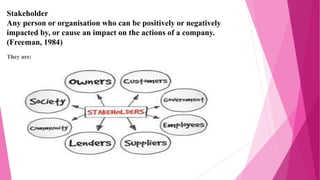
Stakeholder
Any person or organisation who can be positively or negatively
impacted by, or cause an impact on the actions of a company.
(Freeman, 1984)
They are:
Stakeholder Mapping
 Helps to identify which stakeholders may support or
oppose change / organisation’s actions
 Which stakeholders are the most powerful, have most
influence
 Help decision makers formalise / prioritise strategies
Power/Interest Matrix
 Classifies stakeholders in relation to their power and the extent to which they
are likely to show interest in the actions of the organisation.
 Can be used to indicate the nature of the relationship which should be adopted
with each group
Check Power & Interest
Power / Interest Matrix
 Stakeholders in group A: Need only minimum effort an monitoring
 Stakeholders in group B: Should be kept informed as they may be able to
influence more powerful stakeholders
 Stakeholders in group C: Are powerful, but level of interest is low. Generally
expected to be passive, but may move into group D on an issue of particular
interest
 Stakeholders in group D: Are both powerful and interested. Their co-operation
is of key importance for new strategies
Measure Phase Tools
 Check Sheets
 KANO Model
 Input/output Process Maps
 Benchmarking
KANO Model
The Kano model is a theory developed in the 1980s
by Professor Noriaki Kano.
KANO Model Process
Research
Analyze &
Brainstorm
Plot &
Diagram
Strategize
•Research available
data sources
•Determine data
collection strategy
•Design data
collection
instruments
•Collect and
summarize data
•Analyze results
from data
collection
•Brainstorm list of
features and
functionality
•Develop Functional
and Dysfunctional
Questionnaire
•Distribute
Questionnaire
•Develop
Customer
Requirement
Matrix
•Record
Questionnaire
results in Matrix
and Summarize
•Plot results on
Kano Model
•Determine
Project selection
•Product
Development
•Service
Development
•Identify
Marketing
Strategy
KANO Model have 3 attributes with
Respect to customer Satisfaction Level
Analyze Phase
 Kaizen
 Financial and Operational Analysis
 Design of Experiment
 Non Parametric Tests
 NVA Process (Non value added)
Key Delivers
 Define achievable benefits
 Identifies Non value added products in process
 Identifies the root causes
KAIZEN
 KAIZEN is a Japanese word means change (KAI) to become good (ZEN)
 KAIZEN means Improvement. Improvements without spending much money,
involving everyone from managers to employees, and using much common
sense.
History
In the decade of 1980, management techniques focusing on employee
involvement, and empowerment through teamwork approach and interactive
communications.
On improving job design were not new, but Japanese companies seemed to
implement such techniques much more effectively than others .
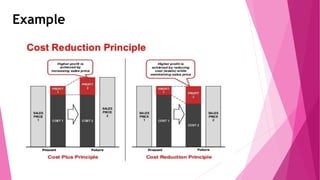
Example
Design Phase
 DFMEA (Design Failure Mode Effects Analysis)
 TRIZ
 Process Scorecard
“TRIZ” A Russian acronym
TRIZ is based on two basic principles
1) Somebody, sometime, somewhere has
already solved your problem or one similar to it.
2) Creativity means finding that solution and
adapting it to the current problem.Don’t accept
contradictions. Resolve them
Fundamentals of TRIZ
2
General Problem
3
General Solutions
1
Specific Problem
4
Solution to Specific
Problem
AnalogyAbstraction
Example
“I want to create a uniform flow with Gas A & B, but I can’t because GAS C will
contaminate it when it is blown in to visualize flame extinction.
This uses Physical Contradiction rather than the Technical Contradiction just
described.
Verify Phase
Tools
 Control Plan
 Performance Score Card
 Summary score card
 Pilot run
Control Plan
In the world of quality management, a control plan is a written summary of the
process that lays out in detail the steps to be taken to maintain a process or a device
operating at the current level of performance.
Control plans include a description of each step in the process, and the parameters
that need to be kept in check to ensure there are no excessive deviations from mean
performance or variation in a batch of products.
Control Plans are extensively utilized by Six Sigma Professionals and are an integral
part of the Six Sigma set of methodologies.
Finally

Six sigma difference b/w DMAIC & DMADV

  • 2.
  • 4.
    Six sigma Six sigmais a business method for improving quality by removing defects and their causes in business process activities  The method uses different statistical tools to measure  3.4 defects per million produce when we achieve the 6σ level
  • 8.
    Define Phase Tools Surveys & Questionnaires  Project Charter  Stakeholder analysis  Tree Diagram
  • 9.
    Key delivers byDefine Phase  Project description  Smart goal  High level project plan defined  Team launched
  • 10.
    Stakeholder Any person ororganisation who can be positively or negatively impacted by, or cause an impact on the actions of a company. (Freeman, 1984) They are:
  • 11.
    Stakeholder Mapping  Helpsto identify which stakeholders may support or oppose change / organisation’s actions  Which stakeholders are the most powerful, have most influence  Help decision makers formalise / prioritise strategies
  • 12.
    Power/Interest Matrix  Classifiesstakeholders in relation to their power and the extent to which they are likely to show interest in the actions of the organisation.  Can be used to indicate the nature of the relationship which should be adopted with each group
  • 13.
    Check Power &Interest
  • 14.
    Power / InterestMatrix  Stakeholders in group A: Need only minimum effort an monitoring  Stakeholders in group B: Should be kept informed as they may be able to influence more powerful stakeholders  Stakeholders in group C: Are powerful, but level of interest is low. Generally expected to be passive, but may move into group D on an issue of particular interest  Stakeholders in group D: Are both powerful and interested. Their co-operation is of key importance for new strategies
  • 15.
    Measure Phase Tools Check Sheets  KANO Model  Input/output Process Maps  Benchmarking
  • 16.
    KANO Model The Kanomodel is a theory developed in the 1980s by Professor Noriaki Kano.
  • 17.
    KANO Model Process Research Analyze& Brainstorm Plot & Diagram Strategize •Research available data sources •Determine data collection strategy •Design data collection instruments •Collect and summarize data •Analyze results from data collection •Brainstorm list of features and functionality •Develop Functional and Dysfunctional Questionnaire •Distribute Questionnaire •Develop Customer Requirement Matrix •Record Questionnaire results in Matrix and Summarize •Plot results on Kano Model •Determine Project selection •Product Development •Service Development •Identify Marketing Strategy
  • 18.
    KANO Model have3 attributes with Respect to customer Satisfaction Level
  • 20.
    Analyze Phase  Kaizen Financial and Operational Analysis  Design of Experiment  Non Parametric Tests  NVA Process (Non value added)
  • 21.
    Key Delivers  Defineachievable benefits  Identifies Non value added products in process  Identifies the root causes
  • 22.
    KAIZEN  KAIZEN isa Japanese word means change (KAI) to become good (ZEN)  KAIZEN means Improvement. Improvements without spending much money, involving everyone from managers to employees, and using much common sense.
  • 23.
    History In the decadeof 1980, management techniques focusing on employee involvement, and empowerment through teamwork approach and interactive communications. On improving job design were not new, but Japanese companies seemed to implement such techniques much more effectively than others .
  • 27.
  • 28.
    Design Phase  DFMEA(Design Failure Mode Effects Analysis)  TRIZ  Process Scorecard
  • 29.
  • 30.
    TRIZ is basedon two basic principles 1) Somebody, sometime, somewhere has already solved your problem or one similar to it. 2) Creativity means finding that solution and adapting it to the current problem.Don’t accept contradictions. Resolve them
  • 32.
    Fundamentals of TRIZ 2 GeneralProblem 3 General Solutions 1 Specific Problem 4 Solution to Specific Problem AnalogyAbstraction
  • 33.
    Example “I want tocreate a uniform flow with Gas A & B, but I can’t because GAS C will contaminate it when it is blown in to visualize flame extinction. This uses Physical Contradiction rather than the Technical Contradiction just described.
  • 34.
    Verify Phase Tools  ControlPlan  Performance Score Card  Summary score card  Pilot run
  • 35.
    Control Plan In theworld of quality management, a control plan is a written summary of the process that lays out in detail the steps to be taken to maintain a process or a device operating at the current level of performance. Control plans include a description of each step in the process, and the parameters that need to be kept in check to ensure there are no excessive deviations from mean performance or variation in a batch of products. Control Plans are extensively utilized by Six Sigma Professionals and are an integral part of the Six Sigma set of methodologies.
  • 38.