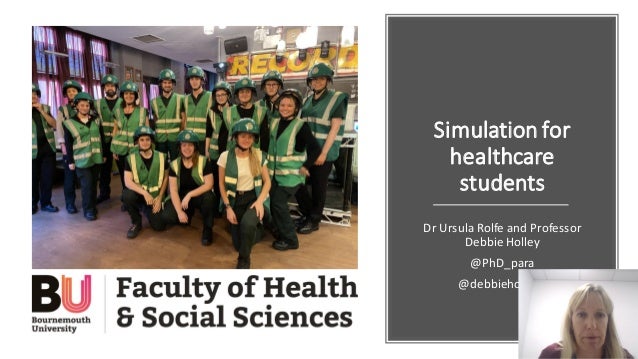
Simulation for
healthcare
students
Dr Ursula Rolfe and Professor
Debbie Holley
@PhD_para
@debbieholley1
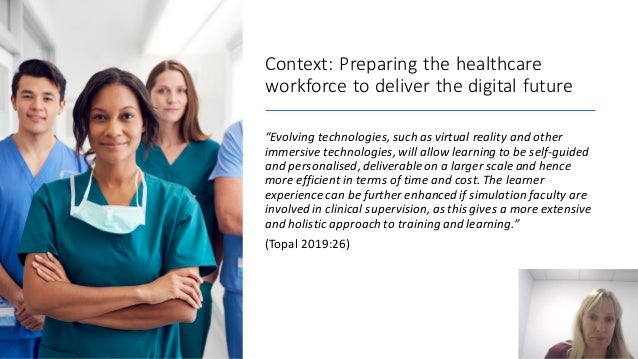
Context: Preparing the healthcare
workforce to deliver the digital future
“Evolving technologies, such as virtual reality and other
immersive technologies, will allow learning to be self-guided
and personalised,deliverable on a larger scale and hence
more efficient in terms of time and cost. The learner
experience can be further enhanced if simulation faculty are
involved in clinical supervision, as this gives a more extensive
and holistic approach to training and learning.”
(Topal 2019:26)
Background
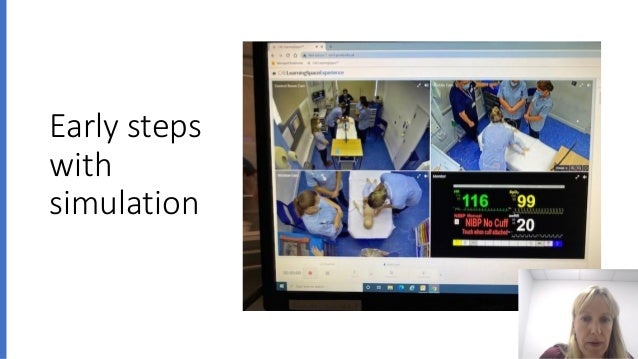
Early steps
with
simulation
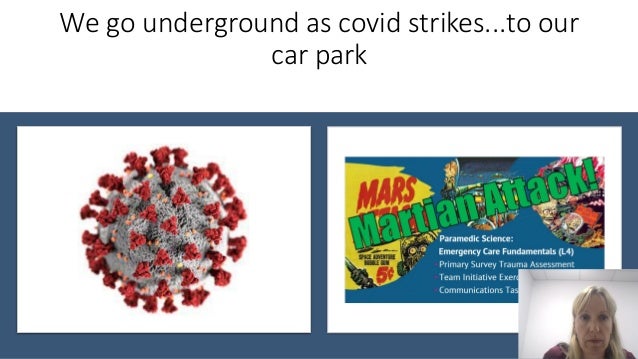
We go underground as covid strikes...to our
car park
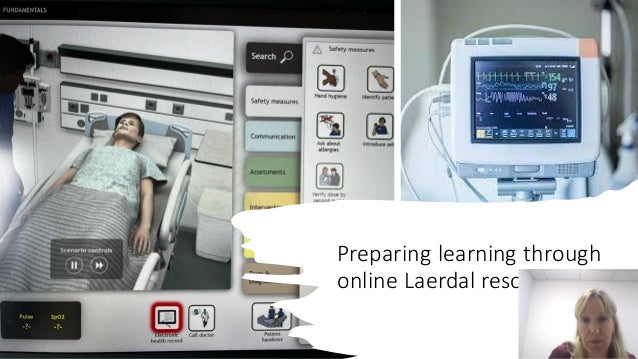
Preparing learning through
online Laerdal resources
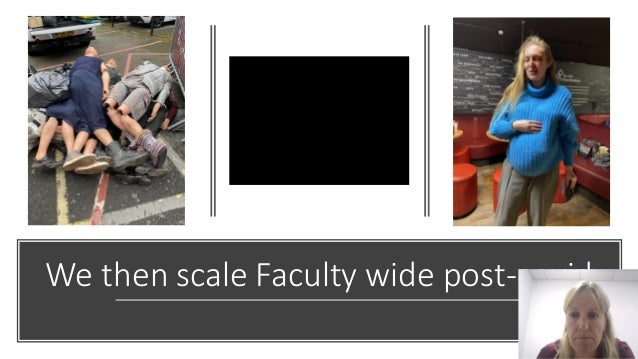
We then scale Faculty wide post-covid
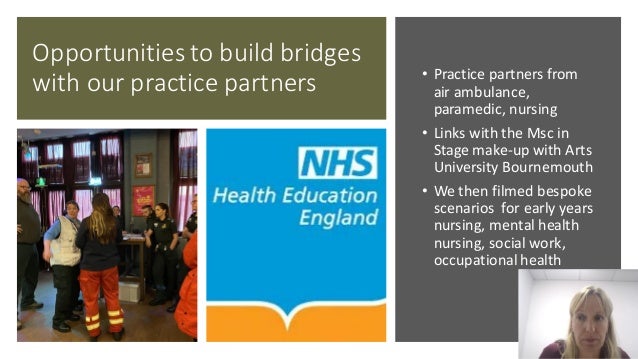
Opportunities to build bridges
with our practice partners • Practice partners from
air ambulance,
paramedic, nursing
• Links with the Msc in
Stage make-up with Arts
University Bournemouth
• We then filmed bespoke
scenarios for early years
nursing, mental health
nursing, social work,
occupational health
Final thoughts -what have we
learned from Covid-19?
• We pride ourselves on the quality of healthcare graduates
entering the NHS workforce – but standing still post Covid
will not meet with the NHS aspirations for a digitally
enabled workforce
• Authentic assessmentis key, and we are re-visiting our
curricula to explore this
• Excellent learning design works for students for
online, face-to-face and blending learning
• Simulation is building effective bridges for us between our
student and their placements in health
Key References:
• Bancroft,A.,Holley,D.,Moran.,J.,Singleton,HandRolfe.,U(2022)
'Martian Attack,thestory so far' presentedtothe Universityof Kent
PedagogyandPractice whenTeachingandLearningOnline webinar
series(16.02.2022)
• NHS/HEE (2020) A national visionforthe role of simulationand
immersivetechnologiesinhealthandcare
https://www.hee.nhs.uk/sites/default/files/documents/National%20Strat
egic%20Vision%20of%20Sim%20in%20Health%20and%20Care.pdf
• Topal review:NHS (Feb2019) Preparingthe healthcare workforce to
deliverthe digital future https://topol.hee.nhs.uk/wp-
content/uploads/HEE-Topol-Review-2019.pdf
Acknowledgements
• Health Education England; Adam Bancroft,
Bournemouth University; John Moran,
Bournemouth University, Heidi Singleton,
Bournemouth University; Sue Baron,
Bournemouth University.
• Health Education England Simulation
Grant.
Thank you for listening

Simulation for healthcare students: lessons learned from C19

  • 2.
    Simulation for healthcare students Dr UrsulaRolfe and Professor Debbie Holley @PhD_para @debbieholley1
  • 3.
    Context: Preparing thehealthcare workforce to deliver the digital future “Evolving technologies, such as virtual reality and other immersive technologies, will allow learning to be self-guided and personalised,deliverable on a larger scale and hence more efficient in terms of time and cost. The learner experience can be further enhanced if simulation faculty are involved in clinical supervision, as this gives a more extensive and holistic approach to training and learning.” (Topal 2019:26)
  • 4.
  • 5.
  • 6.
    We go undergroundas covid strikes...to our car park
  • 7.
  • 8.
    We then scaleFaculty wide post-covid
  • 9.
    Opportunities to buildbridges with our practice partners • Practice partners from air ambulance, paramedic, nursing • Links with the Msc in Stage make-up with Arts University Bournemouth • We then filmed bespoke scenarios for early years nursing, mental health nursing, social work, occupational health
  • 10.
    Final thoughts -whathave we learned from Covid-19? • We pride ourselves on the quality of healthcare graduates entering the NHS workforce – but standing still post Covid will not meet with the NHS aspirations for a digitally enabled workforce • Authentic assessmentis key, and we are re-visiting our curricula to explore this • Excellent learning design works for students for online, face-to-face and blending learning • Simulation is building effective bridges for us between our student and their placements in health
  • 11.
    Key References: • Bancroft,A.,Holley,D.,Moran.,J.,Singleton,HandRolfe.,U(2022) 'MartianAttack,thestory so far' presentedtothe Universityof Kent PedagogyandPractice whenTeachingandLearningOnline webinar series(16.02.2022) • NHS/HEE (2020) A national visionforthe role of simulationand immersivetechnologiesinhealthandcare https://www.hee.nhs.uk/sites/default/files/documents/National%20Strat egic%20Vision%20of%20Sim%20in%20Health%20and%20Care.pdf • Topal review:NHS (Feb2019) Preparingthe healthcare workforce to deliverthe digital future https://topol.hee.nhs.uk/wp- content/uploads/HEE-Topol-Review-2019.pdf
  • 12.
    Acknowledgements • Health EducationEngland; Adam Bancroft, Bournemouth University; John Moran, Bournemouth University, Heidi Singleton, Bournemouth University; Sue Baron, Bournemouth University. • Health Education England Simulation Grant.
  • 13.
    Thank you forlistening