Downloaded 75 times
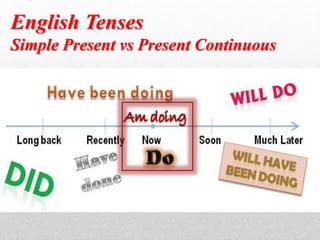
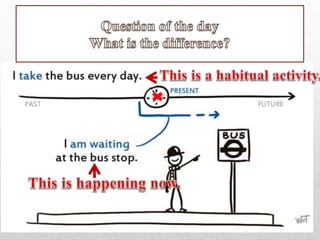
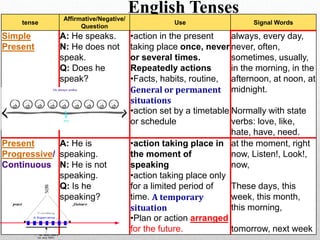

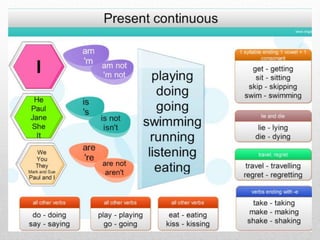
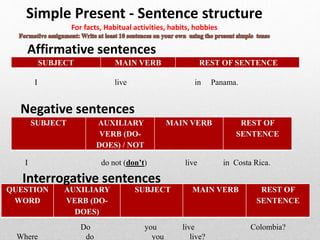
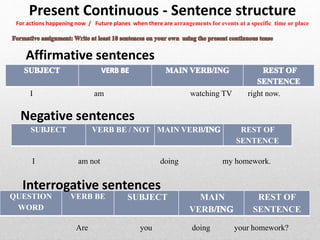
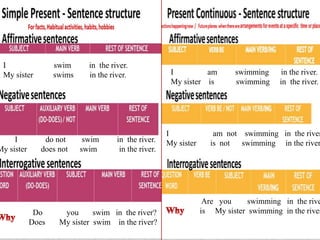
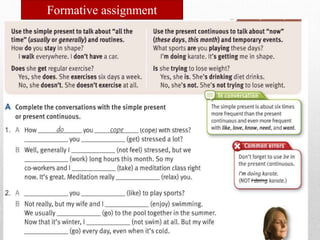

The document summarizes the differences between the simple present and present continuous tenses in English. It provides examples of their sentence structures and usage. The simple present is used for habitual or repeated actions, facts, and schedules. It uses signal words like "always" and days/times. The present continuous emphasizes a temporary action happening at the time of speaking and uses words like "now" and "these days." Examples are given of affirmative, negative, and interrogative sentences in both tenses. Readers are directed to a website for more information on tenses.


