Index
● What is Simple Object Access Protocol (SOAP)?
● Important points about Simple Object Access Protocol (SOAP)
● Key Features of Simple Object Access Protocol (SOAP)
● Simple Object Access Protocol (SOAP) of Web Services
● Message Structure of Simple Object Access Protocol (SOAP)
● Applications of Simple Object Access Protocol (SOAP)
● Example of Simple Object Access Protocol (SOAP)
● Conclusion
What is Simple Object Access Protocol ?
SOAP (Simple Object Access Protocol) is a
messaging protocol specification for exchanging
structured information in the implementation of web
services in computer networks. It uses XML as its
message format and relies on other application-level
protocols, such as HTTP and SMTP, for message
negotiation and transmission.
SOAP is an extensible protocol that can be used to
exchange a wide range of information, including
simple data types, complex data structures, and even
multimedia content.
Important points about Simple Object Access Protocol
● SOAP is a messaging protocol specification for exchanging structured
information in the implementation of web services
● Uses XML as its message format
● Relies on other application-level protocols (e.g. HTTP, SMTP) for message
negotiation and transmission
● Extensible protocol that can exchange a wide range of information (simple data
types, complex data structures, multimedia content)
● Platform- and language-agnostic (can be used between systems written in
different languages and running on different platforms)
Key Features of Simple Object Access Protocol
● Uses web services
● Message structure (envelope, header, body)
● Application in various contexts (e.g. remote procedure calls, data
retrieval)
Simple Object Access Protocol of Web Services
● Self-contained, modular applications that can be accessed over a network
● Simple interface described in a Web Services Description Language (WSDL) document
● SOAP messages are sent over HTTP or another application-level protocol
● Can be used to invoke methods on a remote server, retrieve data from a server, or
perform other actions
Message Structure of Simple Object Access Protocol
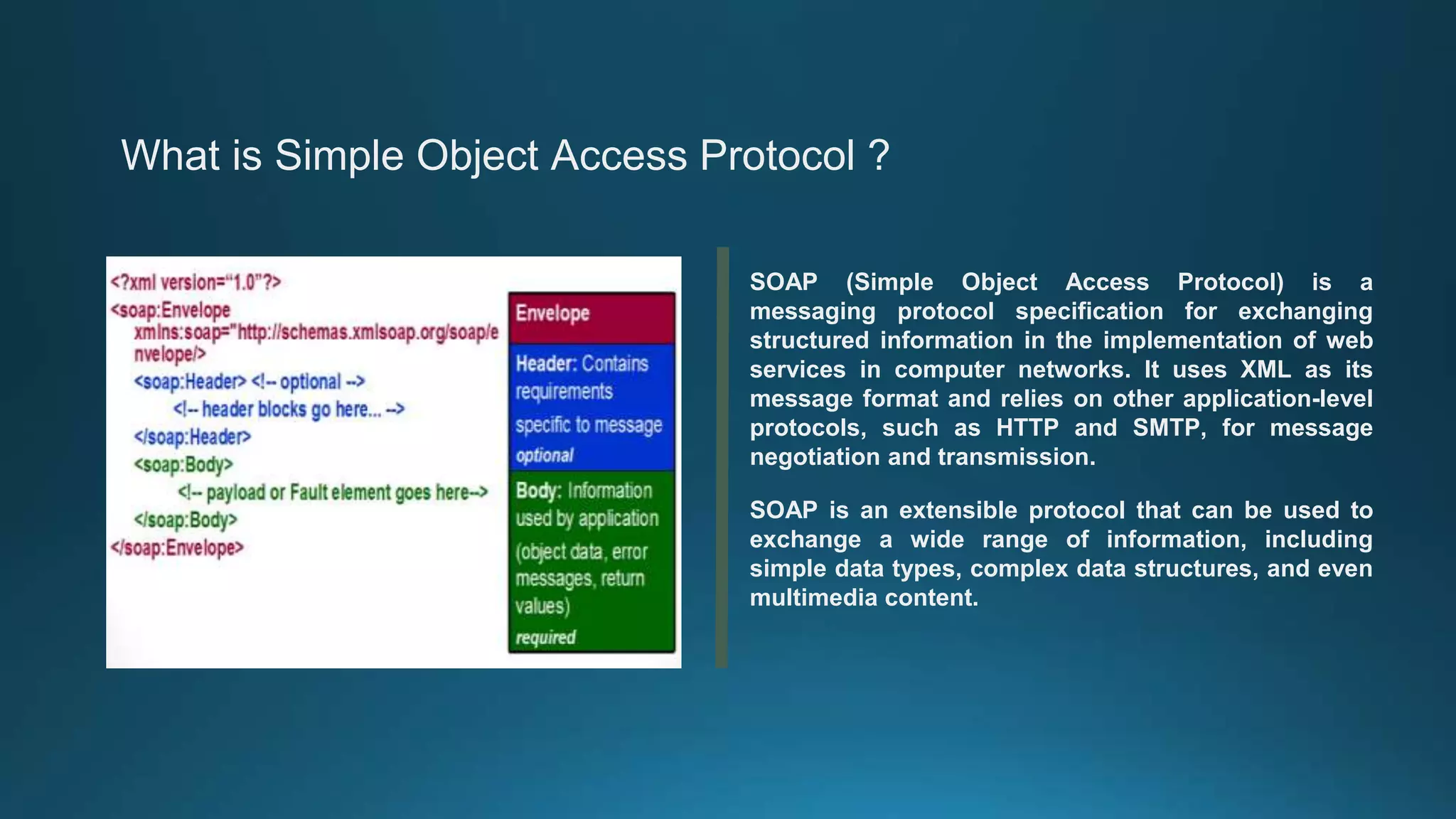
A message consists of some particular structure that is,
● SOAP envelope, which defines the structure of the message and encloses the
message content.
● SOAP header, which can contain optional information such as authentication
credentials or other metadata.
● SOAP body, which contains the actual data being exchanged between the
systems.
Applications of Simple Object Access Protocol
• Remote procedure calls
• Data retrieval
• Other actions (e.g. data manipulation, messaging)
Overall, the applications of SOAP are quite varied and can be tailored to meet the
specific needs of a particular system or use case.
Example of Simple Object Access Protocol
Imagine that a client system wants to retrieve some information from a server system.
The client system sends a SOAP request message to the server, using HTTP as the
transport protocol. The request message is an XML document that contains the
following elements:
• A SOAP envelope.
• A SOAP header.
• A SOAP body.
Example of Simple Object Access Protocol
The server system receives the request message, processes it, and returns a response
message to the client. The response message is also an XML document, with a similar
structure to the request message.
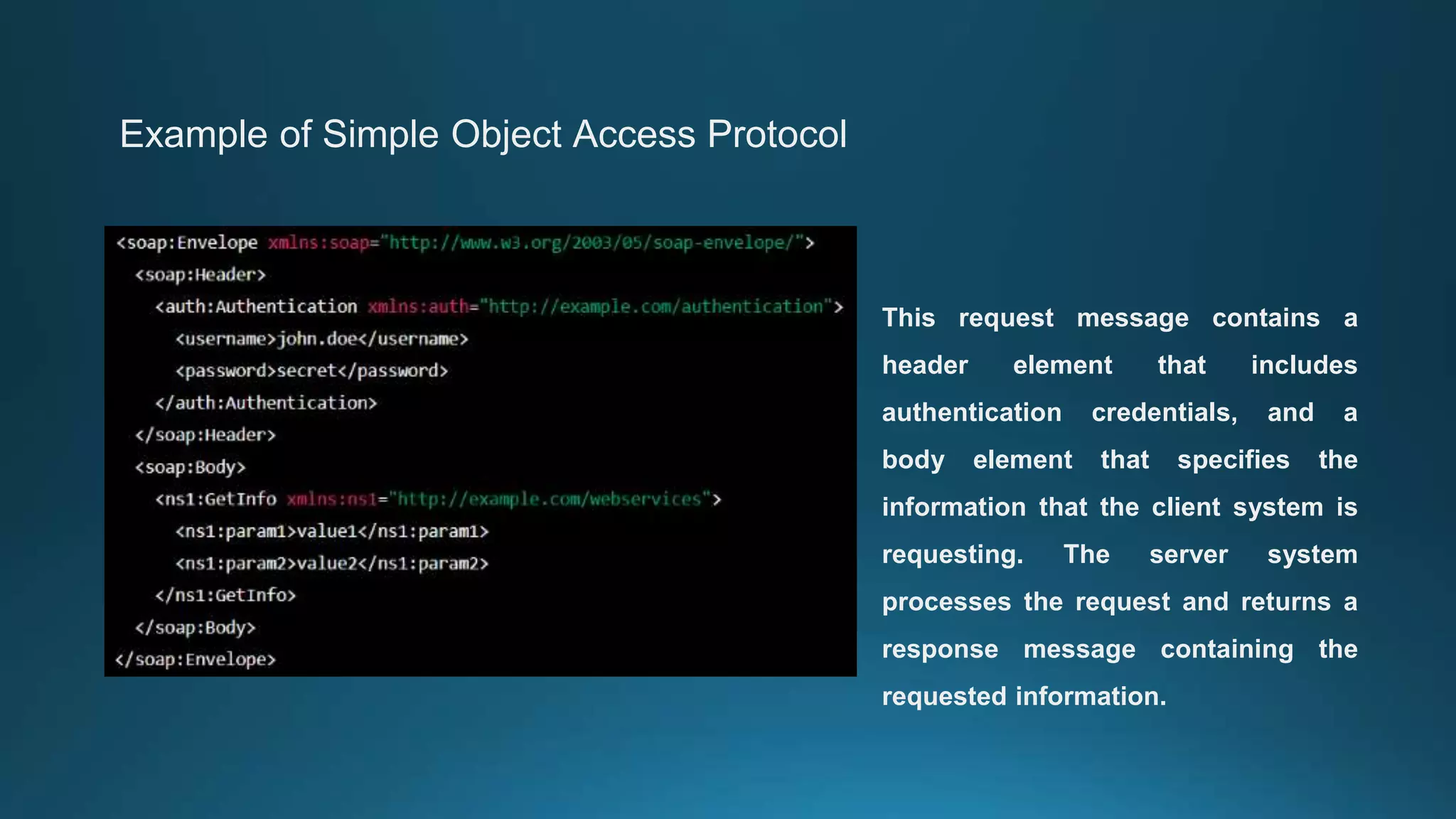
Here is an example of a SOAP request message that might be used to retrieve
information from a server:
Example of Simple Object Access Protocol
This request message contains a
header element that includes
authentication credentials, and a
body element that specifies the
information that the client system is
requesting. The server system
processes the request and returns a
response message containing the
requested information.
Conclusion
● SOAP is a widely used protocol for exchanging information between systems via
web services
● Key features include its use of web services, its message structure, and its
ability to be used in various contexts
● Provides a platform- and language-agnostic solution for exchanging a wide
range of information over the web
Thank you

Simple Object Access Protocol (SOAP).pptx

  • 1.
    Index ● What isSimple Object Access Protocol (SOAP)? ● Important points about Simple Object Access Protocol (SOAP) ● Key Features of Simple Object Access Protocol (SOAP) ● Simple Object Access Protocol (SOAP) of Web Services ● Message Structure of Simple Object Access Protocol (SOAP) ● Applications of Simple Object Access Protocol (SOAP) ● Example of Simple Object Access Protocol (SOAP) ● Conclusion
  • 2.
    What is SimpleObject Access Protocol ? SOAP (Simple Object Access Protocol) is a messaging protocol specification for exchanging structured information in the implementation of web services in computer networks. It uses XML as its message format and relies on other application-level protocols, such as HTTP and SMTP, for message negotiation and transmission. SOAP is an extensible protocol that can be used to exchange a wide range of information, including simple data types, complex data structures, and even multimedia content.
  • 3.
    Important points aboutSimple Object Access Protocol ● SOAP is a messaging protocol specification for exchanging structured information in the implementation of web services ● Uses XML as its message format ● Relies on other application-level protocols (e.g. HTTP, SMTP) for message negotiation and transmission ● Extensible protocol that can exchange a wide range of information (simple data types, complex data structures, multimedia content) ● Platform- and language-agnostic (can be used between systems written in different languages and running on different platforms)
  • 4.
    Key Features ofSimple Object Access Protocol ● Uses web services ● Message structure (envelope, header, body) ● Application in various contexts (e.g. remote procedure calls, data retrieval)
  • 5.
    Simple Object AccessProtocol of Web Services ● Self-contained, modular applications that can be accessed over a network ● Simple interface described in a Web Services Description Language (WSDL) document ● SOAP messages are sent over HTTP or another application-level protocol ● Can be used to invoke methods on a remote server, retrieve data from a server, or perform other actions
  • 6.
    Message Structure ofSimple Object Access Protocol A message consists of some particular structure that is, ● SOAP envelope, which defines the structure of the message and encloses the message content. ● SOAP header, which can contain optional information such as authentication credentials or other metadata. ● SOAP body, which contains the actual data being exchanged between the systems.
  • 7.
    Applications of SimpleObject Access Protocol • Remote procedure calls • Data retrieval • Other actions (e.g. data manipulation, messaging) Overall, the applications of SOAP are quite varied and can be tailored to meet the specific needs of a particular system or use case.
  • 8.
    Example of SimpleObject Access Protocol Imagine that a client system wants to retrieve some information from a server system. The client system sends a SOAP request message to the server, using HTTP as the transport protocol. The request message is an XML document that contains the following elements: • A SOAP envelope. • A SOAP header. • A SOAP body.
  • 9.
    Example of SimpleObject Access Protocol The server system receives the request message, processes it, and returns a response message to the client. The response message is also an XML document, with a similar structure to the request message. Here is an example of a SOAP request message that might be used to retrieve information from a server:
  • 10.
    Example of SimpleObject Access Protocol This request message contains a header element that includes authentication credentials, and a body element that specifies the information that the client system is requesting. The server system processes the request and returns a response message containing the requested information.
  • 11.
    Conclusion ● SOAP isa widely used protocol for exchanging information between systems via web services ● Key features include its use of web services, its message structure, and its ability to be used in various contexts ● Provides a platform- and language-agnostic solution for exchanging a wide range of information over the web
  • 12.