SIMPLE, COMPOUND, AND COMPLEX
SENTENCES
A little review and a little new…
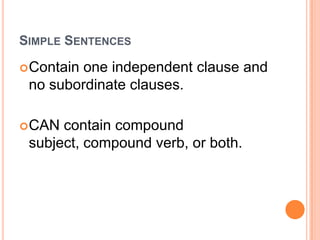
SIMPLE SENTENCES

 Containone independent clause and
 no subordinate clauses.

 CAN contain compound
 subject, compound verb, or both.
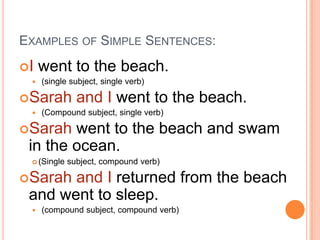
EXAMPLES OF SIMPLE SENTENCES:
I   went to the beach.
    (single subject, single verb)

Sarah         and I went to the beach.
    (Compound subject, single verb)

Sarah  went to the beach and swam
 in the ocean.
  (Single   subject, compound verb)

Sarah and I returned from the beach
 and went to sleep.
    (compound subject, compound verb)
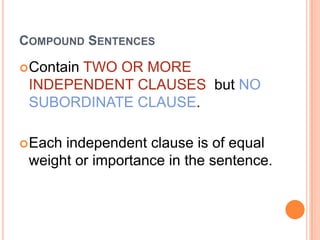
COMPOUND SENTENCES

 Contain
       TWO OR MORE
 INDEPENDENT CLAUSES but NO
 SUBORDINATE CLAUSE.

 Eachindependent clause is of equal
 weight or importance in the sentence.
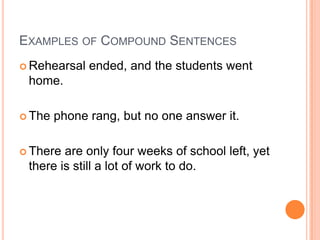
EXAMPLES OF COMPOUND SENTENCES
 Rehearsal   ended, and the students went
 home.

 The   phone rang, but no one answer it.

 There are only four weeks of school left, yet
 there is still a lot of work to do.
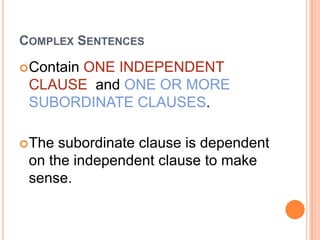
COMPLEX SENTENCES

 Contain
       ONE INDEPENDENT
 CLAUSE and ONE OR MORE
 SUBORDINATE CLAUSES.

 The subordinate clause is dependent
 on the independent clause to make
 sense.
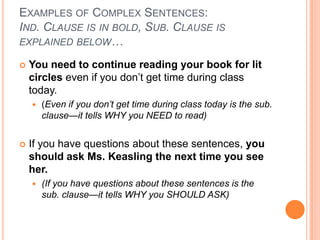
EXAMPLES OF COMPLEX SENTENCES:
IND. CLAUSE IS IN BOLD, SUB. CLAUSE IS
EXPLAINED BELOW…

   You need to continue reading your book for lit
    circles even if you don’t get time during class
    today.
       (Even if you don’t get time during class today is the sub.
        clause—it tells WHY you NEED to read)


   If you have questions about these sentences, you
    should ask Ms. Keasling the next time you see
    her.
       (If you have questions about these sentences is the
        sub. clause—it tells WHY you SHOULD ASK)
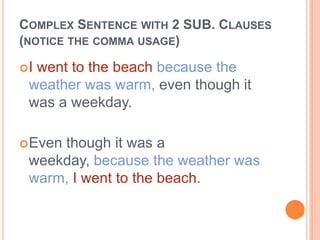
COMPLEX SENTENCE WITH 2 SUB. CLAUSES
(NOTICE THE COMMA USAGE)

Iwent to the beach because the
 weather was warm, even though it
 was a weekday.

 Even
     though it was a
 weekday, because the weather was
 warm, I went to the beach.
NOW FOR SOME PRACTICE:
SIMPLE, COMPLEX, OR COMPOUND?
   1.   Owen found his book over the weekend, but
        Cole did not.

   2.   Alex and Charlie were talking about hotdogs
        when they should have been talking about their
        project.

   3.   Sachin and Eric were passing out the papers.

   4.   Because it was so much fun working on
        grammar, students almost forgot it was the end
        of the school year.
SIMPLE, COMPOUND, COMPLEX, COMPOUND-
COMPLEX?

   Pick up the green packet and get to work.

   You will take a quiz on Monday, and it will count
    toward your grade.

   Your grade will be affected by your final which is
    next week.

   There is still work to complete, and you have
    studying to even though the year is almost over.

Simple Complex Compound Sentences

  • 1.
    SIMPLE, COMPOUND, ANDCOMPLEX SENTENCES A little review and a little new…
  • 2.
    SIMPLE SENTENCES  Containoneindependent clause and no subordinate clauses.  CAN contain compound subject, compound verb, or both.
  • 3.
    EXAMPLES OF SIMPLESENTENCES: I went to the beach.  (single subject, single verb) Sarah and I went to the beach.  (Compound subject, single verb) Sarah went to the beach and swam in the ocean.  (Single subject, compound verb) Sarah and I returned from the beach and went to sleep.  (compound subject, compound verb)
  • 4.
    COMPOUND SENTENCES  Contain TWO OR MORE INDEPENDENT CLAUSES but NO SUBORDINATE CLAUSE.  Eachindependent clause is of equal weight or importance in the sentence.
  • 5.
    EXAMPLES OF COMPOUNDSENTENCES  Rehearsal ended, and the students went home.  The phone rang, but no one answer it.  There are only four weeks of school left, yet there is still a lot of work to do.
  • 6.
    COMPLEX SENTENCES  Contain ONE INDEPENDENT CLAUSE and ONE OR MORE SUBORDINATE CLAUSES.  The subordinate clause is dependent on the independent clause to make sense.
  • 7.
    EXAMPLES OF COMPLEXSENTENCES: IND. CLAUSE IS IN BOLD, SUB. CLAUSE IS EXPLAINED BELOW…  You need to continue reading your book for lit circles even if you don’t get time during class today.  (Even if you don’t get time during class today is the sub. clause—it tells WHY you NEED to read)  If you have questions about these sentences, you should ask Ms. Keasling the next time you see her.  (If you have questions about these sentences is the sub. clause—it tells WHY you SHOULD ASK)
  • 8.
    COMPLEX SENTENCE WITH2 SUB. CLAUSES (NOTICE THE COMMA USAGE) Iwent to the beach because the weather was warm, even though it was a weekday.  Even though it was a weekday, because the weather was warm, I went to the beach.
  • 9.
    NOW FOR SOMEPRACTICE: SIMPLE, COMPLEX, OR COMPOUND? 1. Owen found his book over the weekend, but Cole did not. 2. Alex and Charlie were talking about hotdogs when they should have been talking about their project. 3. Sachin and Eric were passing out the papers. 4. Because it was so much fun working on grammar, students almost forgot it was the end of the school year.
  • 10.
    SIMPLE, COMPOUND, COMPLEX,COMPOUND- COMPLEX?  Pick up the green packet and get to work.  You will take a quiz on Monday, and it will count toward your grade.  Your grade will be affected by your final which is next week.  There is still work to complete, and you have studying to even though the year is almost over.