
ď‚— A Database Management System (DBMS) is a set of 
computer programs that controls the creation, 
maintenance , and the use of the database of an 
organization and its end users. 
ď‚— For examples- the list of names and address may consist of 
only a few hundred records, each with a simple structure.
• Computerized library systems 
• Automated teller machines 
• Flight reservation systems
• Represents complex relationship between data 
• Controls data redundancy 
• Ensures data sharing 
• Enforces user defined rules 
• It has central dictionary to store information
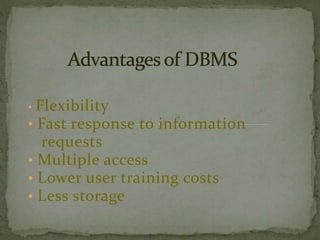
• Flexibility 
• Fast response to information 
requests 
• Multiple access 
• Lower user training costs 
• Less storage
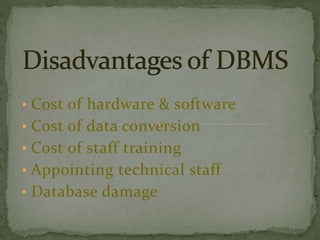
• Cost of hardware & software 
• Cost of data conversion 
• Cost of staff training 
• Appointing technical staff 
• Database damage
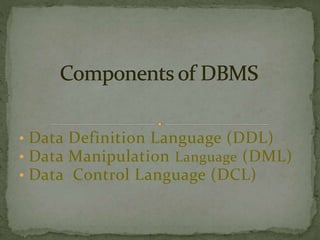
• Data Definition Language (DDL) 
• Data Manipulation Language (DML) 
• Data Control Language (DCL)
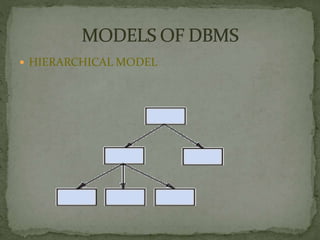
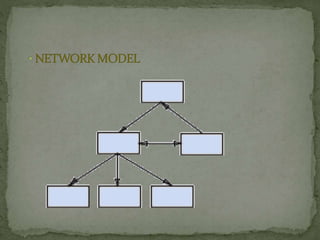
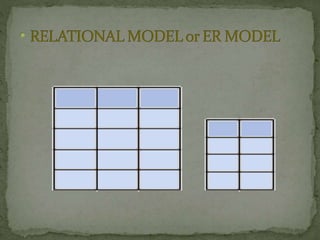
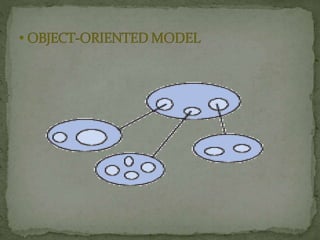
ď‚— HIERARCHICAL MODEL
ď‚— This information clearly throws light on various 
functions of DBMS which it can perform in day to day 
life of a person. DBMS models broadens its activities 
depending on the purpose of activity. Its increasing 
demand and application of it in the business gives a 
clear picture of its scope and importance of it in the 
business world as well. It gives a bird eye view of a very 
complex data and also helps in easy finding of the 
relations between different components of the data.
WEBSITES 
ď‚— WWW.GOOGLE.COM 
ď‚— WWW.KIOSKEA.NET 
ď‚— WWW.WIKIPEDIA.COM
Silvester presentation on dbms

Silvester presentation on dbms

  • 2.
    ď‚— A DatabaseManagement System (DBMS) is a set of computer programs that controls the creation, maintenance , and the use of the database of an organization and its end users. ď‚— For examples- the list of names and address may consist of only a few hundred records, each with a simple structure.
  • 3.
    • Computerized librarysystems • Automated teller machines • Flight reservation systems
  • 4.
    • Represents complexrelationship between data • Controls data redundancy • Ensures data sharing • Enforces user defined rules • It has central dictionary to store information
  • 5.
    • Flexibility •Fast response to information requests • Multiple access • Lower user training costs • Less storage
  • 6.
    • Cost ofhardware & software • Cost of data conversion • Cost of staff training • Appointing technical staff • Database damage
  • 7.
    • Data DefinitionLanguage (DDL) • Data Manipulation Language (DML) • Data Control Language (DCL)
  • 8.
  • 12.
    ď‚— This informationclearly throws light on various functions of DBMS which it can perform in day to day life of a person. DBMS models broadens its activities depending on the purpose of activity. Its increasing demand and application of it in the business gives a clear picture of its scope and importance of it in the business world as well. It gives a bird eye view of a very complex data and also helps in easy finding of the relations between different components of the data.
  • 13.
    WEBSITES ď‚— WWW.GOOGLE.COM ď‚— WWW.KIOSKEA.NET ď‚— WWW.WIKIPEDIA.COM