Effluent Treatment plant
By
Siddartha Ananthagiri (V>
Trainee at MGRL.
Importance Of Water
 Water is one of the most indispensable resources and is the elixir of life
and primary cause for the origin of life on earth planet.
 Life is not possible on this planet without water.
 Water is an essential production factor in agriculture, both for crops
and for livestock.
 Industries that produce metals, wood, paper, chemicals, gasoline, oils,
and most other food products all use water in some part of their
production process.
 Water is often an important resource when it comes to food processing.
For example, many foods require the use of water in order to be
prepared
 It can be also used for various manufacturing industries.
Need of ETP
 Water is basic necessity of life used for many purposes one of which
is industrial use.
 Industries generally take water from rivers or lakes but they have to
pay heavy taxes for that.
 So it’s necessary for them to recycle that to reduce cost and also
conserve it.
 Main function of ETP is to clean industry effluent and recycle it for
further use.
 Many manufacturing industries produce their products with using
water. With their products industries produce wastewater, otherwise
known as effluent , which can be removed with the help of an
effluent treatment plant (ETP).
 Manufacturers face strict regulations on discharge and waste.
Effluent from industries must meet the national effluent discharge
quality standards (NEDQS) set by the Government.
Design of ETP
 The design and size of the ETP will depending on the quantity
and quality of the industries discharge effluent.
 The amount of land available for that plant.
 Amount of money available for construction ,operation and
maintenance.
 The area needed for an ETP depends mostly on the quality of
wastewater to be treated, flow rate, the type of biological
treatment to be used and the orientation of different treatment
units.
 If we reduce the required land area then will require extra
pumps and piping, and stronger tank walls, so construction
costs may be higher for tall structures
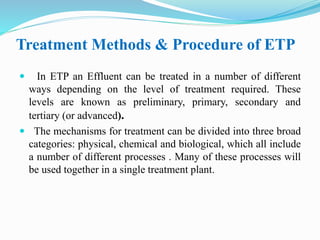
Treatment Methods & Procedure of ETP
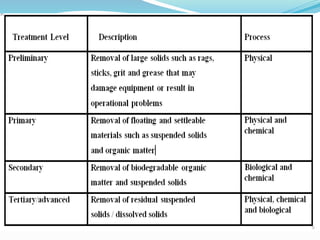
 In ETP an Effluent can be treated in a number of different
ways depending on the level of treatment required. These
levels are known as preliminary, primary, secondary and
tertiary (or advanced).
 The mechanisms for treatment can be divided into three broad
categories: physical, chemical and biological, which all include
a number of different processes . Many of these processes will
be used together in a single treatment plant.
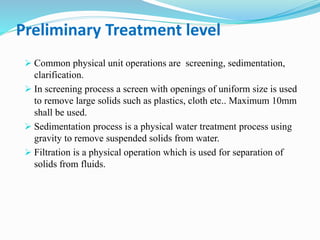
Preliminary Treatment level
 Common physical unit operations are screening, sedimentation,
clarification.
 In screening process a screen with openings of uniform size is used
to remove large solids such as plastics, cloth etc.. Maximum 10mm
shall be used.
 Sedimentation process is a physical water treatment process using
gravity to remove suspended solids from water.
 Filtration is a physical operation which is used for separation of
solids from fluids.
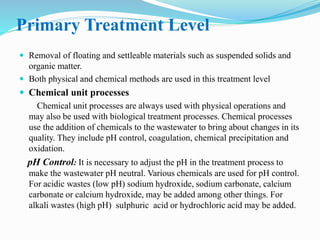
Primary Treatment Level
 Removal of floating and settleable materials such as suspended solids and
organic matter.
 Both physical and chemical methods are used in this treatment level
 Chemical unit processes
Chemical unit processes are always used with physical operations and
may also be used with biological treatment processes. Chemical processes
use the addition of chemicals to the wastewater to bring about changes in its
quality. They include pH control, coagulation, chemical precipitation and
oxidation.
pH Control: It is necessary to adjust the pH in the treatment process to
make the wastewater pH neutral. Various chemicals are used for pH control.
For acidic wastes (low pH) sodium hydroxide, sodium carbonate, calcium
carbonate or calcium hydroxide, may be added among other things. For
alkali wastes (high pH) sulphuric acid or hydrochloric acid may be added.
Chemical coagulation and Flocculation
 Coagulation is a complex process but generally refers to collecting
into a larger mass the minute solid particles dispersed in a liquid.
Chemical coagulants such as aluminum sulphate (alum) or ferric
sulphate may be added to wastewater to improve the attraction of
fine particles so that they come together and form larger particles
called flocs. A chemical flocculent, usually a polyelectrolyte,
enhances the flocculation process by bringing together particles to
form larger flocs , which settle out more quickly Flocculation is
aided by gentle mixing which causes the particles to collide.
Secondary Treatment Level
Biological and chemical processes are involved in this level.
 Biological unit process
Biological treatment is an important and integral part of any
wastewater treatment plant that treats wastewater from either
municipality or industry having soluble organic impurities or a mix
of the two types of wastewater sources.
The objective of biological treatment of industrial wastewater is to
remove, or reduce the concentration of, organic and inorganic
compounds. Biological treatment process can take many forms but
all are based around microorganisms, mainly bacteria.
Biological treatment plants must be carefully managed as they use
live microorganisms to digest the pollutants.
Aerobic and Anaerobic Processes
 Aerobic, as the title suggests, means in the presence of air
(oxygen); while anaerobic means in the absence of air (oxygen).
 Therefore, aerobic treatment processes take place in the presence
of air and utilize those microorganisms (also called aerobes), which
use molecular/free oxygen to assimilate organic impurities i.e.
convert them in to carbon dioxide, water and biomass.
 The anaerobic treatment processes, on other hand take place in the
absence of air (and thus molecular/free oxygen) by those
microorganisms (also called anaerobes) which do not require air
(molecular/free oxygen) to assimilate organic impurities. The final
products of organic assimilation in anaerobic treatment are methane
and carbon dioxide gas and biomass.
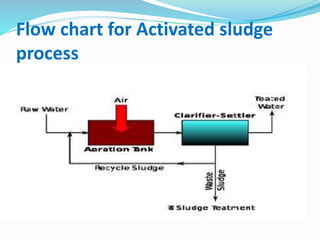
Flow chart for Activated sludge
process
Tertiary / Advanced Treatment
 Tertiary treatment is the final cleaning process that improves
wastewater quality before it is reused, recycled or discharged to the
environment.
 The treatment removes remaining inorganic compounds, and
substances, such as the nitrogen and phosphorus.
 Bacteria, viruses and parasites, which are harmful to public health, are
also removed at this stage.
 Alum is used to help remove additional phosphorus particles and
group the remaining solids together for easy removal in the filters.
 The chlorine contact tank disinfects the tertiary treated wastewater.
 Chlorine removes microorganisms in treated wastewater including
bacteria, viruses and parasites.
 Any remaining chlorine is removed by adding sodium bisulphate just
before it's discharged.
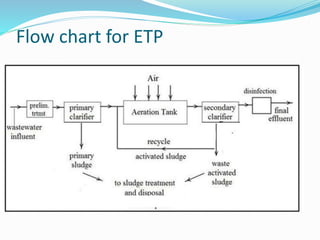
Flow chart for ETP
Cost Comparison
 The installation costs of ETPs can vary greatly depending on
such factors as the materials used, including the quality and
source of the equipment (e.g. pumps and air blowers), land area
and dimensions for construction, the quality and quantity of
wastewater to be treated, and the quality of the required output.
 In addition, the operating costs of ETPs can also vary greatly
depending on quality and quantity of inputs such as chemicals,
the efficiency and size of motors and therefore the energy
required the method of treatment and the efficiency of ETP
management.
Thank You

ETP Presentation by Siddarth Ananthagiri

  • 1.
    Effluent Treatment plant By SiddarthaAnanthagiri (V> Trainee at MGRL.
  • 2.
    Importance Of Water Water is one of the most indispensable resources and is the elixir of life and primary cause for the origin of life on earth planet.  Life is not possible on this planet without water.  Water is an essential production factor in agriculture, both for crops and for livestock.  Industries that produce metals, wood, paper, chemicals, gasoline, oils, and most other food products all use water in some part of their production process.  Water is often an important resource when it comes to food processing. For example, many foods require the use of water in order to be prepared  It can be also used for various manufacturing industries.
  • 3.
    Need of ETP Water is basic necessity of life used for many purposes one of which is industrial use.  Industries generally take water from rivers or lakes but they have to pay heavy taxes for that.  So it’s necessary for them to recycle that to reduce cost and also conserve it.  Main function of ETP is to clean industry effluent and recycle it for further use.  Many manufacturing industries produce their products with using water. With their products industries produce wastewater, otherwise known as effluent , which can be removed with the help of an effluent treatment plant (ETP).  Manufacturers face strict regulations on discharge and waste. Effluent from industries must meet the national effluent discharge quality standards (NEDQS) set by the Government.
  • 4.
    Design of ETP The design and size of the ETP will depending on the quantity and quality of the industries discharge effluent.  The amount of land available for that plant.  Amount of money available for construction ,operation and maintenance.  The area needed for an ETP depends mostly on the quality of wastewater to be treated, flow rate, the type of biological treatment to be used and the orientation of different treatment units.  If we reduce the required land area then will require extra pumps and piping, and stronger tank walls, so construction costs may be higher for tall structures
  • 5.
    Treatment Methods &Procedure of ETP  In ETP an Effluent can be treated in a number of different ways depending on the level of treatment required. These levels are known as preliminary, primary, secondary and tertiary (or advanced).  The mechanisms for treatment can be divided into three broad categories: physical, chemical and biological, which all include a number of different processes . Many of these processes will be used together in a single treatment plant.
  • 7.
    Preliminary Treatment level Common physical unit operations are screening, sedimentation, clarification.  In screening process a screen with openings of uniform size is used to remove large solids such as plastics, cloth etc.. Maximum 10mm shall be used.  Sedimentation process is a physical water treatment process using gravity to remove suspended solids from water.  Filtration is a physical operation which is used for separation of solids from fluids.
  • 8.
    Primary Treatment Level Removal of floating and settleable materials such as suspended solids and organic matter.  Both physical and chemical methods are used in this treatment level  Chemical unit processes Chemical unit processes are always used with physical operations and may also be used with biological treatment processes. Chemical processes use the addition of chemicals to the wastewater to bring about changes in its quality. They include pH control, coagulation, chemical precipitation and oxidation. pH Control: It is necessary to adjust the pH in the treatment process to make the wastewater pH neutral. Various chemicals are used for pH control. For acidic wastes (low pH) sodium hydroxide, sodium carbonate, calcium carbonate or calcium hydroxide, may be added among other things. For alkali wastes (high pH) sulphuric acid or hydrochloric acid may be added.
  • 9.
    Chemical coagulation andFlocculation  Coagulation is a complex process but generally refers to collecting into a larger mass the minute solid particles dispersed in a liquid. Chemical coagulants such as aluminum sulphate (alum) or ferric sulphate may be added to wastewater to improve the attraction of fine particles so that they come together and form larger particles called flocs. A chemical flocculent, usually a polyelectrolyte, enhances the flocculation process by bringing together particles to form larger flocs , which settle out more quickly Flocculation is aided by gentle mixing which causes the particles to collide.
  • 10.
    Secondary Treatment Level Biologicaland chemical processes are involved in this level.  Biological unit process Biological treatment is an important and integral part of any wastewater treatment plant that treats wastewater from either municipality or industry having soluble organic impurities or a mix of the two types of wastewater sources. The objective of biological treatment of industrial wastewater is to remove, or reduce the concentration of, organic and inorganic compounds. Biological treatment process can take many forms but all are based around microorganisms, mainly bacteria. Biological treatment plants must be carefully managed as they use live microorganisms to digest the pollutants.
  • 11.
    Aerobic and AnaerobicProcesses  Aerobic, as the title suggests, means in the presence of air (oxygen); while anaerobic means in the absence of air (oxygen).  Therefore, aerobic treatment processes take place in the presence of air and utilize those microorganisms (also called aerobes), which use molecular/free oxygen to assimilate organic impurities i.e. convert them in to carbon dioxide, water and biomass.  The anaerobic treatment processes, on other hand take place in the absence of air (and thus molecular/free oxygen) by those microorganisms (also called anaerobes) which do not require air (molecular/free oxygen) to assimilate organic impurities. The final products of organic assimilation in anaerobic treatment are methane and carbon dioxide gas and biomass.
  • 12.
    Flow chart forActivated sludge process
  • 13.
    Tertiary / AdvancedTreatment  Tertiary treatment is the final cleaning process that improves wastewater quality before it is reused, recycled or discharged to the environment.  The treatment removes remaining inorganic compounds, and substances, such as the nitrogen and phosphorus.  Bacteria, viruses and parasites, which are harmful to public health, are also removed at this stage.  Alum is used to help remove additional phosphorus particles and group the remaining solids together for easy removal in the filters.  The chlorine contact tank disinfects the tertiary treated wastewater.  Chlorine removes microorganisms in treated wastewater including bacteria, viruses and parasites.  Any remaining chlorine is removed by adding sodium bisulphate just before it's discharged.
  • 14.
  • 15.
    Cost Comparison  Theinstallation costs of ETPs can vary greatly depending on such factors as the materials used, including the quality and source of the equipment (e.g. pumps and air blowers), land area and dimensions for construction, the quality and quantity of wastewater to be treated, and the quality of the required output.  In addition, the operating costs of ETPs can also vary greatly depending on quality and quantity of inputs such as chemicals, the efficiency and size of motors and therefore the energy required the method of treatment and the efficiency of ETP management.
  • 16.