Topic:
Effective Communication
What is the definition of
Communication?
REVIEW
PRAYER
Heavenly Father and Your Beloved Son Jesus
Christ, Thank you for another life to enjoy,
another day to learn, and a new set of
things we will experience. As we go through
our lessons today, may let us be
instruments to do good things. Help us be
obedient, honest, and kind to one another.
Amen
• Communication is a process
that involves sending and
receiving messages through
the verbal and non-verbal
methods.
• Communication is a two-way
means of communicating
information
REVIEW
OBJECTIVES:
At the end of the lesson, the students should be able to:
1. Define Effective Communication;
2. Perform oral communication activities based on context;
3. Describe the value of effective communication in maintaining
harmonious relationship.
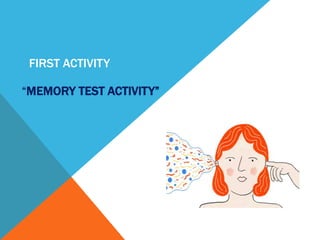
FIRST ACTIVITY
“MEMORY TEST ACTIVITY”
ANSWER THE FOLLOWING:
1. What makes a communication
effective?
2. Why is effective Communication
important?
3. How can you achieve effective
communication?
INSTRUCTIONS:
1. The teacher will read a list of words to test your
memory.
2. Listen carefully, as you cannot write down any
words. The teacher will test you later to see how
many of the words you can remember.
3. After one minute, write down as many words as you
can remember from the list.
GROUP ACTIVITY
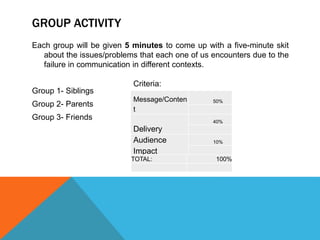
GROUP ACTIVITY
Each group will be given 5 minutes to come up with a five-minute skit
about the issues/problems that each one of us encounters due to the
failure in communication in different contexts.
Group 1- Siblings
Group 2- Parents
Group 3- Friends
Message/Conten
t
50%
Delivery
40%
Audience
Impact
10%
TOTAL: 100%
Criteria:
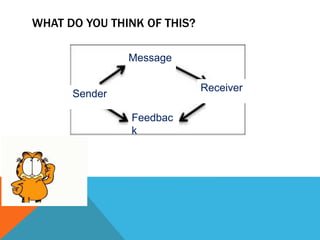
WHAT DO YOU THINK OF THIS?
Message
Sender
Receiver
Feedbac
k
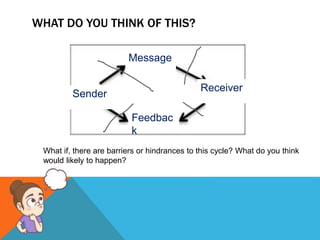
WHAT DO YOU THINK OF THIS?
Message
Sender
Receiver
Feedbac
k
What if, there are barriers or hindrances to this cycle? What do you think
would likely to happen?
REMEMBER!
• At any point in the communication process a
barrier can occur. Barriers keep us from
understanding other’s ideas and thoughts.
Barriers can appear at any point of the
communication loop.
• There are two types of barriers- internal
and external.
REMEMBER!
• Examples of internal barriers are fatigue, poor listening skills,
attitude toward the sender or the information, lack of interest
in the message, fear, mistrust, past experiences, problems at
home and emotions.
• While external barriers include instances such as noise,
distractions, bad internet connections, time of day, use of
jargons and the environment. Barriers simply keep the
message from getting through. When communicating, watch
out for the barriers. Monitor the actions of the receiver. Watch
his/her body language; check to make sure the message the
receiver received is the one sent- ask questions and listen
SUMMARY
Kindly give a short summary of the important key notes we
learned today.
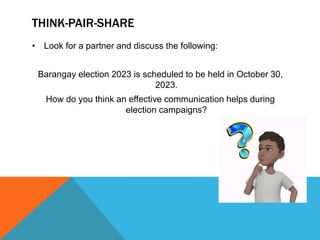
THINK-PAIR-SHARE
• Look for a partner and discuss the following:
Barangay election 2023 is scheduled to be held in October 30,
2023.
How do you think an effective communication helps during
election campaigns?
QUIZ!
Directions: In a maximum time of ten minutes, write a five-
sentence Facebook status (a paper provided by the teacher)
on any of the following statements/maxims and be ready to
share it to the class afterwards:
a. Perfection is the enemy.
b. Failure is the perfect opportunity for growth.
c. Success in high school does not mean success in life.
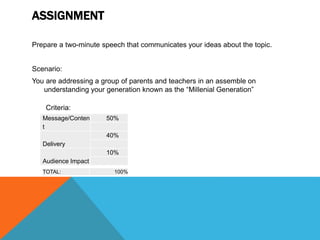
ASSIGNMENT
Prepare a two-minute speech that communicates your ideas about the topic.
Scenario:
You are addressing a group of parents and teachers in an assemble on
understanding your generation known as the “Millenial Generation”
Message/Conten
t
50%
Delivery
40%
Audience Impact
10%
TOTAL: 100%
Criteria:
THANK YOU FOR LISTENING!!
GOD BLESS EVERYONE! 

SHS DEMONSTRATION TEACHING ppt.pptx

  • 1.
  • 2.
    What is thedefinition of Communication? REVIEW
  • 3.
    PRAYER Heavenly Father andYour Beloved Son Jesus Christ, Thank you for another life to enjoy, another day to learn, and a new set of things we will experience. As we go through our lessons today, may let us be instruments to do good things. Help us be obedient, honest, and kind to one another. Amen
  • 4.
    • Communication isa process that involves sending and receiving messages through the verbal and non-verbal methods. • Communication is a two-way means of communicating information REVIEW
  • 5.
    OBJECTIVES: At the endof the lesson, the students should be able to: 1. Define Effective Communication; 2. Perform oral communication activities based on context; 3. Describe the value of effective communication in maintaining harmonious relationship.
  • 6.
  • 7.
    ANSWER THE FOLLOWING: 1.What makes a communication effective? 2. Why is effective Communication important? 3. How can you achieve effective communication?
  • 8.
    INSTRUCTIONS: 1. The teacherwill read a list of words to test your memory. 2. Listen carefully, as you cannot write down any words. The teacher will test you later to see how many of the words you can remember. 3. After one minute, write down as many words as you can remember from the list.
  • 9.
  • 10.
    GROUP ACTIVITY Each groupwill be given 5 minutes to come up with a five-minute skit about the issues/problems that each one of us encounters due to the failure in communication in different contexts. Group 1- Siblings Group 2- Parents Group 3- Friends Message/Conten t 50% Delivery 40% Audience Impact 10% TOTAL: 100% Criteria:
  • 11.
    WHAT DO YOUTHINK OF THIS? Message Sender Receiver Feedbac k
  • 12.
    WHAT DO YOUTHINK OF THIS? Message Sender Receiver Feedbac k What if, there are barriers or hindrances to this cycle? What do you think would likely to happen?
  • 13.
    REMEMBER! • At anypoint in the communication process a barrier can occur. Barriers keep us from understanding other’s ideas and thoughts. Barriers can appear at any point of the communication loop. • There are two types of barriers- internal and external.
  • 14.
    REMEMBER! • Examples ofinternal barriers are fatigue, poor listening skills, attitude toward the sender or the information, lack of interest in the message, fear, mistrust, past experiences, problems at home and emotions. • While external barriers include instances such as noise, distractions, bad internet connections, time of day, use of jargons and the environment. Barriers simply keep the message from getting through. When communicating, watch out for the barriers. Monitor the actions of the receiver. Watch his/her body language; check to make sure the message the receiver received is the one sent- ask questions and listen
  • 15.
    SUMMARY Kindly give ashort summary of the important key notes we learned today.
  • 16.
    THINK-PAIR-SHARE • Look fora partner and discuss the following: Barangay election 2023 is scheduled to be held in October 30, 2023. How do you think an effective communication helps during election campaigns?
  • 17.
    QUIZ! Directions: In amaximum time of ten minutes, write a five- sentence Facebook status (a paper provided by the teacher) on any of the following statements/maxims and be ready to share it to the class afterwards: a. Perfection is the enemy. b. Failure is the perfect opportunity for growth. c. Success in high school does not mean success in life.
  • 18.
    ASSIGNMENT Prepare a two-minutespeech that communicates your ideas about the topic. Scenario: You are addressing a group of parents and teachers in an assemble on understanding your generation known as the “Millenial Generation” Message/Conten t 50% Delivery 40% Audience Impact 10% TOTAL: 100% Criteria:
  • 19.
    THANK YOU FORLISTENING!! GOD BLESS EVERYONE! 