Why persistent?
Nearby spacer/MDI/ DPI
3. Pleural effusion with some respiratory
distress probably a child who is
recovering from DHF.
Why recovering from DHF?
Recovery rash, flushing, 2
cannula either side
Why respiratory distress?
Tachypnea. So COUNT RR/HR

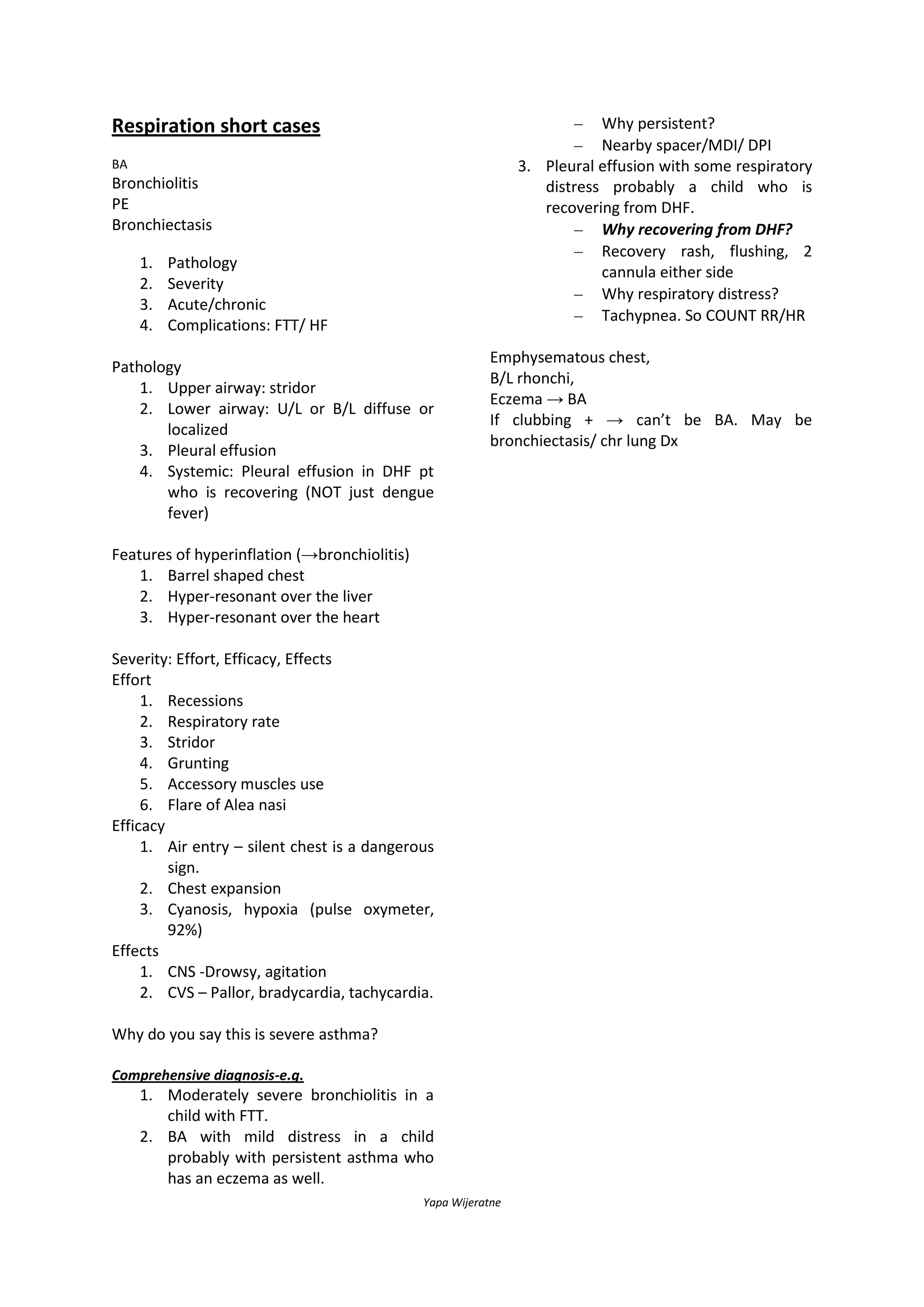
Respiration short cases
BA

Bronchiolitis
PE
Bronchiectasis
1.
2.
3.
4.

Pathology
Severity
Acute/chronic
Complications: FTT/ HF

Pathology
1. Upper airway: stridor
2. Lower airway: U/L or B/L diffuse or
localized
3. Pleural effusion
4. Systemic: Pleural effusion in DHF pt
who is recovering (NOT just dengue
fever)

Emphysematous chest,
B/L rhonchi,
Eczema → BA
If clubbing + → can’t be BA. May be
bronchiectasis/ chr lung Dx

Features of hyperinflation (→bronchiolitis)
1. Barrel shaped chest
2. Hyper-resonant over the liver
3. Hyper-resonant over the heart
Severity: Effort, Efficacy, Effects
Effort
1. Recessions
2. Respiratory rate
3. Stridor
4. Grunting
5. Accessory muscles use
6. Flare of Alea nasi
Efficacy
1. Air entry – silent chest is a dangerous
sign.
2. Chest expansion
3. Cyanosis, hypoxia (pulse oxymeter,
92%)
Effects
1. CNS -Drowsy, agitation
2. CVS – Pallor, bradycardia, tachycardia.
Why do you say this is severe asthma?
Comprehensive diagnosis-e.g.

1. Moderately severe bronchiolitis in a
child with FTT.
2. BA with mild distress in a child
probably with persistent asthma who
has an eczema as well.
Yapa Wijeratne

Short cases in Respiration: in paediatrics-final MBBS

  • 1.
    Why persistent? Nearby spacer/MDI/DPI 3. Pleural effusion with some respiratory distress probably a child who is recovering from DHF. Why recovering from DHF? Recovery rash, flushing, 2 cannula either side Why respiratory distress? Tachypnea. So COUNT RR/HR Respiration short cases BA Bronchiolitis PE Bronchiectasis 1. 2. 3. 4. Pathology Severity Acute/chronic Complications: FTT/ HF Pathology 1. Upper airway: stridor 2. Lower airway: U/L or B/L diffuse or localized 3. Pleural effusion 4. Systemic: Pleural effusion in DHF pt who is recovering (NOT just dengue fever) Emphysematous chest, B/L rhonchi, Eczema → BA If clubbing + → can’t be BA. May be bronchiectasis/ chr lung Dx Features of hyperinflation (→bronchiolitis) 1. Barrel shaped chest 2. Hyper-resonant over the liver 3. Hyper-resonant over the heart Severity: Effort, Efficacy, Effects Effort 1. Recessions 2. Respiratory rate 3. Stridor 4. Grunting 5. Accessory muscles use 6. Flare of Alea nasi Efficacy 1. Air entry – silent chest is a dangerous sign. 2. Chest expansion 3. Cyanosis, hypoxia (pulse oxymeter, 92%) Effects 1. CNS -Drowsy, agitation 2. CVS – Pallor, bradycardia, tachycardia. Why do you say this is severe asthma? Comprehensive diagnosis-e.g. 1. Moderately severe bronchiolitis in a child with FTT. 2. BA with mild distress in a child probably with persistent asthma who has an eczema as well. Yapa Wijeratne