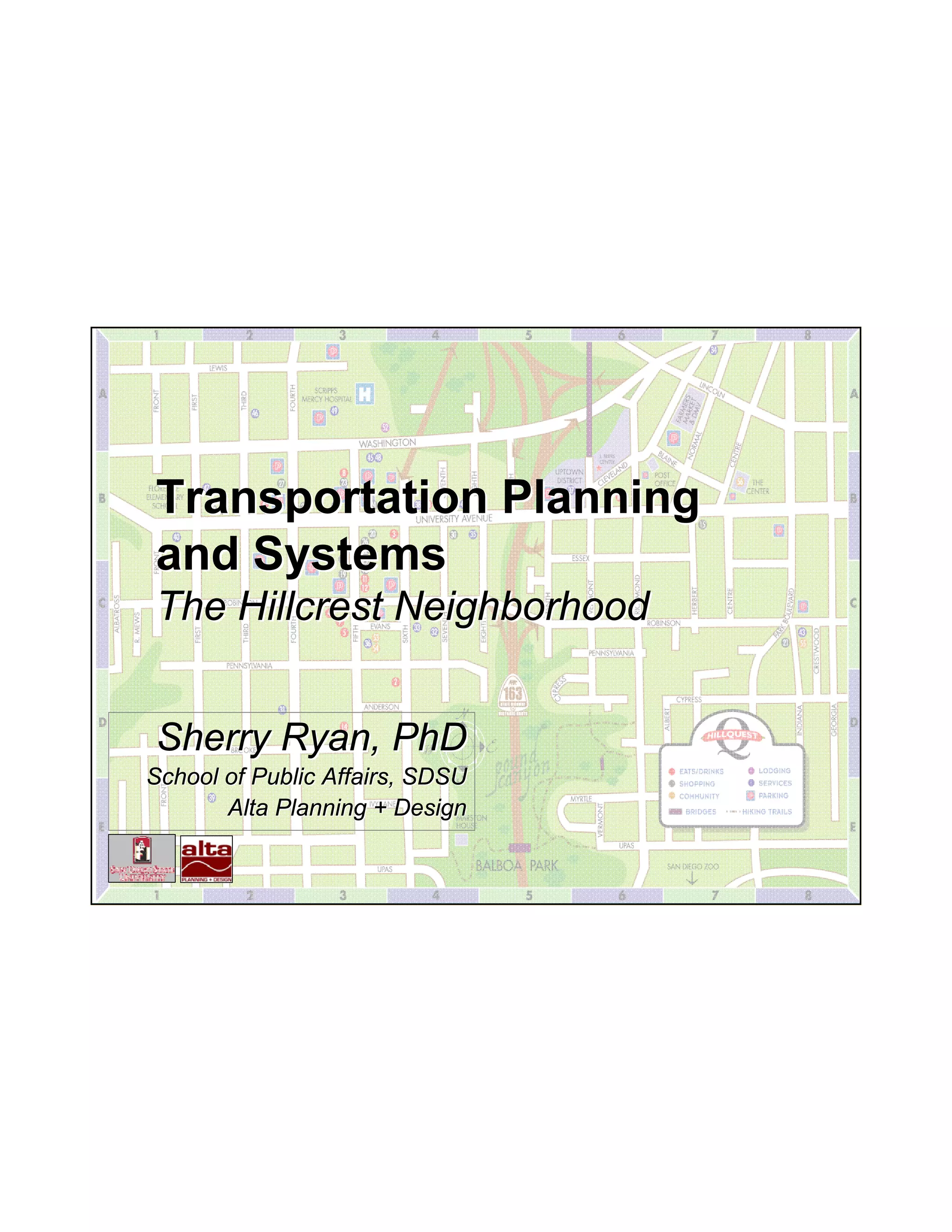
Transportation Planning
and Systems
The Hillcrest Neighborhood


Sherry Ryan, PhD
School of Public Affairs, SDSU
       Alta Planning + Design
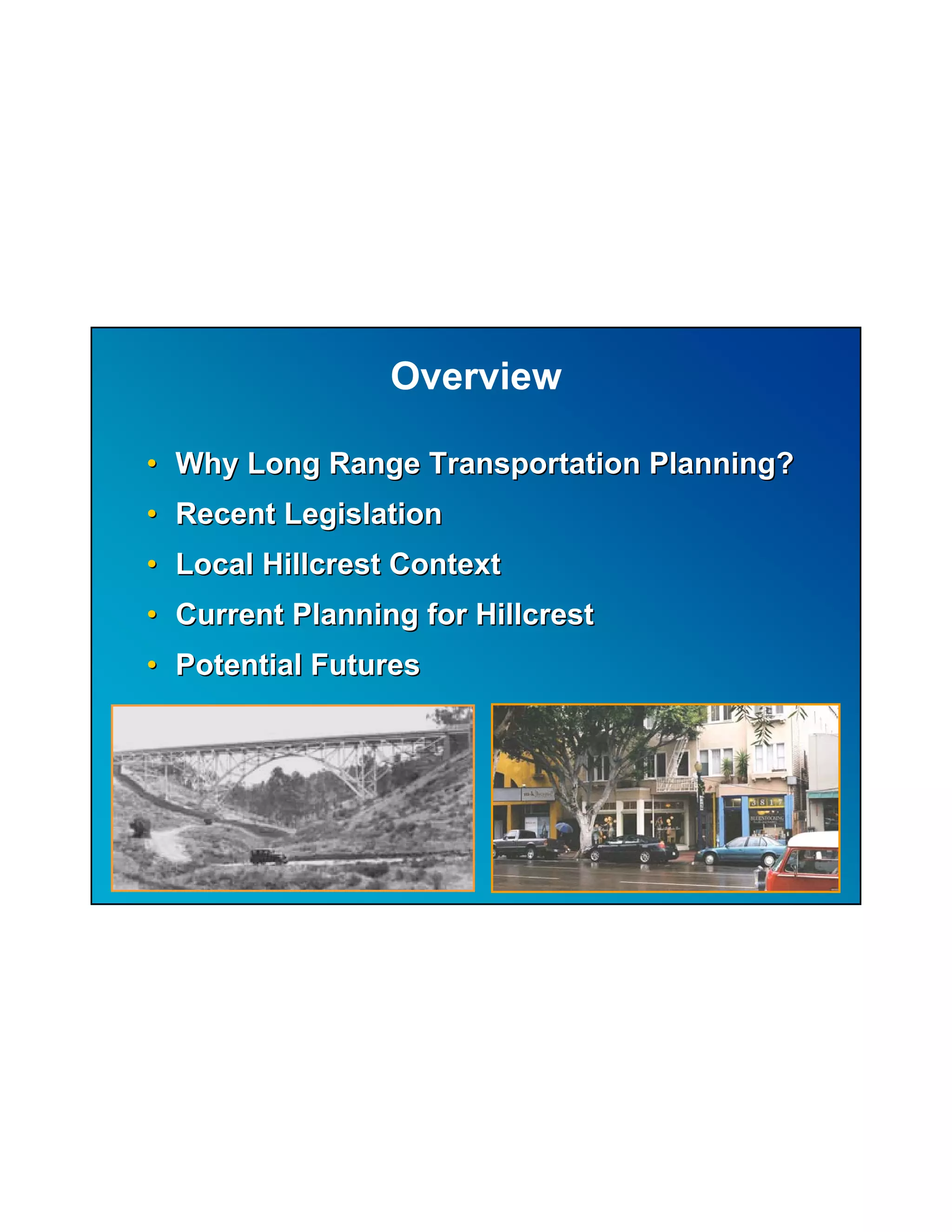
Overview

• Why Long Range Transportation Planning?
• Recent Legislation
• Local Hillcrest Context
• Current Planning for Hillcrest
• Potential Futures
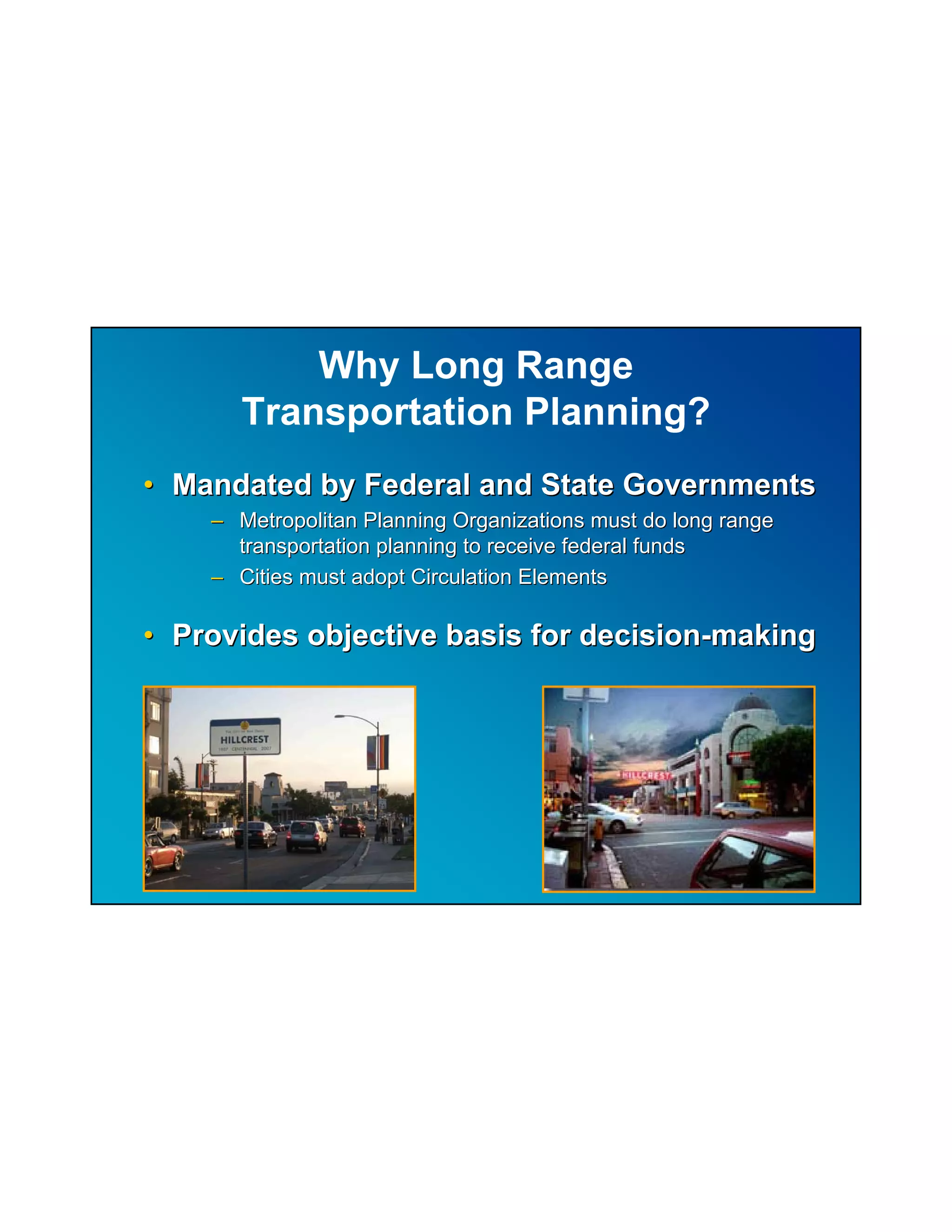
Why Long Range
       Transportation Planning?
• Mandated by Federal and State Governments
    – Metropolitan Planning Organizations must do long range
      transportation planning to receive federal funds
    – Cities must adopt Circulation Elements

• Provides objective basis for decision-making
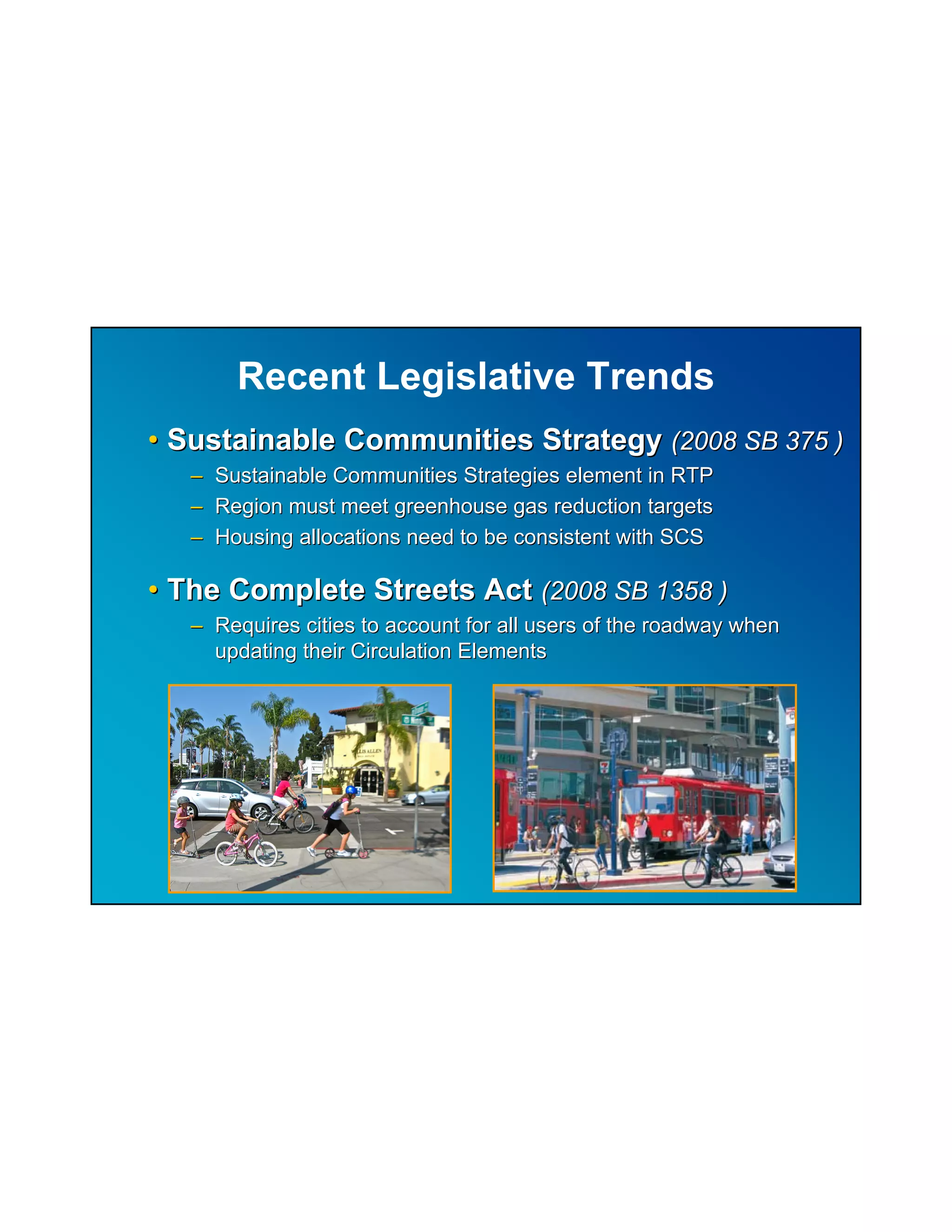
Recent Legislative Trends
• Sustainable Communities Strategy (2008 SB 375 )
   – Sustainable Communities Strategies element in RTP
   – Region must meet greenhouse gas reduction targets
   – Housing allocations need to be consistent with SCS

• The Complete Streets Act (2008 SB 1358 )
   – Requires cities to account for all users of the roadway when
     updating their Circulation Elements
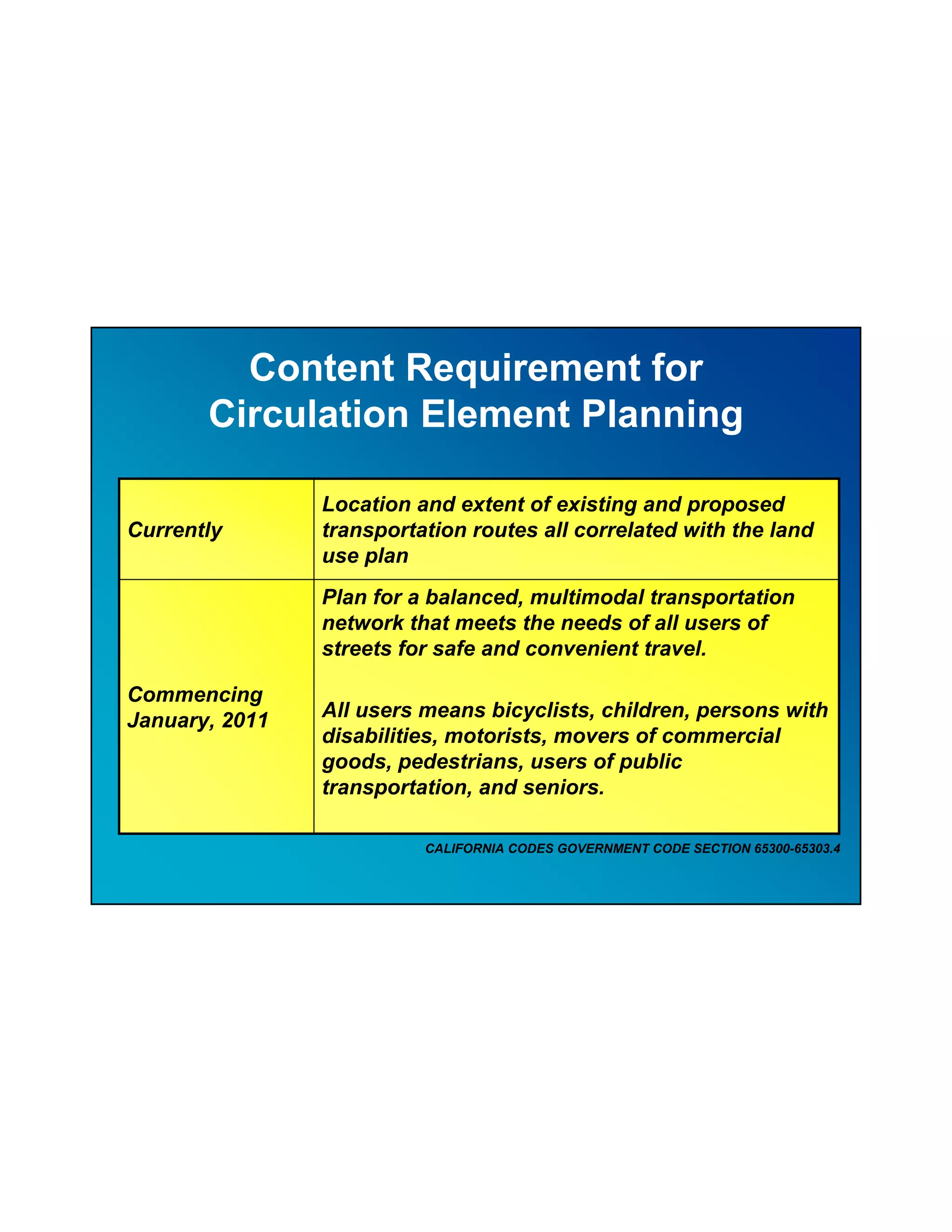
Content Requirement for
       Circulation Element Planning

                Location and extent of existing and proposed
Currently       transportation routes all correlated with the land
                use plan
                Plan for a balanced, multimodal transportation
                network that meets the needs of all users of
                streets for safe and convenient travel.

Commencing
January, 2011   All users means bicyclists, children, persons with
                disabilities, motorists, movers of commercial
                goods, pedestrians, users of public
                transportation, and seniors.
                          CALIFORNIA CODES GOVERNMENT CODE SECTION 65300-65303.4
Local Context
      Hillcrest’s Transportation System


• Current Land Patterns
• Roadway Network and Operations
• Transit Network
• Bicycle Network
• Pedestrian Network
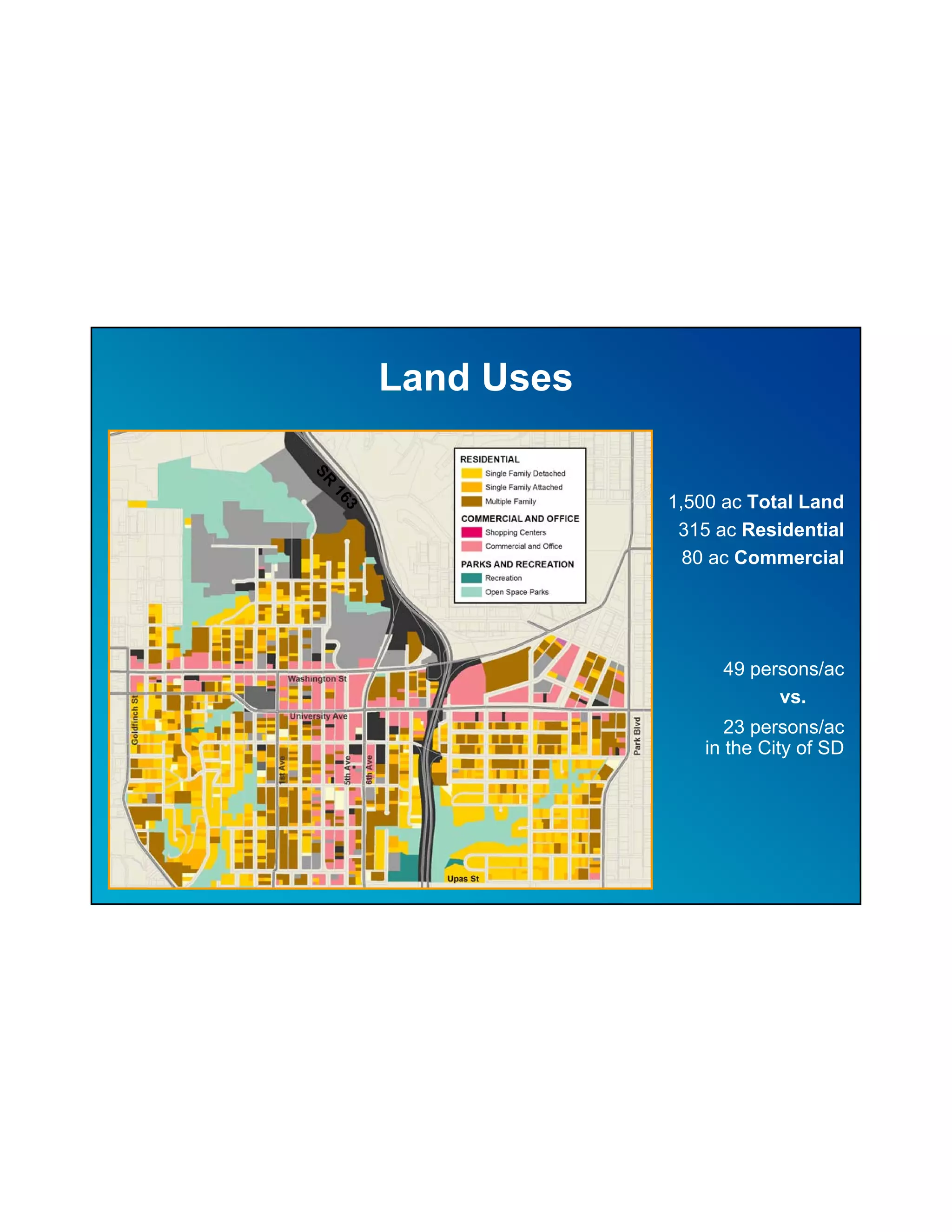
Land Uses
SR
 16


                   1,500 ac Total Land
   3


                    315 ac Residential
                     80 ac Commercial


                         49 persons/ac
                               vs.
                          23 persons/ac
                       in the City of SD
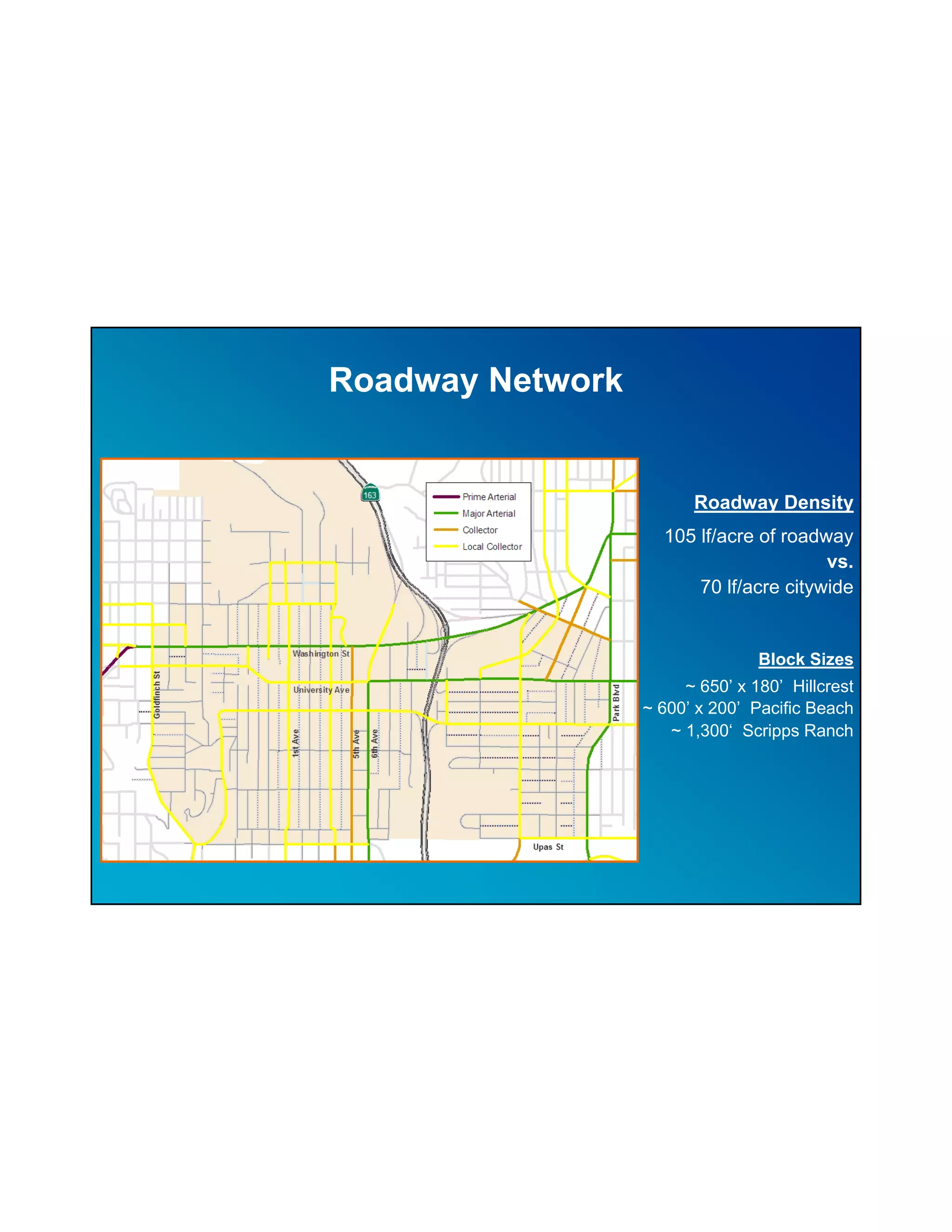
Roadway Network


                        Roadway Density
                    105 lf/acre of roadway
                                        vs.
                        70 lf/acre citywide


                                 Block Sizes
                       ~ 650’ x 180’ Hillcrest
                  ~ 600’ x 200’ Pacific Beach
                     ~ 1,300‘ Scripps Ranch
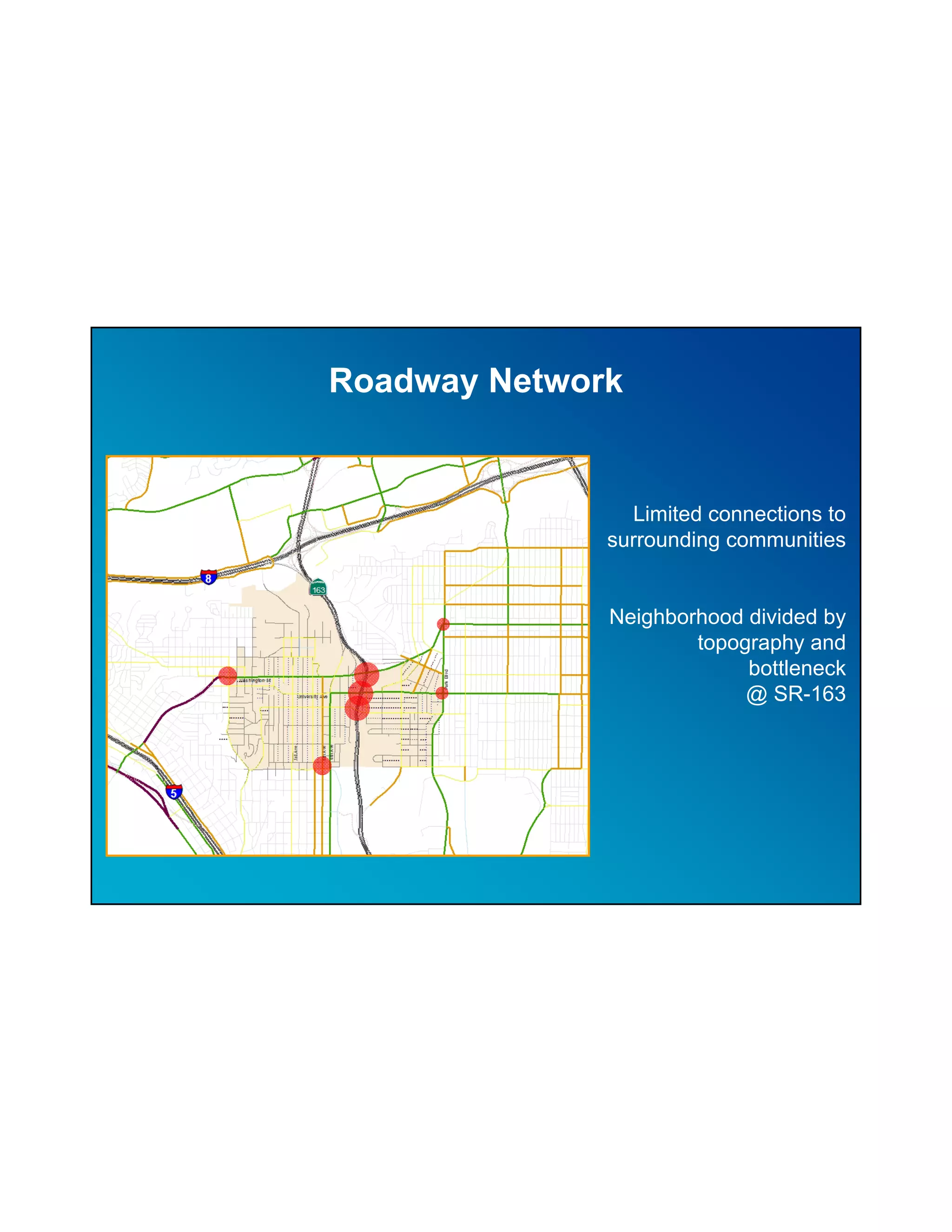
Roadway Network


                Limited connections to
              surrounding communities


              Neighborhood divided by
                      topography and
                           bottleneck
                           @ SR-163
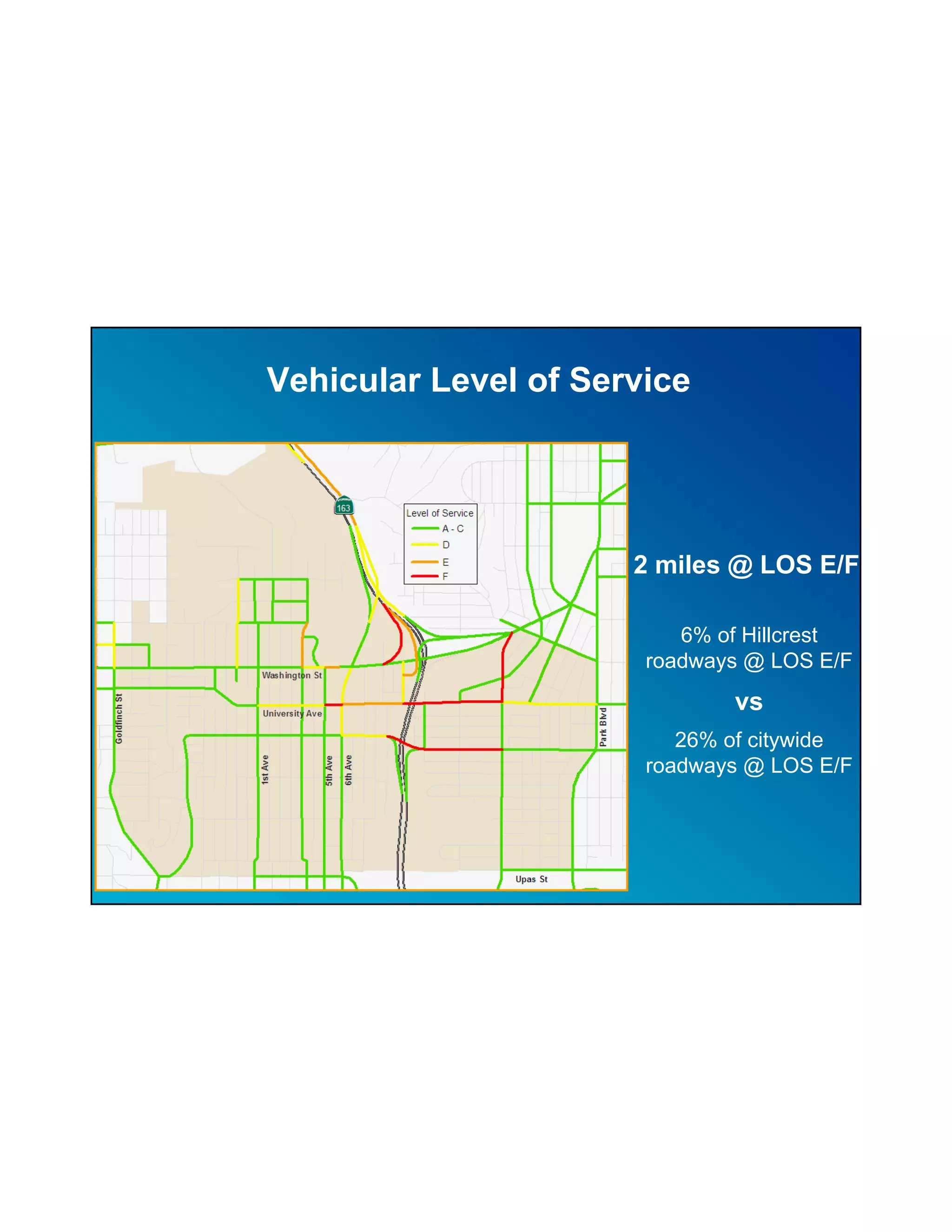
Vehicular Level of Service


                      2 miles @ LOS E/F

                          6% of Hillcrest
                       roadways @ LOS E/F
                              vs
                          26% of citywide
                       roadways @ LOS E/F
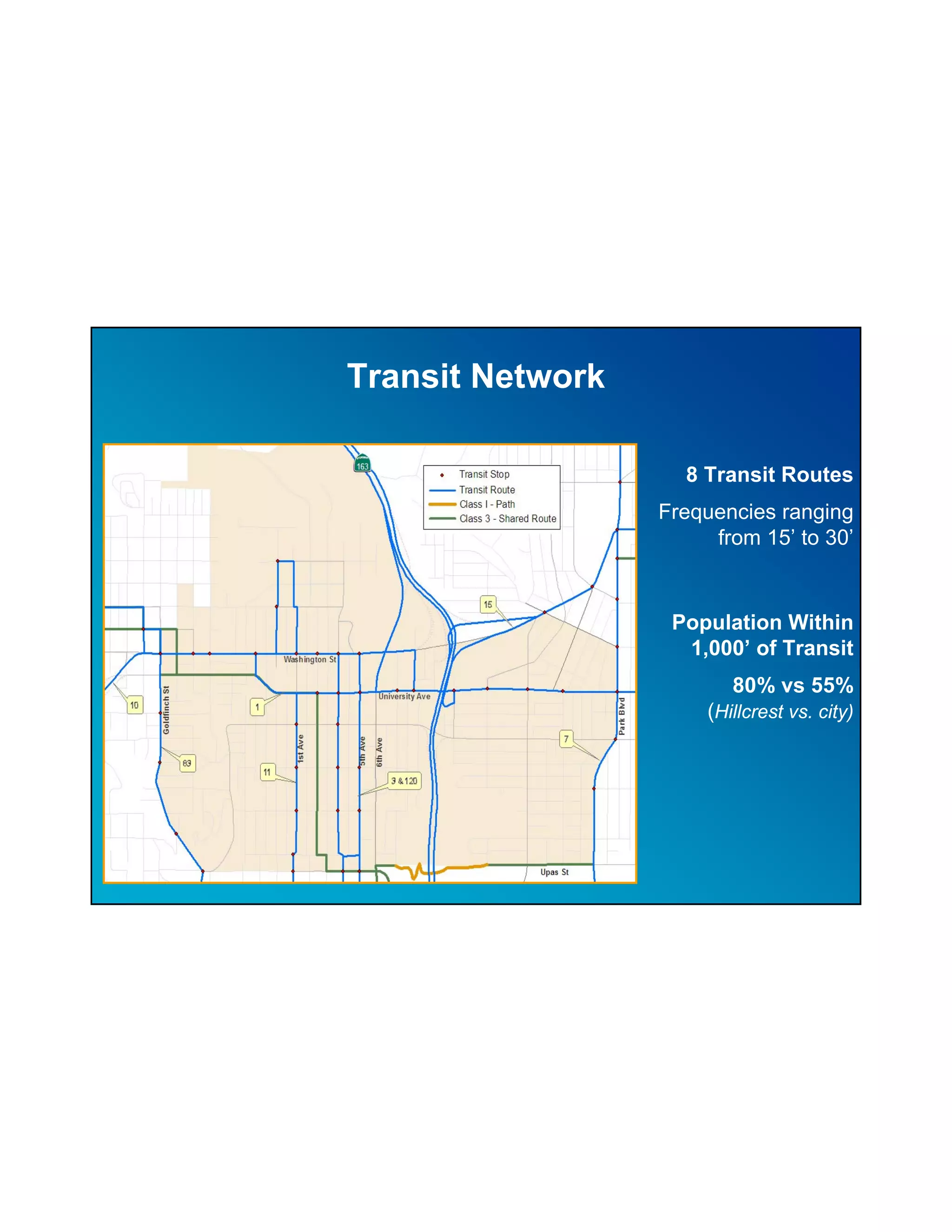
Transit Network

                    8 Transit Routes
                  Frequencies ranging
                       from 15’ to 30’


                   Population Within
                    1,000’ of Transit
                          80% vs 55%
                       (Hillcrest vs. city)
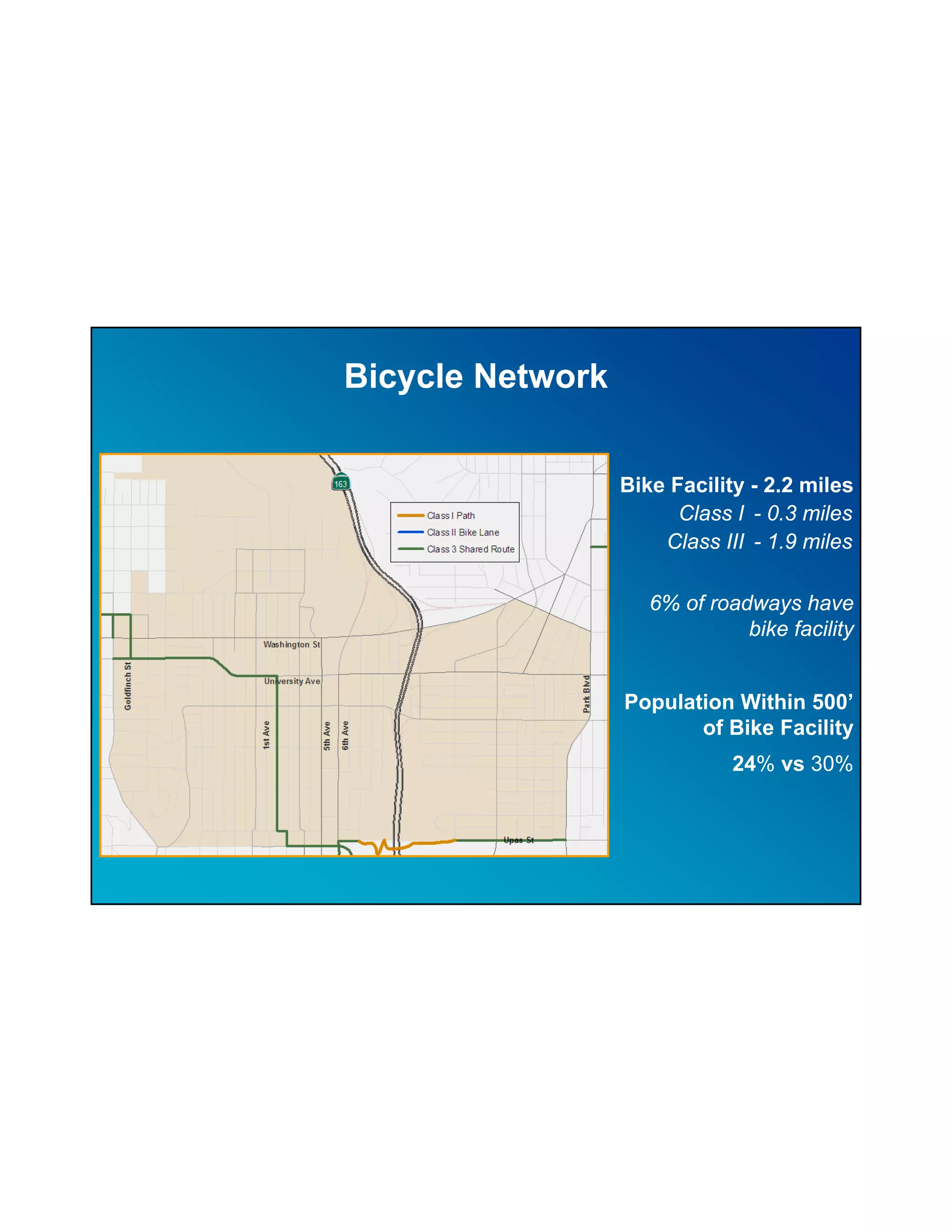
Bicycle Network


                  Bike Facility - 2.2 miles
                        Class I - 0.3 miles
                      Class III - 1.9 miles

                     6% of roadways have
                               bike facility


                  Population Within 500’
                         of Bike Facility
                              24% vs 30%
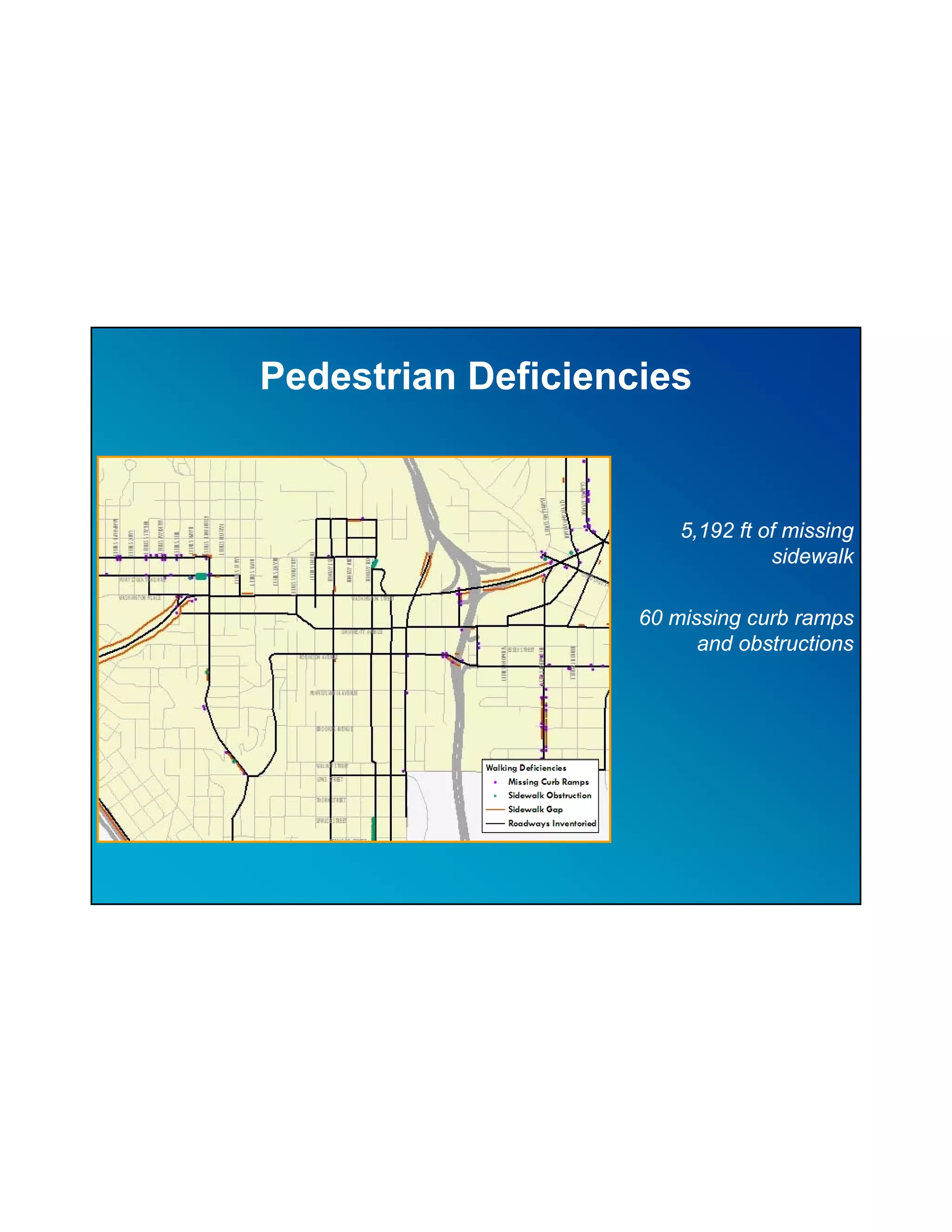
Pedestrian Deficiencies

• PMP map
                          5,192 ft of missing
                                    sidewalk

                      60 missing curb ramps
                            and obstructions
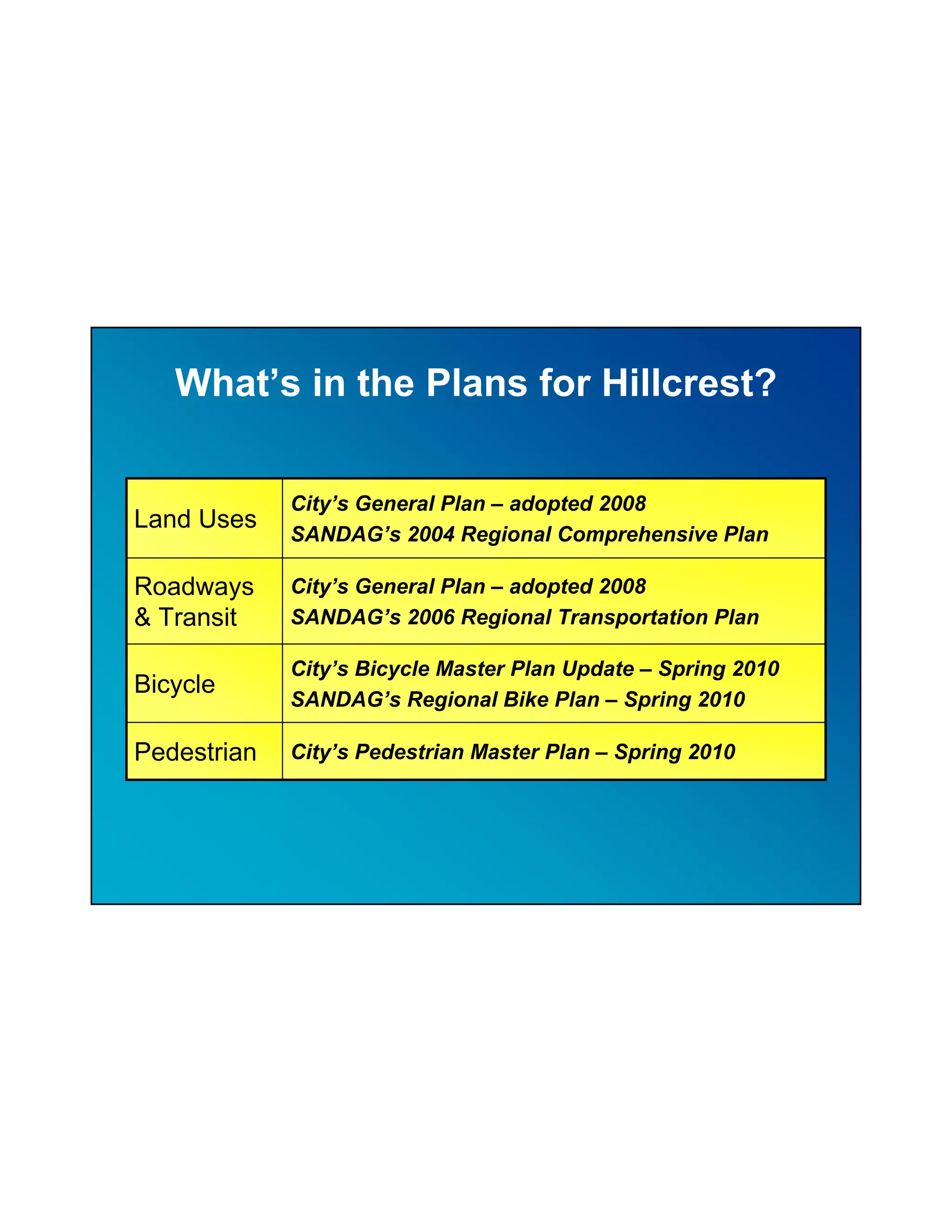
What’s in the Plans for Hillcrest?

             City’s General Plan – adopted 2008
Land Uses
             SANDAG’s 2004 Regional Comprehensive Plan

Roadways     City’s General Plan – adopted 2008
& Transit    SANDAG’s 2006 Regional Transportation Plan

             City’s Bicycle Master Plan Update – Spring 2010
Bicycle
             SANDAG’s Regional Bike Plan – Spring 2010

Pedestrian   City’s Pedestrian Master Plan – Spring 2010
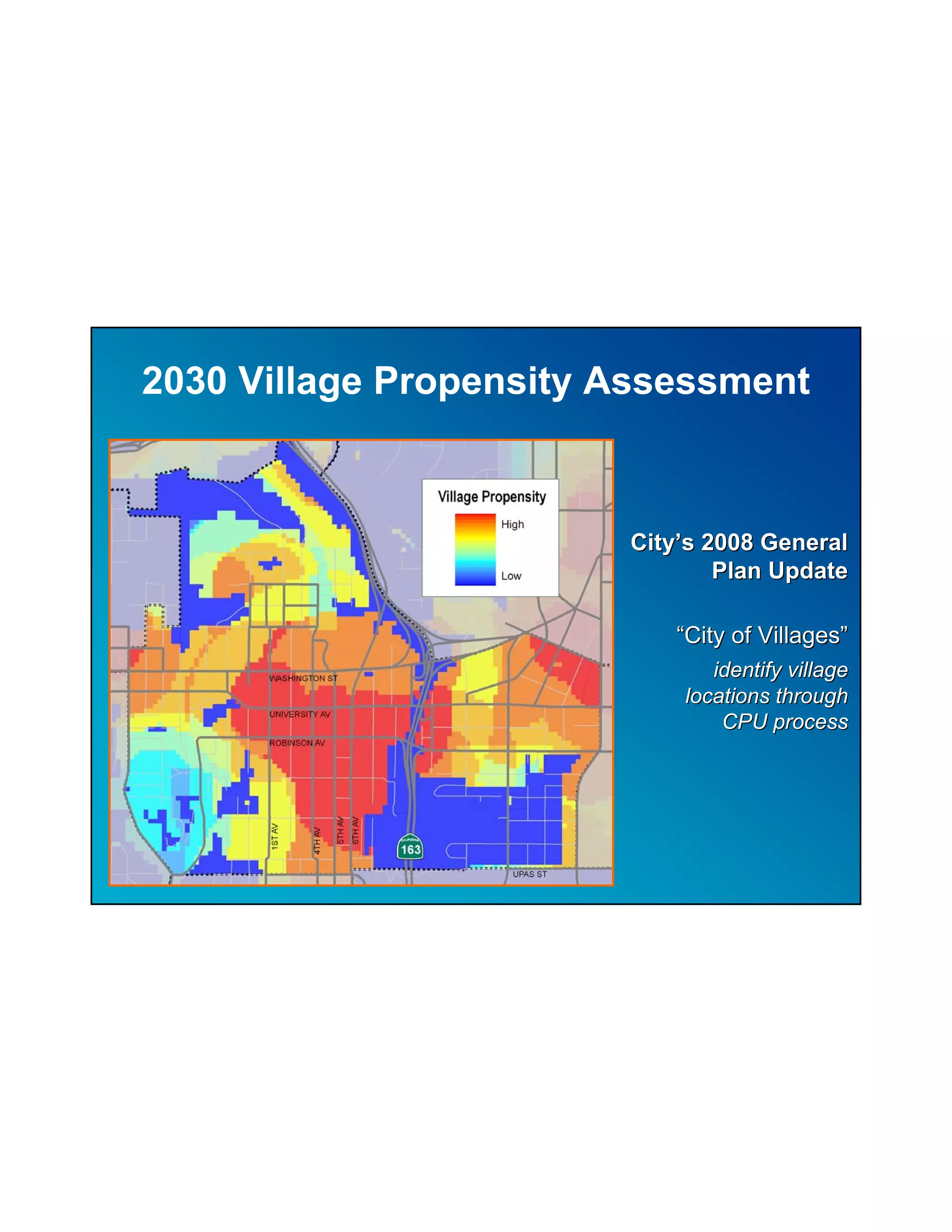
2030 Village Propensity Assessment


                        City’s 2008 General
                                Plan Update

                            “City of Villages”
                               identify village
                            locations through
                                CPU process
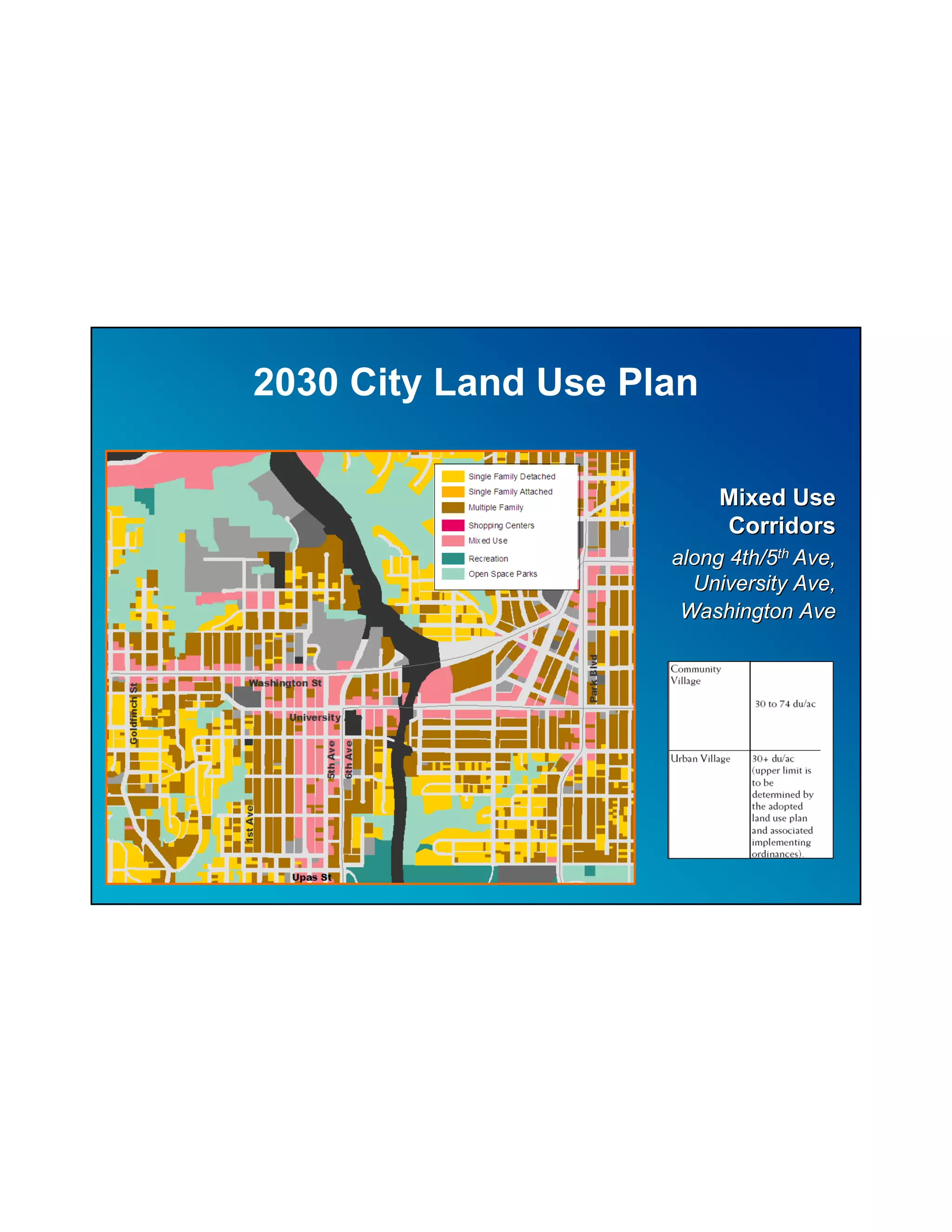
2030 City Land Use Plan

                          Mixed Use
                          Corridors
                     along 4th/5th Ave,
                       University Ave,
                      Washington Ave
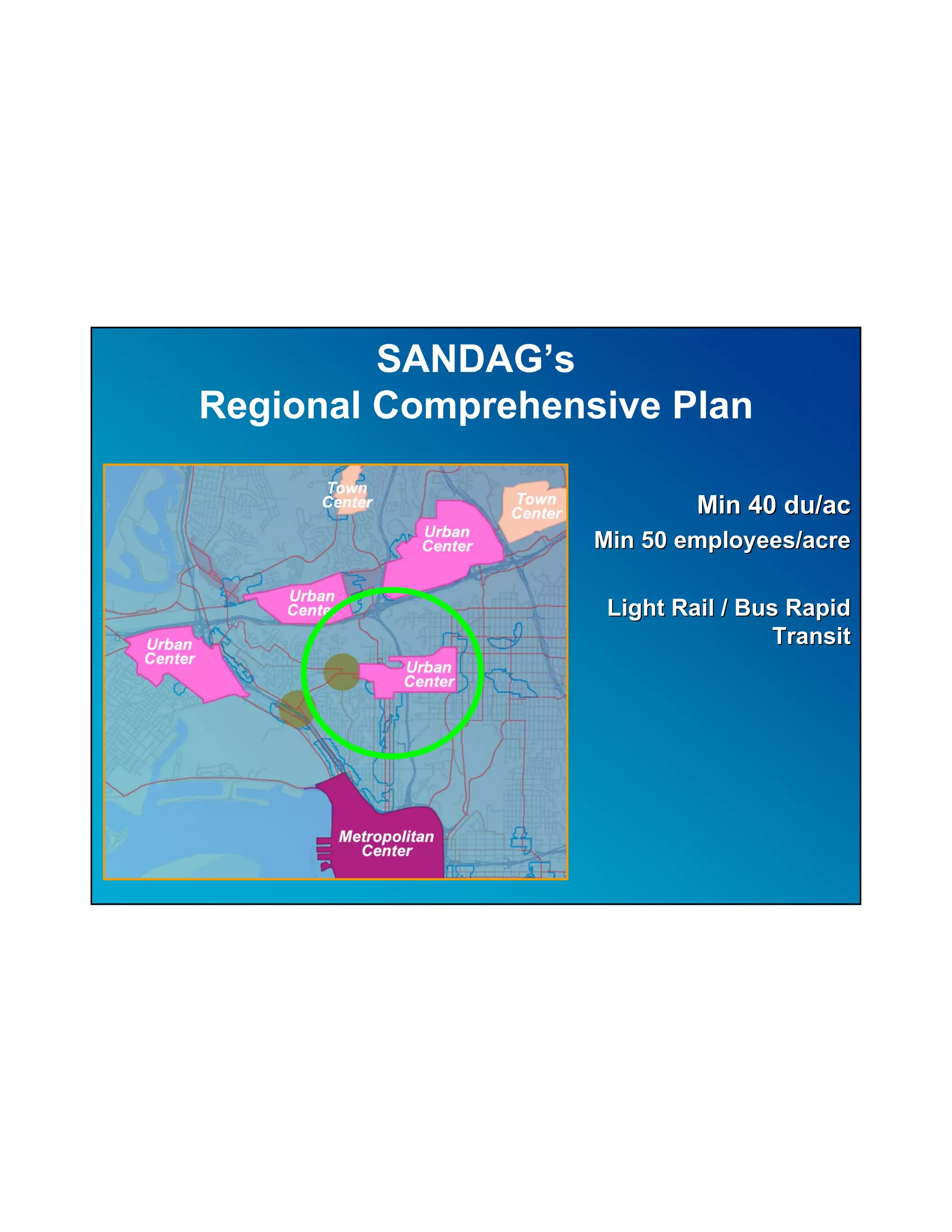
SANDAG’s
Regional Comprehensive Plan

                            Min 40 du/ac
                   Min 50 employees/acre

                    Light Rail / Bus Rapid
                                    Transit
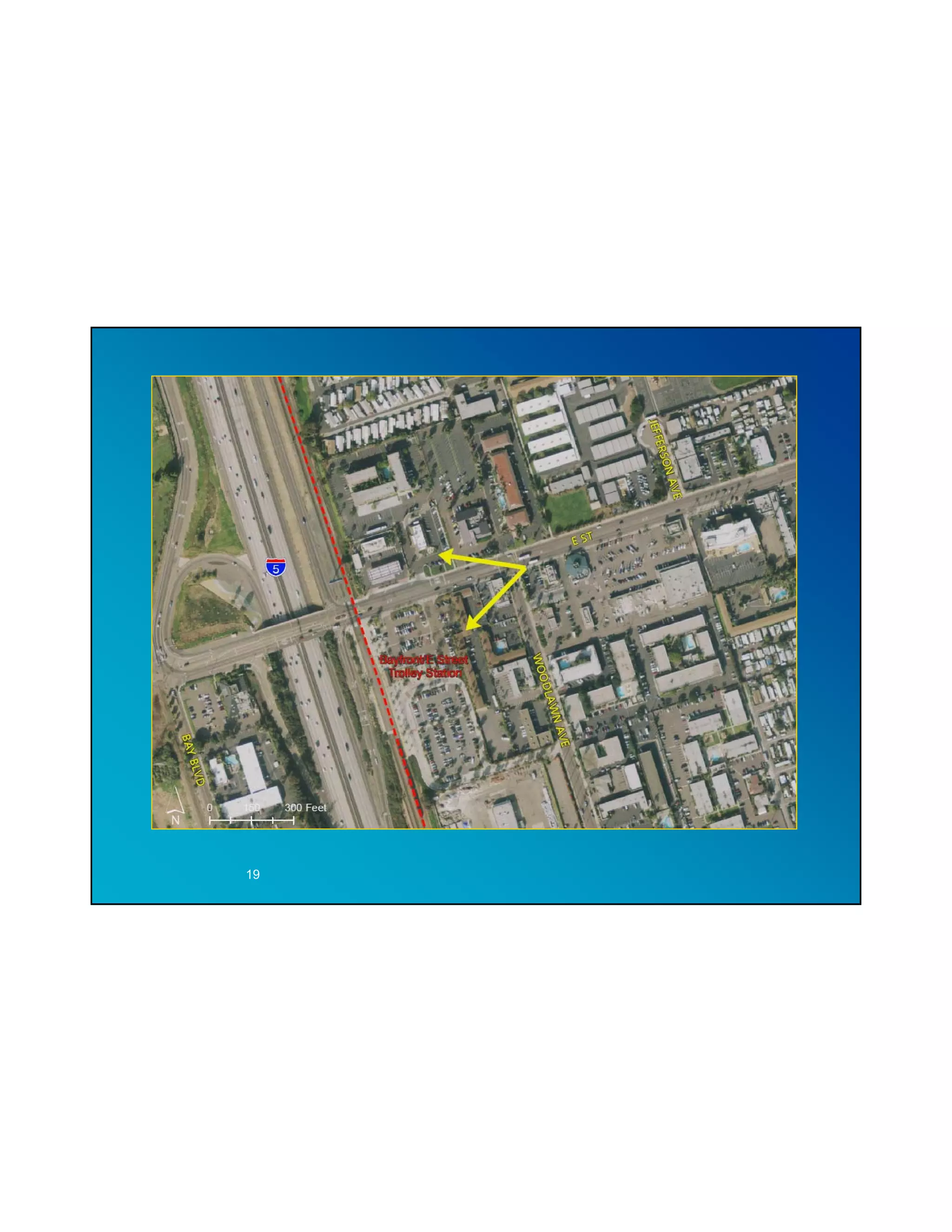
Chula Vista
     Place Type: Urban Center


18
19
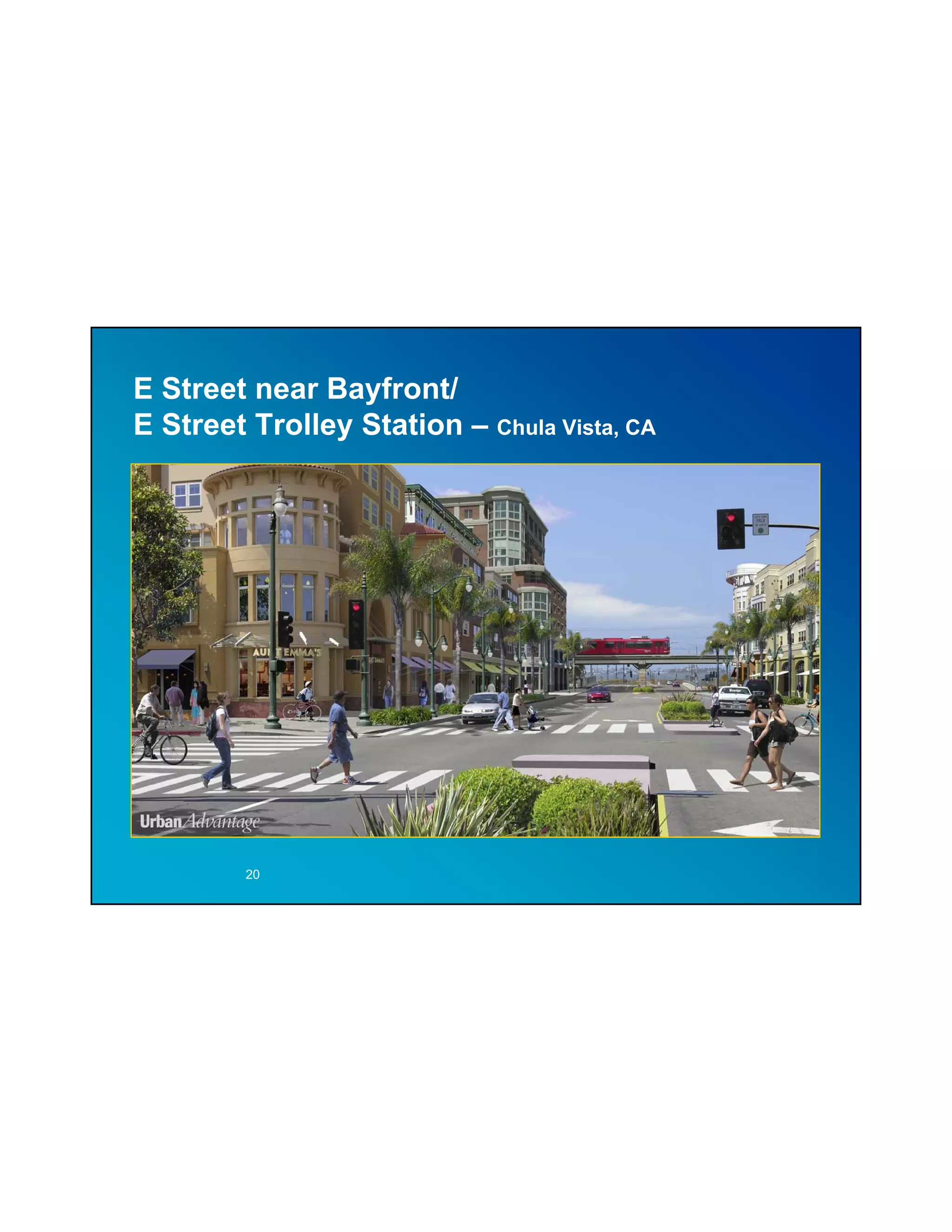
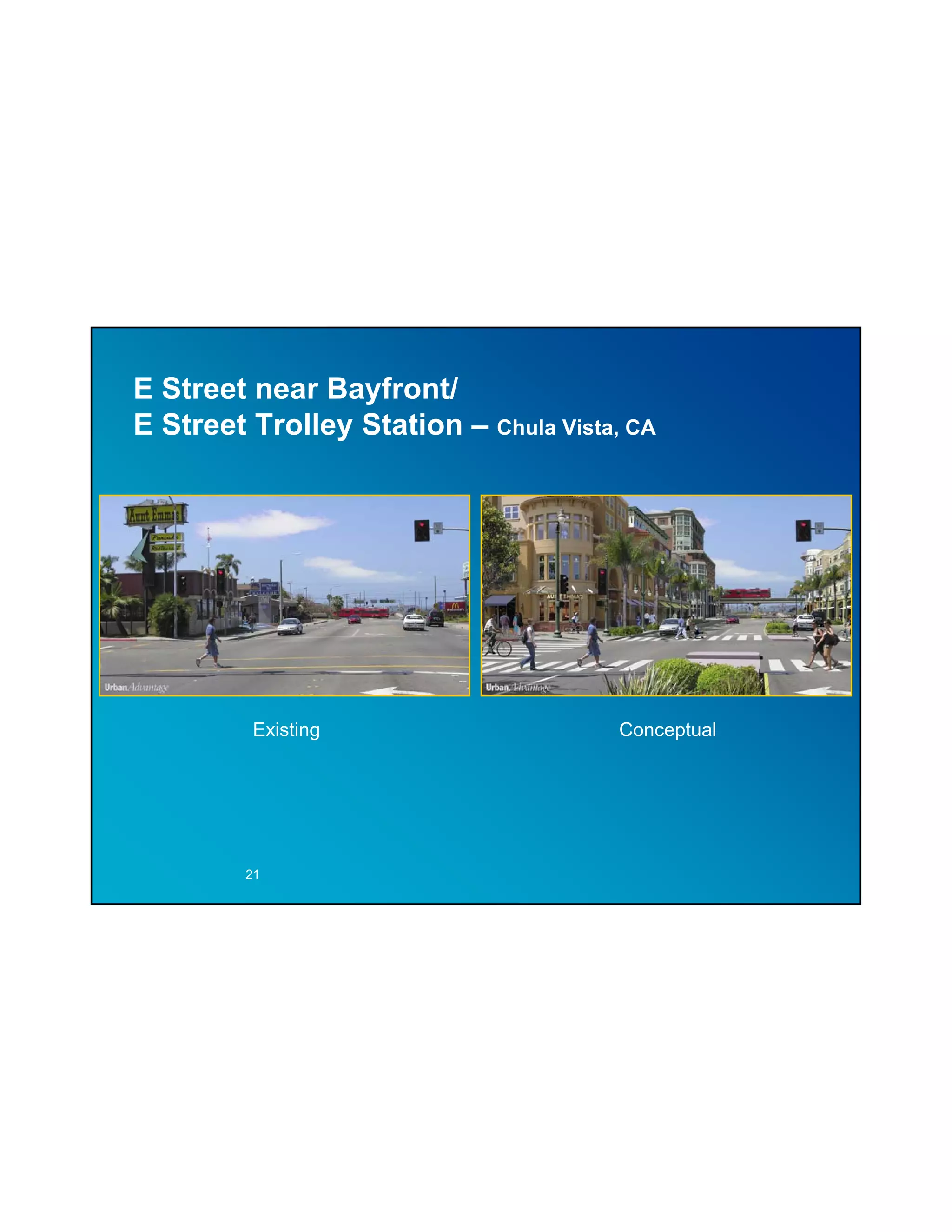
E Street near Bayfront/
E Street Trolley Station – Chula Vista, CA


         20
E Street near Bayfront/
E Street Trolley Station – Chula Vista, CA


          Existing                     Conceptual


         21
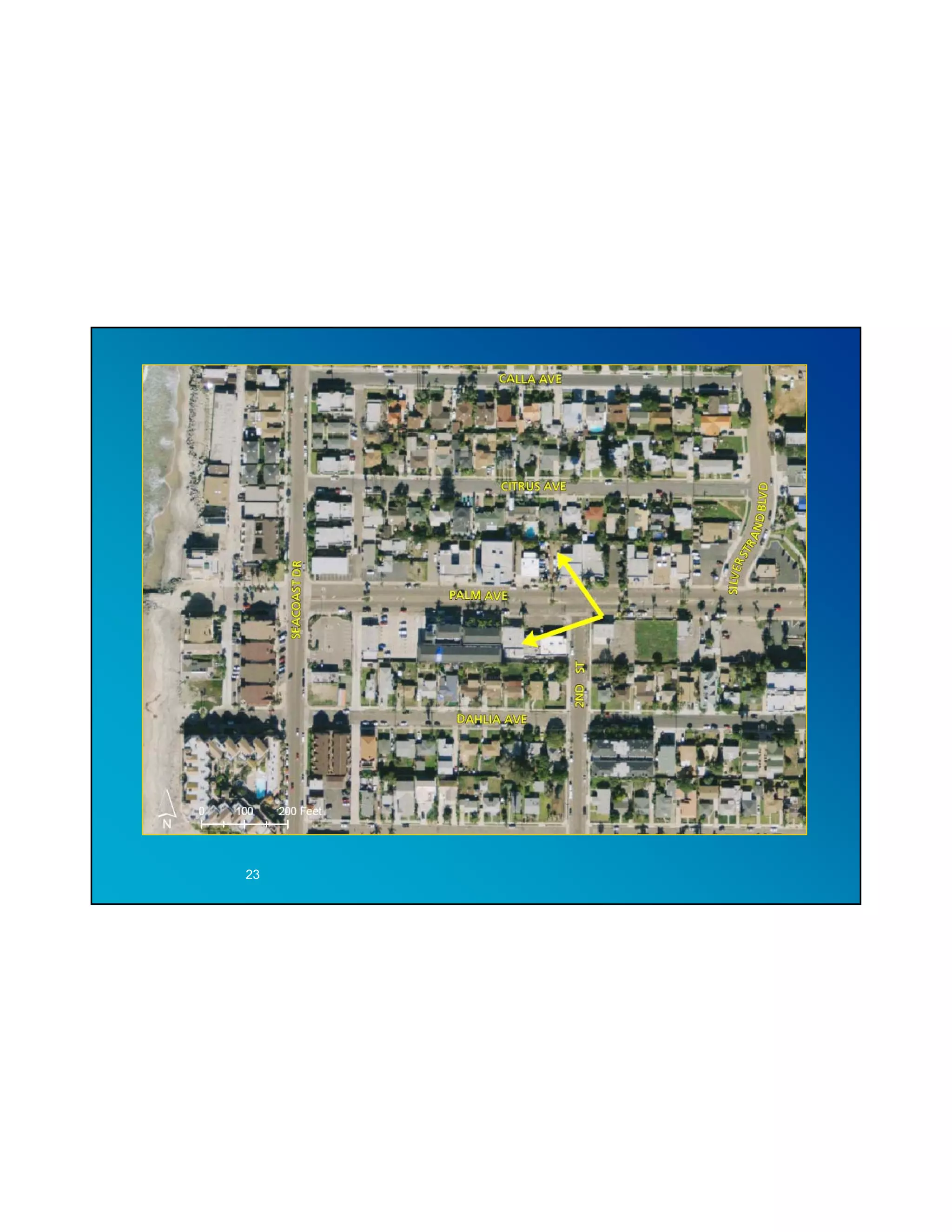
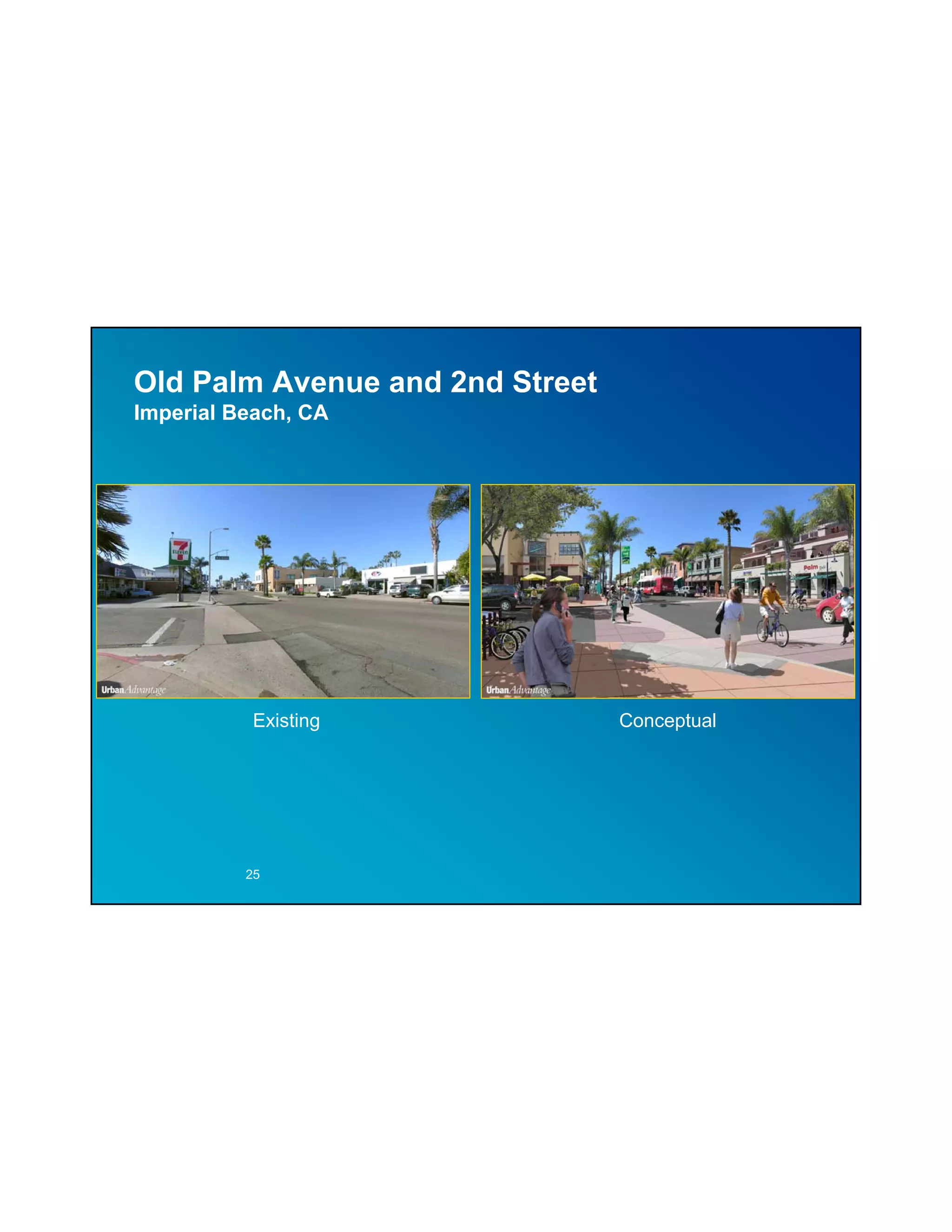
Imperial Beach
Place Type: Mixed Use Transit Corridor

       Old Palm Avenue and 2nd Street


  22
23
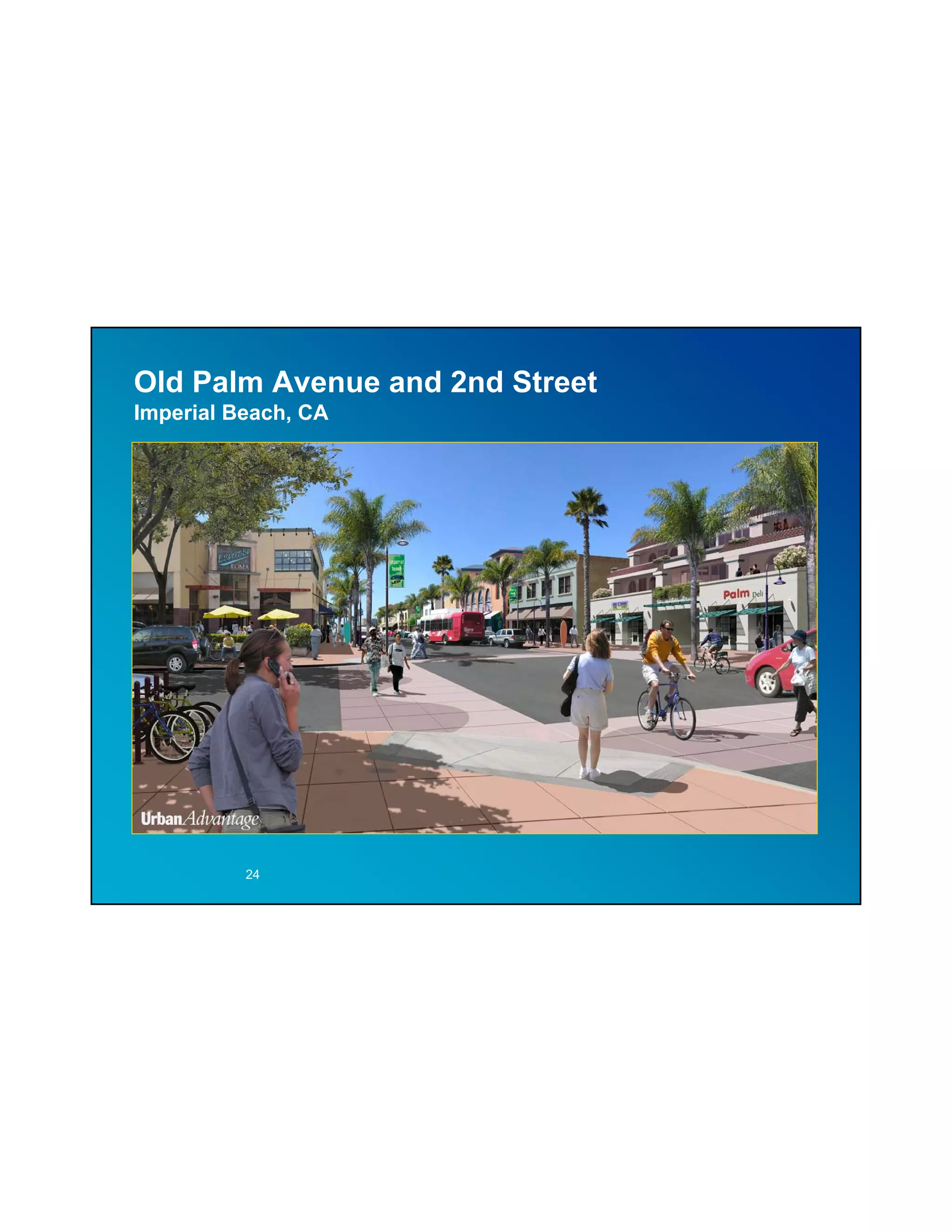
Old Palm Avenue and 2nd Street
Imperial Beach, CA


          24
Old Palm Avenue and 2nd Street
Imperial Beach, CA


           Existing              Conceptual


          25
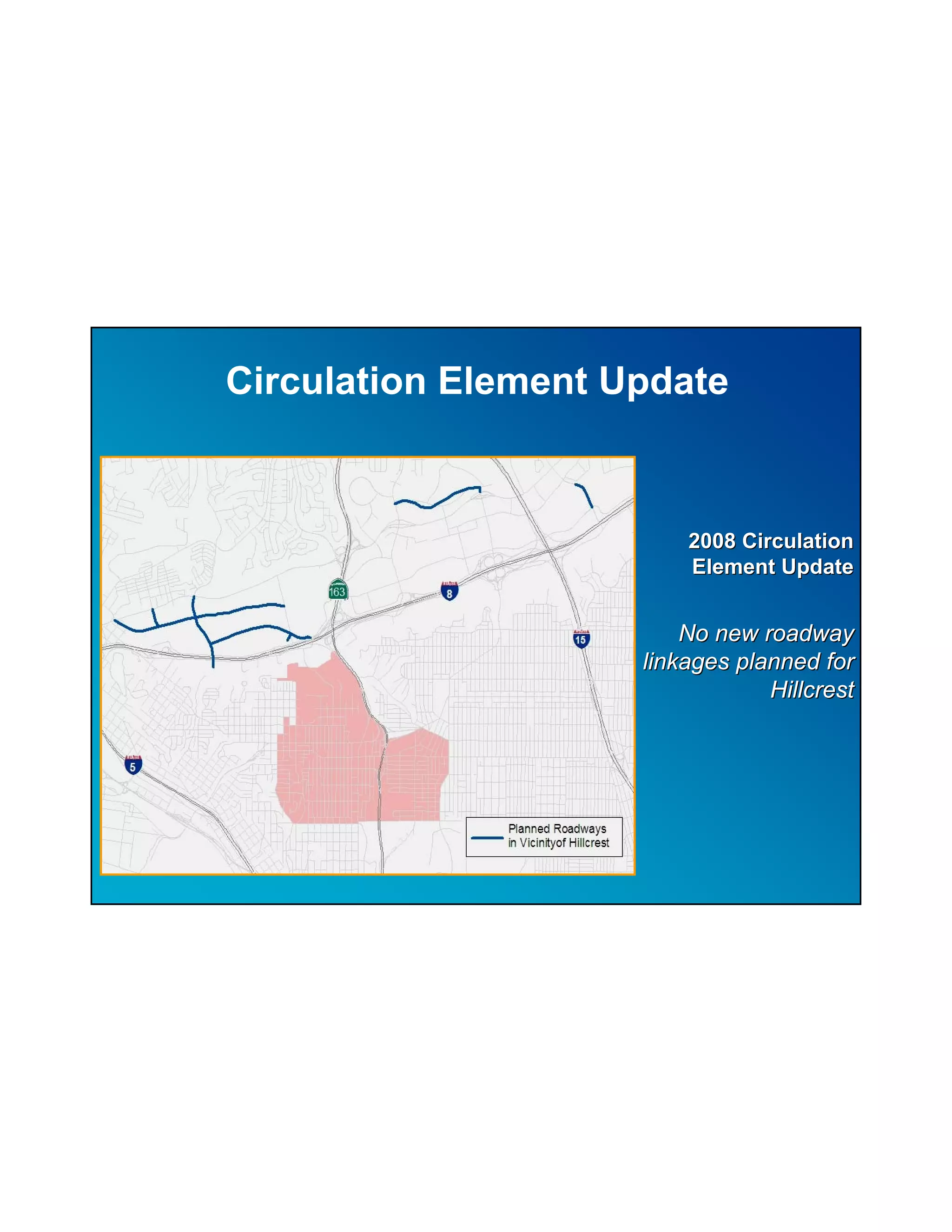
Circulation Element Update


                         2008 Circulation
                         Element Update


                         No new roadway
                     linkages planned for
                                 Hillcrest
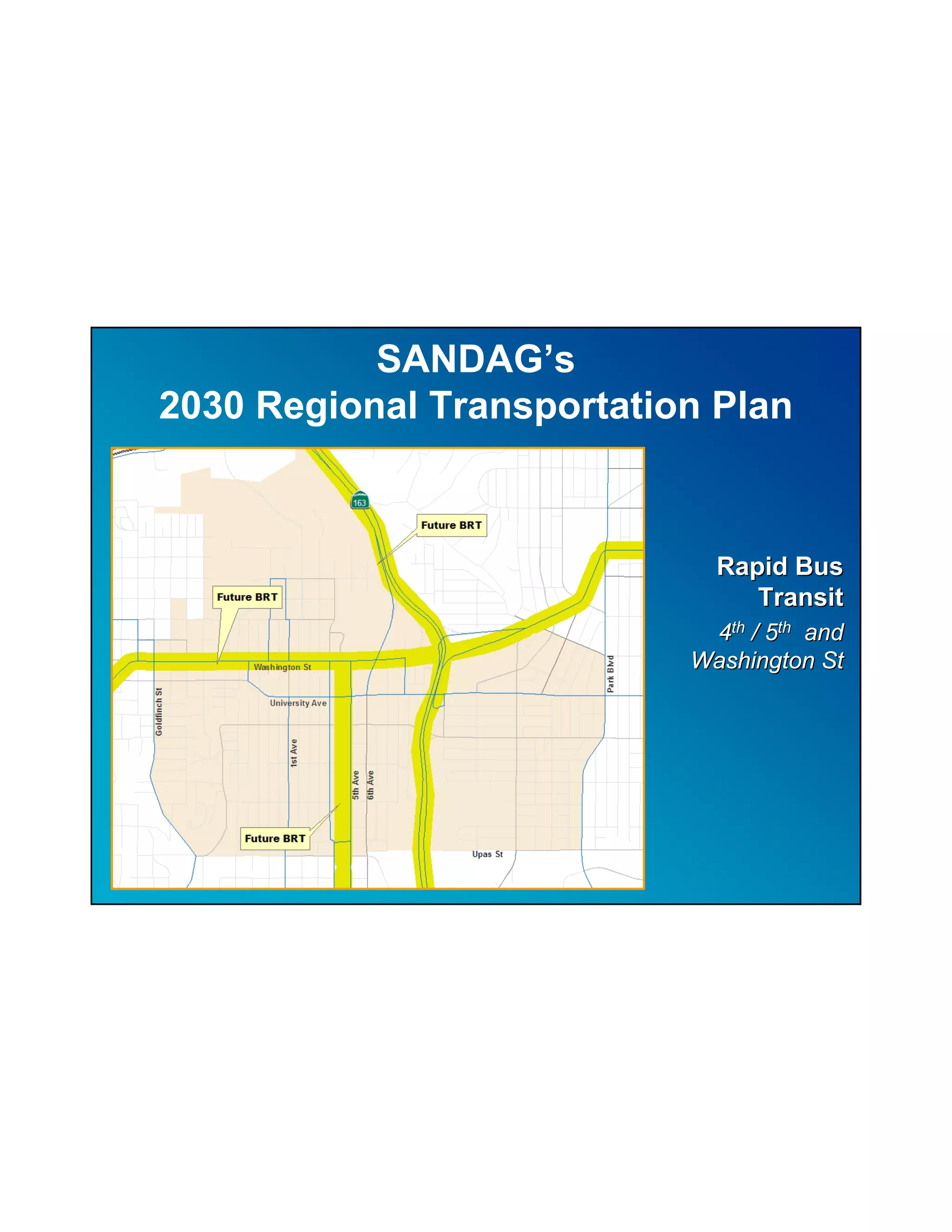
SANDAG’s
2030 Regional Transportation Plan


                             Rapid Bus
                                Transit
                            4th / 5th and
                           Washington St
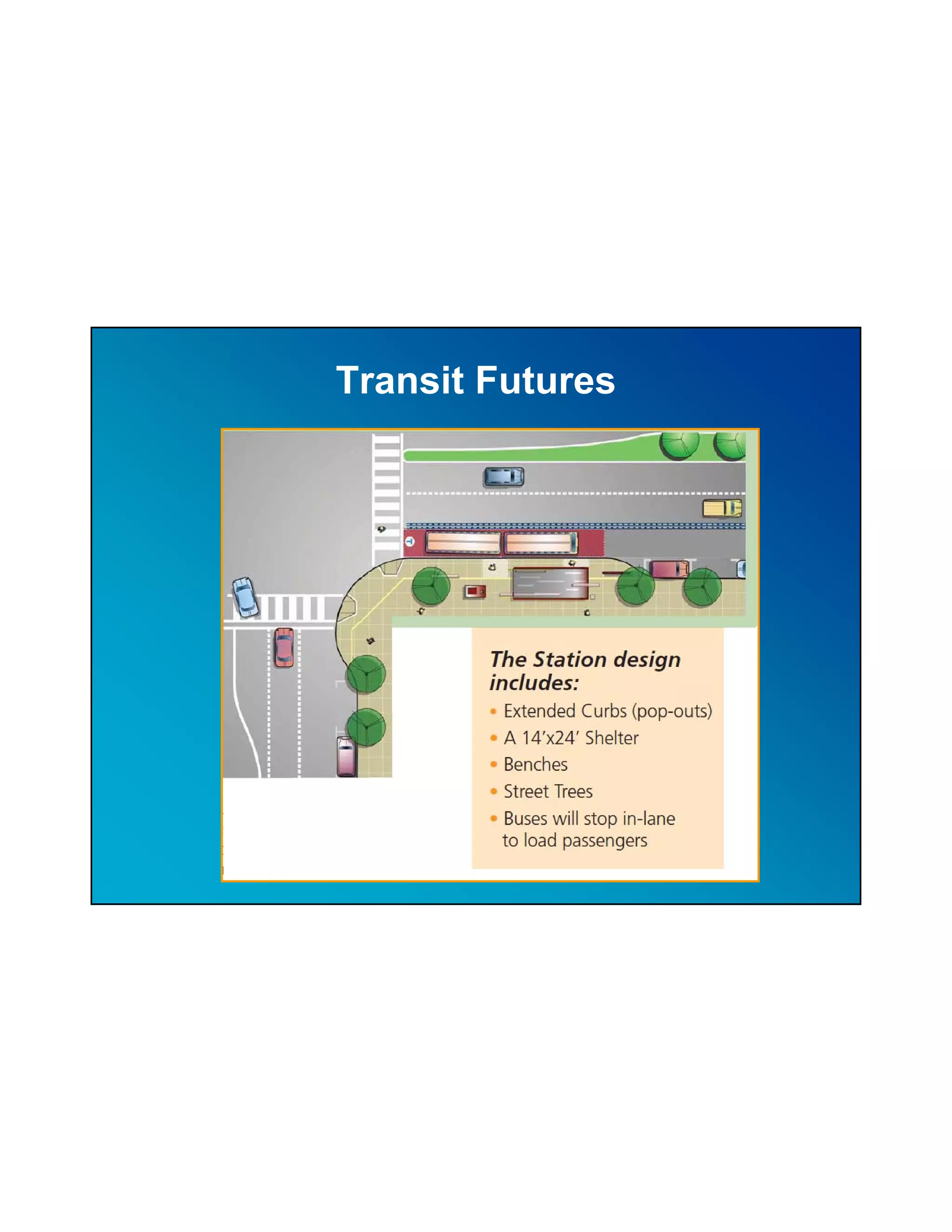
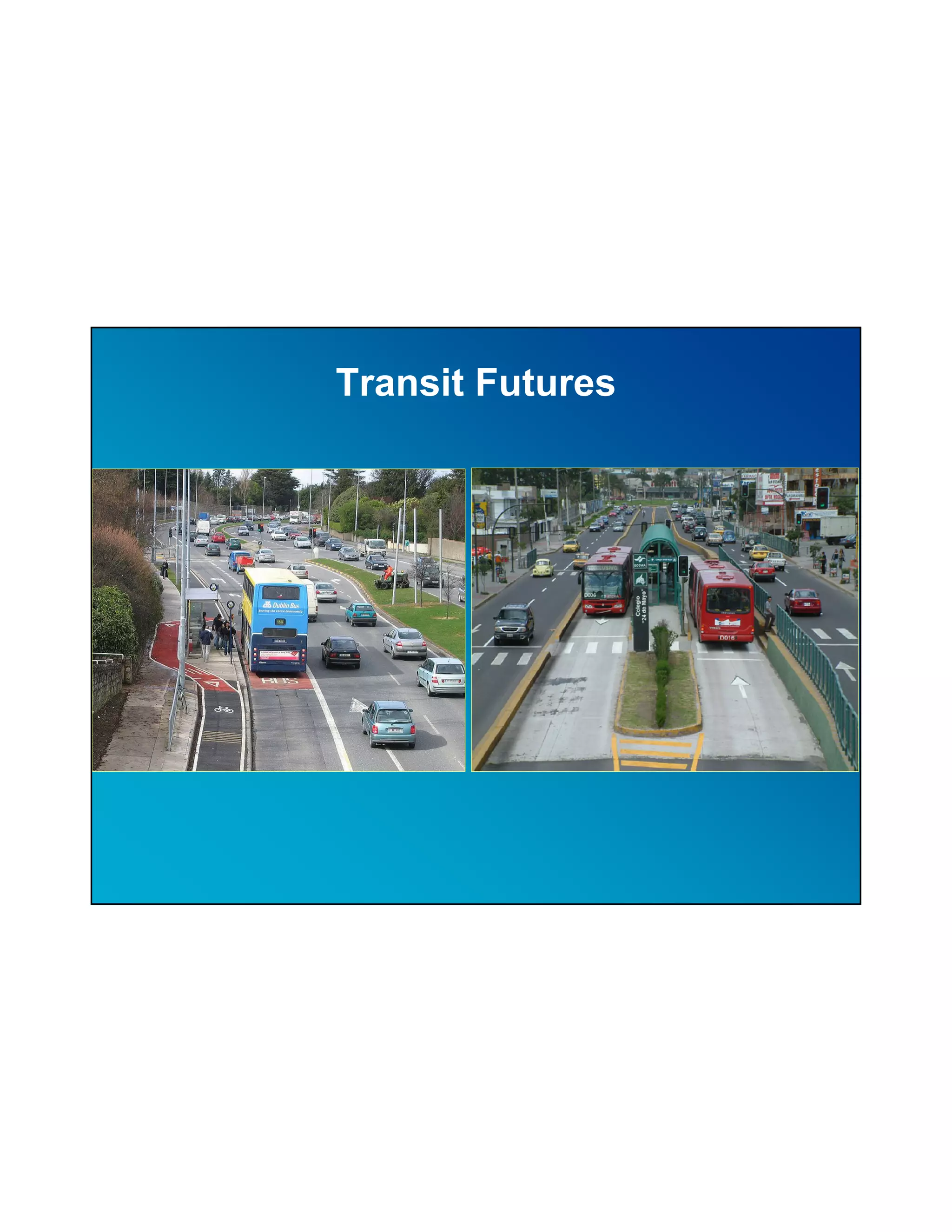
Transit Futures
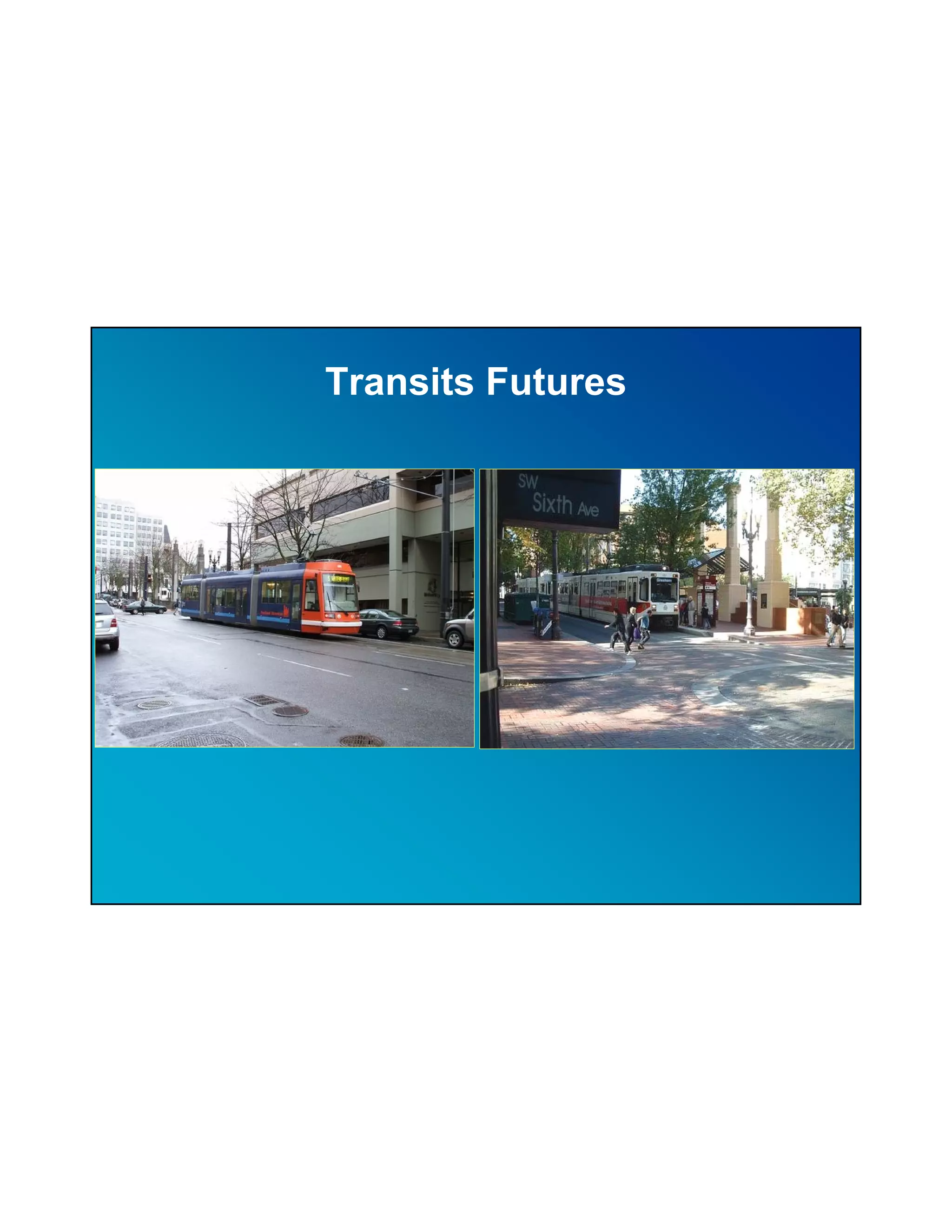
Transit Futures
Transits Futures
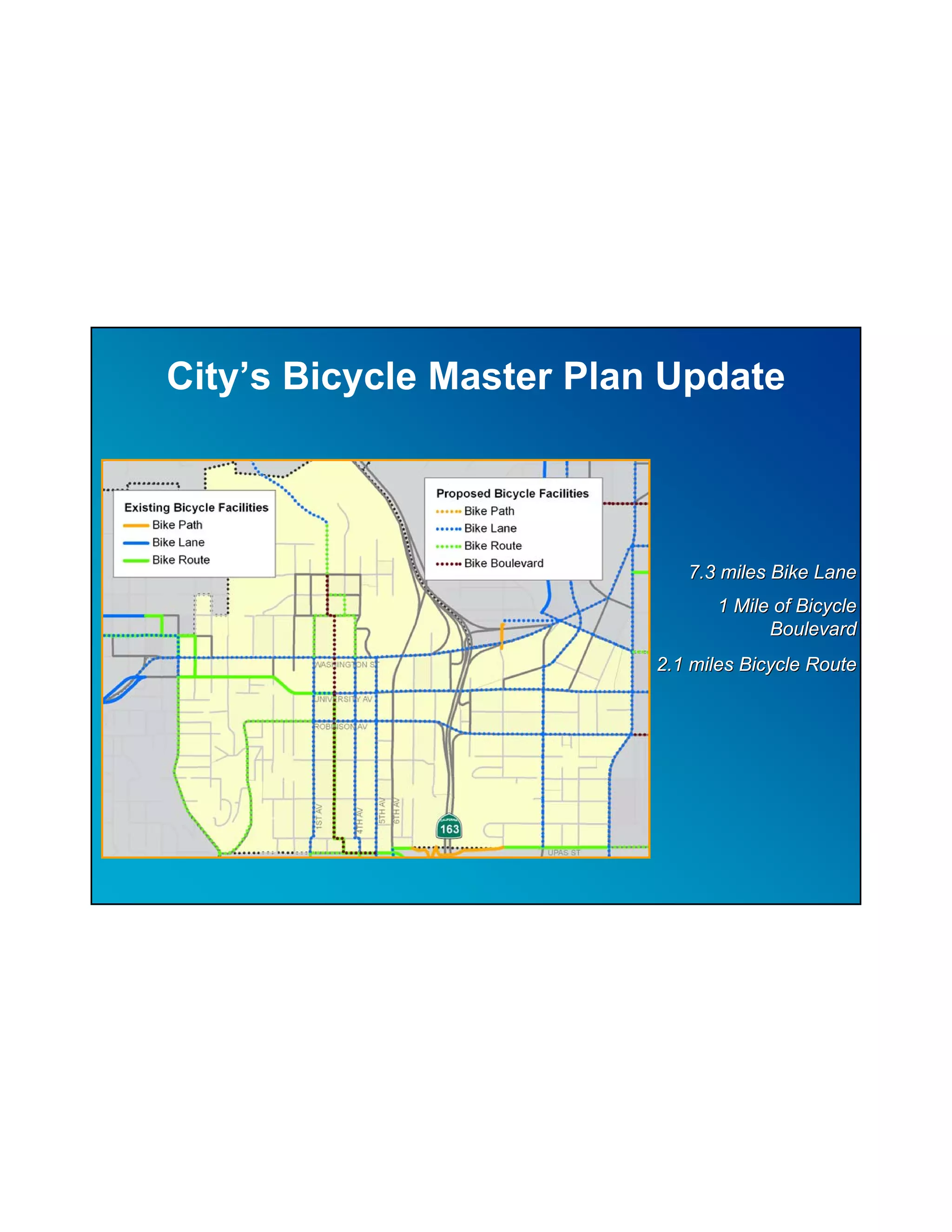
City’s Bicycle Master Plan Update


                             7.3 miles Bike Lane
                                1 Mile of Bicycle
                                      Boulevard
                          2.1 miles Bicycle Route
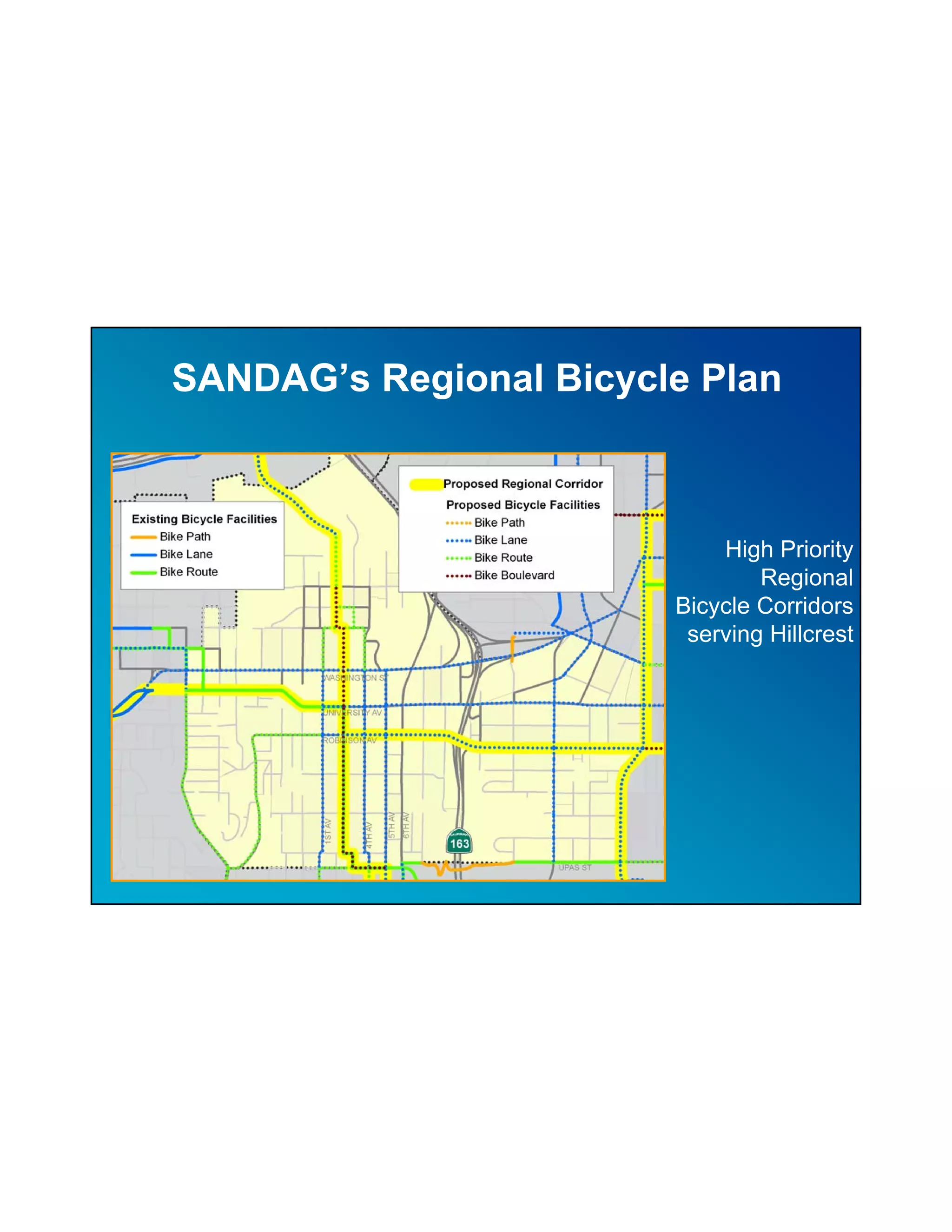
SANDAG’s Regional Bicycle Plan


                            High Priority
                                Regional
                        Bicycle Corridors
                         serving Hillcrest
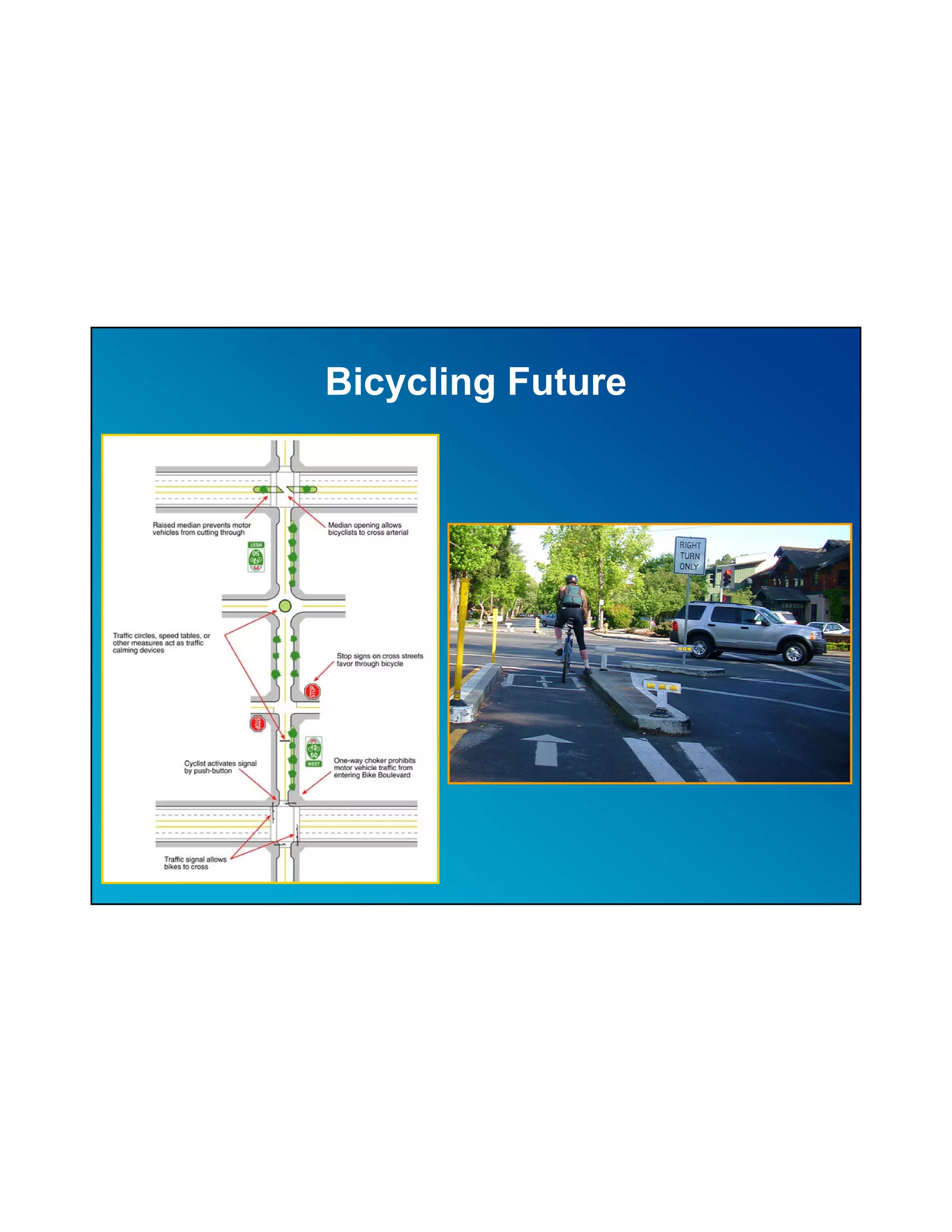
Bicycling Future
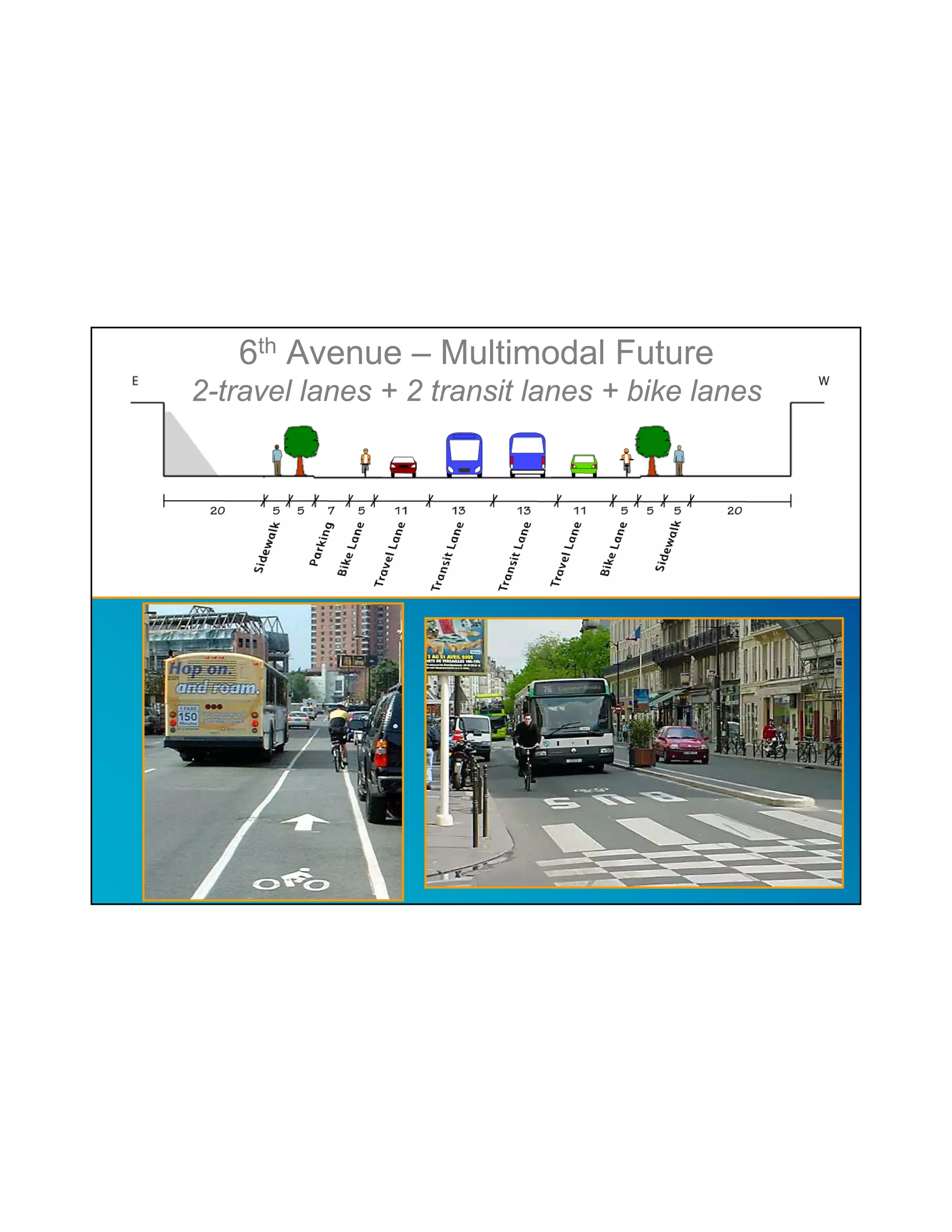
6th Avenue – Multimodal Future
2-travel lanes + 2 transit lanes + bike lanes
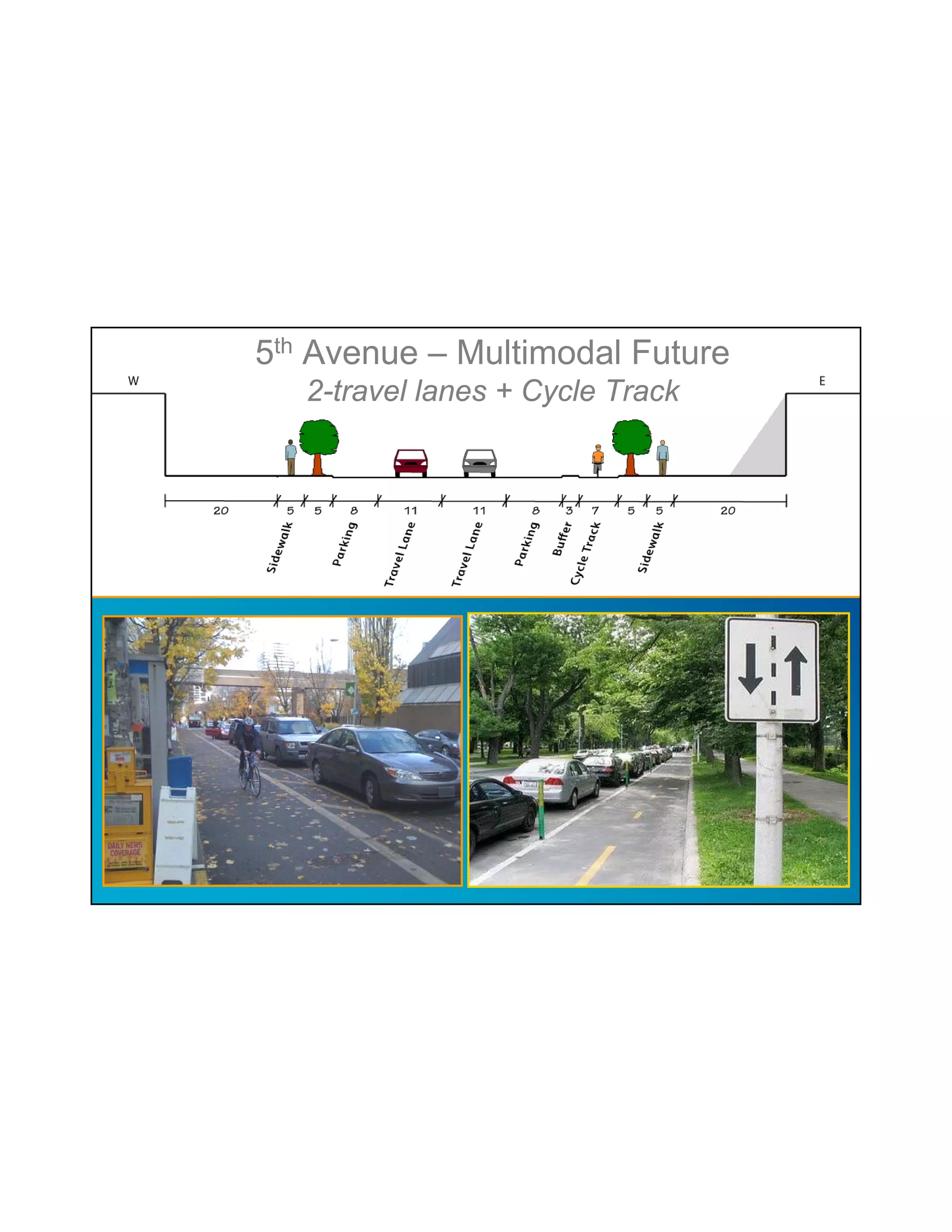
5th Avenue – Multimodal Future
   2-travel lanes + Cycle Track
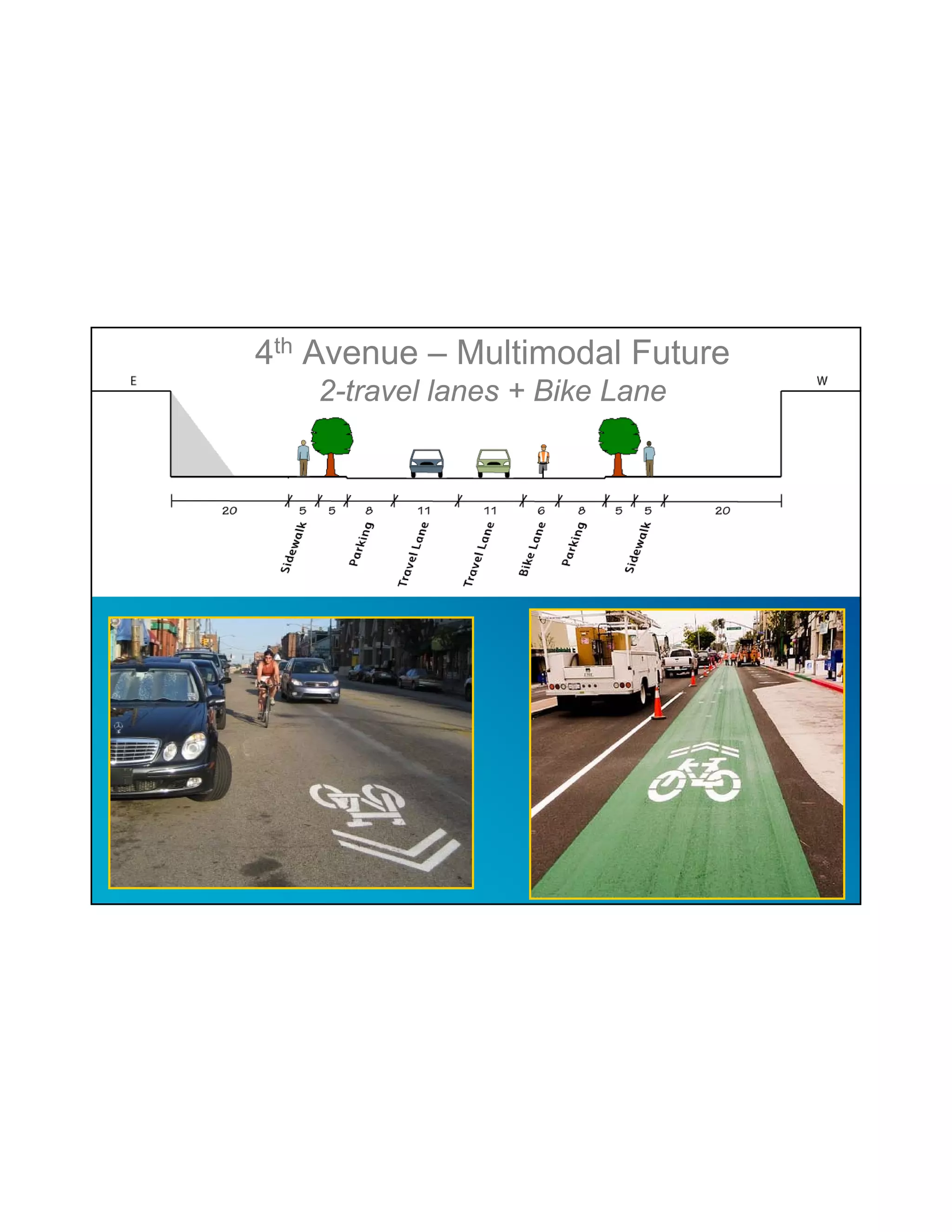
4th Avenue – Multimodal Future
    2-travel lanes + Bike Lane
Parting Thoughts…

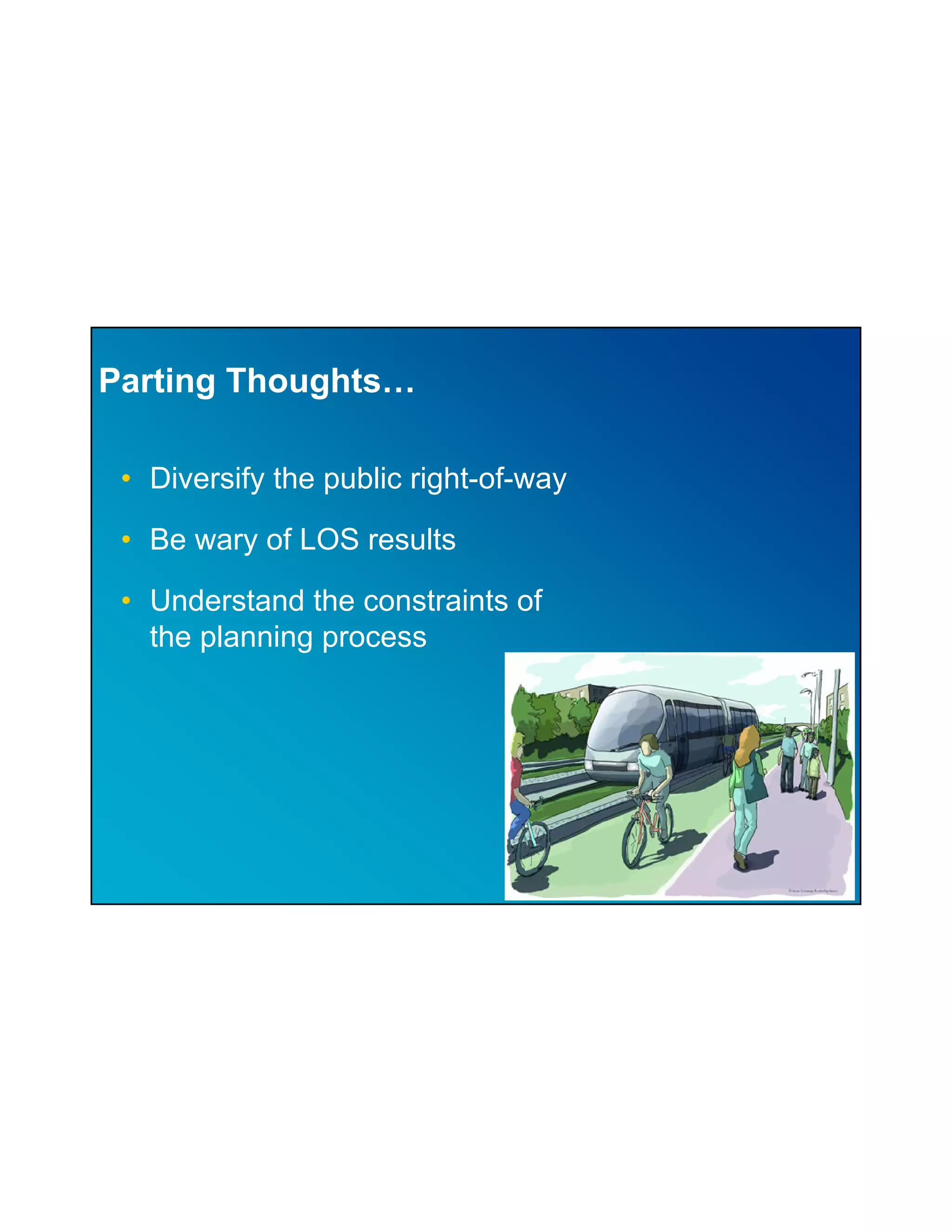
 • Diversify the public right-of-way

 • Be wary of LOS results

 • Understand the constraints of
   the planning process
THANK YOU!


Sherry Ryan, PhD
School of Public Affairs, SDSU
       Alta Planning + Design

Sherry Ryan Transportation Systems Presentation

  • 1.
    Transportation Planning and Systems TheHillcrest Neighborhood Sherry Ryan, PhD School of Public Affairs, SDSU Alta Planning + Design
  • 2.
    Overview • Why LongRange Transportation Planning? • Recent Legislation • Local Hillcrest Context • Current Planning for Hillcrest • Potential Futures
  • 3.
    Why Long Range Transportation Planning? • Mandated by Federal and State Governments – Metropolitan Planning Organizations must do long range transportation planning to receive federal funds – Cities must adopt Circulation Elements • Provides objective basis for decision-making
  • 4.
    Recent Legislative Trends •Sustainable Communities Strategy (2008 SB 375 ) – Sustainable Communities Strategies element in RTP – Region must meet greenhouse gas reduction targets – Housing allocations need to be consistent with SCS • The Complete Streets Act (2008 SB 1358 ) – Requires cities to account for all users of the roadway when updating their Circulation Elements
  • 5.
    Content Requirement for Circulation Element Planning Location and extent of existing and proposed Currently transportation routes all correlated with the land use plan Plan for a balanced, multimodal transportation network that meets the needs of all users of streets for safe and convenient travel. Commencing January, 2011 All users means bicyclists, children, persons with disabilities, motorists, movers of commercial goods, pedestrians, users of public transportation, and seniors. CALIFORNIA CODES GOVERNMENT CODE SECTION 65300-65303.4
  • 6.
    Local Context Hillcrest’s Transportation System • Current Land Patterns • Roadway Network and Operations • Transit Network • Bicycle Network • Pedestrian Network
  • 7.
    Land Uses SR 16 1,500 ac Total Land 3 315 ac Residential 80 ac Commercial 49 persons/ac vs. 23 persons/ac in the City of SD
  • 8.
    Roadway Network Roadway Density 105 lf/acre of roadway vs. 70 lf/acre citywide Block Sizes ~ 650’ x 180’ Hillcrest ~ 600’ x 200’ Pacific Beach ~ 1,300‘ Scripps Ranch
  • 9.
    Roadway Network Limited connections to surrounding communities Neighborhood divided by topography and bottleneck @ SR-163
  • 10.
    Vehicular Level ofService 2 miles @ LOS E/F 6% of Hillcrest roadways @ LOS E/F vs 26% of citywide roadways @ LOS E/F
  • 11.
    Transit Network 8 Transit Routes Frequencies ranging from 15’ to 30’ Population Within 1,000’ of Transit 80% vs 55% (Hillcrest vs. city)
  • 12.
    Bicycle Network Bike Facility - 2.2 miles Class I - 0.3 miles Class III - 1.9 miles 6% of roadways have bike facility Population Within 500’ of Bike Facility 24% vs 30%
  • 13.
    Pedestrian Deficiencies • PMPmap 5,192 ft of missing sidewalk 60 missing curb ramps and obstructions
  • 14.
    What’s in thePlans for Hillcrest? City’s General Plan – adopted 2008 Land Uses SANDAG’s 2004 Regional Comprehensive Plan Roadways City’s General Plan – adopted 2008 & Transit SANDAG’s 2006 Regional Transportation Plan City’s Bicycle Master Plan Update – Spring 2010 Bicycle SANDAG’s Regional Bike Plan – Spring 2010 Pedestrian City’s Pedestrian Master Plan – Spring 2010
  • 15.
    2030 Village PropensityAssessment City’s 2008 General Plan Update “City of Villages” identify village locations through CPU process
  • 16.
    2030 City LandUse Plan Mixed Use Corridors along 4th/5th Ave, University Ave, Washington Ave
  • 17.
    SANDAG’s Regional Comprehensive Plan Min 40 du/ac Min 50 employees/acre Light Rail / Bus Rapid Transit
  • 18.
    Chula Vista Place Type: Urban Center 18
  • 19.
  • 20.
    E Street nearBayfront/ E Street Trolley Station – Chula Vista, CA 20
  • 21.
    E Street nearBayfront/ E Street Trolley Station – Chula Vista, CA Existing Conceptual 21
  • 22.
    Imperial Beach Place Type:Mixed Use Transit Corridor Old Palm Avenue and 2nd Street 22
  • 23.
  • 24.
    Old Palm Avenueand 2nd Street Imperial Beach, CA 24
  • 25.
    Old Palm Avenueand 2nd Street Imperial Beach, CA Existing Conceptual 25
  • 26.
    Circulation Element Update 2008 Circulation Element Update No new roadway linkages planned for Hillcrest
  • 27.
    SANDAG’s 2030 Regional TransportationPlan Rapid Bus Transit 4th / 5th and Washington St
  • 28.
  • 29.
  • 30.
  • 31.
    City’s Bicycle MasterPlan Update 7.3 miles Bike Lane 1 Mile of Bicycle Boulevard 2.1 miles Bicycle Route
  • 32.
    SANDAG’s Regional BicyclePlan High Priority Regional Bicycle Corridors serving Hillcrest
  • 33.
  • 34.
    6th Avenue –Multimodal Future 2-travel lanes + 2 transit lanes + bike lanes
  • 35.
    5th Avenue –Multimodal Future 2-travel lanes + Cycle Track
  • 36.
    4th Avenue –Multimodal Future 2-travel lanes + Bike Lane
  • 37.
    Parting Thoughts… •Diversify the public right-of-way • Be wary of LOS results • Understand the constraints of the planning process
  • 38.
    THANK YOU! Sherry Ryan,PhD School of Public Affairs, SDSU Alta Planning + Design