
Definition:
It is defined as the behavior which occurs when an individual percives
threat or anticipates threat in the group.
The person who behaves defensively, even though he or she also gives
some attention to the common task , devotes an appreciable portion of
energy to defending himself or herself.
 Defence behavior present in defferent mammals……;
E.g.
Cow:-
 Cow is pretect their calves from predatorys by lowering their heads and
charging towards the attracker, brandishing their horns if they have them.
 Living is herd helps to overcome this problem because herd members will
co-operate to protect their young.
Domesticated Sheep: have come to rely on man for protection from
predators.
After fleeing , sheep will reform their group and look at the predator.
They use their natural herding instinct to band together for safety.
A sheep that is by itself is vulnerable to attack.
 Defense behavior in kangroo’s I must add that there is no enemy in
kangroo’s nature habit.
 Hence they do not show nature defensive action.
 Kangroos fight aggressively among themselves and they use their arms
and legs a lot during the fight.
 In pet cat , aggressive behavior can rang from cats who hiss and
avoid the target of their aggression to cats who attack.
 Understanding what cats are communicating through their body
language is essential for cats parents.
 threats and aggression can be either offence or defencive.
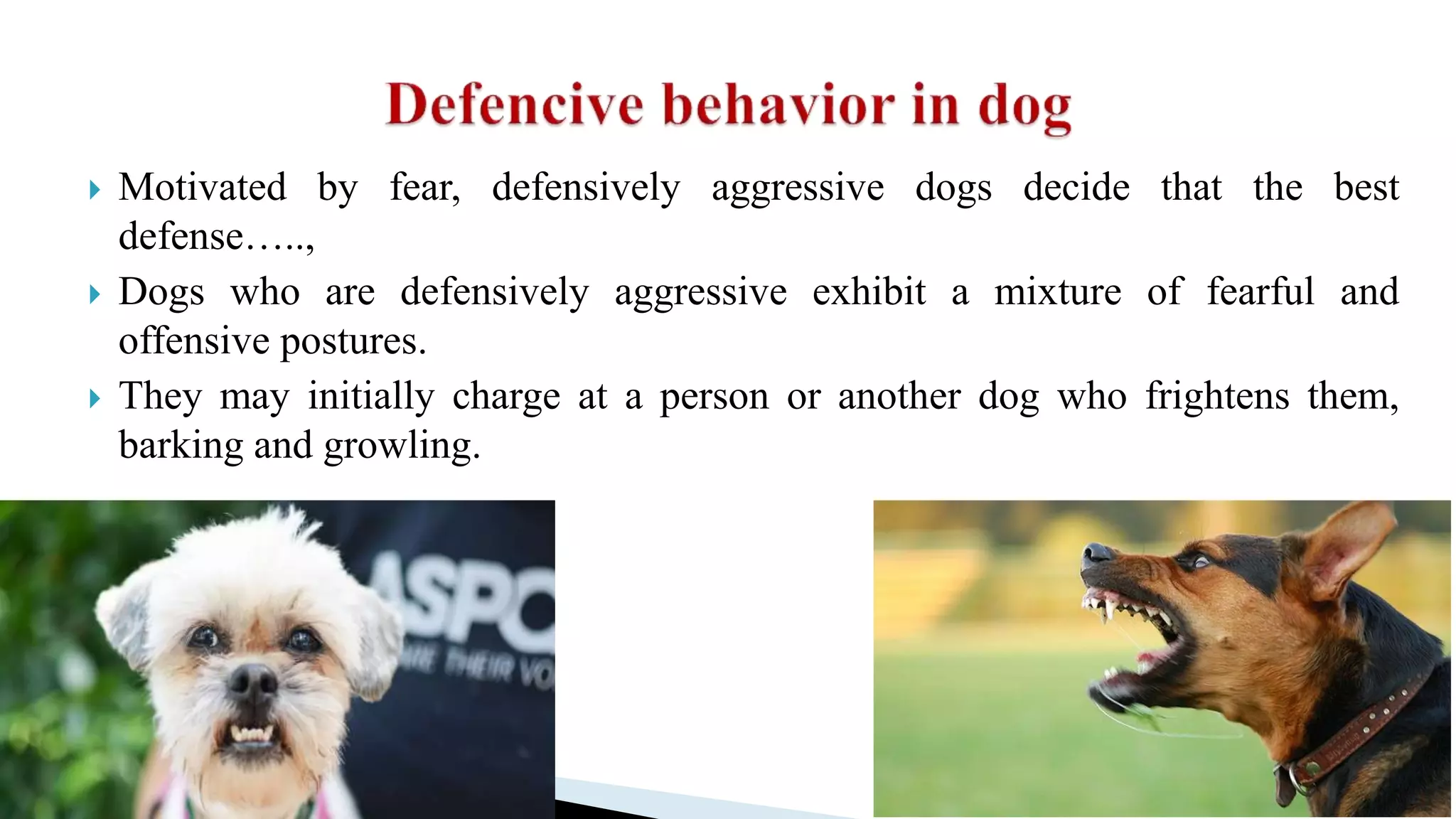
 Motivated by fear, defensively aggressive dogs decide that the best
defense…..,
 Dogs who are defensively aggressive exhibit a mixture of fearful and
offensive postures.
 They may initially charge at a person or another dog who frightens them,
barking and growling.
 A whales large size is its best protection from predators.
 The formation of pods (Social Group) also help protect the more vulnerable
members.
 The toothed whales use their teeth to kill prey and protect themselves.
Defence behavior in mammals

Defence behavior in mammals

  • 3.
    Definition: It is definedas the behavior which occurs when an individual percives threat or anticipates threat in the group. The person who behaves defensively, even though he or she also gives some attention to the common task , devotes an appreciable portion of energy to defending himself or herself.
  • 4.
     Defence behaviorpresent in defferent mammals……; E.g. Cow:-  Cow is pretect their calves from predatorys by lowering their heads and charging towards the attracker, brandishing their horns if they have them.  Living is herd helps to overcome this problem because herd members will co-operate to protect their young.
  • 6.
    Domesticated Sheep: havecome to rely on man for protection from predators. After fleeing , sheep will reform their group and look at the predator. They use their natural herding instinct to band together for safety. A sheep that is by itself is vulnerable to attack.
  • 7.
     Defense behaviorin kangroo’s I must add that there is no enemy in kangroo’s nature habit.  Hence they do not show nature defensive action.  Kangroos fight aggressively among themselves and they use their arms and legs a lot during the fight.
  • 9.
     In petcat , aggressive behavior can rang from cats who hiss and avoid the target of their aggression to cats who attack.  Understanding what cats are communicating through their body language is essential for cats parents.  threats and aggression can be either offence or defencive.
  • 10.
     Motivated byfear, defensively aggressive dogs decide that the best defense…..,  Dogs who are defensively aggressive exhibit a mixture of fearful and offensive postures.  They may initially charge at a person or another dog who frightens them, barking and growling.
  • 11.
     A whaleslarge size is its best protection from predators.  The formation of pods (Social Group) also help protect the more vulnerable members.  The toothed whales use their teeth to kill prey and protect themselves.