Why we care about IA
Review of Information Management statistics
published by Gartner shows
 Information is doubling every 2 years
 Information Worker spends 2 hrs. every week looking for data
and not finding it
 2 hours spent on recreating information which already exists

Problem: Business good in creating contents and not effective in
managing it

Solution: The process which can help Business manage data is called
Information Architecture
What is Information Architecture
 IA is about defining user experience in
context to data and business process
 IA defines how we create, organize, search,
use and manage data

"It is all about making data more efficient and useful"
Why we do Information Architecture
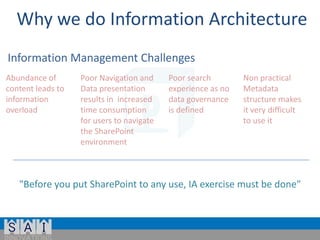
Information Management Challenges
Abundance of
content leads to
information
overload

Poor Navigation and
Data presentation
results in increased
time consumption
for users to navigate
the SharePoint
environment

Poor search
experience as no
data governance
is defined

Non practical
Metadata
structure makes
it very difficult
to use it

"Before you put SharePoint to any use, IA exercise must be done"
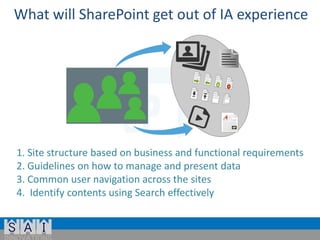
What will SharePoint get out of IA experience

1. Site structure based on business and functional requirements
2. Guidelines on how to manage and present data
3. Common user navigation across the sites
4. Identify contents using Search effectively
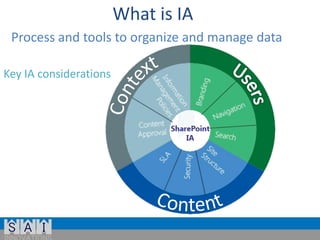
What is IA
Process and tools to organize and manage data
Key IA considerations
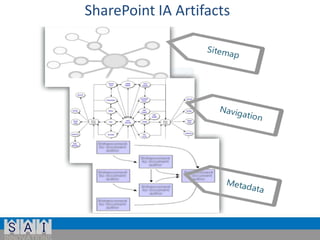
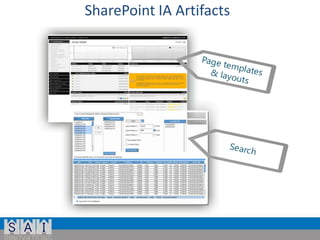
SharePoint IA Artifacts
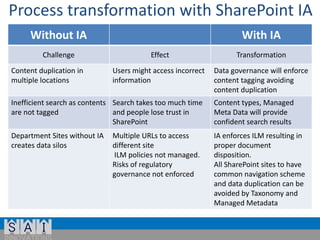
Process transformation with SharePoint IA
Without IA
Challenge
Content duplication in
multiple locations

With IA
Effect

Transformation

Users might access incorrect
information

Data governance will enforce
content tagging avoiding
content duplication

Inefficient search as contents Search takes too much time
are not tagged
and people lose trust in
SharePoint

Content types, Managed
Meta Data will provide
confident search results

Department Sites without IA
creates data silos

IA enforces ILM resulting in
proper document
disposition.
All SharePoint sites to have
common navigation scheme
and data duplication can be
avoided by Taxonomy and
Managed Metadata

Multiple URLs to access
different site
ILM policies not managed.
Risks of regulatory
governance not enforced
Project Implementation Approach
Phase I - Assessment
Tasks






End User Survey
ILM Workshops
Content Audit
Metadata Extraction
Content Migration Approach

Deliverables
Logical Architecture, Site map, Content Types, Taxonomy,
Managed Metadata, Security Model
Phase II - Development and Implementation
Tasks
 Validate Physical Architecture
 Build Logical Architecture
 Records Center, if required

Deliverables
SharePoint Infrastructure to support IA
Phase II - Refinement
Tasks
 Test & Validate Search and Navigation

Deliverables
Data Governance to keep Taxonomy relevant all times
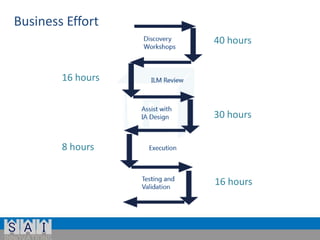
Business Effort
40 hours
16 hours
30 hours
8 hours
16 hours
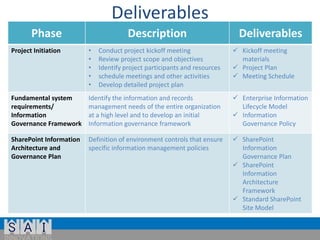
Deliverables
Phase

Description

Deliverables

Project Initiation

•
•
•
•
•

Fundamental system
requirements/
Information
Governance Framework

Identify the information and records
management needs of the entire organization
at a high level and to develop an initial
Information governance framework

 Enterprise Information
Lifecycle Model
 Information
Governance Policy

SharePoint Information
Architecture and
Governance Plan

Definition of environment controls that ensure
specific information management policies

 SharePoint
Information
Governance Plan
 SharePoint
Information
Architecture
Framework
 Standard SharePoint
Site Model

Conduct project kickoff meeting
Review project scope and objectives
Identify project participants and resources
schedule meetings and other activities
Develop detailed project plan

 Kickoff meeting
materials
 Project Plan
 Meeting Schedule
About SAI Innovations
SAI Innovations provides business technology services
for Enterprise Content Management and CRM consulting.
SAI specializes in Microsoft SharePoint and Dynamics
CRM technologies to develop Cloud or On-premises
solutions. Companies can achieve regulatory compliance
and reduce risk with use of PageLight, our award winning
Document Management solution for SharePoint.

www.sai-innovations.com

Sharepoint information-architecture

  • 2.
    Why we careabout IA Review of Information Management statistics published by Gartner shows  Information is doubling every 2 years  Information Worker spends 2 hrs. every week looking for data and not finding it  2 hours spent on recreating information which already exists Problem: Business good in creating contents and not effective in managing it Solution: The process which can help Business manage data is called Information Architecture
  • 3.
    What is InformationArchitecture  IA is about defining user experience in context to data and business process  IA defines how we create, organize, search, use and manage data "It is all about making data more efficient and useful"
  • 4.
    Why we doInformation Architecture Information Management Challenges Abundance of content leads to information overload Poor Navigation and Data presentation results in increased time consumption for users to navigate the SharePoint environment Poor search experience as no data governance is defined Non practical Metadata structure makes it very difficult to use it "Before you put SharePoint to any use, IA exercise must be done"
  • 5.
    What will SharePointget out of IA experience 1. Site structure based on business and functional requirements 2. Guidelines on how to manage and present data 3. Common user navigation across the sites 4. Identify contents using Search effectively
  • 6.
    What is IA Processand tools to organize and manage data Key IA considerations
  • 7.
  • 8.
  • 9.
    Process transformation withSharePoint IA Without IA Challenge Content duplication in multiple locations With IA Effect Transformation Users might access incorrect information Data governance will enforce content tagging avoiding content duplication Inefficient search as contents Search takes too much time are not tagged and people lose trust in SharePoint Content types, Managed Meta Data will provide confident search results Department Sites without IA creates data silos IA enforces ILM resulting in proper document disposition. All SharePoint sites to have common navigation scheme and data duplication can be avoided by Taxonomy and Managed Metadata Multiple URLs to access different site ILM policies not managed. Risks of regulatory governance not enforced
  • 10.
    Project Implementation Approach PhaseI - Assessment Tasks      End User Survey ILM Workshops Content Audit Metadata Extraction Content Migration Approach Deliverables Logical Architecture, Site map, Content Types, Taxonomy, Managed Metadata, Security Model
  • 11.
    Phase II -Development and Implementation Tasks  Validate Physical Architecture  Build Logical Architecture  Records Center, if required Deliverables SharePoint Infrastructure to support IA
  • 12.
    Phase II -Refinement Tasks  Test & Validate Search and Navigation Deliverables Data Governance to keep Taxonomy relevant all times
  • 13.
    Business Effort 40 hours 16hours 30 hours 8 hours 16 hours
  • 14.
    Deliverables Phase Description Deliverables Project Initiation • • • • • Fundamental system requirements/ Information GovernanceFramework Identify the information and records management needs of the entire organization at a high level and to develop an initial Information governance framework  Enterprise Information Lifecycle Model  Information Governance Policy SharePoint Information Architecture and Governance Plan Definition of environment controls that ensure specific information management policies  SharePoint Information Governance Plan  SharePoint Information Architecture Framework  Standard SharePoint Site Model Conduct project kickoff meeting Review project scope and objectives Identify project participants and resources schedule meetings and other activities Develop detailed project plan  Kickoff meeting materials  Project Plan  Meeting Schedule
  • 15.
    About SAI Innovations SAIInnovations provides business technology services for Enterprise Content Management and CRM consulting. SAI specializes in Microsoft SharePoint and Dynamics CRM technologies to develop Cloud or On-premises solutions. Companies can achieve regulatory compliance and reduce risk with use of PageLight, our award winning Document Management solution for SharePoint. www.sai-innovations.com