Shade and Seating Areas
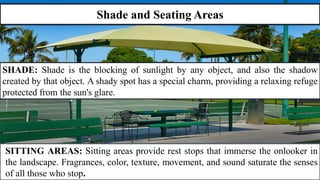
SHADE: Shade is the blocking of sunlight by any object, and also the shadow
created by that object. A shady spot has a special charm, providing a relaxing refuge
protected from the sun's glare.
SITTING AREAS: Sitting areas provide rest stops that immerse the onlooker in
the landscape. Fragrances, color, texture, movement, and sound saturate the senses
of all those who stop.
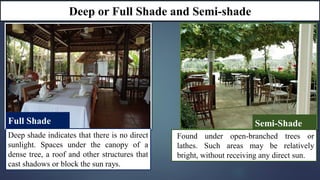
Deep or Full Shade and Semi-shade
Deep shade indicates that there is no direct
sunlight. Spaces under the canopy of a
dense tree, a roof and other structures that
cast shadows or block the sun rays.
Full Shade Semi-Shade
Found under open-branched trees or
lathes. Such areas may be relatively
bright, without receiving any direct sun.
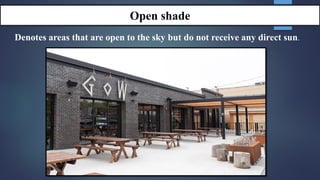
Open shade
Denotes areas that are open to the sky but do not receive any direct sun.
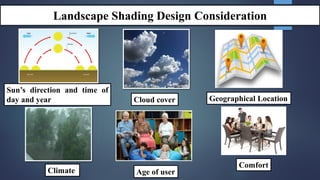
Landscape Shading Design Consideration
Cloud cover Geographical Location
Comfort
Climate
Sun’s direction and time of
day and year
Age of user
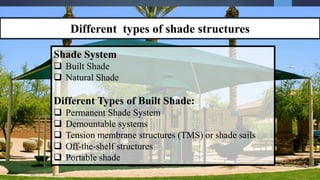
Different types of shade structures
Shade System
 Built Shade
 Natural Shade
Different Types of Built Shade:
 Permanent Shade System
 Demountable systems
 Tension membrane structures (TMS) or shade sails
 Off-the-shelf structures
 Portable shade
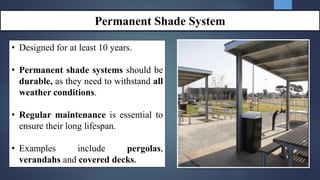
Permanent Shade System
• Designed for at least 10 years.
• Permanent shade systems should be
durable, as they need to withstand all
weather conditions.
• Regular maintenance is essential to
ensure their long lifespan.
• Examples include pergolas,
verandahs and covered decks.
Permanent Pergola Shade System
Covered Deck Shade System
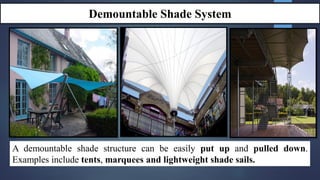
A demountable shade structure can be easily put up and pulled down.
Examples include tents, marquees and lightweight shade sails.
Demountable Shade System
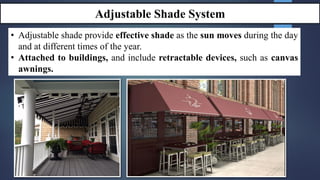
• Adjustable shade provide effective shade as the sun moves during the day
and at different times of the year.
• Attached to buildings, and include retractable devices, such as canvas
awnings.
Adjustable Shade System
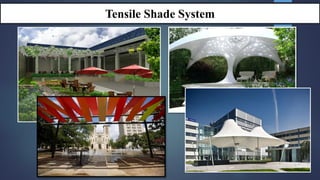
 Tensile Structure an advanced roofing structure that using the polymer
textile to be roofing material.
 These structures are safe to be left outside in all weather conditions and
protect those underneath from the rain sun and harmful UV rays.
Tensile Shade System
TMS have several advantages:
They look good
 Usually require minimal support structures.
Cost effective where shade is required for large areas that need to be column-
free, such as playgrounds and swimming pools.
Tensile Shade System
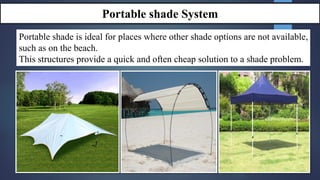
Portable shade is ideal for places where other shade options are not available,
such as on the beach.
This structures provide a quick and often cheap solution to a shade problem.
Portable shade System
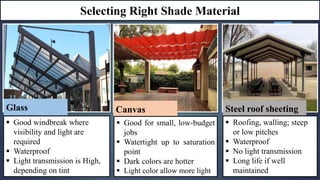
 Good windbreak where
visibility and light are
required
 Waterproof
 Light transmission is High,
depending on tint
Selecting Right Shade Material
 Good for small, low-budget
jobs
 Watertight up to saturation
point
 Dark colors are hotter
 Light color allow more light
 Roofing, walling; steep
or low pitches
 Waterproof
 No light transmission
 Long life if well
maintained
Glass Canvas Steel roof sheeting
 Pergolas, trellis, screens
 Does conduct heat
 Long life if well maintained
Selecting Right Shade Material
 Roofing, walling, skylights,
canopies
 Waterproof
 Light transmission high
 Roofing, walling; steep
or low pitches
 Porous, lacks rain
protection
 Light colors allow more
light
Timber
Fiberglass sheeting
Knitted polyethylene
Natural Shade
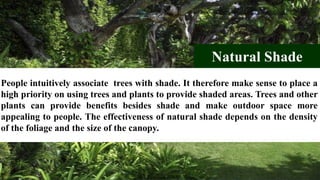
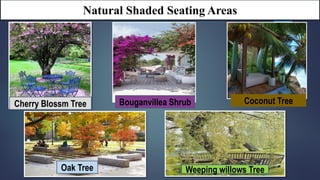
People intuitively associate trees with shade. It therefore make sense to place a
high priority on using trees and plants to provide shaded areas. Trees and other
plants can provide benefits besides shade and make outdoor space more
appealing to people. The effectiveness of natural shade depends on the density
of the foliage and the size of the canopy.
Cherry Blossm Tree Bouganvillea Shrub Coconut Tree
Oak Tree Weeping willows Tree
Natural Shaded Seating Areas
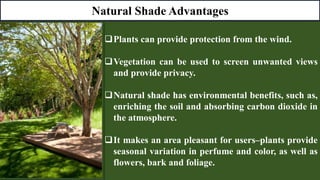
Plants can provide protection from the wind.
Vegetation can be used to screen unwanted views
and provide privacy.
Natural shade has environmental benefits, such as,
enriching the soil and absorbing carbon dioxide in
the atmosphere.
It makes an area pleasant for users–plants provide
seasonal variation in perfume and color, as well as
flowers, bark and foliage.
Natural Shade Advantages
 Ensure that planting will be consistent with the character of the surrounding environment, both
natural and built.
 Find out about local conditions, such as soil type, climate and salinity, before choosing plants.
 Check the size and shape of a plant when it is fully grown, as well as its lifespan, are appropriate
for the space available.
 Avoid plants that are toxic, attract bees, drop limbs, have thorns or spikes, or cause adverse
health effects such as asthma and skin irritation.
 Consider whether deciduous or evergreen plants are more suitable.
 Keep large trees away from power lines and underground services, such as water and gas.
 Consider the costs associated with maintaining natural shade, such as watering, fertilizing and
pruning.
Natural Shading Design Consideration

Shade and Shade Structures

  • 1.
    Shade and SeatingAreas SHADE: Shade is the blocking of sunlight by any object, and also the shadow created by that object. A shady spot has a special charm, providing a relaxing refuge protected from the sun's glare. SITTING AREAS: Sitting areas provide rest stops that immerse the onlooker in the landscape. Fragrances, color, texture, movement, and sound saturate the senses of all those who stop.
  • 2.
    Deep or FullShade and Semi-shade Deep shade indicates that there is no direct sunlight. Spaces under the canopy of a dense tree, a roof and other structures that cast shadows or block the sun rays. Full Shade Semi-Shade Found under open-branched trees or lathes. Such areas may be relatively bright, without receiving any direct sun.
  • 3.
    Open shade Denotes areasthat are open to the sky but do not receive any direct sun.
  • 4.
    Landscape Shading DesignConsideration Cloud cover Geographical Location Comfort Climate Sun’s direction and time of day and year Age of user
  • 5.
    Different types ofshade structures Shade System  Built Shade  Natural Shade Different Types of Built Shade:  Permanent Shade System  Demountable systems  Tension membrane structures (TMS) or shade sails  Off-the-shelf structures  Portable shade
  • 6.
    Permanent Shade System •Designed for at least 10 years. • Permanent shade systems should be durable, as they need to withstand all weather conditions. • Regular maintenance is essential to ensure their long lifespan. • Examples include pergolas, verandahs and covered decks.
  • 7.
  • 8.
  • 9.
    A demountable shadestructure can be easily put up and pulled down. Examples include tents, marquees and lightweight shade sails. Demountable Shade System
  • 10.
    • Adjustable shadeprovide effective shade as the sun moves during the day and at different times of the year. • Attached to buildings, and include retractable devices, such as canvas awnings. Adjustable Shade System
  • 11.
     Tensile Structurean advanced roofing structure that using the polymer textile to be roofing material.  These structures are safe to be left outside in all weather conditions and protect those underneath from the rain sun and harmful UV rays. Tensile Shade System TMS have several advantages: They look good  Usually require minimal support structures. Cost effective where shade is required for large areas that need to be column- free, such as playgrounds and swimming pools.
  • 12.
  • 13.
    Portable shade isideal for places where other shade options are not available, such as on the beach. This structures provide a quick and often cheap solution to a shade problem. Portable shade System
  • 14.
     Good windbreakwhere visibility and light are required  Waterproof  Light transmission is High, depending on tint Selecting Right Shade Material  Good for small, low-budget jobs  Watertight up to saturation point  Dark colors are hotter  Light color allow more light  Roofing, walling; steep or low pitches  Waterproof  No light transmission  Long life if well maintained Glass Canvas Steel roof sheeting
  • 15.
     Pergolas, trellis,screens  Does conduct heat  Long life if well maintained Selecting Right Shade Material  Roofing, walling, skylights, canopies  Waterproof  Light transmission high  Roofing, walling; steep or low pitches  Porous, lacks rain protection  Light colors allow more light Timber Fiberglass sheeting Knitted polyethylene
  • 16.
    Natural Shade People intuitivelyassociate trees with shade. It therefore make sense to place a high priority on using trees and plants to provide shaded areas. Trees and other plants can provide benefits besides shade and make outdoor space more appealing to people. The effectiveness of natural shade depends on the density of the foliage and the size of the canopy.
  • 17.
    Cherry Blossm TreeBouganvillea Shrub Coconut Tree Oak Tree Weeping willows Tree Natural Shaded Seating Areas
  • 18.
    Plants can provideprotection from the wind. Vegetation can be used to screen unwanted views and provide privacy. Natural shade has environmental benefits, such as, enriching the soil and absorbing carbon dioxide in the atmosphere. It makes an area pleasant for users–plants provide seasonal variation in perfume and color, as well as flowers, bark and foliage. Natural Shade Advantages
  • 19.
     Ensure thatplanting will be consistent with the character of the surrounding environment, both natural and built.  Find out about local conditions, such as soil type, climate and salinity, before choosing plants.  Check the size and shape of a plant when it is fully grown, as well as its lifespan, are appropriate for the space available.  Avoid plants that are toxic, attract bees, drop limbs, have thorns or spikes, or cause adverse health effects such as asthma and skin irritation.  Consider whether deciduous or evergreen plants are more suitable.  Keep large trees away from power lines and underground services, such as water and gas.  Consider the costs associated with maintaining natural shade, such as watering, fertilizing and pruning. Natural Shading Design Consideration