Sustainable Design Principles
The U.S. Green Building Council
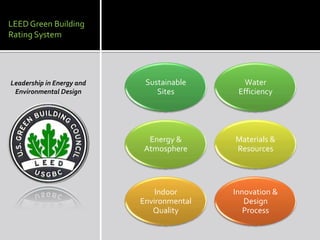
LEED Green Building Rating SystemLeadership in Energy and Environmental Design
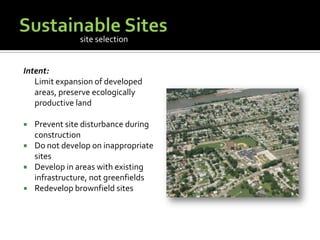
Sustainable SitesIntent:	Limit expansion of developed areas, preserve ecologically productive landPrevent site disturbance during constructionDo not develop on inappropriate sitesDevelop in areas with existing infrastructure, not greenfieldsRedevelop brownfield sitessite selection
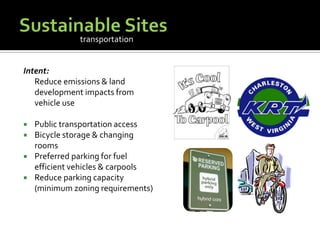
Sustainable SitesIntent:	Reduce emissions & land development impacts from vehicle usePublic transportation accessBicycle storage & changing roomsPreferred parking for fuel efficient vehicles & carpoolsReduce parking capacity (minimum zoning requirements)transportation
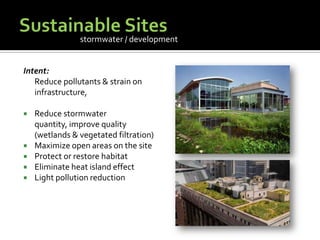
Sustainable SitesIntent:	Reduce pollutants & strain on infrastructure, Reduce stormwater quantity, improve quality (wetlands & vegetated filtration)Maximize open areas on the siteProtect or restore habitatEliminate heat island effectLight pollution reductionstormwater / development
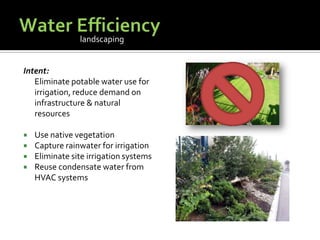
Water EfficiencyIntent:	Eliminate potable water use for irrigation, reduce demand on infrastructure & natural resourcesUse native vegetationCapture rainwater for irrigationEliminate site irrigation systemsReuse condensate water from HVAC systemslandscaping
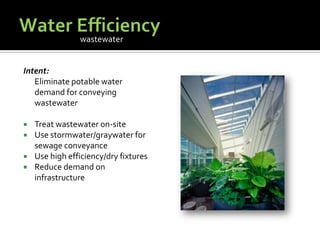
Water EfficiencyIntent:	Eliminate potable water demand for conveying wastewaterTreat wastewater on-siteUse stormwater/graywater for sewage conveyanceUse high efficiency/dry fixturesReduce demand on infrastructurewastewater
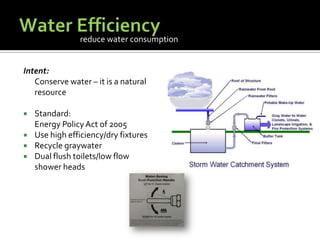
Water EfficiencyIntent:	Conserve water – it is a natural resourceStandard:	Energy Policy Act of 2005Use high efficiency/dry fixturesRecycle graywaterDual flush toilets/low flow shower headsreduce water consumption
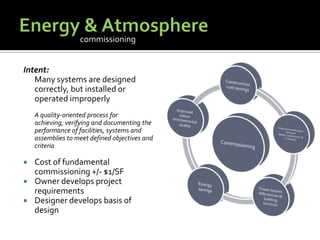
Energy & AtmosphereIntent:	Many systems are designed correctly, but installed or operated improperlyA quality-oriented process for achieving, verifying and documenting the performance of facilities, systems and assemblies to meet defined objectives and criteriaCost of fundamental commissioning +/- $1/SFOwner develops project requirementsDesigner develops basis of designcommissioning
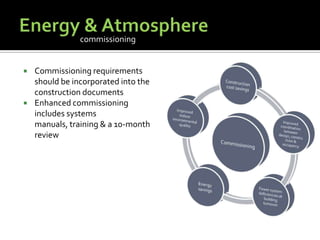
Energy & AtmosphereCommissioning requirements should be incorporated into the construction documentsEnhanced commissioning includes systems manuals, training & a 10-month reviewcommissioning
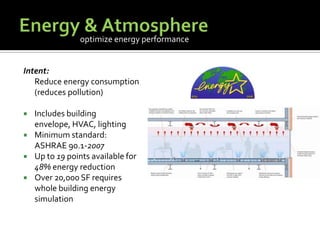
Energy & Atmosphereoptimize energy performanceIntent:	Reduce energy consumption (reduces pollution)Includes building envelope, HVAC, lightingMinimum standard:	ASHRAE 90.1-2007Up to 19 points available for 48% energy reductionOver 20,000 SF requires whole building energy simulation
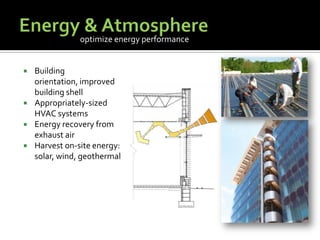
Energy & Atmosphereoptimize energy performanceBuilding orientation, improved building shellAppropriately-sized HVAC systemsEnergy recovery from exhaust airHarvest on-site energy:  solar, wind, geothermal
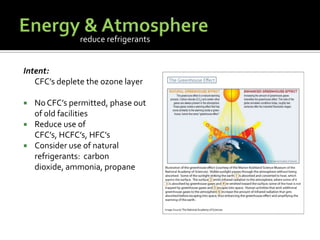
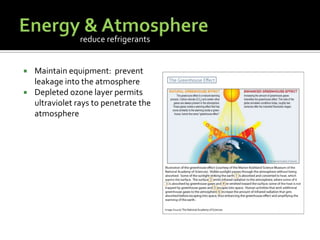
Energy & AtmosphereIntent:	CFC’s deplete the ozone layerNo CFC’s permitted, phase out of old facilitiesReduce use of CFC’s, HCFC’s, HFC’sConsider use of natural refrigerants:  carbon dioxide, ammonia, propanereduce refrigerants
Energy & AtmosphereMaintain equipment:  prevent leakage into the atmosphereDepleted ozone layer permits ultraviolet rays to penetrate the atmospherereduce refrigerants
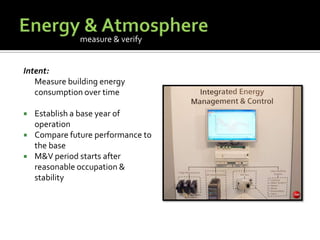
Energy & AtmosphereIntent:	Measure building energy consumption over timeEstablish a base year of operationCompare future performance to the baseM&V period starts after reasonable occupation & stabilitymeasure & verify
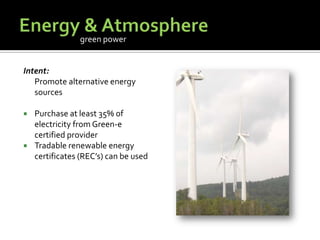
Energy & AtmosphereIntent:	Promote alternative energy sourcesPurchase at least 35% of electricity from Green-e certified providerTradable renewable energy certificates (REC’s) can be usedgreen power
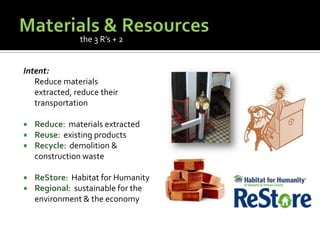
Materials & ResourcesIntent:	Reduce materials extracted, reduce their transportationReduce:  materials extractedReuse:  existing productsRecycle:  demolition & construction wasteReStore:  Habitat for HumanityRegional:  sustainable for the environment & the economythe 3 R’s + 2
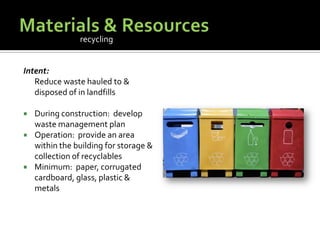
Materials & ResourcesIntent:	Reduce waste hauled to & disposed of in landfillsDuring construction:  develop waste management planOperation:  provide an area within the building for storage & collection of recyclablesMinimum:  paper, corrugated cardboard, glass, plastic & metalsrecycling
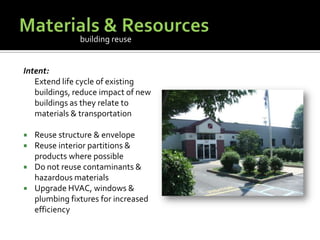
Materials & ResourcesIntent:	Extend life cycle of existing buildings, reduce impact of new buildings as they relate to materials & transportationReuse structure & envelopeReuse interior partitions & products where possibleDo not reuse contaminants & hazardous materialsUpgrade HVAC, windows & plumbing fixtures for increased efficiencybuilding reuse
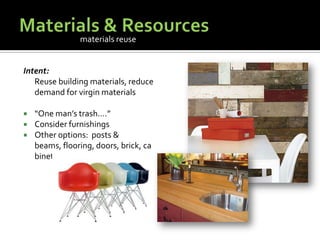
Materials & ResourcesIntent:	Reuse building materials, reduce demand for virgin materialsā€œOne man’s trash….ā€Consider furnishingsOther options:  posts & beams, flooring, doors, brick, cabinetrymaterials reuse
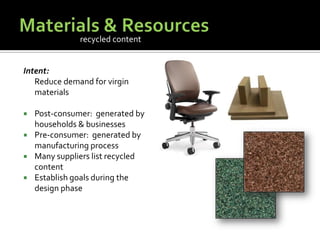
Materials & ResourcesIntent:	Reduce demand for virgin materialsPost-consumer:  generated by households & businessesPre-consumer:  generated by manufacturing processMany suppliers list recycled contentEstablish goals during the design phaserecycled content
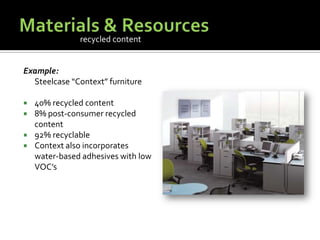
Materials & ResourcesExample:	Steelcase ā€œContextā€ furniture40% recycled content8% post-consumer recycled content92% recyclableContext also incorporates water-based adhesives with low VOC’srecycled content
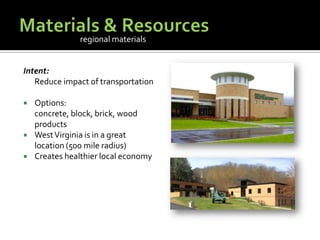
Materials & ResourcesIntent:	Reduce impact of transportationOptions:  concrete, block, brick, wood productsWest Virginia is in a great location (500 mile radius)Creates healthier local economyregional materials
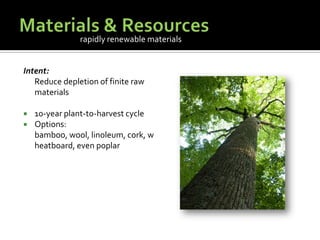
Materials & ResourcesIntent:	Reduce depletion of finite raw materials10-year plant-to-harvest cycleOptions:  bamboo, wool, linoleum, cork, wheatboard, even poplarrapidly renewable materials
Materials & ResourcesIntent:	Encourage environmentally responsible forest managementCurrent standard:  Forest Stewardship Council (FSC)Most West Virginia forests adhere to Sustainable Forest Initiative (SFI) standardUSGBC is reviewing this credit to possibly include SFIcertified woods
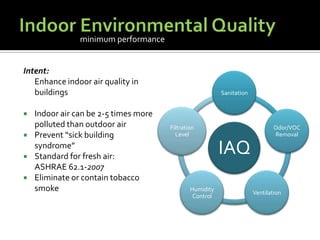
Indoor Environmental QualityIntent:	Enhance indoor air quality in buildingsIndoor air can be 2-5 times more polluted than outdoor airPrevent ā€œsick building syndromeā€Standard for fresh air:	ASHRAE 62.1-2007Eliminate or contain tobacco smokeminimum performance
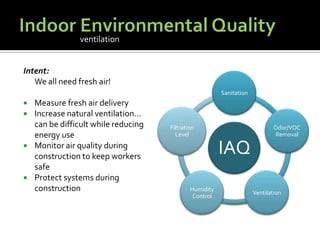
Indoor Environmental QualityIntent:	We all need fresh air!Measure fresh air deliveryIncrease natural ventilation… can be difficult while reducing energy useMonitor air quality during construction to keep workers safeProtect systems during constructionventilation
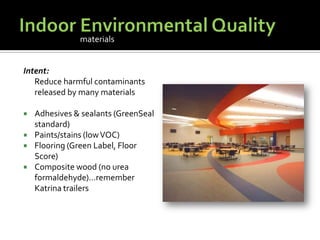
Indoor Environmental QualityIntent:	Reduce harmful contaminants released by many materials Adhesives & sealants (GreenSeal standard)Paints/stains (low VOC)Flooring (Green Label, Floor Score)Composite wood (no urea formaldehyde)…remember Katrina trailersmaterials
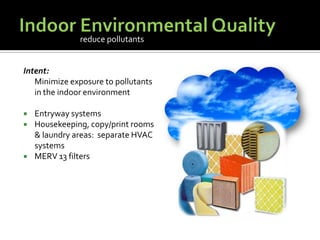
Indoor Environmental QualityIntent:	Minimize exposure to pollutants in the indoor environmentEntryway systemsHousekeeping, copy/print rooms & laundry areas:  separate HVAC systemsMERV 13 filtersreduce pollutants
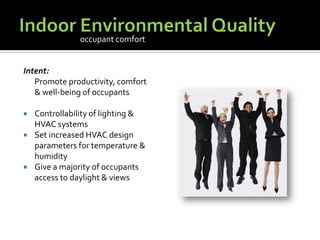
Indoor Environmental QualityIntent:	Promote productivity, comfort & well-being of occupantsControllability of lighting & HVAC systemsSet increased HVAC design parameters for temperature & humidityGive a majority of occupants access to daylight & viewsoccupant comfort
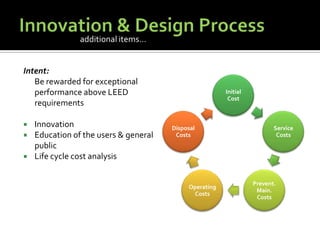
Innovation & Design ProcessIntent:	Be rewarded for exceptional performance above LEED requirementsInnovationEducation of the users & general publicLife cycle cost analysisadditional items…
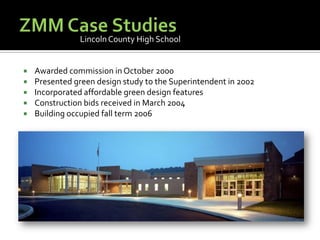
ZMM Case StudiesLincoln County High SchoolAwarded commission in October 2000Presented green design study to the Superintendent in 2002Incorporated affordable green design featuresConstruction bids received in March 2004Building occupied fall term 2006
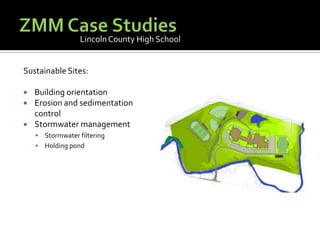
ZMM Case StudiesLincoln County High SchoolSustainable Sites:Building orientationErosion and sedimentation controlStormwater managementStormwater filteringHolding pond
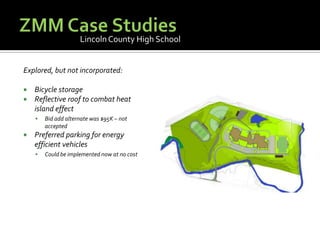
ZMM Case StudiesLincoln County High SchoolExplored, but not incorporated:Bicycle storageReflective roof to combat heat island effectBid add alternate was $95K – not acceptedPreferred parking for energy efficient vehiclesCould be implemented now at no cost
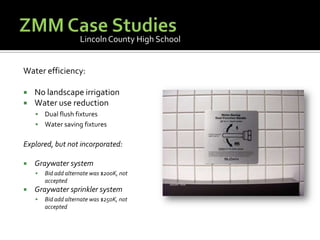
ZMM Case StudiesLincoln County High SchoolWater efficiency:No landscape irrigationWater use reductionDual flush fixturesWater saving fixturesExplored, but not incorporated:Graywater systemBid add alternate was $200K, not acceptedGraywater sprinkler systemBid add alternate was $250K, not accepted
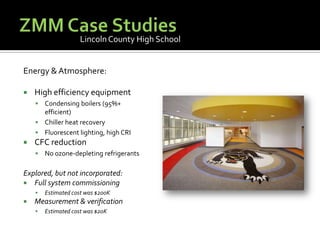
ZMM Case StudiesLincoln County High SchoolEnergy & Atmosphere:High efficiency equipmentCondensing boilers (95%+ efficient)Chiller heat recoveryFluorescent lighting, high CRICFC reductionNo ozone-depleting refrigerantsExplored, but not incorporated:Full system commissioningEstimated cost was $200KMeasurement & verificationEstimated cost was $20K
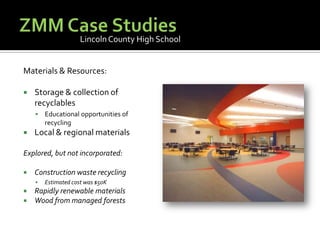
ZMM Case StudiesLincoln County High SchoolMaterials & Resources:Storage & collection of recyclablesEducational opportunities of recyclingLocal & regional materialsExplored, but not incorporated:Construction waste recyclingEstimated cost was $50KRapidly renewable materialsWood from managed forests
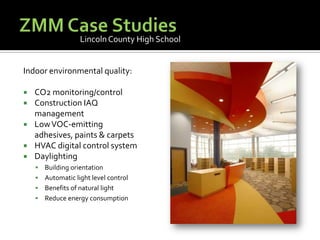
ZMM Case StudiesLincoln County High SchoolIndoor environmental quality:CO2 monitoring/controlConstruction IAQ managementLow VOC-emitting adhesives, paints & carpetsHVAC digital control systemDaylightingBuilding orientationAutomatic light level controlBenefits of natural lightReduce energy consumption
ZMM Case StudiesLincoln County High SchoolCost breakdown:Sustainable SitesNominalWater EfficiencyEstimated at $50KEnergy & AtmosphereEstimated at $50KMaterials & ResourcesNominalIndoor Environmental QualityEstimated at $625K (daylighting & lighting controls make up $600K of this cost)
ZMM Case StudiesLincoln County High SchoolFirst costs vs. long-term benefits:First cost of green features$700,000$3.23 per square footPercent of construction costs$700,000$31,400,000= 2.25%
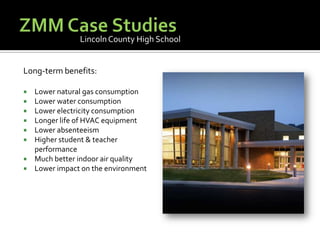
ZMM Case StudiesLincoln County High SchoolLong-term benefits:Lower natural gas consumptionLower water consumptionLower electricity consumptionLonger life of HVAC equipmentLower absenteeismHigher student & teacher performanceMuch better indoor air qualityLower impact on the environment
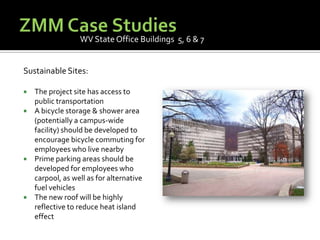
ZMM Case StudiesWV State Office Buildings  5, 6 & 7Sustainable Sites:The project site has access to public transportationA bicycle storage & shower area (potentially a campus-wide facility) should be developed to encourage bicycle commuting for employees who live nearbyPrime parking areas should be developed for employees who carpool, as well as for alternative fuel vehiclesThe new roof will be highly reflective to reduce heat island effect
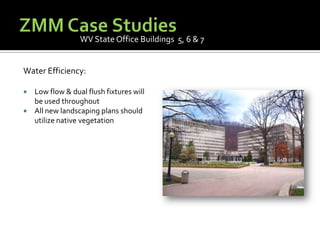
ZMM Case StudiesWV State Office Buildings  5, 6 & 7Water Efficiency:Low flow & dual flush fixtures will be used throughoutAll new landscaping plans should utilize native vegetation
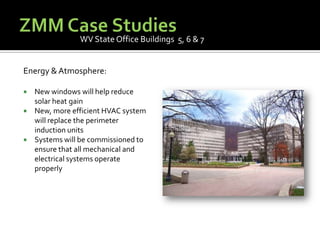
ZMM Case StudiesWV State Office Buildings  5, 6 & 7Energy & Atmosphere:New windows will help reduce solar heat gainNew, more efficient HVAC system will replace the perimeter induction unitsSystems will be commissioned to ensure that all mechanical and electrical systems operate properly
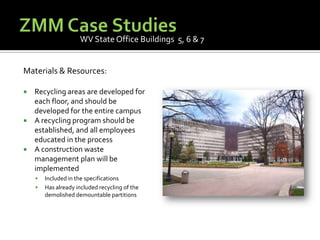
ZMM Case StudiesWV State Office Buildings  5, 6 & 7Materials & Resources:Recycling areas are developed for each floor, and should be developed for the entire campusA recycling program should be established, and all employees educated in the processA construction waste management plan will be implementedIncluded in the specificationsHas already included recycling of the demolished demountable partitions
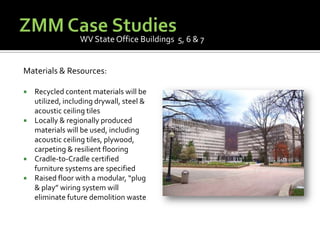
ZMM Case StudiesWV State Office Buildings  5, 6 & 7Materials & Resources:Recycled content materials will be utilized, including drywall, steel & acoustic ceiling tilesLocally & regionally produced materials will be used, including acoustic ceiling tiles, plywood,	carpeting & resilient flooringCradle-to-Cradle certified furniture systems are specifiedRaised floor with a modular, ā€œplug & playā€ wiring system will eliminate future demolition waste
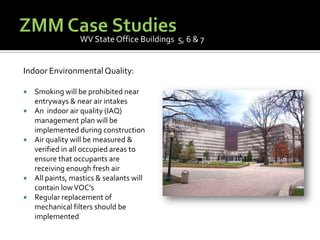
ZMM Case StudiesWV State Office Buildings  5, 6 & 7Indoor Environmental Quality:Smoking will be prohibited near entryways & near air intakesAn  indoor air quality (IAQ) management plan will be implemented during constructionAir quality will be measured & verified in all occupied areas to ensure that occupants are receiving enough fresh airAll paints, mastics & sealants will contain low VOC’sRegular replacement of mechanical filters should be implemented
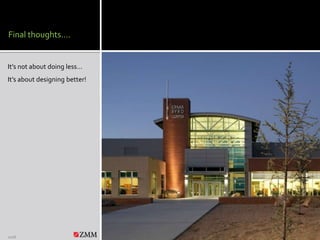
Final thoughts….It’s not about doing less…It’s about designing better!2008SUSTAINABILITY

Sustainable Design Principles

  • 1.
  • 2.
    The U.S. GreenBuilding Council
  • 3.
    The U.S. GreenBuilding Council
  • 4.
    LEED Green BuildingRating SystemLeadership in Energy and Environmental Design
  • 5.
    Sustainable SitesIntent: Limit expansionof developed areas, preserve ecologically productive landPrevent site disturbance during constructionDo not develop on inappropriate sitesDevelop in areas with existing infrastructure, not greenfieldsRedevelop brownfield sitessite selection
  • 6.
    Sustainable SitesIntent: Reduce emissions& land development impacts from vehicle usePublic transportation accessBicycle storage & changing roomsPreferred parking for fuel efficient vehicles & carpoolsReduce parking capacity (minimum zoning requirements)transportation
  • 7.
    Sustainable SitesIntent: Reduce pollutants& strain on infrastructure, Reduce stormwater quantity, improve quality (wetlands & vegetated filtration)Maximize open areas on the siteProtect or restore habitatEliminate heat island effectLight pollution reductionstormwater / development
  • 8.
    Water EfficiencyIntent: Eliminate potablewater use for irrigation, reduce demand on infrastructure & natural resourcesUse native vegetationCapture rainwater for irrigationEliminate site irrigation systemsReuse condensate water from HVAC systemslandscaping
  • 9.
    Water EfficiencyIntent: Eliminate potablewater demand for conveying wastewaterTreat wastewater on-siteUse stormwater/graywater for sewage conveyanceUse high efficiency/dry fixturesReduce demand on infrastructurewastewater
  • 10.
    Water EfficiencyIntent: Conserve water– it is a natural resourceStandard: Energy Policy Act of 2005Use high efficiency/dry fixturesRecycle graywaterDual flush toilets/low flow shower headsreduce water consumption
  • 11.
    Energy & AtmosphereIntent: Manysystems are designed correctly, but installed or operated improperlyA quality-oriented process for achieving, verifying and documenting the performance of facilities, systems and assemblies to meet defined objectives and criteriaCost of fundamental commissioning +/- $1/SFOwner develops project requirementsDesigner develops basis of designcommissioning
  • 12.
    Energy & AtmosphereCommissioningrequirements should be incorporated into the construction documentsEnhanced commissioning includes systems manuals, training & a 10-month reviewcommissioning
  • 13.
    Energy & Atmosphereoptimizeenergy performanceIntent: Reduce energy consumption (reduces pollution)Includes building envelope, HVAC, lightingMinimum standard: ASHRAE 90.1-2007Up to 19 points available for 48% energy reductionOver 20,000 SF requires whole building energy simulation
  • 14.
    Energy & Atmosphereoptimizeenergy performanceBuilding orientation, improved building shellAppropriately-sized HVAC systemsEnergy recovery from exhaust airHarvest on-site energy: solar, wind, geothermal
  • 15.
    Energy & AtmosphereIntent: CFC’sdeplete the ozone layerNo CFC’s permitted, phase out of old facilitiesReduce use of CFC’s, HCFC’s, HFC’sConsider use of natural refrigerants: carbon dioxide, ammonia, propanereduce refrigerants
  • 16.
    Energy & AtmosphereMaintainequipment: prevent leakage into the atmosphereDepleted ozone layer permits ultraviolet rays to penetrate the atmospherereduce refrigerants
  • 17.
    Energy & AtmosphereIntent: Measurebuilding energy consumption over timeEstablish a base year of operationCompare future performance to the baseM&V period starts after reasonable occupation & stabilitymeasure & verify
  • 18.
    Energy & AtmosphereIntent: Promotealternative energy sourcesPurchase at least 35% of electricity from Green-e certified providerTradable renewable energy certificates (REC’s) can be usedgreen power
  • 19.
    Materials & ResourcesIntent: Reducematerials extracted, reduce their transportationReduce: materials extractedReuse: existing productsRecycle: demolition & construction wasteReStore: Habitat for HumanityRegional: sustainable for the environment & the economythe 3 R’s + 2
  • 20.
    Materials & ResourcesIntent: Reducewaste hauled to & disposed of in landfillsDuring construction: develop waste management planOperation: provide an area within the building for storage & collection of recyclablesMinimum: paper, corrugated cardboard, glass, plastic & metalsrecycling
  • 21.
    Materials & ResourcesIntent: Extendlife cycle of existing buildings, reduce impact of new buildings as they relate to materials & transportationReuse structure & envelopeReuse interior partitions & products where possibleDo not reuse contaminants & hazardous materialsUpgrade HVAC, windows & plumbing fixtures for increased efficiencybuilding reuse
  • 22.
    Materials & ResourcesIntent: Reusebuilding materials, reduce demand for virgin materialsā€œOne man’s trash….ā€Consider furnishingsOther options: posts & beams, flooring, doors, brick, cabinetrymaterials reuse
  • 23.
    Materials & ResourcesIntent: Reducedemand for virgin materialsPost-consumer: generated by households & businessesPre-consumer: generated by manufacturing processMany suppliers list recycled contentEstablish goals during the design phaserecycled content
  • 24.
    Materials & ResourcesExample: Steelcaseā€œContextā€ furniture40% recycled content8% post-consumer recycled content92% recyclableContext also incorporates water-based adhesives with low VOC’srecycled content
  • 25.
    Materials & ResourcesIntent: Reduceimpact of transportationOptions: concrete, block, brick, wood productsWest Virginia is in a great location (500 mile radius)Creates healthier local economyregional materials
  • 26.
    Materials & ResourcesIntent: Reducedepletion of finite raw materials10-year plant-to-harvest cycleOptions: bamboo, wool, linoleum, cork, wheatboard, even poplarrapidly renewable materials
  • 27.
    Materials & ResourcesIntent: Encourageenvironmentally responsible forest managementCurrent standard: Forest Stewardship Council (FSC)Most West Virginia forests adhere to Sustainable Forest Initiative (SFI) standardUSGBC is reviewing this credit to possibly include SFIcertified woods
  • 28.
    Indoor Environmental QualityIntent: Enhanceindoor air quality in buildingsIndoor air can be 2-5 times more polluted than outdoor airPrevent ā€œsick building syndromeā€Standard for fresh air: ASHRAE 62.1-2007Eliminate or contain tobacco smokeminimum performance
  • 29.
    Indoor Environmental QualityIntent: Weall need fresh air!Measure fresh air deliveryIncrease natural ventilation… can be difficult while reducing energy useMonitor air quality during construction to keep workers safeProtect systems during constructionventilation
  • 30.
    Indoor Environmental QualityIntent: Reduceharmful contaminants released by many materials Adhesives & sealants (GreenSeal standard)Paints/stains (low VOC)Flooring (Green Label, Floor Score)Composite wood (no urea formaldehyde)…remember Katrina trailersmaterials
  • 31.
    Indoor Environmental QualityIntent: Minimizeexposure to pollutants in the indoor environmentEntryway systemsHousekeeping, copy/print rooms & laundry areas: separate HVAC systemsMERV 13 filtersreduce pollutants
  • 32.
    Indoor Environmental QualityIntent: Promoteproductivity, comfort & well-being of occupantsControllability of lighting & HVAC systemsSet increased HVAC design parameters for temperature & humidityGive a majority of occupants access to daylight & viewsoccupant comfort
  • 33.
    Innovation & DesignProcessIntent: Be rewarded for exceptional performance above LEED requirementsInnovationEducation of the users & general publicLife cycle cost analysisadditional items…
  • 34.
    ZMM Case StudiesLincolnCounty High SchoolAwarded commission in October 2000Presented green design study to the Superintendent in 2002Incorporated affordable green design featuresConstruction bids received in March 2004Building occupied fall term 2006
  • 35.
    ZMM Case StudiesLincolnCounty High SchoolSustainable Sites:Building orientationErosion and sedimentation controlStormwater managementStormwater filteringHolding pond
  • 36.
    ZMM Case StudiesLincolnCounty High SchoolExplored, but not incorporated:Bicycle storageReflective roof to combat heat island effectBid add alternate was $95K – not acceptedPreferred parking for energy efficient vehiclesCould be implemented now at no cost
  • 37.
    ZMM Case StudiesLincolnCounty High SchoolWater efficiency:No landscape irrigationWater use reductionDual flush fixturesWater saving fixturesExplored, but not incorporated:Graywater systemBid add alternate was $200K, not acceptedGraywater sprinkler systemBid add alternate was $250K, not accepted
  • 38.
    ZMM Case StudiesLincolnCounty High SchoolEnergy & Atmosphere:High efficiency equipmentCondensing boilers (95%+ efficient)Chiller heat recoveryFluorescent lighting, high CRICFC reductionNo ozone-depleting refrigerantsExplored, but not incorporated:Full system commissioningEstimated cost was $200KMeasurement & verificationEstimated cost was $20K
  • 39.
    ZMM Case StudiesLincolnCounty High SchoolMaterials & Resources:Storage & collection of recyclablesEducational opportunities of recyclingLocal & regional materialsExplored, but not incorporated:Construction waste recyclingEstimated cost was $50KRapidly renewable materialsWood from managed forests
  • 40.
    ZMM Case StudiesLincolnCounty High SchoolIndoor environmental quality:CO2 monitoring/controlConstruction IAQ managementLow VOC-emitting adhesives, paints & carpetsHVAC digital control systemDaylightingBuilding orientationAutomatic light level controlBenefits of natural lightReduce energy consumption
  • 41.
    ZMM Case StudiesLincolnCounty High SchoolCost breakdown:Sustainable SitesNominalWater EfficiencyEstimated at $50KEnergy & AtmosphereEstimated at $50KMaterials & ResourcesNominalIndoor Environmental QualityEstimated at $625K (daylighting & lighting controls make up $600K of this cost)
  • 42.
    ZMM Case StudiesLincolnCounty High SchoolFirst costs vs. long-term benefits:First cost of green features$700,000$3.23 per square footPercent of construction costs$700,000$31,400,000= 2.25%
  • 43.
    ZMM Case StudiesLincolnCounty High SchoolLong-term benefits:Lower natural gas consumptionLower water consumptionLower electricity consumptionLonger life of HVAC equipmentLower absenteeismHigher student & teacher performanceMuch better indoor air qualityLower impact on the environment
  • 44.
    ZMM Case StudiesWVState Office Buildings 5, 6 & 7Sustainable Sites:The project site has access to public transportationA bicycle storage & shower area (potentially a campus-wide facility) should be developed to encourage bicycle commuting for employees who live nearbyPrime parking areas should be developed for employees who carpool, as well as for alternative fuel vehiclesThe new roof will be highly reflective to reduce heat island effect
  • 45.
    ZMM Case StudiesWVState Office Buildings 5, 6 & 7Water Efficiency:Low flow & dual flush fixtures will be used throughoutAll new landscaping plans should utilize native vegetation
  • 46.
    ZMM Case StudiesWVState Office Buildings 5, 6 & 7Energy & Atmosphere:New windows will help reduce solar heat gainNew, more efficient HVAC system will replace the perimeter induction unitsSystems will be commissioned to ensure that all mechanical and electrical systems operate properly
  • 47.
    ZMM Case StudiesWVState Office Buildings 5, 6 & 7Materials & Resources:Recycling areas are developed for each floor, and should be developed for the entire campusA recycling program should be established, and all employees educated in the processA construction waste management plan will be implementedIncluded in the specificationsHas already included recycling of the demolished demountable partitions
  • 48.
    ZMM Case StudiesWVState Office Buildings 5, 6 & 7Materials & Resources:Recycled content materials will be utilized, including drywall, steel & acoustic ceiling tilesLocally & regionally produced materials will be used, including acoustic ceiling tiles, plywood, carpeting & resilient flooringCradle-to-Cradle certified furniture systems are specifiedRaised floor with a modular, ā€œplug & playā€ wiring system will eliminate future demolition waste
  • 49.
    ZMM Case StudiesWVState Office Buildings 5, 6 & 7Indoor Environmental Quality:Smoking will be prohibited near entryways & near air intakesAn indoor air quality (IAQ) management plan will be implemented during constructionAir quality will be measured & verified in all occupied areas to ensure that occupants are receiving enough fresh airAll paints, mastics & sealants will contain low VOC’sRegular replacement of mechanical filters should be implemented
  • 50.
    Final thoughts….It’s notabout doing less…It’s about designing better!2008SUSTAINABILITY