KUVEMPU UNIVERSITY
SAHYADRI SCIENCE COLLEGE, SHIVAMOGGA
DEPARTMENT OF BIOTECHNOLOGY
Seminar Topic : SEXUALLY TRANSMITTED DISEASES
Guide: Submitted By:
Ms.Syeda Misba Fathima, Sanjay G
Lecturer, I MSc, I Semester
Dept of Biotechnology Sahyadri Science college
Sahyadri Science college Shivamogga
Shivamogga
CONTENTS
 INTRODUCTION
 LIST OF DISEASES
a) AIDS/HIV
b) HUMAN PAPPILOMA VIRUS
c) HEPATITIS B
 CONCLUSION
 REFERENCE
INTRODUCTION
 The term ‘Sexually Transmitted Diseases’ (abbreviated STDs)
refers to a group of illnesses that can be transmitted from one
person to another through the sharing of body fluids,
including ejaculate , vaginal fluids, blood, and other fluids.
Apart from sharing similar ways of infecting people, the
various diseases compromising the STDs have little in
common.
 STDs are transmitted when body fluids from an infected
person come into intimate contact with another person. As
their name implies, the most common route through which
this body fluid sharing occurs is sexual activity. All forms of
sexual activity may involve sharing of body fluids. Sexual
contacts involving any combination of genitals, anus, fingers
and/or mouth can place a person at risk.
LIST OF DISEASES
 Though there are number of sexually transmitted
diseases present all over the world, I have considered
some of the leading sexually transmitted diseases that are
threat to the world and commonly noticeable around us.
 HIV/AIDS
 HUMAN PAPILLOMA VIRUS
 HEPATITIS B
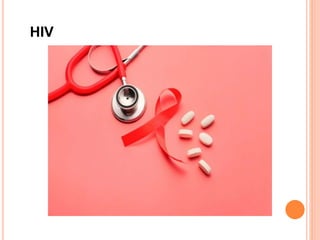
HIV
1.HIV/AIDS
 Human immunodeficiency virus infection and acquired
immunodeficiency syndrome (HIV/AIDS) is a spectrum
of conditions caused by infection with the human
immunodeficiency virus (HIV), a retrovirus. Following
initial infection a person may not notice any symptoms,
or may experience a brief period of influenza-like illness.
HIV is spread primarily by unprotected
sex (including anal and oral sex), contaminated blood
transfusions, hypodermic needles, and from mother to
child during pregnancy, delivery, or breastfeeding.
Some bodily fluids, such as saliva, sweat and tears, do
not transmit the virus.
MODE OF TRANSMISSION
 HIV attacks and destroys the CD4 cells of
the immune system. CD4 cells play a major role in
protecting the body from infection.
 HIV uses the machinery of the CD4 cells to multiply
and spread throughout the body. This process,
which is carried out in seven steps or stages, is
called the HIV life cycle. HIV medicines protect the
immune system by blocking HIV at different stages
of the HIV life cycle.
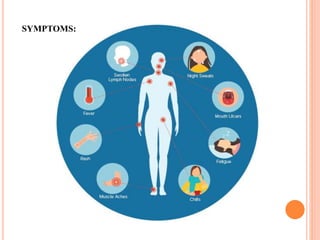
SYMPTOMS:
TREATMENTS:
Tests to stage disease and treatment:
If you've been diagnosed with HIV, it's important to find a
specialist trained in diagnosing and treating HIV to help you.
Tests for complications
The doctor might also order lab tests to check for other
infections or complications, including:
•Tuberculosis
•Hepatitis B or hepatitis C virus infection
•STIs
•Liver or kidney damage
•Urinary tract infection
•Cervical and anal cancer
•Cytomegalovirus
•Toxoplasmosis
2.HUMAN PAPILLOMA VIRUS
 Human papillomavirus infection (HPV infection) is
an infection caused by human
papillomavirus (HPV), a DNA virus from
the Papillomaviridae family. Many HPV infections
cause no symptoms and 90% resolve
spontaneously within two years. An HPV infection
is caused by human papillomavirus, a DNA virus
from the papillomavirus family. Over 170 types
have been described. More than 40 types may
be spread through sexual contact and infect
the anus and genitals
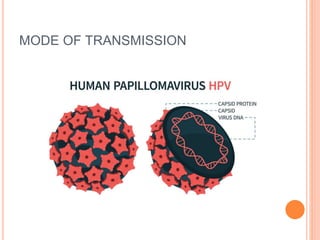
MODE OF TRANSMISSION
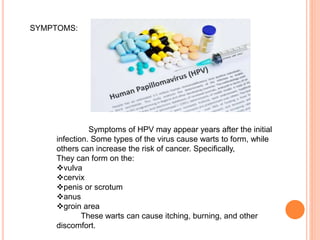
SYMPTOMS:
Symptoms of HPV may appear years after the initial
infection. Some types of the virus cause warts to form, while
others can increase the risk of cancer. Specifically,
They can form on the:
vulva
cervix
penis or scrotum
anus
groin area
These warts can cause itching, burning, and other
discomfort.
How HPV can lead to cancer?
Most people with HPV do not develop cancer, but the
infection can increase the risk, especially in people with weakened
immune systems.
A high-risk strain of HPV can change the way that cells
communicate with each other, and this can cause them to grow in
an uncontrolled way.
In many people, the immune system defeats the unwanted
cells. However, if the immune system is unable to do this, the cells
can stay in the body and continue to grow. In time, this can lead to
cancer.
It may take 10–20 years for a tumor to develop, according
to the National Cancer Institute (NCI).
TREATMENT:
There is no way to cure HPV, to remove the virus from
the body.
However, a person can take various steps to remove
the warts that HPV can cause. It is also worth noting that
these warts often go away without treatment.
Do not use over-the-counter products on genital warts.
A doctor may recommend:
Cryotherapy: This involves using liquid nitrogen to freeze off
warts.
Electrocautery: This involves using an electrical current to
burn away the warts.
Laser or light therapy: This involves using a high-powered,
targeted beam to remove the unwanted tissue.
Surgical removal: A surgeon can cut away warts in an
outpatient procedure that involves a local anesthetic.
The best option will depend upon the type and location
of the wart. Treatments can remove warts, but the virus will
remain in the body and remain transmissible.
3.HEPATITIS B
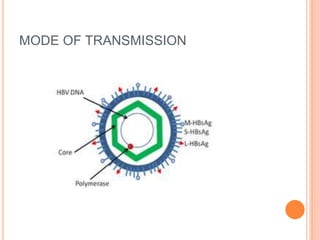
Hepatitis B is an infectious disease caused by
the hepatitis B virus (HBV) that affects the liver, it is a
type of viral hepatitis. It can cause both acute
and chronic infection. Many people have no symptoms
during the initial infection. Often these symptoms last a
few weeks and rarely does the initial infection result in
death. It may take 30 to 180 days for symptoms to
begin. In those who get infected around the time of birth
90% develop chronic hepatitis B while less than 10% of
those infected after the age of five do. Most of those
with chronic disease have no symptoms;
however, cirrhosis and liver cancer may eventually
develop. Cirrhosis or liver cancer occur in about 25% of
those with chronic disease
MODE OF TRANSMISSION
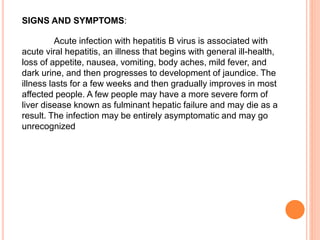
SIGNS AND SYMPTOMS:
Acute infection with hepatitis B virus is associated with
acute viral hepatitis, an illness that begins with general ill-health,
loss of appetite, nausea, vomiting, body aches, mild fever, and
dark urine, and then progresses to development of jaundice. The
illness lasts for a few weeks and then gradually improves in most
affected people. A few people may have a more severe form of
liver disease known as fulminant hepatic failure and may die as a
result. The infection may be entirely asymptomatic and may go
unrecognized
VACCINATION:
Vaccines for the prevention of hepatitis B have been
routinely recommended for babies. The first dose is generally
recommended within a day of birth. The hepatitis B vaccine was the
first vaccine capable of preventing cancer, specifically liver cancer.
TREATMENT:
Acute hepatitis B infection does not usually require
treatment and most adults clear the infection spontaneously. Early
antiviral treatment may be required in fewer than 1% of people,
whose infection takes a very aggressive course (fulminant hepatitis)
or who are immunocompromised . On the other hand, treatment of
chronic infection may be necessary to reduce the risk
of cirrhosis and liver cancer
CONCLUSION
 Sexually transmitted infections are still one of the leading causes
of deaths in many countries including India.
 STD screening and treatment should be a primary intervention
and a standard of care in all health care settings.
 Women infected with STD’s have increased chances of
contracting HIV
 Studies show STD and HIV co-infection increases HIV virus
shedding in the patients genital secretions.
 If co-infection is present, proper diagnosis and treatment of
STD’s will decrease the chances of transmitting HIV.
 STD’s are incurable but all are preventable.
 Proper preventive measures should be instituted.
 High risk groups need certain attention and proper treatment.
 Awareness is low about different types of STI’s and their
management and prevention must be maintained in order to
maintain proper health.
REFERENCE
 Agarwal and Parihar. 2012. Industrial Microbiology.
Agrobiosis, India.
 Vivek Kumar. 2011. Laboratory Manual of
Microbiology. Scientific publishers, USA.
 Bruce Akberts and /dennis Bray. 2009. Essential
cell Biology, 3rd Edition. Garland Science Taylor and
Francis Group, New York.
 Harmeet Kour. 2006. Encyclopedia of Microbiology.
Vol-1. Anmol Publications Pvt. Ltd., New Dehli.
 Parihar and Parihar. 2008. Advances in Applied
Microbiology. Agrobios, India.

SEXUALLY TRANSMITTED DISEASES

  • 1.
    KUVEMPU UNIVERSITY SAHYADRI SCIENCECOLLEGE, SHIVAMOGGA DEPARTMENT OF BIOTECHNOLOGY Seminar Topic : SEXUALLY TRANSMITTED DISEASES Guide: Submitted By: Ms.Syeda Misba Fathima, Sanjay G Lecturer, I MSc, I Semester Dept of Biotechnology Sahyadri Science college Sahyadri Science college Shivamogga Shivamogga
  • 2.
    CONTENTS  INTRODUCTION  LISTOF DISEASES a) AIDS/HIV b) HUMAN PAPPILOMA VIRUS c) HEPATITIS B  CONCLUSION  REFERENCE
  • 3.
    INTRODUCTION  The term‘Sexually Transmitted Diseases’ (abbreviated STDs) refers to a group of illnesses that can be transmitted from one person to another through the sharing of body fluids, including ejaculate , vaginal fluids, blood, and other fluids. Apart from sharing similar ways of infecting people, the various diseases compromising the STDs have little in common.  STDs are transmitted when body fluids from an infected person come into intimate contact with another person. As their name implies, the most common route through which this body fluid sharing occurs is sexual activity. All forms of sexual activity may involve sharing of body fluids. Sexual contacts involving any combination of genitals, anus, fingers and/or mouth can place a person at risk.
  • 4.
    LIST OF DISEASES Though there are number of sexually transmitted diseases present all over the world, I have considered some of the leading sexually transmitted diseases that are threat to the world and commonly noticeable around us.  HIV/AIDS  HUMAN PAPILLOMA VIRUS  HEPATITIS B
  • 5.
  • 6.
    1.HIV/AIDS  Human immunodeficiencyvirus infection and acquired immunodeficiency syndrome (HIV/AIDS) is a spectrum of conditions caused by infection with the human immunodeficiency virus (HIV), a retrovirus. Following initial infection a person may not notice any symptoms, or may experience a brief period of influenza-like illness. HIV is spread primarily by unprotected sex (including anal and oral sex), contaminated blood transfusions, hypodermic needles, and from mother to child during pregnancy, delivery, or breastfeeding. Some bodily fluids, such as saliva, sweat and tears, do not transmit the virus.
  • 7.
    MODE OF TRANSMISSION HIV attacks and destroys the CD4 cells of the immune system. CD4 cells play a major role in protecting the body from infection.  HIV uses the machinery of the CD4 cells to multiply and spread throughout the body. This process, which is carried out in seven steps or stages, is called the HIV life cycle. HIV medicines protect the immune system by blocking HIV at different stages of the HIV life cycle.
  • 8.
  • 9.
    TREATMENTS: Tests to stagedisease and treatment: If you've been diagnosed with HIV, it's important to find a specialist trained in diagnosing and treating HIV to help you. Tests for complications The doctor might also order lab tests to check for other infections or complications, including: •Tuberculosis •Hepatitis B or hepatitis C virus infection •STIs •Liver or kidney damage •Urinary tract infection •Cervical and anal cancer •Cytomegalovirus •Toxoplasmosis
  • 10.
    2.HUMAN PAPILLOMA VIRUS Human papillomavirus infection (HPV infection) is an infection caused by human papillomavirus (HPV), a DNA virus from the Papillomaviridae family. Many HPV infections cause no symptoms and 90% resolve spontaneously within two years. An HPV infection is caused by human papillomavirus, a DNA virus from the papillomavirus family. Over 170 types have been described. More than 40 types may be spread through sexual contact and infect the anus and genitals
  • 11.
  • 12.
    SYMPTOMS: Symptoms of HPVmay appear years after the initial infection. Some types of the virus cause warts to form, while others can increase the risk of cancer. Specifically, They can form on the: vulva cervix penis or scrotum anus groin area These warts can cause itching, burning, and other discomfort.
  • 13.
    How HPV canlead to cancer? Most people with HPV do not develop cancer, but the infection can increase the risk, especially in people with weakened immune systems. A high-risk strain of HPV can change the way that cells communicate with each other, and this can cause them to grow in an uncontrolled way. In many people, the immune system defeats the unwanted cells. However, if the immune system is unable to do this, the cells can stay in the body and continue to grow. In time, this can lead to cancer. It may take 10–20 years for a tumor to develop, according to the National Cancer Institute (NCI).
  • 14.
    TREATMENT: There is noway to cure HPV, to remove the virus from the body. However, a person can take various steps to remove the warts that HPV can cause. It is also worth noting that these warts often go away without treatment. Do not use over-the-counter products on genital warts. A doctor may recommend: Cryotherapy: This involves using liquid nitrogen to freeze off warts. Electrocautery: This involves using an electrical current to burn away the warts. Laser or light therapy: This involves using a high-powered, targeted beam to remove the unwanted tissue. Surgical removal: A surgeon can cut away warts in an outpatient procedure that involves a local anesthetic. The best option will depend upon the type and location of the wart. Treatments can remove warts, but the virus will remain in the body and remain transmissible.
  • 15.
    3.HEPATITIS B Hepatitis Bis an infectious disease caused by the hepatitis B virus (HBV) that affects the liver, it is a type of viral hepatitis. It can cause both acute and chronic infection. Many people have no symptoms during the initial infection. Often these symptoms last a few weeks and rarely does the initial infection result in death. It may take 30 to 180 days for symptoms to begin. In those who get infected around the time of birth 90% develop chronic hepatitis B while less than 10% of those infected after the age of five do. Most of those with chronic disease have no symptoms; however, cirrhosis and liver cancer may eventually develop. Cirrhosis or liver cancer occur in about 25% of those with chronic disease
  • 16.
  • 17.
    SIGNS AND SYMPTOMS: Acuteinfection with hepatitis B virus is associated with acute viral hepatitis, an illness that begins with general ill-health, loss of appetite, nausea, vomiting, body aches, mild fever, and dark urine, and then progresses to development of jaundice. The illness lasts for a few weeks and then gradually improves in most affected people. A few people may have a more severe form of liver disease known as fulminant hepatic failure and may die as a result. The infection may be entirely asymptomatic and may go unrecognized
  • 18.
    VACCINATION: Vaccines for theprevention of hepatitis B have been routinely recommended for babies. The first dose is generally recommended within a day of birth. The hepatitis B vaccine was the first vaccine capable of preventing cancer, specifically liver cancer. TREATMENT: Acute hepatitis B infection does not usually require treatment and most adults clear the infection spontaneously. Early antiviral treatment may be required in fewer than 1% of people, whose infection takes a very aggressive course (fulminant hepatitis) or who are immunocompromised . On the other hand, treatment of chronic infection may be necessary to reduce the risk of cirrhosis and liver cancer
  • 19.
    CONCLUSION  Sexually transmittedinfections are still one of the leading causes of deaths in many countries including India.  STD screening and treatment should be a primary intervention and a standard of care in all health care settings.  Women infected with STD’s have increased chances of contracting HIV  Studies show STD and HIV co-infection increases HIV virus shedding in the patients genital secretions.  If co-infection is present, proper diagnosis and treatment of STD’s will decrease the chances of transmitting HIV.  STD’s are incurable but all are preventable.  Proper preventive measures should be instituted.  High risk groups need certain attention and proper treatment.  Awareness is low about different types of STI’s and their management and prevention must be maintained in order to maintain proper health.
  • 20.
    REFERENCE  Agarwal andParihar. 2012. Industrial Microbiology. Agrobiosis, India.  Vivek Kumar. 2011. Laboratory Manual of Microbiology. Scientific publishers, USA.  Bruce Akberts and /dennis Bray. 2009. Essential cell Biology, 3rd Edition. Garland Science Taylor and Francis Group, New York.  Harmeet Kour. 2006. Encyclopedia of Microbiology. Vol-1. Anmol Publications Pvt. Ltd., New Dehli.  Parihar and Parihar. 2008. Advances in Applied Microbiology. Agrobios, India.