Chapter 36
Sexual Assault

 Rape is nonconsensual vaginal, anal, or oral
  penetration, obtained by force or by threat of
  bodily harm or when a person is incapable of
  giving consent.
 Majority of rapes
   Committed by spouse
   Committed by acquaintance/ date
   Fyi 13% of victims are male
Sexual Assault Statistics
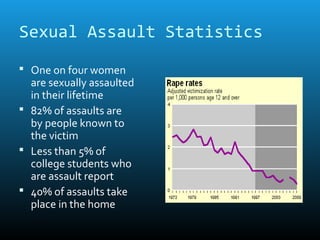
 One on four women
  are sexually assaulted
  in their lifetime
 82% of assaults are
  by people known to
  the victim
 Less than 5% of
  college students who
  are assault report
 40% of assaults take
  place in the home
Effects of Sexual Assault

 Long term
   Depression
   Suicide
   Anxiety/fear
   Difficulties with daily functioning
   Low self esteem
   Sexual dysfunction
   Somatic complaints
Effects of Incest

 Incest victims may experience
   Negative self image
   Depression
   Eating disorders
   Personality disorders
   Self destructive behavior
   Substance abuse
History of Sexual Abuse in
Psychiatric Clients Associated
with a Characteristic Pattern
 Depression
 Anxiety disorders
 Chemical dependency
 Suicide attempts
 Self-mutilation
 Compulsive sexual behavior
 Psychosis-like symptoms
Rape Trauma Syndrome: Acute
Phase
 Occurs immediately after the assault
 May last for a few weeks
 Lifestyle disorganized
 Somatic symptoms are common – tissue
  trauma
 Reaction to crisis includes disruptions in
  cognitive, affective, and behavioral functions
Rape Trauma Syndrome: Long
Term Reorganization Phase
 Reactions likely to be experienced include:
   Intrusive thoughts
   Increased motor activity
   Increased emotional lability
   Fears phobias
   Flashbacks
   Difficulty w/ADLs, self esteem, depression,
    sexuality
   Silence
Self-Assessment by the
Nurse
 Be aware of personal beliefs and feelings
  about rape

 Prepare to give empathetic / effective care


 Examine personal feelings about abortion
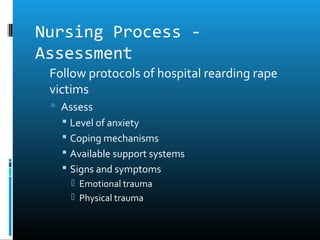
Nursing Process -
Assessment
 Follow protocols of hospital rearding rape
  victims
   Assess
     Level of anxiety
     Coping mechanisms
     Available support systems
     Signs and symptoms
       Emotional trauma
       Physical trauma
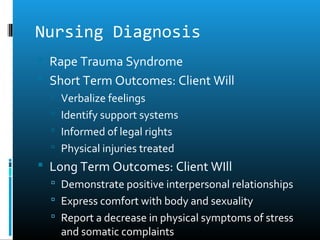
Nursing Diagnosis
 Rape Trauma Syndrome
 Short Term Outcomes: Client Will
   Verbalize feelings
   Identify support systems
   Informed of legal rights
   Physical injuries treated
 Long Term Outcomes: Client WIll
   Demonstrate positive interpersonal relationships
   Express comfort with body and sexuality
   Report a decrease in physical symptoms of stress
    and somatic complaints
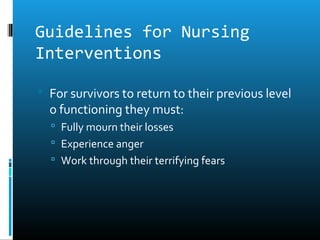
Guidelines for Nursing
Interventions

 For survivors to return to their previous level
  o functioning they must:
   Fully mourn their losses
   Experience anger
   Work through their terrifying fears
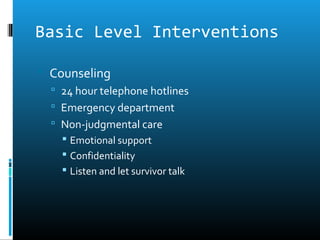
Basic Level Interventions

 Counseling
   24 hour telephone hotlines
   Emergency department
   Non-judgmental care
     Emotional support
     Confidentiality
     Listen and let survivor talk
Advanced Practice Interventions
 Collaborative Care -physical, emotional, and psychiatric
      SANE or SAFE Practitioners
      Obtain consent to collect evidence – can refuse
      Support/assist expert during exam and collections
      Evaluation of pregnancy, STD and prophylactic treatment
      Allow for verbalization – Therapeutic communication
      Call support person
      Provide hotline numbers and initiate referrals

 Case Management – After Care
        Provide follow up assessment within 24-48 hours
        Provide follow up visits at 2,4, and 6 weeks

 Individual or group therapy
    Increase coping
    Prevent long term disability – depression, suicide
Evaluation


 Rape survivors are considered to have
  recovered if their lifestyle is close to what was
  present before rape

Sexual assault ch 36

  • 1.
  • 2.
    Sexual Assault  Rapeis nonconsensual vaginal, anal, or oral penetration, obtained by force or by threat of bodily harm or when a person is incapable of giving consent.  Majority of rapes  Committed by spouse  Committed by acquaintance/ date  Fyi 13% of victims are male
  • 3.
    Sexual Assault Statistics One on four women are sexually assaulted in their lifetime  82% of assaults are by people known to the victim  Less than 5% of college students who are assault report  40% of assaults take place in the home
  • 4.
    Effects of SexualAssault  Long term  Depression  Suicide  Anxiety/fear  Difficulties with daily functioning  Low self esteem  Sexual dysfunction  Somatic complaints
  • 5.
    Effects of Incest Incest victims may experience  Negative self image  Depression  Eating disorders  Personality disorders  Self destructive behavior  Substance abuse
  • 6.
    History of SexualAbuse in Psychiatric Clients Associated with a Characteristic Pattern  Depression  Anxiety disorders  Chemical dependency  Suicide attempts  Self-mutilation  Compulsive sexual behavior  Psychosis-like symptoms
  • 7.
    Rape Trauma Syndrome:Acute Phase  Occurs immediately after the assault  May last for a few weeks  Lifestyle disorganized  Somatic symptoms are common – tissue trauma  Reaction to crisis includes disruptions in cognitive, affective, and behavioral functions
  • 8.
    Rape Trauma Syndrome:Long Term Reorganization Phase  Reactions likely to be experienced include:  Intrusive thoughts  Increased motor activity  Increased emotional lability  Fears phobias  Flashbacks  Difficulty w/ADLs, self esteem, depression, sexuality  Silence
  • 9.
    Self-Assessment by the Nurse Be aware of personal beliefs and feelings about rape  Prepare to give empathetic / effective care  Examine personal feelings about abortion
  • 10.
    Nursing Process - Assessment Follow protocols of hospital rearding rape victims  Assess  Level of anxiety  Coping mechanisms  Available support systems  Signs and symptoms  Emotional trauma  Physical trauma
  • 11.
    Nursing Diagnosis  RapeTrauma Syndrome  Short Term Outcomes: Client Will  Verbalize feelings  Identify support systems  Informed of legal rights  Physical injuries treated  Long Term Outcomes: Client WIll  Demonstrate positive interpersonal relationships  Express comfort with body and sexuality  Report a decrease in physical symptoms of stress and somatic complaints
  • 12.
    Guidelines for Nursing Interventions For survivors to return to their previous level o functioning they must:  Fully mourn their losses  Experience anger  Work through their terrifying fears
  • 13.
    Basic Level Interventions Counseling  24 hour telephone hotlines  Emergency department  Non-judgmental care  Emotional support  Confidentiality  Listen and let survivor talk
  • 14.
    Advanced Practice Interventions Collaborative Care -physical, emotional, and psychiatric  SANE or SAFE Practitioners  Obtain consent to collect evidence – can refuse  Support/assist expert during exam and collections  Evaluation of pregnancy, STD and prophylactic treatment  Allow for verbalization – Therapeutic communication  Call support person  Provide hotline numbers and initiate referrals  Case Management – After Care  Provide follow up assessment within 24-48 hours  Provide follow up visits at 2,4, and 6 weeks  Individual or group therapy  Increase coping  Prevent long term disability – depression, suicide
  • 15.
    Evaluation  Rape survivorsare considered to have recovered if their lifestyle is close to what was present before rape