
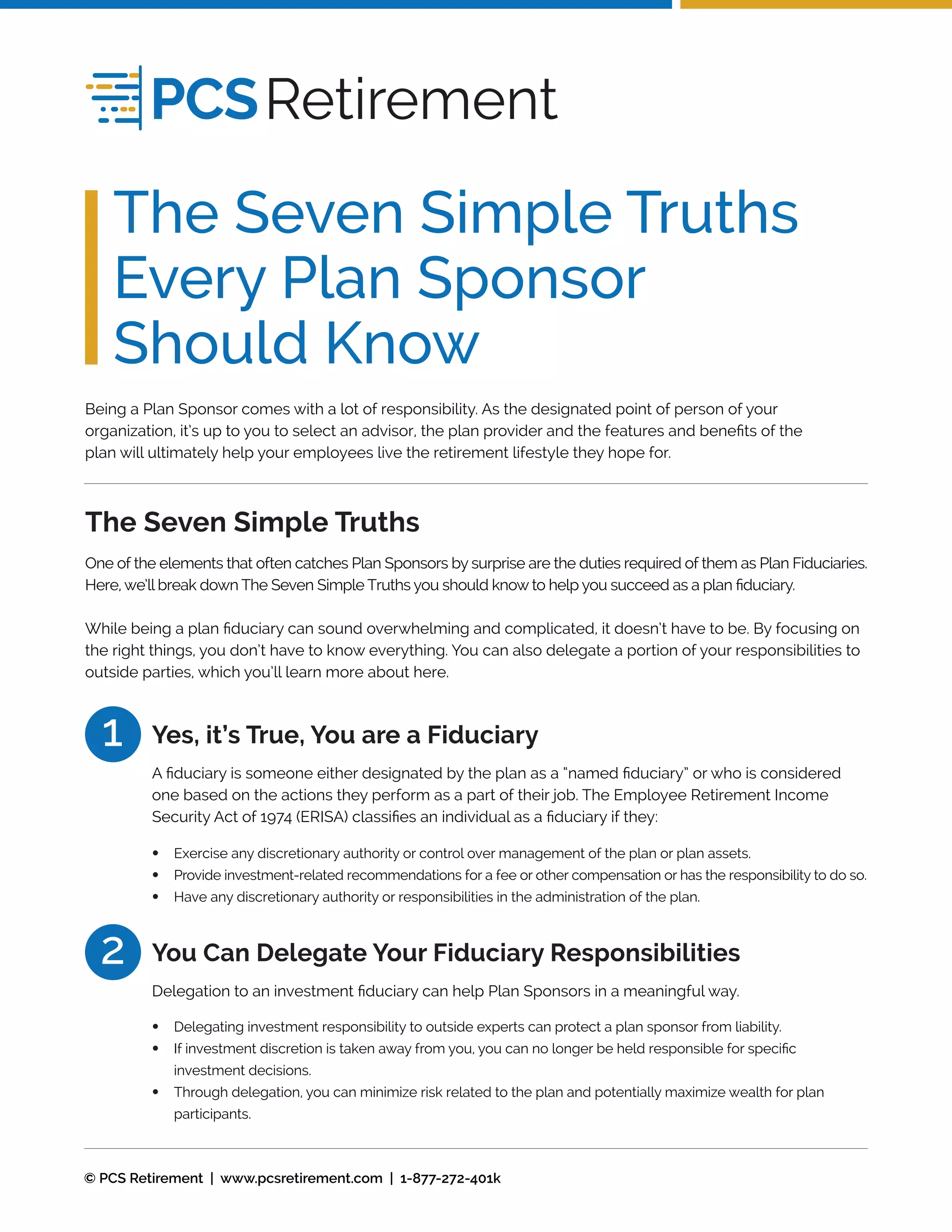
One of the elements that often catches Plan Sponsors by surprise are the duties required of them as Plan Fiduciaries.
Here, we’ll break down The Seven Simple Truths you should know to help you succeed as a plan fiduciary.
While being a plan fiduciary can sound overwhelming and complicated, it doesn’t have to be. By focusing on
the right things, you don’t have to know everything. You can also delegate a portion of your responsibilities to
outside parties, which you’ll learn more about here.
A fiduciary is someone either designated by the plan as a “named fiduciary” or who is considered
one based on the actions they perform as a part of their job. The Employee Retirement Income
Security Act of 1974 (ERISA) classifies an individual as a fiduciary if they:
The Seven Simple Truths
Yes, it’s True, You are a Fiduciary1
Exercise any discretionary authority or control over management of the plan or plan assets.
Provide investment-related recommendations for a fee or other compensation or has the responsibility to do so.
Have any discretionary authority or responsibilities in the administration of the plan.
•
•
•
Delegation to an investment fiduciary can help Plan Sponsors in a meaningful way.
You Can Delegate Your Fiduciary Responsibilities2
Delegating investment responsibility to outside experts can protect a plan sponsor from liability.
If investment discretion is taken away from you, you can no longer be held responsible for specific
investment decisions.
Through delegation, you can minimize risk related to the plan and potentially maximize wealth for plan
participants.
•
•
•
The Seven Simple Truths
Every Plan Sponsor
Should Know
Being a Plan Sponsor comes with a lot of responsibility. As the designated point of person of your
organization, it’s up to you to select an advisor, the plan provider and the features and benefits of the
plan will ultimately help your employees live the retirement lifestyle they hope for.
© PCS Retirement | www.pcsretirement.com | 1-877-272-401k
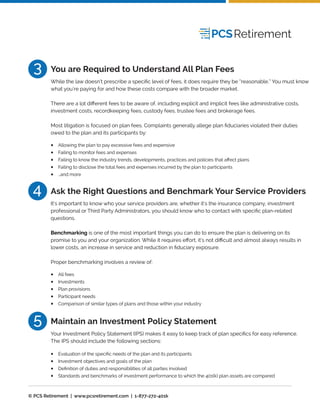
5
Your Investment Policy Statement (IPS) makes it easy to keep track of plan specifics for easy reference.
The IPS should include the following sections:
Maintain an Investment Policy Statement
Evaluation of the specific needs of the plan and its participants
Investment objectives and goals of the plan
Definition of duties and responsibilities of all parties involved
Standards and benchmarks of investment performance to which the 401(k) plan assets are compared
•
•
•
•
3
While the law doesn’t prescribe a specific level of fees, it does require they be “reasonable.” You must know
what you’re paying for and how these costs compare with the broader market.
There are a lot different fees to be aware of, including explicit and implicit fees like administrative costs,
investment costs, recordkeeping fees, custody fees, trustee fees and brokerage fees.
Most litigation is focused on plan fees. Complaints generally allege plan fiduciaries violated their duties
owed to the plan and its participants by:
You are Required to Understand All Plan Fees
Allowing the plan to pay excessive fees and expensive
Failing to monitor fees and expenses
Failing to know the industry trends, developments, practices and policies that affect plans
Failing to disclose the total fees and expenses incurred by the plan to participants
…and more
•
•
•
•
•
4
It’s important to know who your service providers are, whether it’s the insurance company, investment
professional or Third Party Administrators, you should know who to contact with specific plan-related
questions.
Benchmarking is one of the most important things you can do to ensure the plan is delivering on its
promise to you and your organization. While it requires effort, it’s not difficult and almost always results in
lower costs, an increase in service and reduction in fiduciary exposure.
Proper benchmarking involves a review of:
Ask the Right Questions and Benchmark Your Service Providers
All fees
Investments
Plan provisions
Participant needs
Comparison of similar types of plans and those within your industry
•
•
•
•
•
© PCS Retirement | www.pcsretirement.com | 1-877-272-401k
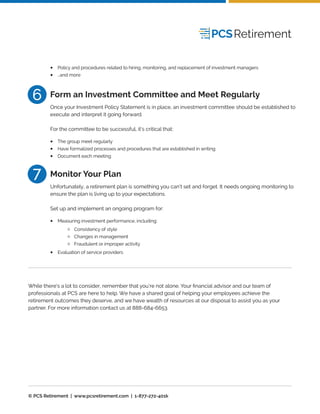
Policy and procedures related to hiring, monitoring, and replacement of investment managers
…and more
•
•
Once your Investment Policy Statement is in place, an investment committee should be established to
execute and interpret it going forward.
For the committee to be successful, it’s critical that:
Form an Investment Committee and Meet Regularly
The group meet regularly
Have formalized processes and procedures that are established in writing
Document each meeting
•
•
•
Unfortunately, a retirement plan is something you can’t set and forget. It needs ongoing monitoring to
ensure the plan is living up to your expectations.
Set up and implement an ongoing program for:
Monitor Your Plan
Measuring investment performance, including:•
Evaluation of service providers•
Consistency of style
Changes in management
Fraudulent or improper activity
While there’s a lot to consider, remember that you’re not alone. Your financial advisor and our team of
professionals at PCS are here to help. We have a shared goal of helping your employees achieve the
retirement outcomes they deserve, and we have wealth of resources at our disposal to assist you as your
partner. For more information contact us at 888-684-6653.
© PCS Retirement | www.pcsretirement.com | 1-877-272-401k
6
7

Seven Simple Truths for Plan Sponsors

  • 1.
    One of theelements that often catches Plan Sponsors by surprise are the duties required of them as Plan Fiduciaries. Here, we’ll break down The Seven Simple Truths you should know to help you succeed as a plan fiduciary. While being a plan fiduciary can sound overwhelming and complicated, it doesn’t have to be. By focusing on the right things, you don’t have to know everything. You can also delegate a portion of your responsibilities to outside parties, which you’ll learn more about here. A fiduciary is someone either designated by the plan as a “named fiduciary” or who is considered one based on the actions they perform as a part of their job. The Employee Retirement Income Security Act of 1974 (ERISA) classifies an individual as a fiduciary if they: The Seven Simple Truths Yes, it’s True, You are a Fiduciary1 Exercise any discretionary authority or control over management of the plan or plan assets. Provide investment-related recommendations for a fee or other compensation or has the responsibility to do so. Have any discretionary authority or responsibilities in the administration of the plan. • • • Delegation to an investment fiduciary can help Plan Sponsors in a meaningful way. You Can Delegate Your Fiduciary Responsibilities2 Delegating investment responsibility to outside experts can protect a plan sponsor from liability. If investment discretion is taken away from you, you can no longer be held responsible for specific investment decisions. Through delegation, you can minimize risk related to the plan and potentially maximize wealth for plan participants. • • • The Seven Simple Truths Every Plan Sponsor Should Know Being a Plan Sponsor comes with a lot of responsibility. As the designated point of person of your organization, it’s up to you to select an advisor, the plan provider and the features and benefits of the plan will ultimately help your employees live the retirement lifestyle they hope for. © PCS Retirement | www.pcsretirement.com | 1-877-272-401k
  • 2.
    5 Your Investment PolicyStatement (IPS) makes it easy to keep track of plan specifics for easy reference. The IPS should include the following sections: Maintain an Investment Policy Statement Evaluation of the specific needs of the plan and its participants Investment objectives and goals of the plan Definition of duties and responsibilities of all parties involved Standards and benchmarks of investment performance to which the 401(k) plan assets are compared • • • • 3 While the law doesn’t prescribe a specific level of fees, it does require they be “reasonable.” You must know what you’re paying for and how these costs compare with the broader market. There are a lot different fees to be aware of, including explicit and implicit fees like administrative costs, investment costs, recordkeeping fees, custody fees, trustee fees and brokerage fees. Most litigation is focused on plan fees. Complaints generally allege plan fiduciaries violated their duties owed to the plan and its participants by: You are Required to Understand All Plan Fees Allowing the plan to pay excessive fees and expensive Failing to monitor fees and expenses Failing to know the industry trends, developments, practices and policies that affect plans Failing to disclose the total fees and expenses incurred by the plan to participants …and more • • • • • 4 It’s important to know who your service providers are, whether it’s the insurance company, investment professional or Third Party Administrators, you should know who to contact with specific plan-related questions. Benchmarking is one of the most important things you can do to ensure the plan is delivering on its promise to you and your organization. While it requires effort, it’s not difficult and almost always results in lower costs, an increase in service and reduction in fiduciary exposure. Proper benchmarking involves a review of: Ask the Right Questions and Benchmark Your Service Providers All fees Investments Plan provisions Participant needs Comparison of similar types of plans and those within your industry • • • • • © PCS Retirement | www.pcsretirement.com | 1-877-272-401k
  • 3.
    Policy and proceduresrelated to hiring, monitoring, and replacement of investment managers …and more • • Once your Investment Policy Statement is in place, an investment committee should be established to execute and interpret it going forward. For the committee to be successful, it’s critical that: Form an Investment Committee and Meet Regularly The group meet regularly Have formalized processes and procedures that are established in writing Document each meeting • • • Unfortunately, a retirement plan is something you can’t set and forget. It needs ongoing monitoring to ensure the plan is living up to your expectations. Set up and implement an ongoing program for: Monitor Your Plan Measuring investment performance, including:• Evaluation of service providers• Consistency of style Changes in management Fraudulent or improper activity While there’s a lot to consider, remember that you’re not alone. Your financial advisor and our team of professionals at PCS are here to help. We have a shared goal of helping your employees achieve the retirement outcomes they deserve, and we have wealth of resources at our disposal to assist you as your partner. For more information contact us at 888-684-6653. © PCS Retirement | www.pcsretirement.com | 1-877-272-401k 6 7