 If secure within our self we can observe other
people’s strengths, victories, skills, and success
with a wholesome admiration. We are happy for
them.
 Human nature compares our self with others.
 Envy releases an emotion. We respond to discredit
another through obstruction or sabotaging their
person
 The origins originate in our insecure nature and
ability to create false comparatives.
 See Colossians 3:5-10 as to root causes
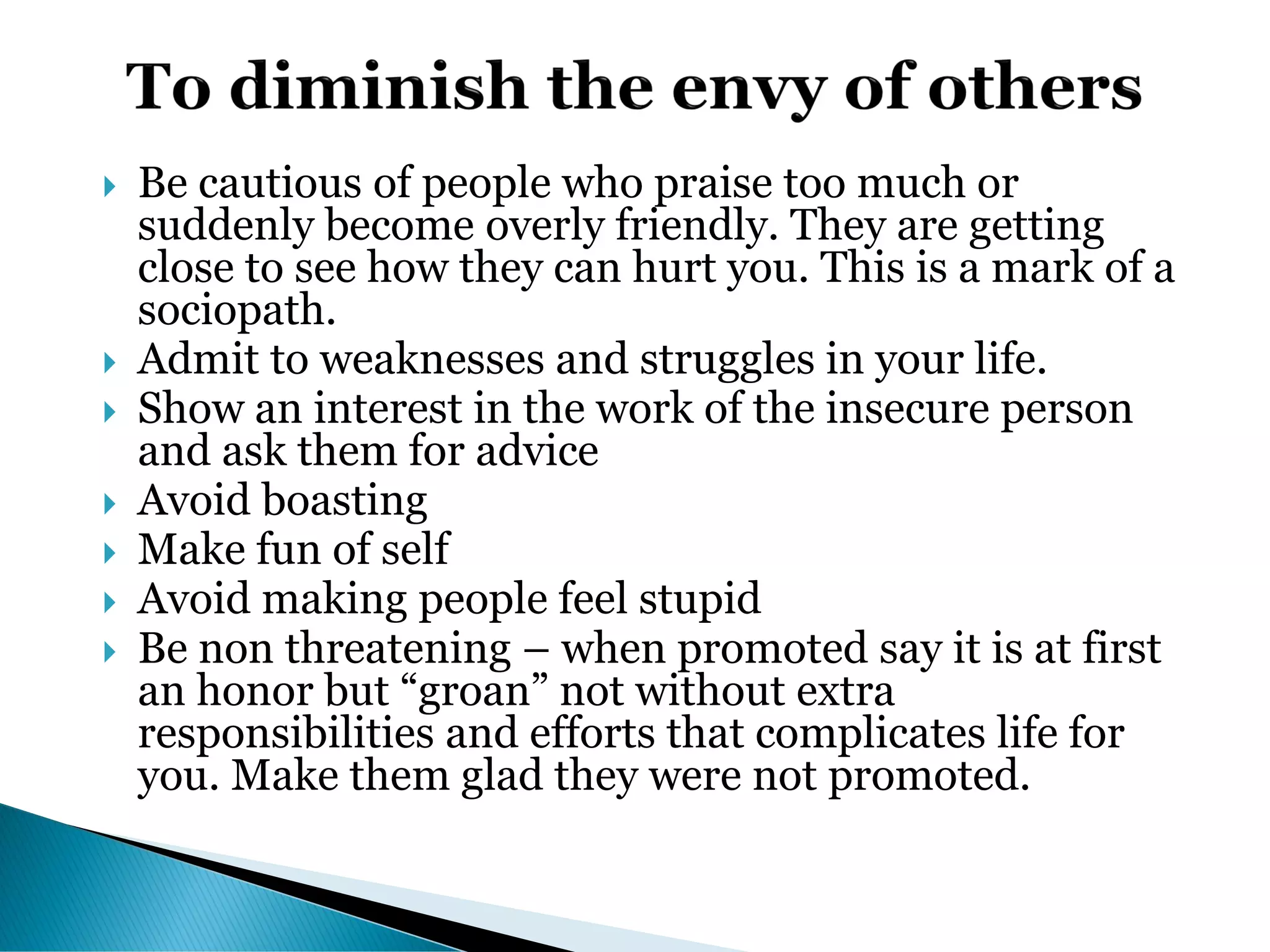
 Be cautious of people who praise too much or
suddenly become overly friendly. They are getting
close to see how they can hurt you. This is a mark of a
sociopath.
 Admit to weaknesses and struggles in your life.
 Show an interest in the work of the insecure person
and ask them for advice
 Avoid boasting
 Make fun of self
 Avoid making people feel stupid
 Be non threatening – when promoted say it is at first
an honor but “groan” not without extra
responsibilities and efforts that complicates life for
you. Make them glad they were not promoted.
 Once a member of a group a mind set of expectations
occurs for the group.
 Written and unwritten codes of behavior and attitude is
expected
 In the group are those who are the self appointed
sanctimonious politically correct crowd that observe our
attitude and behavior.
 They will sabotage and ostracize the non conformist. We
try to keep them in mind as to freely express our self can
meet punitive results
 The workplace is a kind of theater in which we role play.
We reveal our deep seated feeling outside of the group
to trusted friends and relatives.
 We do not like complexity. We resort to habits and routines
to give us a sense of control through embracing simplicity.
 The familiar comforts. The new does not comfort.
 What worked in the past is assumed to work also in the
future.
 Rigidity reject new ideas and procedures. No matter how
reasonable change threatens. Defensiveness and
obstructionism occurs.
 Axiom of life. Change happens. When the facts change – I
change. My core being of integrity does not change. I adapt
and embrace change as an opportunity to learn and to
grow. I jettison out dated habits and procedures.
 Human nature looks out for itself first.
 When asking for help therefore appeal to a
person’s self interest.
 View the world from their perspective
 Give them if possible something in return
 People tend to forget the past and heavily rely on
how their relationship benefits them for the
present and the future.
 A person who has no stake in the present or future
with someone else abandons the relationship.
They simply quit.
 We avoid prudence. We seek a quick fix solution with
pleasure now rather than endure the pain of self sacrifice
for now for a long term goal.
 People are lazy. Keep your ideas to yourself. This avoids
stealing of them by others.
 Be wary of people who want to collaborate. They may
wish to transfer the majority of the work to someone
else.
 People change their perception depending on their
mood. We are govern by our emotions.
Motivations are fleeting.
 People are sorely tempted to avoid a promise
made when that promise becomes inconvenient.
 We waste valuable time depending on people who
do not keep their promises.
 Depend more on our self to get a task done.
 Focus on what people do not what they say as an
indicator of their dependability.
 Low level symptoms include procrastination, appearing
late, making destructive comments are all done to upset
someone and be in control
 Correct by calling their behavior to their attention. Or
one can avoid comment. It is not worth the conflict it
might invite.
 High level passive aggressive is a different matter. These
avoid. They create a reputation. They sabotage or
obstruct with a smile. Focus on their actions not their
words.
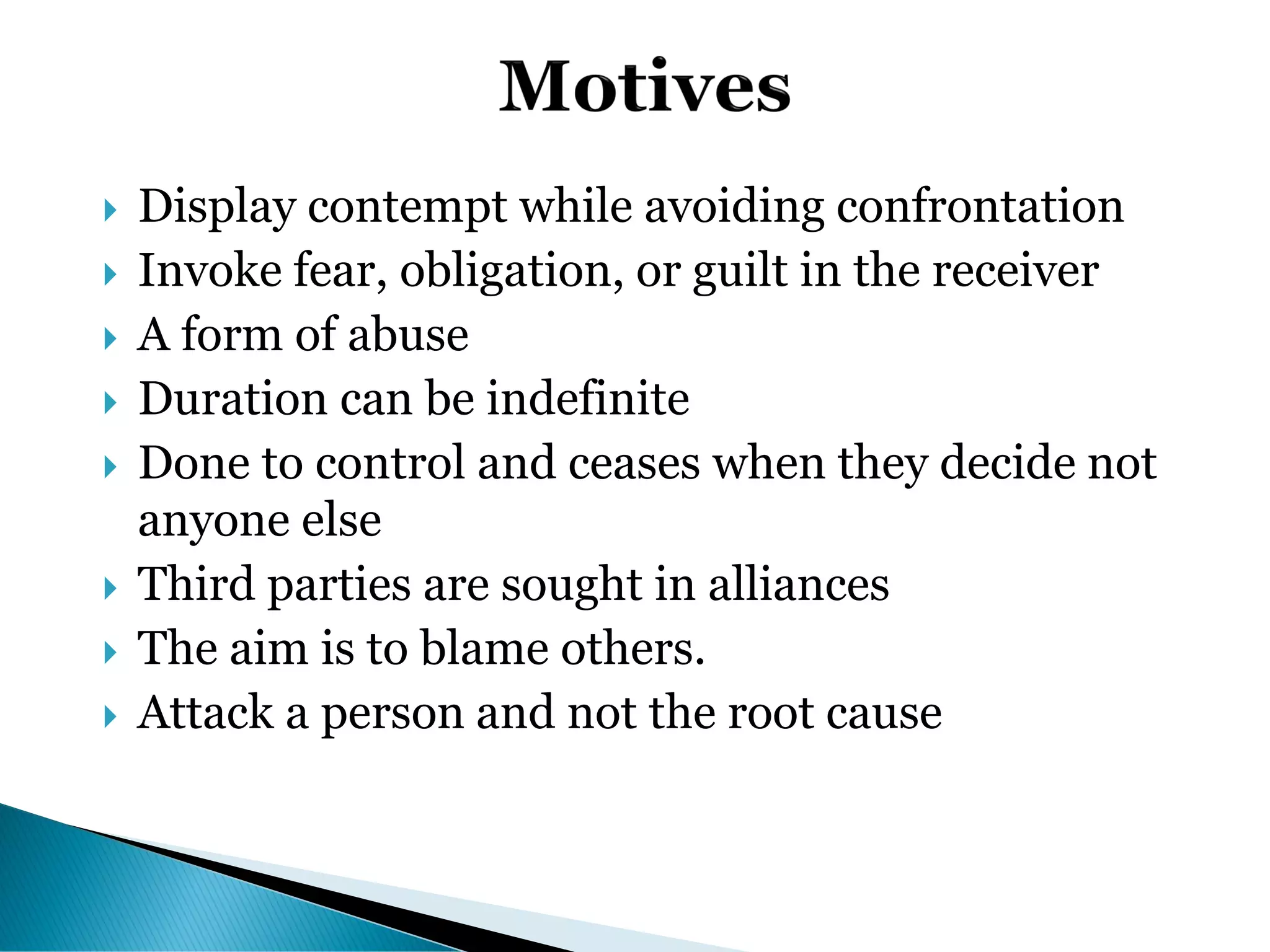
 Display contempt while avoiding confrontation
 Invoke fear, obligation, or guilt in the receiver
 A form of abuse
 Duration can be indefinite
 Done to control and ceases when they decide not
anyone else
 Third parties are sought in alliances
 The aim is to blame others.
 Attack a person and not the root cause
 Avoid using it on others
 Avoid escalation or they can turn and act hostile aggressive in an act
of revenge
 Avoid blaming oneself
 Recognize it is an attempt to control through scorn. The reward
comes to the passive aggressive when they are pursued.
 Work on yourself
 Use “I” statements briefly of feelings
 Get support from others
 Trust what the person feels is temporal and may lift as they
recognize it does not get their need met.

Seven deadly realities

  • 2.
     If securewithin our self we can observe other people’s strengths, victories, skills, and success with a wholesome admiration. We are happy for them.  Human nature compares our self with others.  Envy releases an emotion. We respond to discredit another through obstruction or sabotaging their person  The origins originate in our insecure nature and ability to create false comparatives.  See Colossians 3:5-10 as to root causes
  • 3.
     Be cautiousof people who praise too much or suddenly become overly friendly. They are getting close to see how they can hurt you. This is a mark of a sociopath.  Admit to weaknesses and struggles in your life.  Show an interest in the work of the insecure person and ask them for advice  Avoid boasting  Make fun of self  Avoid making people feel stupid  Be non threatening – when promoted say it is at first an honor but “groan” not without extra responsibilities and efforts that complicates life for you. Make them glad they were not promoted.
  • 4.
     Once amember of a group a mind set of expectations occurs for the group.  Written and unwritten codes of behavior and attitude is expected  In the group are those who are the self appointed sanctimonious politically correct crowd that observe our attitude and behavior.  They will sabotage and ostracize the non conformist. We try to keep them in mind as to freely express our self can meet punitive results  The workplace is a kind of theater in which we role play. We reveal our deep seated feeling outside of the group to trusted friends and relatives.
  • 5.
     We donot like complexity. We resort to habits and routines to give us a sense of control through embracing simplicity.  The familiar comforts. The new does not comfort.  What worked in the past is assumed to work also in the future.  Rigidity reject new ideas and procedures. No matter how reasonable change threatens. Defensiveness and obstructionism occurs.  Axiom of life. Change happens. When the facts change – I change. My core being of integrity does not change. I adapt and embrace change as an opportunity to learn and to grow. I jettison out dated habits and procedures.
  • 6.
     Human naturelooks out for itself first.  When asking for help therefore appeal to a person’s self interest.  View the world from their perspective  Give them if possible something in return  People tend to forget the past and heavily rely on how their relationship benefits them for the present and the future.  A person who has no stake in the present or future with someone else abandons the relationship. They simply quit.
  • 7.
     We avoidprudence. We seek a quick fix solution with pleasure now rather than endure the pain of self sacrifice for now for a long term goal.  People are lazy. Keep your ideas to yourself. This avoids stealing of them by others.  Be wary of people who want to collaborate. They may wish to transfer the majority of the work to someone else.
  • 8.
     People changetheir perception depending on their mood. We are govern by our emotions. Motivations are fleeting.  People are sorely tempted to avoid a promise made when that promise becomes inconvenient.  We waste valuable time depending on people who do not keep their promises.  Depend more on our self to get a task done.  Focus on what people do not what they say as an indicator of their dependability.
  • 9.
     Low levelsymptoms include procrastination, appearing late, making destructive comments are all done to upset someone and be in control  Correct by calling their behavior to their attention. Or one can avoid comment. It is not worth the conflict it might invite.  High level passive aggressive is a different matter. These avoid. They create a reputation. They sabotage or obstruct with a smile. Focus on their actions not their words.
  • 10.
     Display contemptwhile avoiding confrontation  Invoke fear, obligation, or guilt in the receiver  A form of abuse  Duration can be indefinite  Done to control and ceases when they decide not anyone else  Third parties are sought in alliances  The aim is to blame others.  Attack a person and not the root cause
  • 11.
     Avoid usingit on others  Avoid escalation or they can turn and act hostile aggressive in an act of revenge  Avoid blaming oneself  Recognize it is an attempt to control through scorn. The reward comes to the passive aggressive when they are pursued.  Work on yourself  Use “I” statements briefly of feelings  Get support from others  Trust what the person feels is temporal and may lift as they recognize it does not get their need met.