Annisa Dian
RESOURCE PERSON :
Dr. dr. Soroy Lardo Sp.PD,FINASIM
DIVISION OF TROPICAL MEDICINE
AND INFECTIOUS DISEASES
DEPARTEMEN OF INTERNAL MEDICINE
INDONESIA ARMY CENTRAL HOSPITAL
GATOT SOEBROTO
Morning report :
Hemodyalisis in Sepsis
IDENTITY
 Name : Ny. L
 DOB/Age : June 17th 1946 / 71 years old
 Religion : Christian
 Marital status : Widow
 Address : Kemayoran, Jakarta Pusat
 Medical Record : 8665353
 Admisssion : March 1st 2018 18.00
 Ward : PU 3rd floor
CHIEF COMPLAIN
 Fever since 4 days before hospital admission
HISTORY OF PRESENT ILLNESS
 Four days before admission to hospital, patients felt
fever throughout the day with shivering,headache,
muscular aching and weakness. Temperature weren’t
recorded.
 Unproductive cough also present, with short of
breathness, decreases of appetite and nauseous
during meal without vomiting. No sign of swelling on
foot, dyspneu on effort, nocturnal dyspnea and patient
can sleep with flatened position. Stable weight, no
night sweat and chronic cough.
 Micturition discomfort and defecation were denied.
Nosebleed ,bleeding of gum nor black stool also.
HISTORY OF PAST ILLNESS
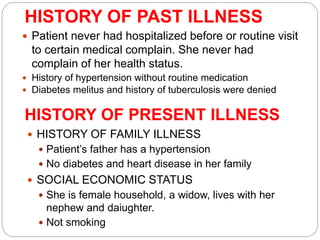
 Patient never had hospitalized before or routine visit

to certain medical complain. She never had
complain of her health status.
HISTORY OF PRESENT ILLNESS
 History of hypertension without routine medication
 Diabetes melitus and history of tuberculosis were denied
 HISTORY OF FAMILY ILLNESS
 Patient’s father has a hypertension
 No diabetes and heart disease in her family
 SOCIAL ECONOMIC STATUS
 She is female household, a widow, lives with her
nephew and daiughter.
 Not smoking
PHYSICAL EXAMINATION (in ER)
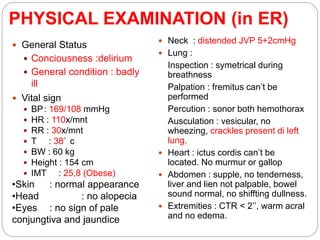
 Neck : distended JVP 5+2cmHg
 Lung :
Inspection : symetrical during
breathness
Palpation : fremitus can’t be
performed
Percution : sonor both hemothorax
Ausculation : vesicular, no
wheezing, crackles present di left
lung.
 Heart : ictus cordis can’t be
located. No murmur or gallop
 Abdomen : supple, no tenderness,
liver and lien not palpable, bowel
sound normal, no shiffting dullness.
 Extremities : CTR < 2’’, warm acral
and no edema.
 General Status
 Conciousness :delirium
 General condition : badly
ill
 Vital sign
 BP: 169/108 mmHg
 HR : 110x/mnt
 RR : 30x/mnt
 T : 38 c
 BW : 60 kg
 Height : 154 cm
 IMT : 25,8 (Obese)
•Skin : normal appearance
•Head : no alopecia
•Eyes : no sign of pale
conjungtiva and jaundice
LABOLATORY FINDINGS
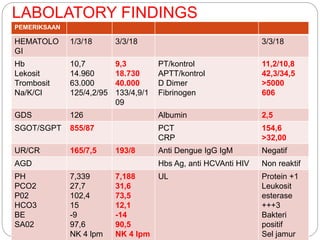
PEMERIKSAAN
HEMATOLO
GI
1/3/18 3/3/18 3/3/18
Hb
Lekosit
Trombosit
Na/K/Cl
10,7
14.960
63.000
125/4,2/95
9,3
18.730
40.000
133/4,9/1
09
PT/kontrol
APTT/kontrol
D Dimer
Fibrinogen
11,2/10,8
42,3/34,5
>5000
606
GDS 126 Albumin 2,5
SGOT/SGPT 855/87 PCT
CRP
154,6
>32,00
UR/CR 165/7,5 193/8 Anti Dengue IgG IgM Negatif
AGD Hbs Ag, anti HCVAnti HIV Non reaktif
PH
PCO2
P02
HCO3
BE
SA02
7,339
27,7
102,4
15
-9
97,6
NK 4 lpm
7,188
31,6
73,5
12,1
-14
90,5
NK 4 lpm
UL Protein +1
Leukosit
esterase
+++3
Bakteri
positif
Sel jamur
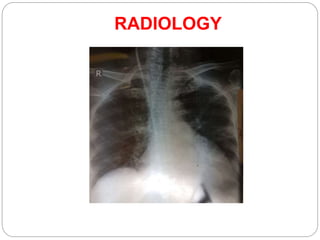
RADIOLOGY
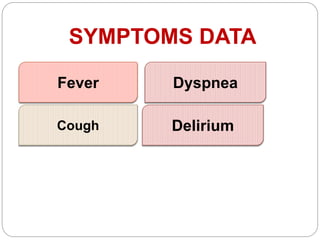
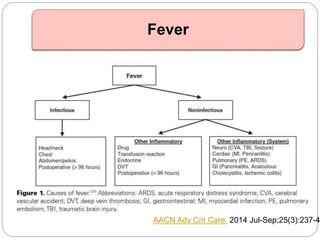
Fever
SYMPTOMS DATA
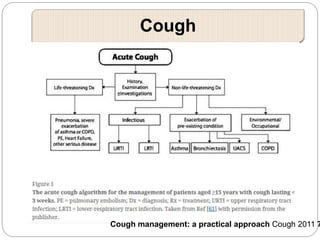
Cough
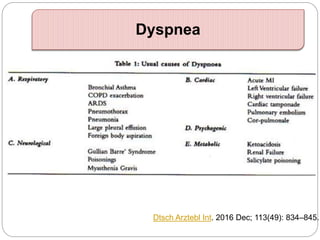
Dyspnea
Delirium
AACN Adv Crit Care. 2014 Jul-Sep;25(3):237-4
Fever
Cough
Cough management: a practical approach Cough 2011 7
Dyspnea
Dtsch Arztebl Int. 2016 Dec; 113(49): 834–845.
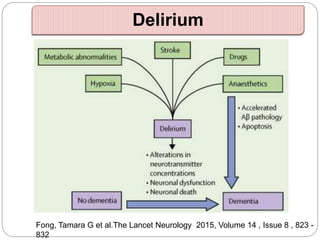
Delirium
Fong, Tamara G et al.The Lancet Neurology 2015, Volume 14 , Issue 8 , 823 -
832
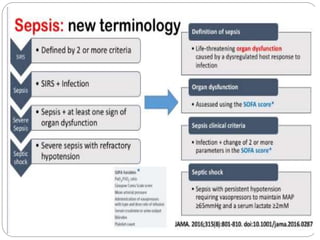
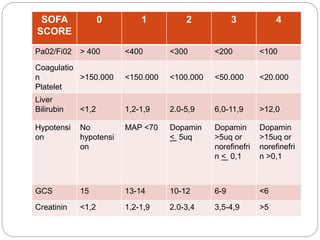
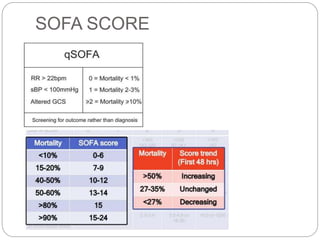
SOFA
SCORE
0 1 2 3 4
Pa02/Fi02 > 400 <400 <300 <200 <100
Coagulatio
n
Platelet
>150.000 <150.000 <100.000 <50.000 <20.000
Liver
Bilirubin <1,2 1,2-1,9 2.0-5,9 6,0-11,9 >12,0
Hypotensi
on
No
hypotensi
on
MAP <70 Dopamin
< 5uq
Dopamin
>5uq or
norefinefri
n < 0,1
Dopamin
>15uq or
norefinefri
n >0,1
GCS 15 13-14 10-12 6-9 <6
Creatinin <1,2 1,2-1,9 2.0-3,4 3,5-4,9 >5
SOFA
SCORE
0 1 2 3 4
Pa02/Fi02 > 400 <400 <300 <200 <100
Coagulatio
n
Platelet
>150.000 <150.000 <100.000 <50.000 <20.000
Liver
Bilirubin <1,2 1,2-1,9 2.0-5,9 6,0-11,9 >12,0
Hypotensi
on
No
hypotensi
on
MAP <70 Dopamin
< 5uq
Dopamin
>5uq or
norefinefri
n < 0,1
Dopamin
>15uq or
norefinefri
n >0,1
GCS 15 13-14 10-12 6-9 <6
Creatinin <1,2 1,2-1,9 2.0-3,4 3,5-4,9 >5
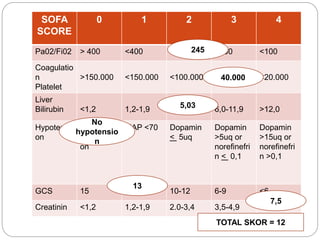
245
40.000
5,03
No
hypotensio
n
13
7,5
TOTAL SKOR = 12
SOFA SCORE
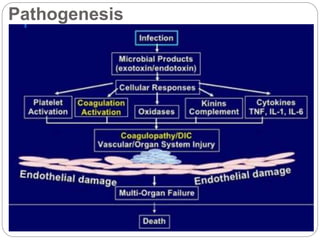
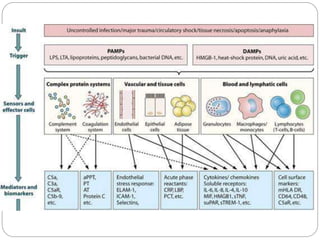
Pathogenesis
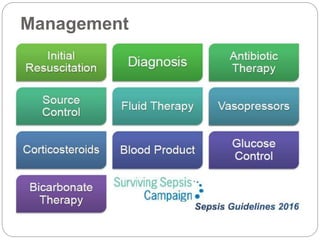
Management
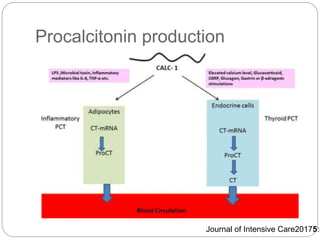
Procalcitonin production
Journal of Intensive Care20175:5
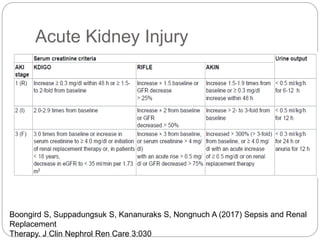
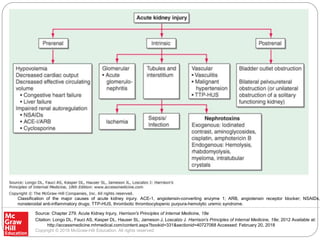
Acute Kidney Injury
Boongird S, Suppadungsuk S, Kananuraks S, Nongnuch A (2017) Sepsis and Renal
Replacement
Therapy. J Clin Nephrol Ren Care 3:030
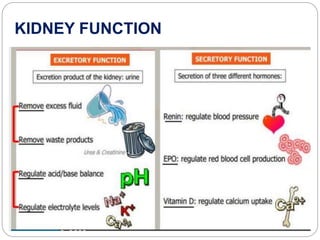
KIDNEY FUNCTION
Source: Chapter 279. Acute Kidney Injury, Harrison's Principles of Internal Medicine, 18e
Citation: Longo DL, Fauci AS, Kasper DL, Hauser SL, Jameson J, Loscalzo J. Harrison's Principles of Internal Medicine, 18e; 2012 Available at:
http://accessmedicine.mhmedical.com/content.aspx?bookid=331&sectionid=40727068 Accessed: February 20, 2018
Copyright © 2018 McGraw-Hill Education. All rights reserved
Classification of the major causes of acute kidney injury. ACE-1, angiotensin-converting enzyme 1; ARB, angiotensin receptor blocker; NSAIDs,
nonsteroidal anti-inflammatory drugs; TTP-HUS, thrombotic thrombocytopenic purpura-hemolytic uremic syndrome.
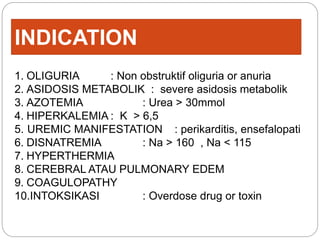
INDICATION
1. OLIGURIA : Non obstruktif oliguria or anuria
2. ASIDOSIS METABOLIK : severe asidosis metabolik
3. AZOTEMIA : Urea > 30mmol
4. HIPERKALEMIA : K > 6,5
5. UREMIC MANIFESTATION : perikarditis, ensefalopati
6. DISNATREMIA : Na > 160 , Na < 115
7. HYPERTHERMIA
8. CEREBRAL ATAU PULMONARY EDEM
9. COAGULOPATHY
10.INTOKSIKASI : Overdose drug or toxin
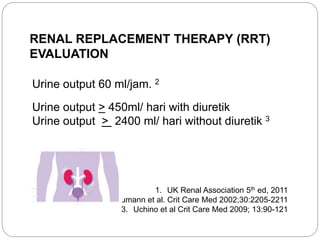
RENAL REPLACEMENT THERAPY (RRT)
EVALUATION
Urine output 60 ml/jam. 2
Urine output > 450ml/ hari with diuretik
Urine output > 2400 ml/ hari without diuretik 3
1. UK Renal Association 5th ed, 2011
2. Boumann et al. Crit Care Med 2002;30:2205-2211
3. Uchino et al Crit Care Med 2009; 13:90-121
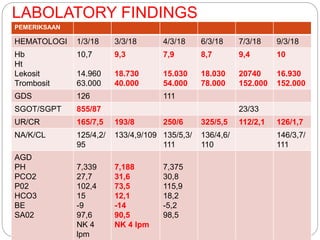
LABOLATORY FINDINGS
PEMERIKSAAN
HEMATOLOGI 1/3/18 3/3/18 4/3/18 6/3/18 7/3/18 9/3/18
Hb
Ht
Lekosit
Trombosit
10,7
14.960
63.000
9,3
18.730
40.000
7,9
15.030
54.000
8,7
18.030
78.000
9,4
20740
152.000
10
16.930
152.000
GDS 126 111
SGOT/SGPT 855/87 23/33
UR/CR 165/7,5 193/8 250/6 325/5,5 112/2,1 126/1,7
NA/K/CL 125/4,2/
95
133/4,9/109 135/5,3/
111
136/4,6/
110
146/3,7/
111
AGD
PH
PCO2
P02
HCO3
BE
SA02
7,339
27,7
102,4
15
-9
97,6
NK 4
lpm
7,188
31,6
73,5
12,1
-14
90,5
NK 4 lpm
7,375
30,8
115,9
18,2
-5,2
98,5
PEMERIKSAA
N
3/3/18 7/3/18
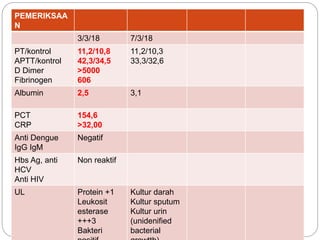
PT/kontrol
APTT/kontrol
D Dimer
Fibrinogen
11,2/10,8
42,3/34,5
>5000
606
11,2/10,3
33,3/32,6
Albumin 2,5 3,1
PCT
CRP
154,6
>32,00
Anti Dengue
IgG IgM
Negatif
Hbs Ag, anti
HCV
Anti HIV
Non reaktif
UL Protein +1
Leukosit
esterase
+++3
Bakteri
Kultur darah
Kultur sputum
Kultur urin
(unidenified
bacterial
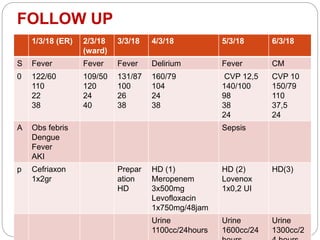
FOLLOW UP
1/3/18 (ER) 2/3/18
(ward)
3/3/18 4/3/18 5/3/18 6/3/18
S Fever Fever Fever Delirium Fever CM
0 122/60
110
22
38
109/50
120
24
40
131/87
100
26
38
160/79
104
24
38
CVP 12,5
140/100
98
38
24
CVP 10
150/79
110
37,5
24
A Obs febris
Dengue
Fever
AKI
Sepsis
p Cefriaxon
1x2gr
Prepar
ation
HD
HD (1)
Meropenem
3x500mg
Levofloxacin
1x750mg/48jam
HD (2)
Lovenox
1x0,2 UI
HD(3)
Urine
1100cc/24hours
Urine
1600cc/24
Urine
1300cc/2
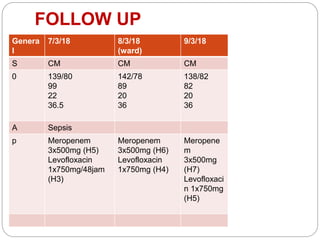
FOLLOW UP
Genera
l
7/3/18 8/3/18
(ward)
9/3/18
S CM CM CM
0 139/80
99
22
36.5
142/78
89
20
36
138/82
82
20
36
A Sepsis
p Meropenem
3x500mg (H5)
Levofloxacin
1x750mg/48jam
(H3)
Meropenem
3x500mg (H6)
Levofloxacin
1x750mg (H4)
Meropene
m
3x500mg
(H7)
Levofloxaci
n 1x750mg
(H5)
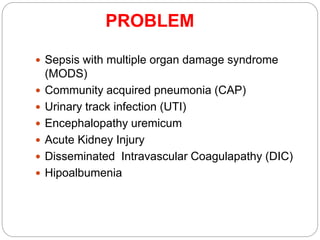
 Sepsis with multiple organ damage syndrome
(MODS)
 Community acquired pneumonia (CAP)
 Urinary track infection (UTI)
 Encephalopathy uremicum
 Acute Kidney Injury
 Disseminated Intravascular Coagulapathy (DIC)
 Hipoalbumenia
PROBLEM
TREATMENT
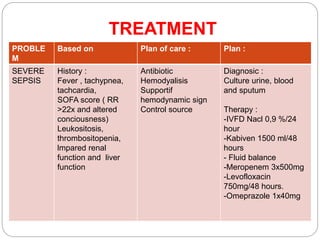
PROBLE
M
Based on Plan of care : Plan :
SEVERE
SEPSIS
History :
Fever , tachypnea,
tachcardia,
SOFA score ( RR
>22x and altered
conciousness)
Leukositosis,
thrombositopenia,
lmpared renal
function and liver
function
Antibiotic
Hemodyalisis
Supportif
hemodynamic sign
Control source
Diagnosic :
Culture urine, blood
and sputum
Therapy :
-IVFD Nacl 0,9 %/24
hour
-Kabiven 1500 ml/48
hours
- Fluid balance
-Meropenem 3x500mg
-Levofloxacin
750mg/48 hours.
-Omeprazole 1x40mg
TREATMENT
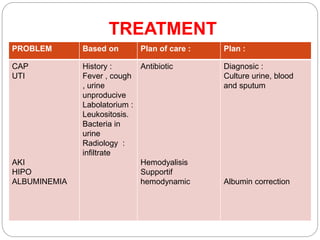
PROBLEM Based on Plan of care : Plan :
CAP
UTI
AKI
HIPO
ALBUMINEMIA
History :
Fever , cough
, urine
unproducive
Labolatorium :
Leukositosis.
Bacteria in
urine
Radiology :
infiltrate
Antibiotic
Hemodyalisis
Supportif
hemodynamic
Diagnosic :
Culture urine, blood
and sputum
Albumin correction
RESUME
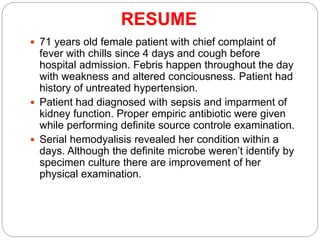
 71 years old female patient with chief complaint of
fever with chills since 4 days and cough before
hospital admission. Febris happen throughout the day
with weakness and altered conciousness. Patient had
history of untreated hypertension.
 Patient had diagnosed with sepsis and imparment of
kidney function. Proper empiric antibiotic were given
while performing definite source controle examination.
 Serial hemodyalisis revealed her condition within a
days. Although the definite microbe weren’t identify by
specimen culture there are improvement of her
physical examination.
Sepsis with Hemodyalisis

Sepsis with Hemodyalisis

  • 1.
    Annisa Dian RESOURCE PERSON: Dr. dr. Soroy Lardo Sp.PD,FINASIM DIVISION OF TROPICAL MEDICINE AND INFECTIOUS DISEASES DEPARTEMEN OF INTERNAL MEDICINE INDONESIA ARMY CENTRAL HOSPITAL GATOT SOEBROTO Morning report : Hemodyalisis in Sepsis
  • 2.
    IDENTITY  Name :Ny. L  DOB/Age : June 17th 1946 / 71 years old  Religion : Christian  Marital status : Widow  Address : Kemayoran, Jakarta Pusat  Medical Record : 8665353  Admisssion : March 1st 2018 18.00  Ward : PU 3rd floor
  • 3.
    CHIEF COMPLAIN  Feversince 4 days before hospital admission HISTORY OF PRESENT ILLNESS  Four days before admission to hospital, patients felt fever throughout the day with shivering,headache, muscular aching and weakness. Temperature weren’t recorded.  Unproductive cough also present, with short of breathness, decreases of appetite and nauseous during meal without vomiting. No sign of swelling on foot, dyspneu on effort, nocturnal dyspnea and patient can sleep with flatened position. Stable weight, no night sweat and chronic cough.  Micturition discomfort and defecation were denied. Nosebleed ,bleeding of gum nor black stool also.
  • 4.
    HISTORY OF PASTILLNESS  Patient never had hospitalized before or routine visit to certain medical complain. She never had complain of her health status. HISTORY OF PRESENT ILLNESS  History of hypertension without routine medication  Diabetes melitus and history of tuberculosis were denied  HISTORY OF FAMILY ILLNESS  Patient’s father has a hypertension  No diabetes and heart disease in her family  SOCIAL ECONOMIC STATUS  She is female household, a widow, lives with her nephew and daiughter.  Not smoking
  • 5.
    PHYSICAL EXAMINATION (inER)  Neck : distended JVP 5+2cmHg  Lung : Inspection : symetrical during breathness Palpation : fremitus can’t be performed Percution : sonor both hemothorax Ausculation : vesicular, no wheezing, crackles present di left lung.  Heart : ictus cordis can’t be located. No murmur or gallop  Abdomen : supple, no tenderness, liver and lien not palpable, bowel sound normal, no shiffting dullness.  Extremities : CTR < 2’’, warm acral and no edema.  General Status  Conciousness :delirium  General condition : badly ill  Vital sign  BP: 169/108 mmHg  HR : 110x/mnt  RR : 30x/mnt  T : 38 c  BW : 60 kg  Height : 154 cm  IMT : 25,8 (Obese) •Skin : normal appearance •Head : no alopecia •Eyes : no sign of pale conjungtiva and jaundice
  • 6.
    LABOLATORY FINDINGS PEMERIKSAAN HEMATOLO GI 1/3/18 3/3/183/3/18 Hb Lekosit Trombosit Na/K/Cl 10,7 14.960 63.000 125/4,2/95 9,3 18.730 40.000 133/4,9/1 09 PT/kontrol APTT/kontrol D Dimer Fibrinogen 11,2/10,8 42,3/34,5 >5000 606 GDS 126 Albumin 2,5 SGOT/SGPT 855/87 PCT CRP 154,6 >32,00 UR/CR 165/7,5 193/8 Anti Dengue IgG IgM Negatif AGD Hbs Ag, anti HCVAnti HIV Non reaktif PH PCO2 P02 HCO3 BE SA02 7,339 27,7 102,4 15 -9 97,6 NK 4 lpm 7,188 31,6 73,5 12,1 -14 90,5 NK 4 lpm UL Protein +1 Leukosit esterase +++3 Bakteri positif Sel jamur
  • 7.
  • 8.
  • 9.
    AACN Adv CritCare. 2014 Jul-Sep;25(3):237-4 Fever
  • 10.
    Cough Cough management: apractical approach Cough 2011 7
  • 11.
    Dyspnea Dtsch Arztebl Int.2016 Dec; 113(49): 834–845.
  • 12.
    Delirium Fong, Tamara Get al.The Lancet Neurology 2015, Volume 14 , Issue 8 , 823 - 832
  • 14.
    SOFA SCORE 0 1 23 4 Pa02/Fi02 > 400 <400 <300 <200 <100 Coagulatio n Platelet >150.000 <150.000 <100.000 <50.000 <20.000 Liver Bilirubin <1,2 1,2-1,9 2.0-5,9 6,0-11,9 >12,0 Hypotensi on No hypotensi on MAP <70 Dopamin < 5uq Dopamin >5uq or norefinefri n < 0,1 Dopamin >15uq or norefinefri n >0,1 GCS 15 13-14 10-12 6-9 <6 Creatinin <1,2 1,2-1,9 2.0-3,4 3,5-4,9 >5
  • 15.
    SOFA SCORE 0 1 23 4 Pa02/Fi02 > 400 <400 <300 <200 <100 Coagulatio n Platelet >150.000 <150.000 <100.000 <50.000 <20.000 Liver Bilirubin <1,2 1,2-1,9 2.0-5,9 6,0-11,9 >12,0 Hypotensi on No hypotensi on MAP <70 Dopamin < 5uq Dopamin >5uq or norefinefri n < 0,1 Dopamin >15uq or norefinefri n >0,1 GCS 15 13-14 10-12 6-9 <6 Creatinin <1,2 1,2-1,9 2.0-3,4 3,5-4,9 >5 245 40.000 5,03 No hypotensio n 13 7,5 TOTAL SKOR = 12
  • 16.
  • 17.
  • 20.
  • 22.
  • 23.
    Acute Kidney Injury BoongirdS, Suppadungsuk S, Kananuraks S, Nongnuch A (2017) Sepsis and Renal Replacement Therapy. J Clin Nephrol Ren Care 3:030
  • 24.
  • 25.
    Source: Chapter 279.Acute Kidney Injury, Harrison's Principles of Internal Medicine, 18e Citation: Longo DL, Fauci AS, Kasper DL, Hauser SL, Jameson J, Loscalzo J. Harrison's Principles of Internal Medicine, 18e; 2012 Available at: http://accessmedicine.mhmedical.com/content.aspx?bookid=331&sectionid=40727068 Accessed: February 20, 2018 Copyright © 2018 McGraw-Hill Education. All rights reserved Classification of the major causes of acute kidney injury. ACE-1, angiotensin-converting enzyme 1; ARB, angiotensin receptor blocker; NSAIDs, nonsteroidal anti-inflammatory drugs; TTP-HUS, thrombotic thrombocytopenic purpura-hemolytic uremic syndrome.
  • 26.
    INDICATION 1. OLIGURIA :Non obstruktif oliguria or anuria 2. ASIDOSIS METABOLIK : severe asidosis metabolik 3. AZOTEMIA : Urea > 30mmol 4. HIPERKALEMIA : K > 6,5 5. UREMIC MANIFESTATION : perikarditis, ensefalopati 6. DISNATREMIA : Na > 160 , Na < 115 7. HYPERTHERMIA 8. CEREBRAL ATAU PULMONARY EDEM 9. COAGULOPATHY 10.INTOKSIKASI : Overdose drug or toxin
  • 27.
    RENAL REPLACEMENT THERAPY(RRT) EVALUATION Urine output 60 ml/jam. 2 Urine output > 450ml/ hari with diuretik Urine output > 2400 ml/ hari without diuretik 3 1. UK Renal Association 5th ed, 2011 2. Boumann et al. Crit Care Med 2002;30:2205-2211 3. Uchino et al Crit Care Med 2009; 13:90-121
  • 28.
    LABOLATORY FINDINGS PEMERIKSAAN HEMATOLOGI 1/3/183/3/18 4/3/18 6/3/18 7/3/18 9/3/18 Hb Ht Lekosit Trombosit 10,7 14.960 63.000 9,3 18.730 40.000 7,9 15.030 54.000 8,7 18.030 78.000 9,4 20740 152.000 10 16.930 152.000 GDS 126 111 SGOT/SGPT 855/87 23/33 UR/CR 165/7,5 193/8 250/6 325/5,5 112/2,1 126/1,7 NA/K/CL 125/4,2/ 95 133/4,9/109 135/5,3/ 111 136/4,6/ 110 146/3,7/ 111 AGD PH PCO2 P02 HCO3 BE SA02 7,339 27,7 102,4 15 -9 97,6 NK 4 lpm 7,188 31,6 73,5 12,1 -14 90,5 NK 4 lpm 7,375 30,8 115,9 18,2 -5,2 98,5
  • 29.
    PEMERIKSAA N 3/3/18 7/3/18 PT/kontrol APTT/kontrol D Dimer Fibrinogen 11,2/10,8 42,3/34,5 >5000 606 11,2/10,3 33,3/32,6 Albumin2,5 3,1 PCT CRP 154,6 >32,00 Anti Dengue IgG IgM Negatif Hbs Ag, anti HCV Anti HIV Non reaktif UL Protein +1 Leukosit esterase +++3 Bakteri Kultur darah Kultur sputum Kultur urin (unidenified bacterial
  • 30.
    FOLLOW UP 1/3/18 (ER)2/3/18 (ward) 3/3/18 4/3/18 5/3/18 6/3/18 S Fever Fever Fever Delirium Fever CM 0 122/60 110 22 38 109/50 120 24 40 131/87 100 26 38 160/79 104 24 38 CVP 12,5 140/100 98 38 24 CVP 10 150/79 110 37,5 24 A Obs febris Dengue Fever AKI Sepsis p Cefriaxon 1x2gr Prepar ation HD HD (1) Meropenem 3x500mg Levofloxacin 1x750mg/48jam HD (2) Lovenox 1x0,2 UI HD(3) Urine 1100cc/24hours Urine 1600cc/24 Urine 1300cc/2
  • 31.
    FOLLOW UP Genera l 7/3/18 8/3/18 (ward) 9/3/18 SCM CM CM 0 139/80 99 22 36.5 142/78 89 20 36 138/82 82 20 36 A Sepsis p Meropenem 3x500mg (H5) Levofloxacin 1x750mg/48jam (H3) Meropenem 3x500mg (H6) Levofloxacin 1x750mg (H4) Meropene m 3x500mg (H7) Levofloxaci n 1x750mg (H5)
  • 32.
     Sepsis withmultiple organ damage syndrome (MODS)  Community acquired pneumonia (CAP)  Urinary track infection (UTI)  Encephalopathy uremicum  Acute Kidney Injury  Disseminated Intravascular Coagulapathy (DIC)  Hipoalbumenia PROBLEM
  • 33.
    TREATMENT PROBLE M Based on Planof care : Plan : SEVERE SEPSIS History : Fever , tachypnea, tachcardia, SOFA score ( RR >22x and altered conciousness) Leukositosis, thrombositopenia, lmpared renal function and liver function Antibiotic Hemodyalisis Supportif hemodynamic sign Control source Diagnosic : Culture urine, blood and sputum Therapy : -IVFD Nacl 0,9 %/24 hour -Kabiven 1500 ml/48 hours - Fluid balance -Meropenem 3x500mg -Levofloxacin 750mg/48 hours. -Omeprazole 1x40mg
  • 34.
    TREATMENT PROBLEM Based onPlan of care : Plan : CAP UTI AKI HIPO ALBUMINEMIA History : Fever , cough , urine unproducive Labolatorium : Leukositosis. Bacteria in urine Radiology : infiltrate Antibiotic Hemodyalisis Supportif hemodynamic Diagnosic : Culture urine, blood and sputum Albumin correction
  • 35.
    RESUME  71 yearsold female patient with chief complaint of fever with chills since 4 days and cough before hospital admission. Febris happen throughout the day with weakness and altered conciousness. Patient had history of untreated hypertension.  Patient had diagnosed with sepsis and imparment of kidney function. Proper empiric antibiotic were given while performing definite source controle examination.  Serial hemodyalisis revealed her condition within a days. Although the definite microbe weren’t identify by specimen culture there are improvement of her physical examination.

Editor's Notes

  • #3 Identitas pasien atas nama Ny. L usia 71 thn, agama kristen, status janda cerai mati, alamat dikemayoran masuk rumah sakit tgl 1 maret di pu lt3
  • #4 Keluhan utama adalah demam sejak 4 sebelum masuk rumah sakit Riwayat penyakit sekarang adalah demam sejak 4 hari dirasakan terus menerus disertai mengigil, sakit kepala dan lemas badan. Selain itu pasien juga mengalami batuk tidak disertai dahak, batuk tidak dipengaruhi oleh perubahan cuaca. Penurunan nafsu makan mual tidak muntah. Pasien sesak napas memberat tidak dipengaruhi oleh aktivitas, dapat tidur telentang, tidak ada bengkak kaki. Berat badan stabil, tidak ada keringat malam atau batuk lama. BAB dan BAK tidak ada gangguan. Perdarahan gusi, mimisan dan BAB hitam tidak ada.
  • #5 Riwayat penyakit dahulu Pasien tidak rutin berobat ke pelayanan kesehatan karena penyakit tertentu. Keluhan kesehatan tidak ada selama ini. Riwayat hipertensi ada tidak minum obat rutin. DM, sakit jantung, asma, riwayat pengobatan TBC tidak ada. Riwayat penyakit keluarga Ayah pasien penderita hipertensi dan telah meninggal. Tidak ada riwayat . DM, sakit jantung, asma. Pasien adalah ibu rumah tangga setelah pensiun tinggal bersama anak kandung dan tidak merokok.
  • #6 Pada pemeriksaan fisis didapatkan tampak sakit berat dan delirium. Hipertensi Takikardi febris obese Distensi vena jugular Ronkhi pada kedua paru
  • #7 Pada pemeriksaan laboratorium di IGD didapatkan lekositosis peningkatan enzim hepar dan penurunan fungsi ginjal.
  • #10 Determining the underlying cause of a fever can be a daunting task. Multiple reasons have been found for a patient to have a fever, but the use of an organized approach will assist clinicians in reaching a correct diagnosis. The first step in this process is a complete assessment, including a thorough physical assessment and an evaluation of the history of present illness as well as a detailed review of all the patient’s medications. Infection should always be a primary ever is a signal of a disruption of one of the body’s defense mechanisms. The cause of the disruption can be either infectious or noninfectious, and the challenge is to discover the underlying cause (see Figure 1 ). In the acute and critical care setting, fever is a common physical finding that must be addressed. Fever is thought to occur in approximately 50% of patients in the intensive care unit (ICU) and is associated with adverse outcomes, including death with high fever. 1 The search for the cause of fever can lead to increased diagnostic testing, which incurs more cost and, at times, increased risk to the patient. C-reactive protein is a positive APP that increases in the acute phase response to bind with phospholipid components of pathogenic bacteria as well as necrotic host cells, activating the complement system to eliminate these cells. 2 Albumin is a negative APP that decreases with inflammation and is thought to allow for greater production of positive APPs.
  • #19 nciting factor (infection, trauma, pancreatitis, etc.) leads to marked inflammatory responsePattern Recognition Receptors (PRR) on immune cells recognize Pathogen Associated Molecular Patterns (PAMPs): TLR4 recognizes lipopolysaccharide (LPS) (gram negative bacteria) TLR2 recognizes lipotechoic acid (gram positive bacteria) PAMP binding to PRR leads to phagocytosis of the infectious agent with subsequent amplification, proliferation, and secretion of cytokines. NF-KB is central to the signal transduction pathways and serves as a master switch for proinflammatory gene expressionTNF-alpha: its rise is temporally associated with shock, can induce shock in and of itself in experimental models. TNF-alpha inhibition failed to improve outcomes in sepsis (Lorente, Shock 2005).IL-1B: Similar to TNF-alpha, major early cytokine in sepsis response, clinical trials failed to demonstrate efficacy in improving outcomes for sepsisIL-6: Increases during sepsis, levels correlated with outcomes in sepsis. Tried utilizing as a stratification marker in sepsis but has failed in the clinical realmIL-10: Most well known anti-inflammatory cytokine, downregulates inflammation, may be partially responsible for the Compensatory Anti-Inflammatory Response Syndrome (CARS) or subsequent immunoparalysis after sepsis
  • #20 Sepsis is a highly heterogeneous syndrome, affecting patients with various underlying conditions, and involving an array of infectious sources and microorganisms. Although the characteristics of infection were retained in attempts to better characterize sepsis through the PIRO (predisposition, infection, response and organ failure) concept. The data collected included all variables defined in the extended sepsis criteria [2] which were grouped according to each PIRO component as follows. 1. Predisposing factors (‘P’) analyzed included: age, sex, season of admission, previous antibiotic therapy (any antibiotic administration with therapeutic intention in the previous month), hospitalization in the previous year, previous instrumentation, Karnofsky index [13] (a value lower than 70 means inability to carry out normal activity or do active work) and premorbid conditions. Chronic morbidities recorded were: immunosuppression (administration of chemotherapy, radiation therapy during 12 months prior to hospital admission or the equivalent of 0.2 mg/Kg/day prednisolone for at least 3 months or 1 mg/Kg/day for a week during 3 months prior to hospital admission or human immunodeficiency virus infection), chronic hepatic disease [14], chronic heart failure [14], chronic respiratory disease [14], hematologic disease [15], cancer [15], chronic renal failure (if there was need for chronic renal support or a history of chronic renal insufficiency with a serum creatinine level over 2 mg/dl), diabetes mellitus (if insulin therapy or oral anti-diabetic drugs were required before the infection) and/or atherosclerosis (if there was a previous history of transient ischemic attack, stroke, angina, myocardial infarction or peripheral arterial disease). 2. Insult/Infection (‘I’) was characterized by: type of infection, categorized as either community-acquired (CAI), if the infection was detected within 48 hours of hospital admission in patients who did not fulfill the criteria for a healthcare-associated infection; healthcare associated (HCAI - using the same criteria that Deborah Friedman used for healthcare associated bloodstream infections regardless of the involved focus of infection) [16] or hospital-acquired (HAI) [12]; focus of infection (categorized as respiratory [12], urinary [12], intra-abdominal [12], or others); microbiology documentation of infection; presence of bacteremia (primary or secondary) [17] and pathogen identification, classified by category (Gram negative, Gram positive, fungus or poly-microbial). 3. Host Response variables (‘R’) included: abnormal temperature (fever or hypothermia), tachypnea, tachycardia, abnormal white blood cells count (leukocytosis, leucopenia), altered consciousness, hyperglycemia in the absence of diabetes, peripheral edema, high serum C-reactive protein and severity of infection as defined in the 2001 SCCM/ESICM/ACCP/ATS/SIS International Sepsis Definitions Conference (infection, sepsis, severe sepsis or septic shock at presentation [2]). 4. Organ dysfunction (‘O’) was assessed by the following variables: hypoxemia, hypotension, high serum lactate, renal dysfunction, high bilirubin, low platelet count, ileus, coagulopathy and total SOFA score [18].
  • #23 The actual mechanism of production of PCT during infection is not known, but it assumes that bacterial lipopolysaccharides and sepsis released cytokines modulate the liver and peripheral blood mononuclear cells to produce PCT. Microbial infection induces the elevated expression of CALC 1 gene followed by the release of PCT product which is correlated with severity of disease and mortality.
  • #24 Acute kidney injury (AKI) merupakan suatu sindrom yang ditandai dengan gangguan fungsi ginjal dalam mengatur komposisi cairan dan elektrolit tubuh, serta pengeluaran produk sisa metabolisme, yang terjadi tiba-tiba dan cepat. Definisi AKI didasarkan kadar serum kreatinin (Cr) dan produksi urin (urine output/ UO). Pada tahun 2004, acute dialysis quality initiative (ADQI) mengganti istilah acute renal failure (ARF) menjadi acute kidney injury (AKI) dan menghadirkan kriteria RIFLE yang terdiri dari 3 kriteria akut berdasarkan peningkatan kadar serum Cr dan UO (Risiko/Risk, Cedera/ Injury, Gagal/Failure) dan 2 kategori lain menggambarkan prognosis gangguan ginjal. Untuk meningkatkan sensitivitas kriteria RIFLE agar AKI dapat dikenali lebih awal, acute kidney injury network (AKIN) memodifikasi jangka waktu peningkatan serum Cr dari 7 hari pada RIFLE menjadi 48 jam, tidak diperlukan kadar serum Cr awal, kenaikan kadar serum Cr sebesar >0,3 mg/dL sebagai ambang definisi AKI, serta semua pasien yang membutuhkan terapi pengganti ginjal diklasifikasikan ke dalam AKI tahap 3. KDIGO (kidney disease improving global outcome) 2012 menggabungkan kriteria RIFLE dan AKIN. AKI didiagnosis jika kadar kreatinin serum meningkat minimal 0,3 mg/dL (26,5 µmol/L) dalam 48 jam atau meningkat minimal 1,5 kali nilai dasar dalam 7 hari.
  • #30 Firstly, patients may have received antibiotics prior to the onset of organ dysfunction, thus obscuring conventional cultures. For example, patients with community-acquired respiratory tract infection often receive antibiotics before ICU admission, and not surprisingly Phua and colleagues report that respiratory tract infection was associated with culture-negative sepsis [2]. They did not, however, record information on prior antibiotic treatment, and this hypothesis cannot be substantiated. Secondly, the diagnostic workup may be insufficient or incomplete, which does seem to apply to the current study because patients with positive or negative cultures appeared to have a similar number of samples taken [2]. A third possible explanation is sepsis caused by unusual organisms that are difficult to identify in routine practice. Conventional microbiological methods frequently fail to indentify a microorganism due to various reasons related to technical issues or intrinsic to the microorganism. Promising studies using PCR methods showed that microbial DNA could be rapidly detected in blood of septic patients [9], and could detect potentially significant bacteria and fungi not retrieved from blood culture [9,10]. In a recent meta-analysis, the overall sensitivity and specificity for such methods to detect bacterial or fungal DNA were 0.75 and 0.92 [11]. However, even in patients with severe sepsis, the rate of positive blood PCRs was only 34.7% [9]. Patients with culture-negative sepsis described by Phua and colleagues [2] having lower serum procalcitonin levels than others also suggests that at least some of them may have had severe viral infections. Indeed, a recent study showed that approximately one-third of ICU patients with severe pneumonia had viruses found by PCR assays on nasopharyngeal swabs or bronchoalveolar lavage fluid [12]. The rates of microorganism detection by blood culture and PCR were 34.2% and 47.9%,