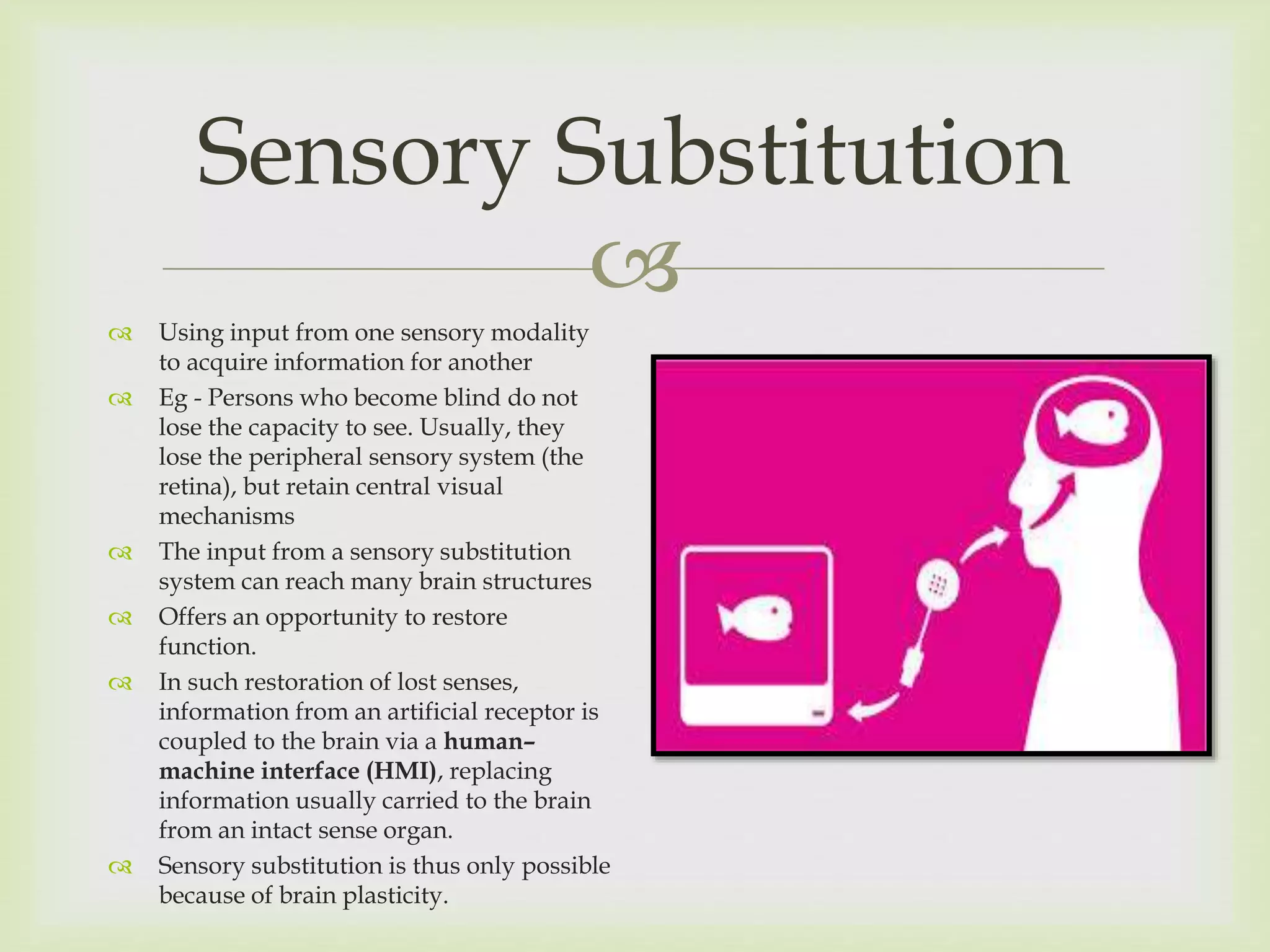
This document discusses sensory substitution, which is using input from one sensory modality to acquire information for another sensory modality. It provides examples of auditory-vision substitution using the vOICe system and tactile-vision substitution using tactile arrays. Tactile-vestibular substitution is also discussed as a way to provide balance information to subjects with bilateral vestibular loss. The strengths are that training with these systems can lead to externalization of sensations and accurate identification of percepts. However, the precise neural mechanisms are not fully understood. There is potential for inexpensive and accessible implementations to expand human senses and study brain plasticity.